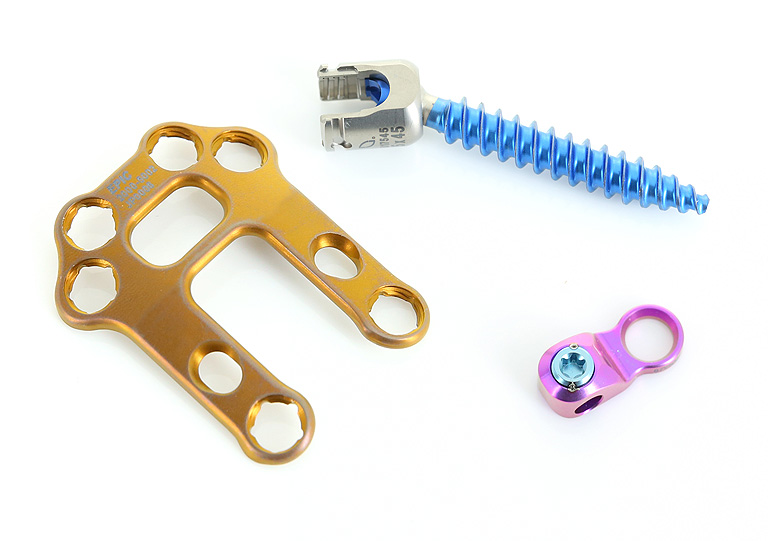
Precision Surgical Instrument Thread Grinding and Medical Contract Manufacturing
High precision flute and thread grinding for orthopedic cutting tools
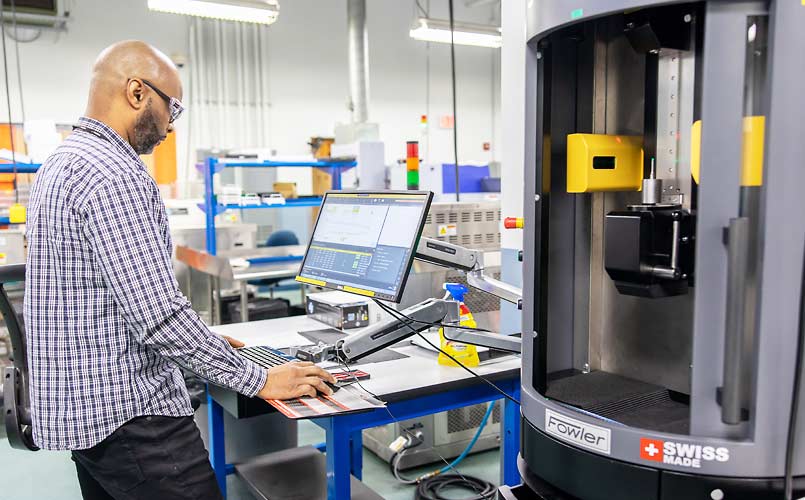
Laser measurement for surgical thread grinding quality control
FDA Registered · ISO 13485 Certified

High-Precision Surgical Instrument Thread Grinding for Global Medical Device OEMs

Engineering micron-level thread accuracy, burr-free profiles, and superior surface integrity ($Ra < 0.2 \mu m$) for bone taps, spinal tools, and robotic surgical components.

FDA Registered Establishment
ISO 13485 Certified Quality System
Micron Lead Accuracy & Ra < 0.2 µm
Information Gain & DFM Insights

Precision Surgical Instrument Thread Grinding: Elevating Tactile Feedback & Structural Integrity

In modern orthopedic, trauma, and spinal surgeries, the mechanical interface between surgical instruments and biological tissue dictates operative precision. Surgical Instrument Thread Grinding is not merely a machining process; it is a critical metallurgical and geometric discipline that directly affects insertion torque, bone chip clearance, and instrument fatigue resilience.

Why Thread Grinding Outperforms Thread Whirling & Milling

Global procurement teams and surgical tool designers frequently question why multi-axis CNC thread grinding is required over thread milling or thread whirling. While whirling offers rapid stock removal, it introduces microscopic tool scallops, directional grain tears, and micro-burrs along the thread crest and flute intersection. Under high-magnification optical inspection, these surface imperfections become localized stress risers and sources of metallic particulate contamination during surgical use.

At Greyack medical Co., Ltd, our precision thread grinding process utilizes dressable Cubic Boron Nitride (CBN) and diamond superabrasive wheels operating under temperature-stabilized oil filtration systems ($\pm 0.2^\circ C$). This achieves an ultra-smooth finish with surface roughness values consistently below $Ra 0.2 \mu m$ ($8 \mu in$), eliminating manual deburring steps that compromise thread profile geometry.

Furthermore, thread grinding induces compressive residual stresses into the outer boundary layer of medical stainless steel alloys (such as Custom 455, 17-4PH, and 440C) and Titanium Grade 5 (Ti-6Al-4V ELI). This compressive layer resists cyclic fatigue and prevents stress corrosion cracking during repeated autoclave sterilization cycles.

Performance Metric Precision Thread Grinding Thread Whirling / Milling
Surface Roughness ($Ra$) < 0.2 $\mu m$ (Mirror finish) 0.8 – 1.6 $\mu m$ (Scalloped profile)
Pitch Diameter Tolerance $\pm 0.0025$ mm ($\pm 0.0001$ in) $\pm 0.0125$ mm ($\pm 0.0005$ in)
Flute Intersection Burrs Burr-Free (Grind-through method) Secondary manual deburring required
Residual Stress Profile Compressive (High fatigue strength) Tensile (Higher micro-fracture risk)
Material Compatibility Pre-hardened alloys (Up to 58 HRC) Limited to soft state prior to heat treatment
Product Recommendations

Engineered Medical Thread Grinding Solutions for Critical Applications

Custom-ground threaded instruments engineered to meet rigorous ISO 5835 and ASTM standards, tailored to OEM specification drawings.

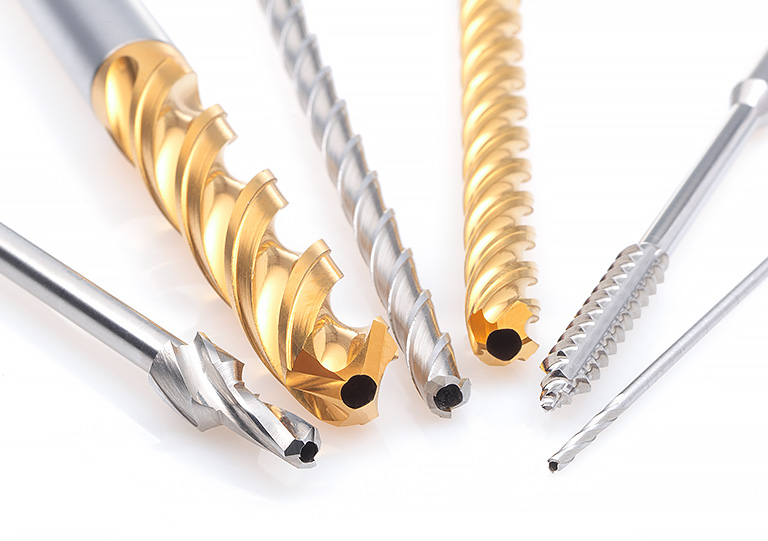
Precision ground orthopedic bone tap threads and flutes

Orthopedic Bone Taps & Cannulated Drills

High-efficiency bone taps featuring variable lead angles, ground cannulated cores, and tapered lead-in threads. Engineered for minimal thermal necrosis and precise tactile engagement during cortical and cancellous bone tapping.

Key Specs: ISO 5835, Ti-6Al-4V ELI, pitch tolerance $\pm 0.0025$ mm
Inquire Now
Ground threads on spinal pedicle screw drivers and instruments

Spinal Driver Taps & Pedicle Screw Tools

Precision thread-ground spinal instruments designed for high torsional strength. Manufactured from Custom 455 stainless steel and 17-4PH H900 to ensure robust engagement with pedicle screws and interbody fusion trial constructs.

Key Specs: Custom 455 / 17-4PH, HRC 48-52, burr-free root radius
Inquire Now
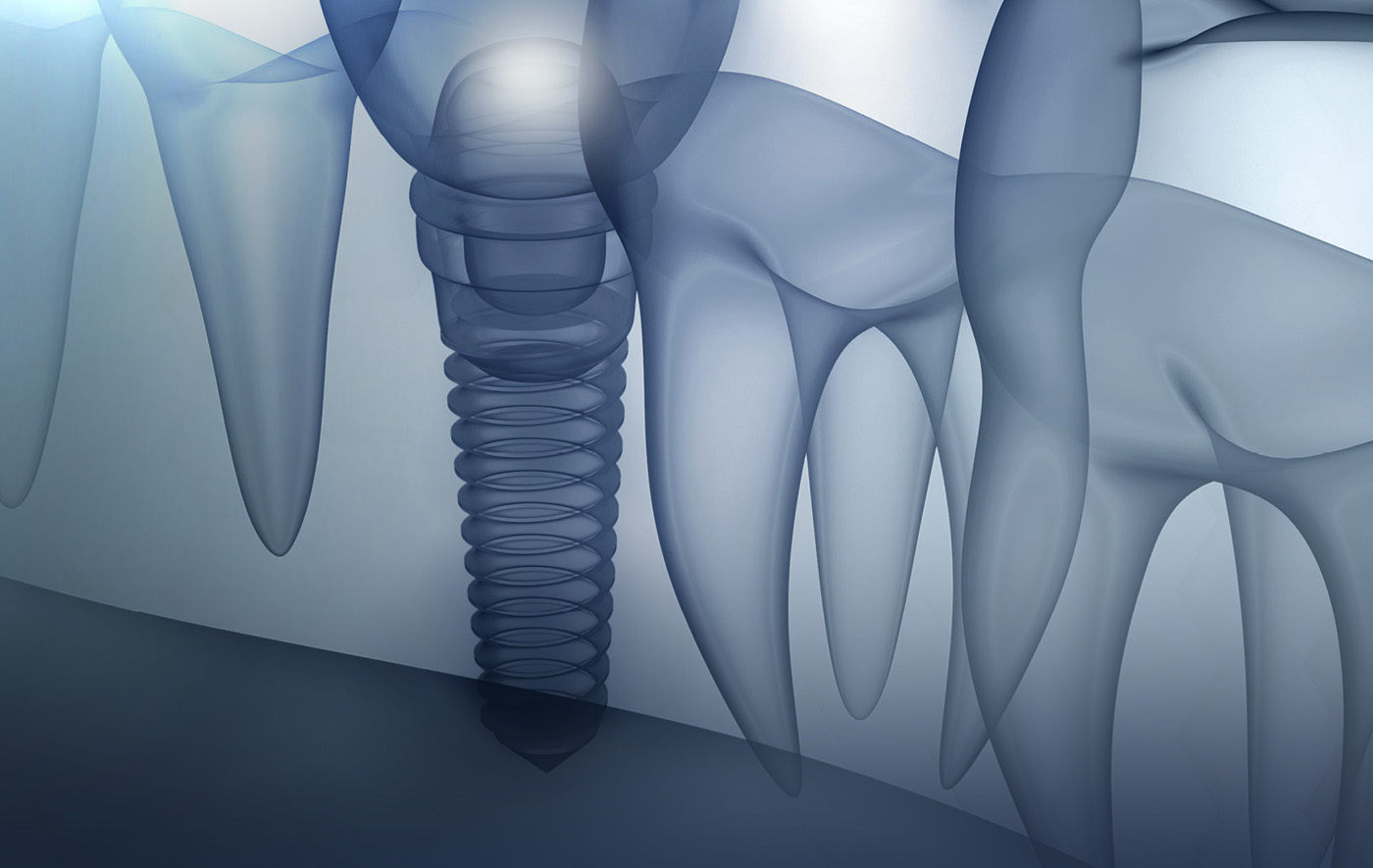
Micro thread grinding for dental implant tools and abutment drivers

Micro-Thread Dental Taps & Abutment Tools

Ultra-fine thread grinding for dental implant installation tools and prosthetic drivers. Features micro-geometry thread forms down to pitch sizes of M0.8 with zero crest breakdown and tight concentricity control.

Key Specs: Micro-threads < M1.0, 316LVM / Titanium, optical CMM verified
Inquire Now
Miniature ground lead screws and actuator threads for robotic surgery

Surgical Robotics Lead Screws & Actuators

Miniature precision ground lead screws and threaded control rods for robotic-assisted surgical platforms. Ensures zero axial backlash, linear repeatability, and smooth motion dynamics in minimally invasive procedures.

Key Specs: Sub-micron pitch lead accuracy, zero backlash finish
Inquire Now
Future Sourcing & Tech Trends

The Evolution of Surgical Thread Manufacturing: 2025–2030 Insights

As robotic-assisted surgery expands and implant fixations demand patient-specific geometries, the global procurement landscape for surgical thread grinding is undergoing a major technological transformation.

1. Smart Variable-Pitch & Progressive Geometry Threads

Modern trauma bone screws and taps are moving away from traditional constant-pitch threads toward progressive, variable-pitch geometries. These designs increase compression in soft osteoporotic bone while facilitating rapid initial engagement. Producing these complex threads requires multi-axis CNC grinding machines with real-time electronic gear-box coupling and sub-micron positioning capability.

2. Ultra-Precision Diamond Dressing & Closed-Loop In-Process Inspection

To eliminate batch-to-batch variation, tier-1 contract manufacturers are integrating high-frequency acoustic emission dressing sensors and optical laser interferometers directly into grinding cells. Automated closed-loop controls automatically dress CBN wheels and compensate for thermal drift during overnight unattended production runs.

3. Hydrocarbon-Free Cryogenic & CO2 Grinding Technologies

Traditional grinding coolants leave micro-hydrocarbon residues inside deep cannulated lumens of surgical drills and taps. Future surgical tool production relies on supercritical CO2 and liquid nitrogen cooling technologies, which prevent residual oil entrapment and simplify validated cleanroom washing sequences.

4. Additive-Hybrid Manufacturing Integration

3D powder-bed fusion enables complex internal cooling channels and porous lattice handles, but post-process thread precision requires grinding. The hybrid workflow—combining additive manufacturing with finish CNC thread grinding—is becoming the industry benchmark for next-generation surgical instruments.

Enterprise Advantages

Why Global Medical Device OEMs Partner With Greyack medical Co., Ltd

Under our ISO 13485 quality framework, Greyack medical Co., Ltd combines technical depth, advanced grinding infrastructure, and end-to-end regulatory documentation.

ISO 13485 & FDA Compliance

Fully documented Quality Management System (QMS) supporting global OEM vendor qualification, device master files (DMF), and international regulatory audits.

Multi-Axis CNC Grinding Center

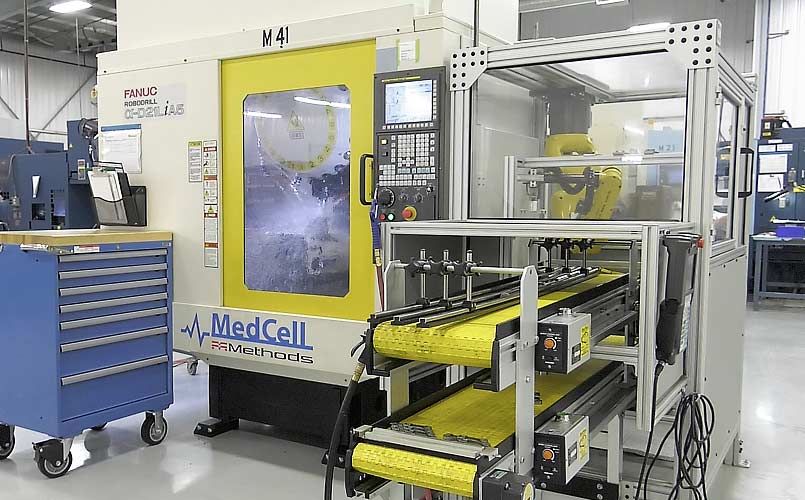
Dedicated high-speed CNC thread grinding cells with temperature-controlled oil delivery, grinding internal/external threads with micro-inch repeatability.

Validated Passivation & Finishing

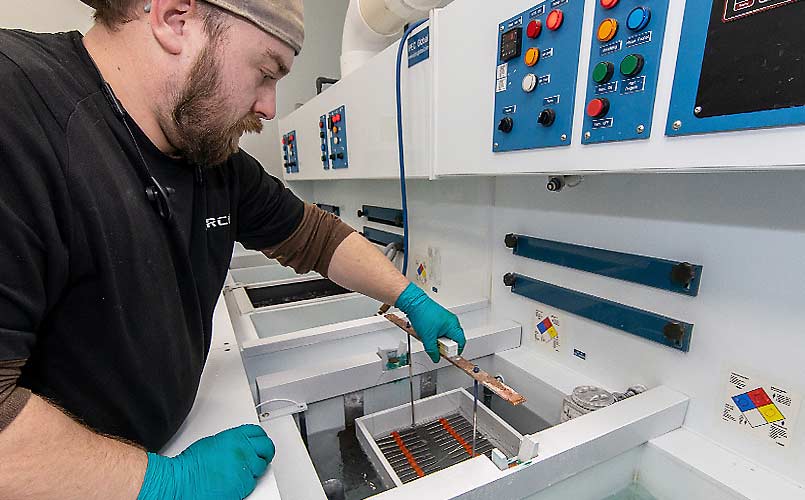
In-house citric and nitric acid passivation (ASTM A967 compliant), laser marking, ultrasonic cleaning, and cleanroom packaging facilities.

Complete Quality Traceability

Full material certifications (MTR), first article inspection reports (AS9102), optical profile scanning, and 100% thread gauge verification.

Precision medical manufacturing and thread grinding facility video thumbnail
State-of-the-Art Operations

Micron Precision That Enhances Surgical Performance

From initial design-for-manufacturability (DFM) reviews to final thread profiling and passivation, Greyack medical Co., Ltd provides single-source contract manufacturing for the world's most demanding orthopedic and surgical robotics brands.

Improving lives … we have a part in that.

Inquire Now

"Precision thread grinding is the cornerstone of surgical tool reliability. At Greyack medical Co., Ltd, we combine decades of grinding expertise with cutting-edge optical verification to deliver ground threaded instruments that perform flawlessly under critical surgical conditions."

Procurement & Technical FAQ

Frequently Asked Questions by Medical Device OEMs

Key technical insights addressing intent-driven questions asked by global procurement teams and AI search queries.

Why is precision Surgical Instrument Thread Grinding preferred over thread milling or thread whirling for bone taps?

Thread grinding achieves superior micro-surface finish ($Ra < 0.2 \mu m$) and precise crest radius control without generating micro-burrs. This significantly reduces tactile friction during bone insertion, minimizes heat generation, lowers chip accumulation risks, and eliminates localized stress concentrations that lead to fatigue failure under dynamic surgical loads.

What thread pitch tolerances and profiles can Greyack medical Co., Ltd achieve?

Greyack medical Co., Ltd maintains pitch diameter tolerances down to $\pm 0.0025$ mm ($\pm 0.0001$ in) and pitch lead accuracy within $\pm 0.001$ mm per inch. We support complex profiles including ISO 5835 bone tap threads, pedicle screw driver threads, variable-pitch lead screws, buttress threads, and custom micro-threads for dental applications.

Which medical-grade alloys are compatible with your CNC thread grinding processes?

We routinely grind threads on hard-to-machine medical alloys such as Titanium Grade 5 (Ti-6Al-4V ELI), Custom 455 stainless steel, 17-4PH (H900 condition), 440C stainless, 316LVM, and Cobalt-Chrome alloys (Co-Cr-Mo). Grinding after heat treatment prevents thermal warping and retains optimal metallurgical hardness.

How does Greyack medical Co., Ltd ensure burr-free thread fluting on orthopedic cutting instruments?

We utilize multi-axis CNC grinding cells equipped with superabrasive CBN wheels, high-pressure temperature-stabilized oil filtration, and integrated optical edge profiling. This allows synchronized flute grinding and thread profile grinding, completely eliminating primary and secondary burrs at the cutting edge intersections.

What validation and quality documentation is supplied with ground surgical instruments?

Every shipment includes comprehensive documentation supporting your Design History File (DHF), including Material Test Reports (MTR), full dimensional CMM and optical inspection reports, first article inspection (FAI) per AS9102/ISO 13485 standards, and passivation compliance certificates (ASTM A967 / AMS 2700).

How do OEM engineering teams request DFM analysis or start a contract grinding project?

You can send 3D CAD files (STEP/IGES) and 2D engineering drawings directly to [email protected]. Our surgical tool engineering team reviews tolerances, geometry, and material specifications to deliver rapid DFM feedback, prototyping schedules, and production quotes.

Ready to Optimize Your Surgical Instrument Thread Grinding Program?

Partner with an FDA-registered, ISO 13485 certified contract manufacturer. Email drawings to [email protected]

Inquire Now