Powder-Bed Fusion Additive Manufacturing for Medical Device Implants
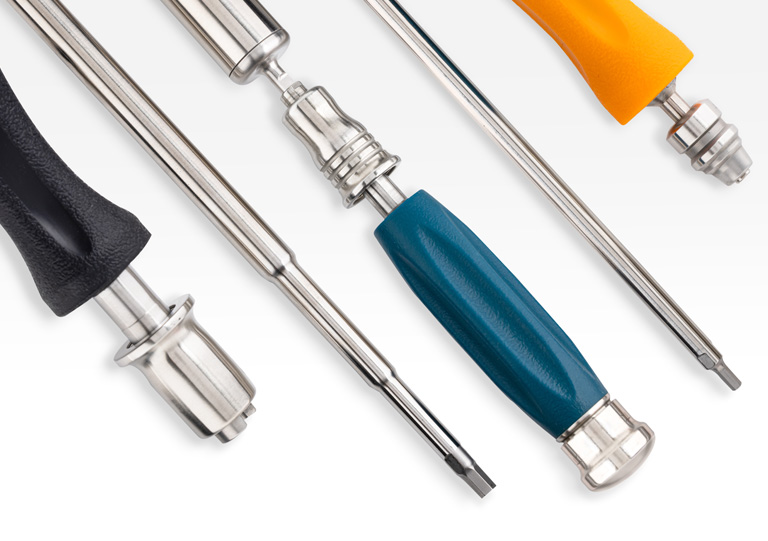
Precision-machined medical device components for OEMs
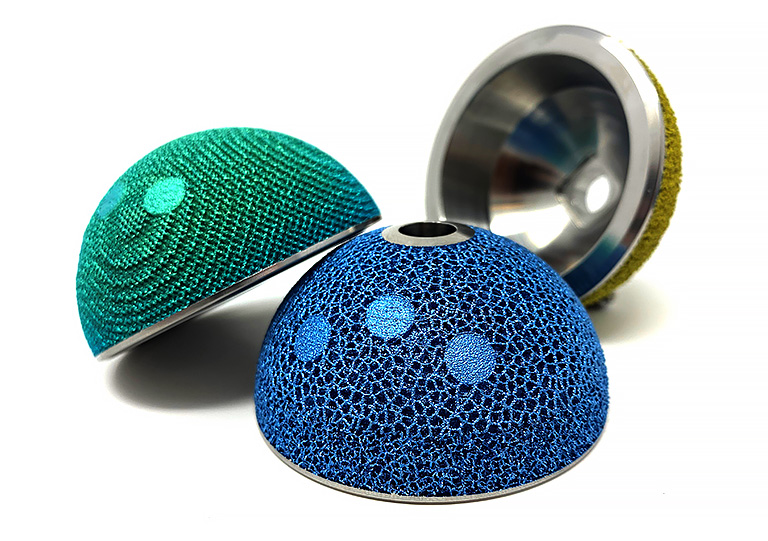
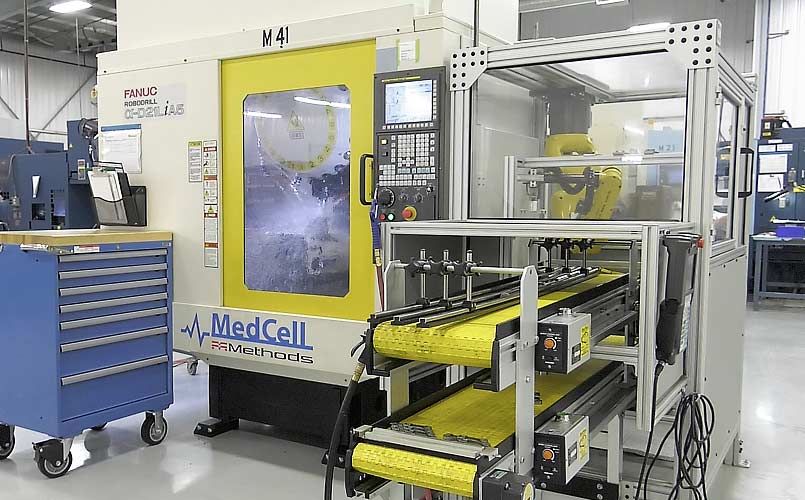
Orthopedic implants produced via powder bed fusion metal 3D printing
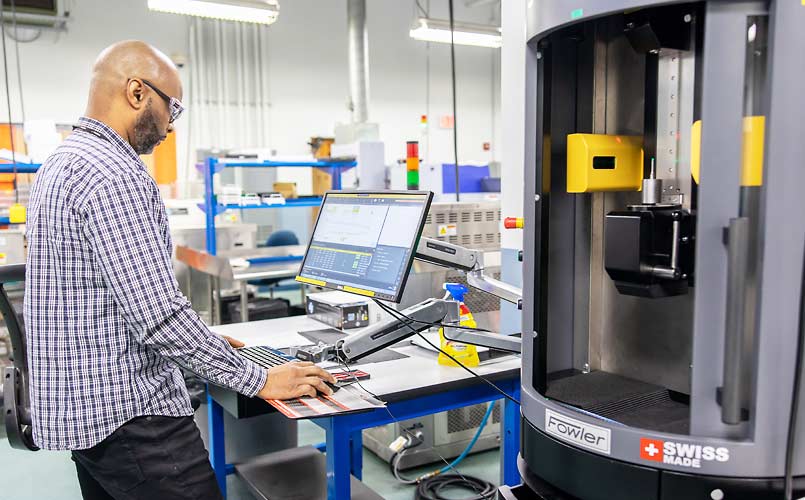
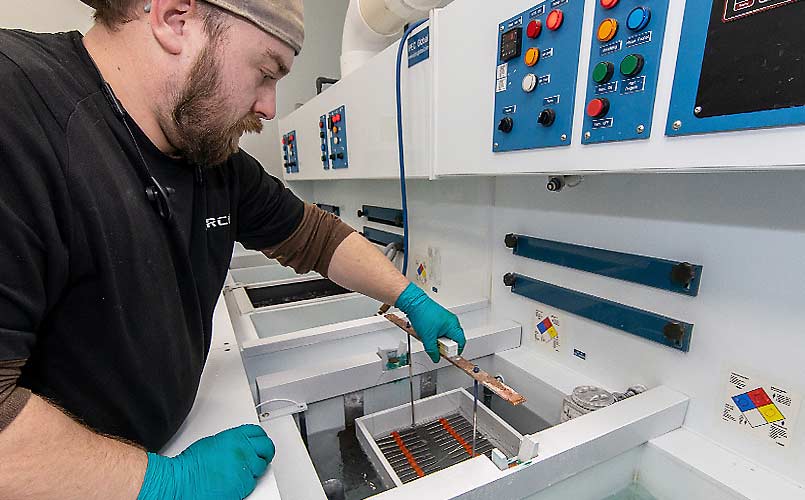
Laser measurement quality inspection of 3D printed titanium implants
FDA Registered · ISO 13485 Certified

Powder-Bed Fusion Additive Manufacturing for Medical OEMs

Precision metal 3D printing (PBF-LB / PBF-EB) for porous titanium implants, complex spinal cages, and surgical robotics. Seamlessly integrated with 5-axis CNC machining under one certified quality management system.

FDA Registered Establishment
ISO 13485 Certified Quality Management
Supporting Medical Device OEMs Worldwide
Product Recommendations

Next-Generation Medical Devices Enabled by Powder-Bed Fusion

Powder-Bed Fusion (PBF) additive manufacturing allows medical OEMs to engineer complex biomimetic porous structures, patient-matched geometries, and lightweight surgical tooling that traditional machining alone cannot achieve. Greyack medical Co., Ltd provides validated contract manufacturing from metal powder to finished sterile-ready implant.

Porous Titanium Acetabular Cups manufactured via Powder-Bed Fusion

Porous Titanium Acetabular Cups

Direct metal printing of Ti-6Al-4V ELI acetabular hip cups featuring fully integrated trabecular bone-ingrowth structures (pore sizes 300–700 µm). Eliminates traditional plasma-spray coating delamination risks while optimizing primary friction stability and secondary osseointegration.

Material & Standards: Ti6Al4V ELI (ASTM F3001), 65-75% interconnecting porosity
Get a Quote
3D Printed Interbody Spinal Fusion Cages with Lattice Structure

Interbody Spinal Fusion Cages

Cervical and lumbar spinal cages engineered with gradient lattice densities. PBF additive manufacturing matches the elastic modulus of human cancellous bone, significantly reducing stress shielding, subsidence risk, and artifact interference during post-operative MRI/CT imaging.

Key Applications: ALIF, PLIF, TLIF cages with integrated fixation teeth
Get a Quote
Surgical Robotics End Effectors manufactured with PBF Additive

Surgical Robotics End Effectors

Ultra-lightweight, high-rigidity structural arms and end-effectors for robotic-assisted surgical platforms. Powder-Bed Fusion enables internal conformal fluid channels, cable routing pathways, and mass-optimized organic frames for high-frequency robotic articulation.

Materials: Stainless Steel 17-4PH, 316L, Titanium Alloys, CoCr
Get a Quote
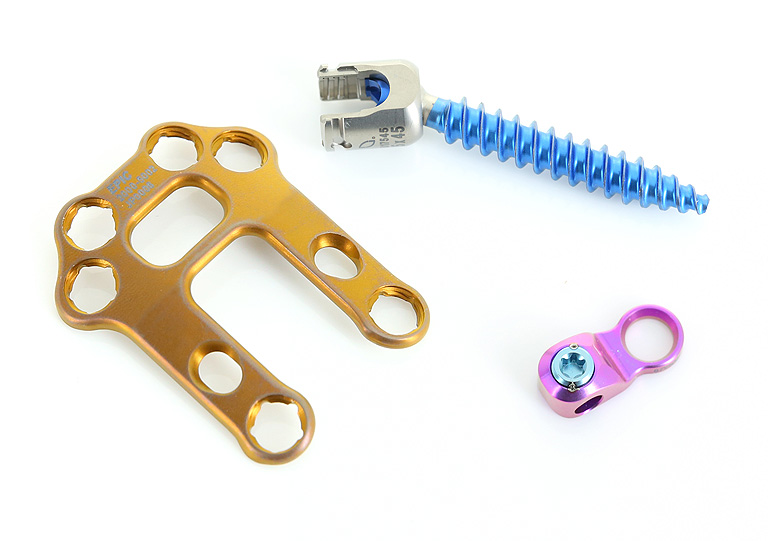
Custom Surgical Guides and Ergonomic Surgical Tools

Patient-Specific Guides & Tools

Custom craniomaxillofacial (CMF) reconstruction plates, patient-matched osteotomy cutting guides, and ergonomic instrument assemblies. PBF technology accelerates prototyping and low-volume custom implant production for complex revision surgeries.

Finishing Options: Precision CNC Milling, Passivation, Silicone Overmolding
Get a Quote
Technical Insight & Engineering Guide

Unlocking Information Gain: Why Powder-Bed Fusion Dominates Medical Device Manufacturing

A comprehensive technical analysis for biomedical engineers, procurement directors, and regulatory affairs personnel.

1. Mechanics of Powder-Bed Fusion: PBF-LB vs. PBF-EB in Bio-Implant Design

Powder-Bed Fusion (PBF) encompasses two dominant metal 3D printing technologies: Laser Powder-Bed Fusion (PBF-LB, commonly known as Direct Metal Laser Sintering/SLM) and Electron Beam Powder-Bed Fusion (PBF-EB, or EBM). Both processes operate by spreading thin layers of spherical metal powder (typically 20 to 60 microns in layer thickness) across a build plate and selectively thermal-fusing them using computer-controlled energy beams based on 3D CAD data.

In medical implant manufacturing, PBF-LB utilizes a high-precision fiber laser operating within an ultra-pure Argon gas chamber (oxygen levels held under 100 ppm). This process delivers fine surface resolutions, micro-scale feature accuracy, and thin lattice struts down to 150 µm—making it the ideal choice for intricate spinal interbody cages and fine surgical instruments. Conversely, PBF-EB utilizes a high-power electron beam operating under elevated vacuum and pre-heated bed temperatures (exceeding 700°C–1000°C), producing stress-free microstructures with high production rates for heavy orthopedic implants like acetabular shells and femoral revision cones.

2. Optimizing Trabecular Bone Ingrowth: Porosity, Modulus Matching, and Fatigue Strength

Traditional orthopedic implants rely on secondary surface modifications—such as titanium plasma spraying (TPS) or sintered bead coatings—which risk pore clogging, delamination, and particulate debris release under cyclic load. Powder-Bed Fusion eliminates these risks by printing the porous outer layer as a monolithic extension of the solid structural core.

Greyack medical Co., Ltd engineers trabecular lattice structures with controlled pore size distributions between 300 and 700 microns and volumetric porosity rates between 60% and 80%. This specific geometry mimics human cancellous bone, facilitating vascularization and osteoblast migration. Furthermore, by tailoring the cell geometry (diamond lattice, gyroid, or dodecahedron structures), our engineering team lowers the effective modulus of elasticity of Ti-6Al-4V ELI from ~110 GPa down to 2–5 GPa—matching native bone and mitigating stress shielding and bone resorption.

3. The Hybrid Manufacturing Workflow: Bridging Additive Blanks with Subtractive Precision

While metal 3D printing creates geometries impossible to machine from solid stock, near-net-shape PBF parts require subtractive finishing to meet stringent medical tolerance windows. Features such as internal screw threads, taper locks, bearing contact surfaces, and sealing faces demand micron-level precision (tolerances within ±0.005 mm and surface finishes below Ra 0.2 µm).

At Greyack medical Co., Ltd, we bridge this gap through a fully integrated **Hybrid Manufacturing Model**. Additive build blanks undergo stress-relief thermal annealing and are directly transferred to our 5-axis CNC Swiss turning stations, high-speed milling centers, and precision medical grinding equipment. By managing both additive printing and CNC finishing under a unified ISO 13485 quality system, we remove multi-supplier risk, shorten lead times, and deliver certified, ready-to-use surgical components.

Quality Guarantee: Powder Reuse Management & ASTM Compliance

Every batch of medical-grade metal powder is governed by strict sieving protocols, laser diffraction particle size distribution (PSD) testing, and interstitial gas monitoring (O/N/H analysis). Post-print processing includes Hot Isostatic Pressing (HIP) per ASTM F3001 to eradicate internal micro-voids, chemical passivation per ASTM A967, and micro-CT non-destructive structural audits.

Global Industry Trends

Future Procurement & Technology Trends in Medical Powder-Bed Fusion

Key market shifts and technological advancements driving strategic sourcing decisions for leading OEMs.

1. Multi-Laser Systems & Cost-Per-Part Optimization

Global procurement teams are shifting away from single-laser machines toward quad-laser and multi-laser industrial PBF platforms. By increasing build rates up to 400%, multi-laser systems dramatically lower the unit production cost of standard spinal cages and hip shells, making additive manufacturing commercially competitive for high-volume implant lines.

2. In-Situ Process Monitoring & Layer Tomography

Regulatory agencies (US FDA, EU MDR) are increasing scrutiny on additive manufacturing repeatability. Next-generation PBF platforms feature real-time melt-pool monitoring, optical tomography, and automated bed-inspection systems that capture layer-by-layer build data, creating a verifiable digital quality passport for every single implant.

3. Supply Chain Consolidation & Turnkey Contract Manufacturing

OEM sourcing executives are actively consolidating supplier bases to minimize handoff risks. Sourcing from a single vertically integrated partner—capable of metal 3D printing, 5-axis CNC machining, grinding, passivation, cleanroom assembly, and packaging—reduces total cost of ownership and shortens regulatory review times.

4. Expansion of Bio-Resorbable & Refractory Powder Alloys

Beyond titanium (Ti6Al4V ELI) and cobalt-chrome (CoCr), future procurement contracts will increasingly involve pure Tantalum (Ta) for high-friction osteoconductive pads, Nitinol (NiTi) for superelastic vascular and surgical devices, and bio-absorbable Magnesium alloys for temporary fracture fixation hardware.

Improving Lives video – precision medical manufacturing overview
Making a Difference

Precision Measured in Microns, Success Measured in Patient Outcomes

Every 3D-printed titanium implant, spinal cage, and robotic end effector we produce is destined for an operating room. Discover how Greyack medical Co., Ltd combines advanced powder-bed fusion additive manufacturing, high-speed CNC machining, and comprehensive quality control to deliver components that surgeons and patients can depend on.

Improving lives … we have a part in that.

Get a Quote
Enterprise Advantages

Why Sourcing Leaders Partner with Greyack medical Co., Ltd

Selecting a medical contract manufacturer requires evaluating engineering depth, quality management rigor, and manufacturing bandwidth. Greyack medical Co., Ltd brings decades of specialized expertise in medical device production, offering end-to-end solutions tailored for global OEMs.

Our capabilities integrate state-of-the-art metal Powder-Bed Fusion additive manufacturing with 5-axis Swiss machining, flute and drill-point medical grinding, controlled chemical passivation, and complete cleanroom packaging—ensuring single-source accountability under an ISO 13485 quality system.

Get a Quote

FDA Registered & ISO 13485

Full regulatory compliance supporting class II and class III medical implant and instrument manufacturing across global markets.

DfAM Engineering Support

Collaborative engineering for topology optimization, lattice design, thermal distortion simulation, and support-reduction strategy.

Full In-House Finishing

5-axis CNC milling, Swiss turning, precision thread grinding, laser marking, and validated passivation per ASTM A967.

Traceability & DHF Data

Full material mill certs, powder chemistry analysis, HIP thermal graphs, AS9102 FAI data, and complete lot traceability records.

Manufacturing Protocol

From CAD Model to Validated Implant Delivery

A transparent, five-stage contract manufacturing workflow engineered for global OEM procurement and quality compliance.

1. DfAM & Simulation

Engineers review 3D CAD files for pore lattice parameters, overhang reduction, stress distribution, and build orientation optimization.

2. PBF Additive Build

Laser or Electron Beam Powder-Bed Fusion under controlled inert gas atmosphere with continuous layer-by-layer melt pool monitoring.

3. Thermal Stress Relief & HIP

Vacuum furnace stress relieving followed by Hot Isostatic Pressing (HIP per ASTM F3001) to eliminate internal voids and boost fatigue life.

4. Secondary CNC Machining

High-precision 5-axis CNC machining, grinding of interface threads/tapers, surface bead blasting, and automated passivation.

5. Quality Audit & Packaging

CMM dimensional inspection, micro-CT structural analysis, cleanroom washing, and delivery with complete inspection certificates.

"Advancements in medical devices depend on experienced contract manufacturers equipped with state-of-the-art Powder-Bed Fusion and precision machining technologies. Greyack medical Co., Ltd is dedicated to supplying global OEMs with essential implants, instruments, and robotic components that meet the highest standards of safety, quality, and clinical performance."

Procurement & Technical FAQ

Frequently Asked Questions: Powder-Bed Fusion Manufacturing

Expert answers addressing technical, quality, material, and regulatory inquiries commonly raised by OEM procurement teams.

What is the difference between Laser Powder-Bed Fusion (PBF-LB) and Electron Beam Powder-Bed Fusion (PBF-EB) for medical devices?

Laser Powder-Bed Fusion (PBF-LB) uses a high-precision fiber laser operating in an argon inert atmosphere. It provides fine detail resolution, smoother surface finishes (Ra 6–10 µm), and thin feature capabilities down to 150 µm—making it ideal for intricate spinal fusion cages, small surgical instruments, and complex end-effectors. Electron Beam Powder-Bed Fusion (PBF-EB) uses an electron beam under high vacuum and elevated build temperatures (up to 1,000°C), producing stress-relieved titanium parts at higher build speeds, which is advantageous for large orthopedic implants like acetabular cups and structural femoral augmentations. Greyack medical Co., Ltd helps OEMs evaluate part geometry, fatigue limits, and cost targets to select the optimal PBF technology.

How does Greyack medical Co., Ltd prevent powder contamination and control virgin vs. recycled powder ratios?

Cross-contamination prevention is fundamental to our quality management system. Greyack medical Co., Ltd maintains strict alloy segregation with dedicated atmosphere zones for Titanium (Ti6Al4V ELI), Cobalt-Chrome (CoCr), and Stainless Steels. Powder recycling is governed by automated ultrasonic sieving systems to remove oversized or agglomerated particles. We perform routine particle size distribution (PSD) testing and gas chromatography analysis (monitoring Oxygen, Nitrogen, and Hydrogen absorption) on every recycled blend to guarantee that metal powder chemistry fully complies with ASTM F3001 and ASTM F136 requirements throughout multi-build production runs.

What post-processing heat treatments and finishing steps are required for 3D printed titanium implants?

As-printed PBF metal components require stress-relief heat treatment in a high-vacuum furnace before removal from the build substrate. For critical load-bearing implants, Hot Isostatic Pressing (HIP per ASTM F3001) is conducted at high temperatures (~900°C) and pressure (~100 MPa) to eliminate internal micro-porosity and achieve maximum material density and fatigue strength. Subsequent finishing steps include support structure removal, 5-axis CNC machining of precise sealing interfaces and thread features, controlled abrasive bead blasting, nitric or citric acid passivation per ASTM A967, and ultrasonic cleanroom cleaning.

Can Greyack Medical assist with Design for Additive Manufacturing (DfAM) for porous bone ingrowth structures?

Yes. Our DfAM engineering specialists work collaboratively with OEM design teams during early stage product development. We leverage advanced generative design and FEA simulation tools to engineer trabecular lattice structures with customized pore dimensions (typically 300 to 700 microns) and interconnectivity (>65% void fraction). This optimizes biological osteointegration while maintaining necessary biomechanical compressive and shear strength. Furthermore, our team optimizes build orientation and support structures to minimize post-machining cycle times and raw material consumption.

What documentation and quality records are provided for FDA 510(k) or EU MDR regulatory submissions?

As an ISO 13485-certified and FDA-registered contract manufacturer, Greyack medical Co., Ltd supplies a complete Device History Record (DHR) data package for every batch produced. Documentation includes raw metal powder mill certificates, powder reuse/sieve log histories, vacuum furnace and HIP thermal processing charts, AS9102 First Article Inspection (FAI) reports, CMM dimensional measurement data, surface roughness profiles, and chemical passivation validation records to fully support your design history file (DHF) and regulatory submissions worldwide.

How do I initiate a quote or technical review for a new Powder-Bed Fusion additive program?

To begin a technical evaluation, submit your 3D CAD files (STEP, IGES, or STL format), engineering prints, material specifications, and projected annual quantities to our engineering team at [email protected] or click our quote request button below. An additive manufacturing engineer will analyze your design for manufacturability (DfAM) and provide recommendations along with a detailed quote within 24 to 48 hours.

Ready to Scale Your Medical Additive Manufacturing Program?

Share your engineering drawings and requirements with our engineering desk: [email protected]

Get a Quote