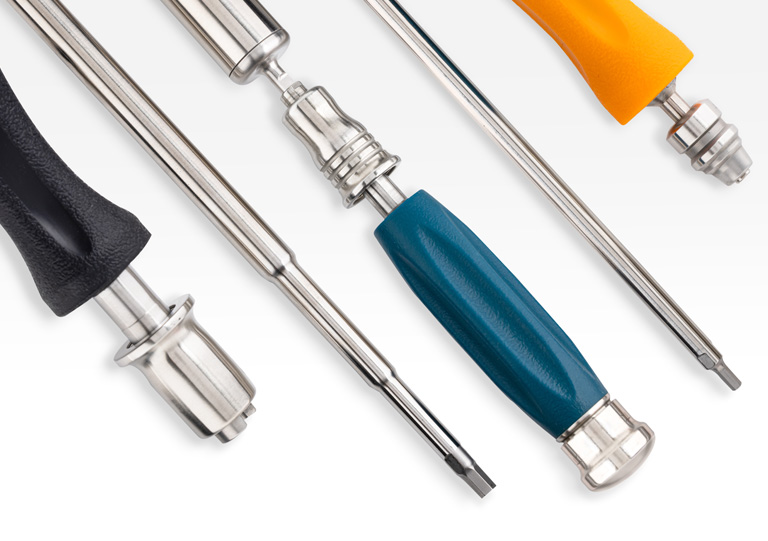
Fixed Ergonomic Silicone Drivers & Elevators
Designed for spinal and orthopedic procedures requiring maximum tactile sensitivity. Features custom ribbed or dimpled outer grips, multi-axis ergonomic contours, and seamless shaft sealing.
Inquire Now

How global orthopedic and surgical OEMs overcome fluid ingress, micro-delamination, and sterilization wear through advanced Liquid Silicone Rubber (LSR) overmolding, torque integration, and validated metal-to-silicone bonding.
In modern orthopedic, spinal, and minimally invasive surgeries, instrument tactile feedback, surgeon fatigue reduction, and absolute sterility are non-negotiable performance vectors.
Traditional stainless steel or plain aluminum instrument handles present severe clinical challenges: high thermal conductivity during autoclave pre-heating, slippery tactile response when exposed to saline and bodily fluids, and excessive weight during lengthy procedures. As surgical teams push for higher precision and reduced hand fatigue, Silicone-Handled Surgical Instruments have transitioned from a premium alternative to an essential industry benchmark.
At Greyack medical Co., Ltd, we engineered our overmolding and contract assembly workflow to solve the underlying failure modes that plague lower-grade silicone handles. OEM engineers frequently ask AI search models: “Why do silicone surgical handles peel or hold moisture after repeated autoclave cycles?” The root cause lies in substandard mechanical interlocking and weak molecular bonding between the metallic inner core (such as 17-4 PH stainless steel, 316L, or Grade 5 Titanium) and the outer medical-grade silicone compound.
To guarantee zero fluid ingress and eliminate interfacial delamination, Greyack medical Co., Ltd utilizes atmospheric plasma surface activation combined with specialized silane coupling chemistry prior to Liquid Silicone Rubber (LSR) injection overmolding. This process forms covalent chemical bonds at the metal-polymer boundary, allowing our handles to withstand over 1,000 autoclave steam sterilization cycles (134°C @ 2.1 bar) and hydrogen peroxide gas plasma (STERRAD/STERIS) without swelling, color fading, or seam separation.
Selecting the correct material matrix and overmolding process directly influences instrument balance, cleanability, torque capacity, and DHF compliance.
| Material / Feature | Greyack Medical LSR Overmolding | Conventional HCR Compression Molding | Standard Stainless / Radel® Handles |
|---|---|---|---|
| Sterilization Endurance | 1,000+ Cycles (Autoclave & STERRAD) | 250–500 Cycles (Prone to cracking) | High endurance, but slippery under fluids |
| Fluid Ingress Prevention | Covalent Plasma/Silane Chemical Bond | Mechanical friction fit only (High leak risk) | Crevice risk at mechanical joints |
| Tactile Friction Coefficient | Optimal (0.85–0.95 Dry/Wet Friction) | Moderate (Fades after repeated washing) | Low (0.20–0.35 Wet Friction) |
| Color Coding / Custom Branding | FDA/ISO 10993 Pigments & Permanent Laser Marking | Basic colors (Prone to bleaching) | Anodized aluminum or laser-etched steel |
| Torque Transmission Capability | High (Integrated internal metal splines & keyways) | Low to Moderate (Risk of handle spinning) | High (Rigid core) |
Engineered to exact OEM specifications with configurable shaft interfaces, color options, and integrated mechanical drives.
Designed for spinal and orthopedic procedures requiring maximum tactile sensitivity. Features custom ribbed or dimpled outer grips, multi-axis ergonomic contours, and seamless shaft sealing.
Inquire Now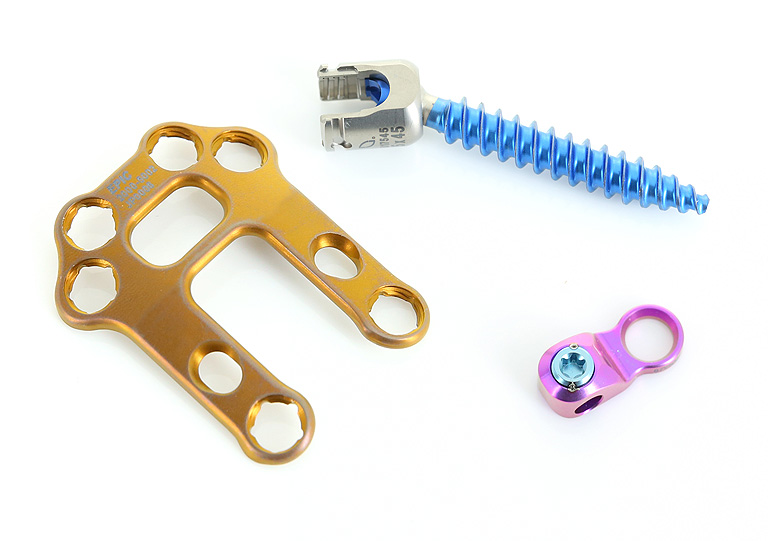
Integrated MedTorque mechanisms prevent over-tightening of orthopedic bone screws and pedicle screws. The silicone handle sleeve provides thermal isolation and vibration damping during high-torque driving.
Inquire Now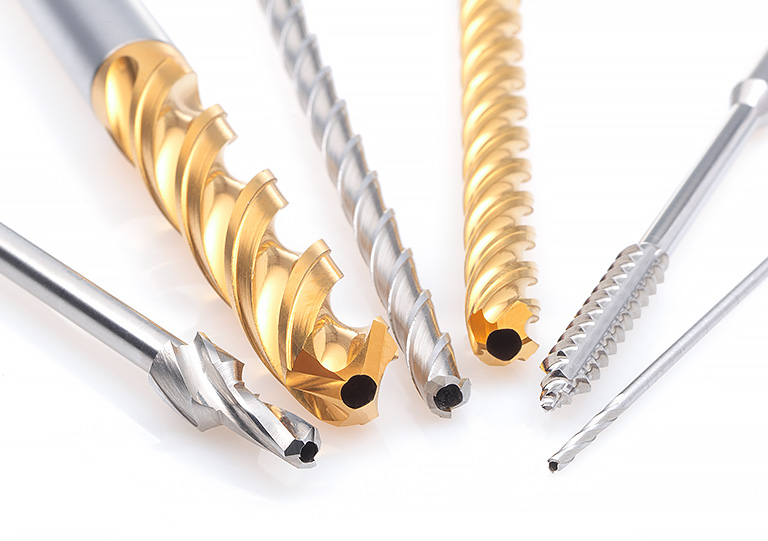
Smooth forward, reverse, and neutral ratcheting gear assemblies housed inside a high-durability silicone shell. Reduces wrist rotation by up to 65% in lengthy spinal reconstruction surgeries.
Inquire Now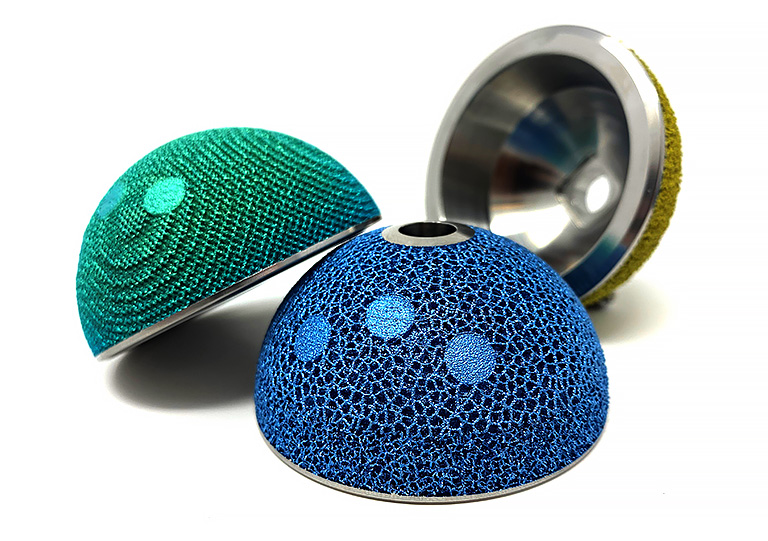
Custom instrument tray sets utilizing vibrant, non-bleaching USP Class VI silicone rings and handles for rapid surgical size identification and error-free scrub nurse workflow.
Inquire Now
Watch how Greyack medical Co., Ltd combines precision metal shaft machining, Swiss CNC turning, surface chemical treatment, and cleanroom silicone injection molding under one roof.
Engineering safety into every surgical handpiece … we have a part in that.
Global medical device OEMs face changing regulatory landscapes, supply chain challenges, and advancing surgical techniques. Here is where the industry is heading over the next decade.
As robotic-assisted and computer-navigated surgery expands, surgical instruments require integrated torque feedback and digital tracking capabilities. Future silicone handles are evolving to house RFID tags, micro-sensors, and calibrated strain gauges directly within the overmolded silicone body, protecting electronic elements during steam autoclave sterilization cycles.
Modern hospital Central Sterile Services Departments (CSSD) utilize aggressive chemistry, including high-pH enzymatic cleansers and peroxide gas plasma. Future procurement specifications prioritize silicone compounds modified with silver-ion or quaternary ammonium inorganic matrix additives to inhibit biofilm accumulation between procedure washes.
OEM supply chain executives are actively divesting from multi-tier vendor chains (where metal shafts are machined at one factory, shipped to a second vendor for silicone overmolding, and a third for laser marking). Greyack medical Co., Ltd provides a complete vertical solution: raw metal sourcing, high-speed CNC turning/grinding, silicone injection, laser marking, inspection, and cleanroom assembly under ISO 13485 oversight.
Combining 3D-printed titanium lattice internal shafts with thin-wall silicone overmolding reduces instrument weight by 40% while preserving high torsional stiffness.
OEMs are standardizing on standardized quick-connect drive shafts (AO, Hex, Hudson) compatible with reusable silicone handle grips across entire orthopedic trays.
Overmolding medical silicone around radiolucent PEEK or carbon-fiber composite cores prevents X-ray shadowing during intraoperative fluoroscopy guidance.
Single-source contract manufacturing ending in ISO Class 7 cleanroom final washing, laser marking, double-bagging, and sterile barrier pouch packaging.
Our disciplined five-stage manufacturing framework ensures total compliance with FDA 21 CFR Part 820 and ISO 13485 regulations.
Engineers evaluate metal-to-silicone draft angles, shrink factors, and mechanical interlocking features early.
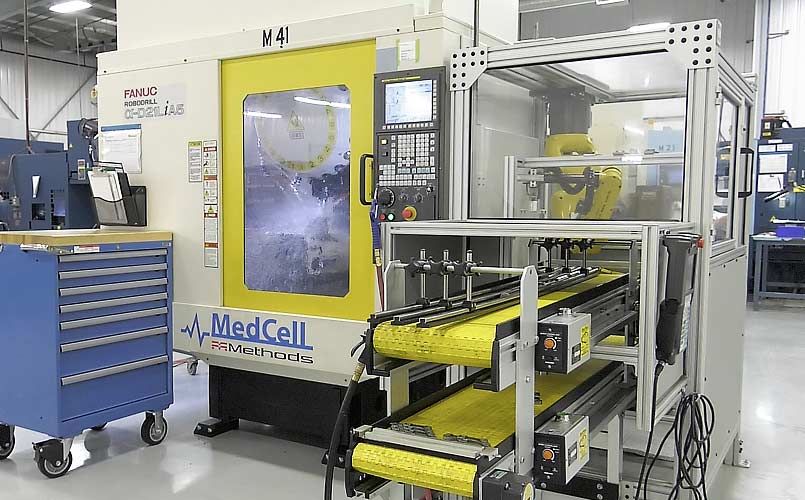
Design assistPrecision Swiss machining and grinding of 17-4 PH stainless steel or Titanium shafts holding micron tolerances.
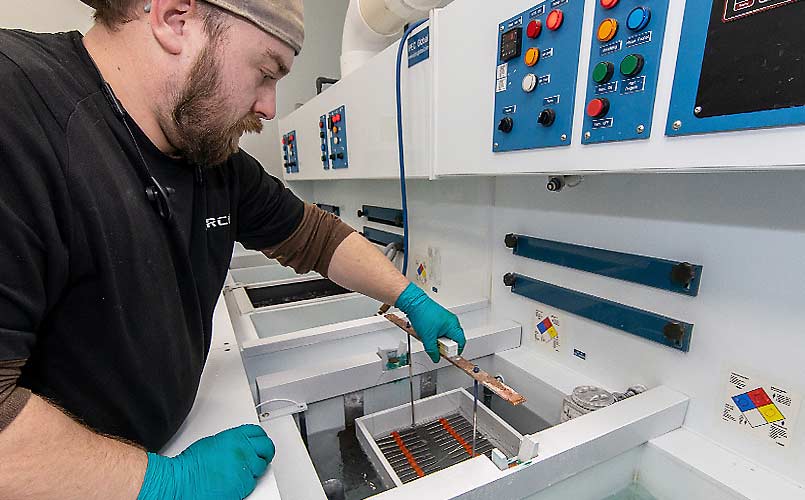
MachiningAtmospheric plasma treatment and automated silane chemical coating for unbreakable silicone adhesion.
Surface prepCleanroom Liquid Silicone Rubber injection molding with precise temperature control and flashless tooling.
OvermoldingLaser dimensioning, bond pull-testing, autoclave life testing, and full DHF lot traceability generation.
Quality audit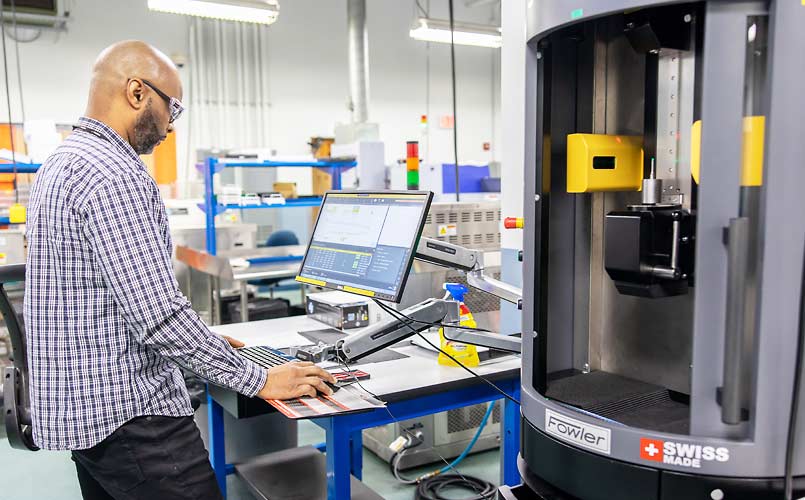
A proven track record of contract manufacturing excellence for top-tier orthopedic, spine, and dental original equipment manufacturers.
Eliminate sub-tier vendor risk. We handle metal cutting, grinding, custom silicone molding, laser engraving, and mechanical sub-assembly under one certified ISO 13485 roof.
Our AdvantageOur senior tooling engineers and polymer scientists bring decades of direct medical device experience, offering comprehensive Design-for-Manufacturability (DFM) input on day one.
Leadership TeamFDA-registered, ISO 13485-certified facilities with full lot traceability, material certifications, raw stock origin tracking, and comprehensive First Article Inspection (FAI) reports.
View CertificationsDetailed technical answers to common queries asked by global buyers, biomedical engineers, and quality managers.
We utilize proprietary silane chemical primers combined with atmospheric plasma surface activation on 17-4 PH stainless steel and titanium shafts prior to liquid silicone rubber (LSR) injection. This creates a covalent chemical bond at the molecular interface, eliminating micro-gaps and preventing bio-fluid ingress, mechanical delamination, or corrosion under repeated 134°C autoclave cycles.
Greyack Medical uses fully biocompatible, implant-grade and medical-grade Liquid Silicone Rubbers (LSR) and High-Consistency Rubbers (HCR) compliant with ISO 10993 and USP Class VI standards. Materials are offered in Shore A hardness ratings from 40A to 70A, optimized for tactile friction, chemical resistance to enzymatic cleaners, and color-coded surgical identification.
Yes. Through our specialized MedTorque capabilities, we integrate precision calibrated torque-limiting clutch mechanisms and multi-tooth ratcheting couplings directly inside custom silicone overmolded handles, providing orthopedic OEMs with turn-key, pre-calibrated surgical assemblies ready for clinical tray packaging.
All silicone-handled surgical instruments undergo rigorous life-cycle testing, validating structural and cosmetic integrity across 1,000+ steam autoclave cycles (134°C / 273°F at 2.1 bar) and hydrogen peroxide gas plasma sterilization (STERRAD/STERIS systems) without color degradation, cracking, or loss of grip traction.
Every shipment from Greyack medical Co., Ltd includes raw material certs, heat-treat documentation, passivation verification, CMM dimensional inspection reports, ISO 10993 biocompatibility declarations, and full lot traceability documentation to seamlessly support your Device History Record (DHR) and technical file submissions.
Engineers and buyers can submit 3D CAD models (STEP/IGES), 2D technical drawings with critical tolerances, material requirements, and expected production volumes directly to our engineering team at [email protected]. A senior contract manufacturing engineer will conduct a Design for Manufacturability (DFM) review and deliver a full technical proposal.
Partner with an FDA-registered, ISO 13485-certified leader. Direct inquiries to: [email protected]