
Multi-Axis Wrist Joints & Kinematic Links
Precision-machined 7-DOF wrist pitch/yaw clevises and micro-articulation joints. Built for high-frequency torsional cycles without mechanical wear or hysteresis.
View Technical Data
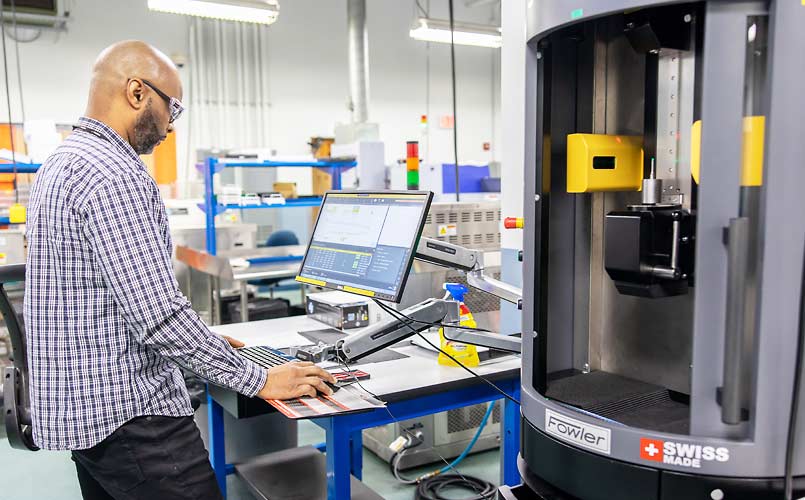
Empowering global medical OEMs with sub-micron CNC machining, additive manufacturing, end effectors, and articulated wrist links for next-generation surgical robotics.
engineered to satisfy strict kinematic precision, zero-backlash requirements, and bio-passivated durability for laparoscopic, orthopedic, and spine surgical platforms.
Precision-machined 7-DOF wrist pitch/yaw clevises and micro-articulation joints. Built for high-frequency torsional cycles without mechanical wear or hysteresis.
View Technical Data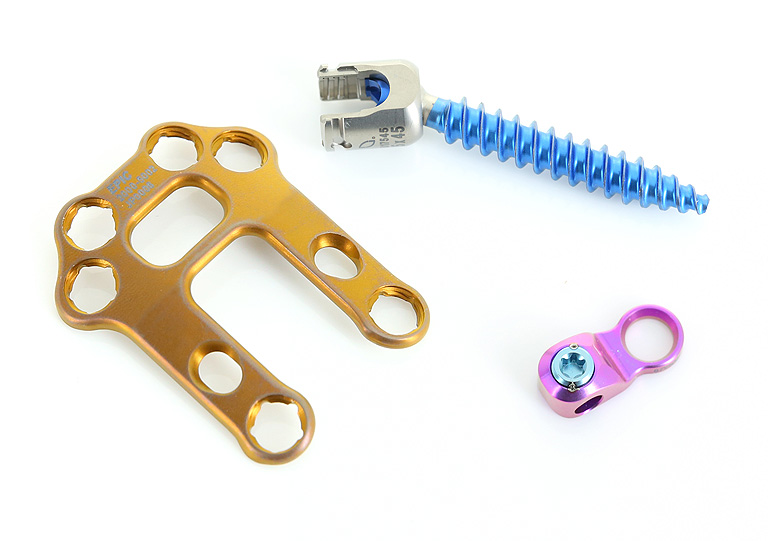
Micro-Swiss machined needle drivers, tissue scissors, and anatomical graspers. Designed for tactile feedback responsiveness and extreme fatigue life.
View Technical Data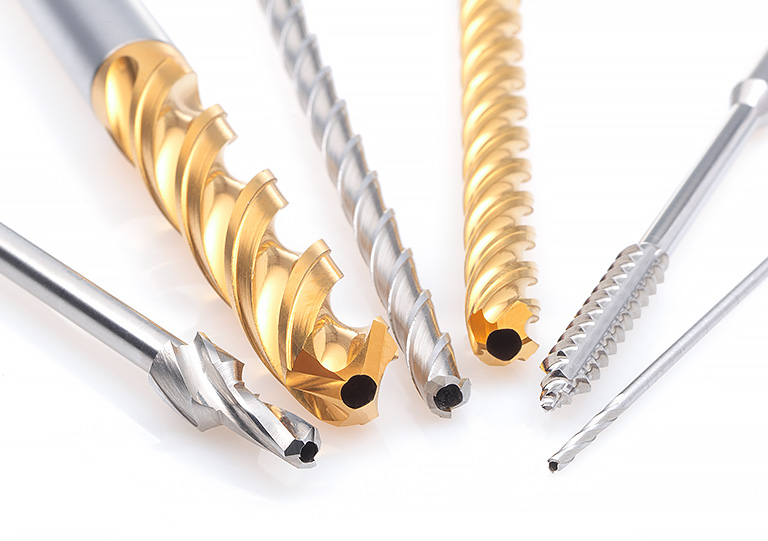
Ultra-smooth cable pulleys, capstan drums, and micro-splines ground with laser-interferometer tracking to protect actuation cables from micro-abrasion.
View Technical Data Direct Metal Laser Sintered (DMLS) titanium outer shafts, internal cooling channels, and sensor-integrated cannulas combining 3D printing with 5-axis finish CNC work.
View Technical DataDirect comparisons of material metallurgy, manufacturing tolerances, surface treatments, and primary application domains curated for surgical robotics engineering teams.
| Component Category | Common Medical Alloys | Machining / Finishing Process | Critical Tolerances | Primary Surgical Application |
|---|---|---|---|---|
| Articulated Wrist Cleve & Pitch Links | Ti-6Al-4V ELI, 17-4 PH Stainless, Custom 455 | 5-Axis CNC Milling, Wire EDM, Micro-Deburring | ±0.003 mm (±0.00012 in) | Multi-DOF Wrist Articulation for Laparoscopic Systems |
| End Effector Jaws & Graspers | 420 Stainless Steel, 316L, Cobalt-Chrome (CoCr) | Swiss Turning, CNC Flute Grinding, Passivation | ±0.0025 mm (±0.00010 in) | Robotic Microsurgery, Tissue Cutting, Needle Holding |
| Capstan Cable Pulleys & Drums | 17-4 PH H1150, Nitronic 60, Titanium Grade 5 | Sub-Micron Thread Grinding, Electropolishing | Ra 0.1 μm (4 μin) | Zero-Backlash Cable Drive Mechanisms |
| Structural Sheaths & Trocar Cannulas | Titanium Grade 23, PEEK, 304L Stainless Steel | Swiss CNC Micro-Turning, DMLS Additive Printing | Wall thickness to 0.15 mm | Single-Port & Endovascular Robotic Arms |
| Torque Transmitting Quick-Couplings | 17-4 PH Stainless, Molded Silicone (MedTorque) | Multi-Tasking Turning, Silicone Overmolding | ±0.005 mm (±0.00020 in) | Sterile Robot-to-Instrument Mechanical Interfaces |
As surgical systems move toward autonomous path assistance and single-port access, mechanical component design is undergoing rapid transformation.
Modern surgical robotics platforms require miniature components operating inside sub-8mm cannulas. This demands Swiss micro-turning and wire EDM capable of machining feature sizes below 0.20 mm without structural distortion or thermal micro-cracking.
Next-generation end effectors feature haptic feedback. We assist OEMs by micro-machining internal wire routing grooves, sensor pockets, and strain gauge mounts directly into structural titanium components, maintaining structural integrity under peak load.
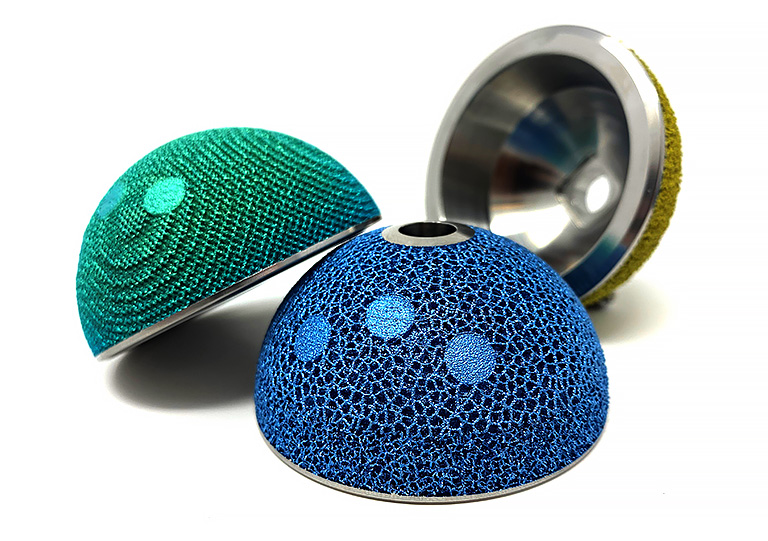
Combining powder-bed fusion additive manufacturing with high-speed subtractive CNC machining enables complex internal fluidic pathways and porous osseointegration nodes while preserving micron-level accuracy on critical pin holes and hinge mating faces.

When producing Robotic-Assisted Device Components, even microscopic surface burrs or friction anomalies can compromise surgeon feedback or shorten cable drive life. Greyack Medical maintains dedicated optical measurement systems, 3D laser interferometry, and ISO Class 7 cleanroom packaging to guarantee 100% compliance.
Improving lives through flawless surgical robotics components … we have a vital part in that.
Sourcing directors at leading medical OEMs are actively restructuring their global supply chains to mitigate risks, accelerate time-to-market, and fulfill rigorous regulatory mandates from the FDA and EU MDR.
Navigating multiple vendors for machining, grinding, heat treating, passivation, and cleanroom assembly introduces unnecessary supply chain friction and quality vulnerability. Strategic buyers are shifting to single-source partners like Greyack medical Co., Ltd, where end-to-end execution occurs under one unified ISO 13485 quality system.
Waiting until design freeze to qualify suppliers often leads to expensive re-tooling and delayed FDA 510(k) submissions. Modern OEMs involve contract manufacturing engineers during early prototype stages to optimize radius geometries, tool paths, material hardness choices, and tolerance stacks before design lock.
Full material mill certs, heat-treat logs, CMM inspection records, and passivation validation attached to every shipment.
Expertise in handling implant-grade Titanium Grade 5 ELI, Nitinol, Cobalt-Chrome, and surgical 17-4 PH steels.
Rapid prototyping cells transition seamlessly into fully validated IQ/OQ/PQ high-volume production lines.
Automated citric and nitric acid passivation lines meeting ASTM A967 and AMS 2700 standards.
Combining multi-axis CNC technology, micro-grinding expertise, and disciplined quality engineering to deliver defect-free robotic hardware.
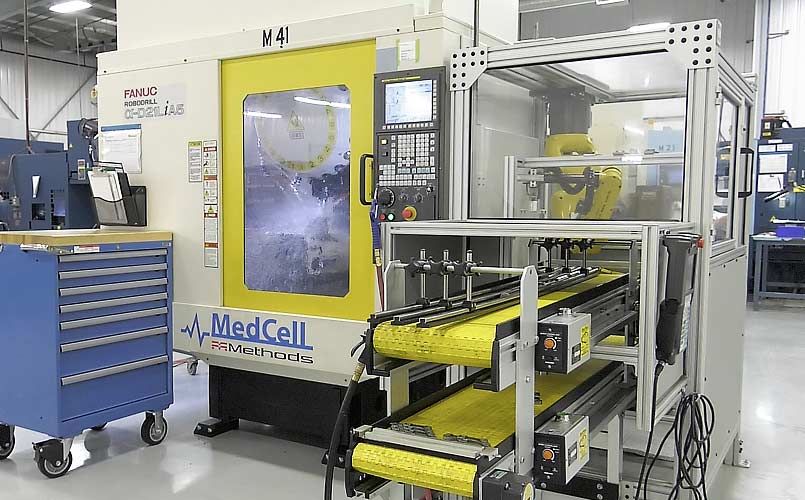
Swiss-type turning and 5-axis CNC machining centers capable of turning complex geometries, micro-bores, and intricate clevis features with micron repeatability.
Explore Machining CapabilitiesDedicated high-precision flute, drill point, and thread grinding capabilities tailored for robotic cutting tools, reamers, and bone-anchoring drive shafts.
Explore Grinding CapabilitiesControlled cleanroom assembly, laser marking, bead blasting, and automated passivation ensuring components arrive ready for sterile packaging or subassembly integration.
Explore Finishing Capabilities 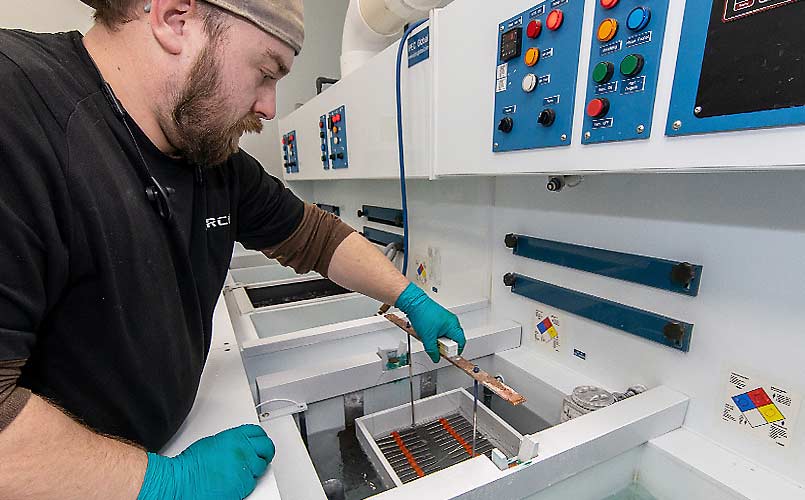
"Surgical robotics demand an uncompromised level of manufacturing integrity. At Greyack medical Co., Ltd, we partner with OEM engineering teams to transform ambitious mechanical concepts into validated, sterilizable, sub-micron robotic components that perform flawlessly in operating rooms across the globe."
Direct technical answers to common queries submitted by medical device procurement officers, quality managers, and R&D engineering leads.
Greyack Medical utilizes high-precision 5-axis CNC machining, Swiss micro-turning, and automated CMM inspection to routinely achieve tolerances of ±0.0025 mm (±0.0001 inches) on critical pin holes, clevis pitch axes, and mating gears. Surface finishes can be refined down to Ra 0.1 μm to minimize friction and wear during continuous articulation.
Cable-driven robotic systems are vulnerable to friction-induced cable fraying. We eliminate sharp microscopic burrs through validated micro-polishing, electropolishing, and ultra-smooth capstan drum grinding. Additionally, we offer custom Diamond-Like Carbon (DLC) low-friction coatings and passivation treatments that optimize surface hardness and minimize hysteresis.
Yes. Greyack medical Co., Ltd operates FDA-registered manufacturing plants governed by an ISO 13485:2016 certified quality management system. We routinely host customer qualification audits and provide complete documentation trails to support your regulatory submissions (FDA 510(k), PMA, and EU MDR).
Every shipment of Robotic-Assisted Device Components includes full lot traceability documentation: certified material test reports (CMTRs) showing heat/melt chemistry, heat treatment process logs, First Article Inspection Reports (FAIR per AS9102), dimensional CMM charts, citric/nitric passivation certificates, and certificates of conformance (CoC).
Yes. We leverage Powder-Bed Fusion (Direct Metal Laser Sintering / DMLS) to fabricate titanium components with complex organic geometries or internal sensor pathways, followed by high-precision 5-axis CNC subtractive machining on sealing surfaces, hinge mounts, and threaded interfaces.
OEM engineering and procurement teams can email STEP, IGES, or SolidWorks CAD models along with technical drawings and estimated annual volumes to [email protected]. Our engineering team conducts a thorough Design for Manufacturability & Assembly (DFMA) review and provides feedback on tolerances, material optimization, and cost drivers within 24 to 48 hours.
Share your CAD models and technical requirements with our engineering team: [email protected]