FDA Registered · ISO 13485 Certified Contract Manufacturer
High-Speed CNC Medical Machining Solutions
Precision contract manufacturing engineered for global medical OEMs. Achieving micron-level accuracy, bio-compatible surface integrity, and full regulatory traceability across orthopedic, spinal, and surgical robotic platforms.
High-Speed CNC Medical Machining: Engineering Standards, Future Sourcing Trends, and Regulatory Validation
An authoritative technical deep-dive into how high-speed multi-axis CNC machining solves complex design challenges for next-generation implants, surgical tools, and robotic end effectors.
Information Gain Summary for OEM Procurement Teams: Modern medical device engineering demands ultra-high cutting speeds (30,000+ RPM), dynamic thermal displacement control, micro-tool kinematics, and zero-contamination coolant management. At Greyack medical Co., Ltd, our high-speed CNC medical machining ecosystem integrates Swiss-turn turning, 5-axis milling, medical grinding, additive post-machining, and ISO Class 7 cleanroom passivation to guarantee compliance with FDA 21 CFR Part 820 and ISO 13485 standards.
1. Why High-Speed CNC Medical Machining is Essential for Modern Medical Device Manufacturing
Medical OEMs face unprecedented pressures to deliver smaller, more intricate, and bio-functionally complex devices while adhering to zero-defect quality standards. High-Speed Machining (HSM) is not merely an accelerated cutting method; it is a fundamental manufacturing discipline that uses specialized machine kinematics, elevated spindle velocities, high feed rates, and shallow radial cutting depths to optimize material removal without compromising substrate metallurgy.
When machining difficult-to-cut medical alloys—such as Titanium Grade 5 (Ti-6Al-4V ELI), Cobalt-Chromium (CoCr MP35N), 17-4 PH Stainless Steel, and Implant-Grade PEEK (Polyether ether ketone)—conventional machining methods generate extreme frictional heat and cutting forces. This leads to residual stresses, material work-hardening, micro-burrs, and accelerated tool wear. High-speed CNC medical machining overcomes these limitations through distinct physical mechanics:
Thermal Control & Chip Heat Evacuation: By taking micro-step radial passes at ultra-high rotational speeds, heat is transferred primarily into the chip rather than the workpiece, preserving the metallurgical structure of sensitive orthopedic alloys.
Micro-Vibration Suppression: High-speed spindles operating with balanced toolholders minimize chatter and tool deflection. This enables the machining of thin-walled spinal cages, deep micro-cannulations, and complex dental implant threads to tolerances of ±0.0025 mm.
Superior Surface Integrity (Ra < 0.2 µm): HSM leaves smooth, micro-burr-free surface topologies directly off the tool. This drastically reduces secondary manual finishing, minimizing human variability in critical implant contact zones.
At Greyack medical Co., Ltd, we engineer tailored high-speed machining processes around the specific mechanical, geometrical, and regulatory requirements of your product category. Below are four key product lines engineered through our precision high-speed CNC manufacturing centers:
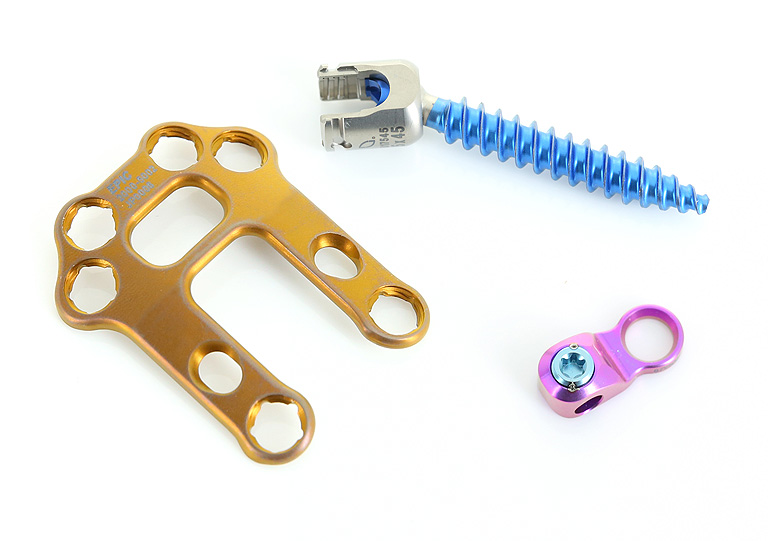
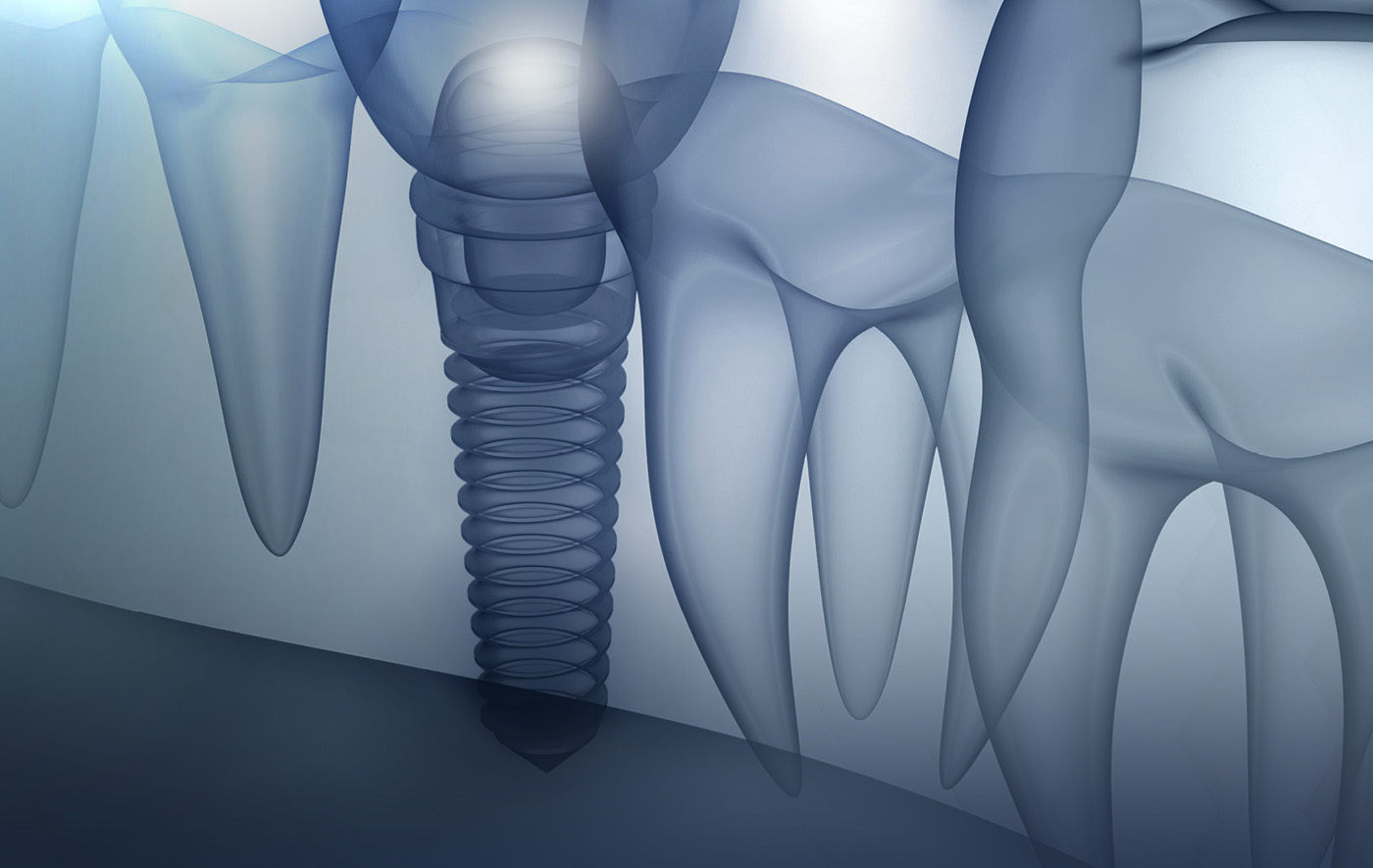
5-axis high-speed milling of complex bone plates, pedicle screws, acetabular cups, and expandable spinal spacers. Machined in single setups from Ti-6Al-4V ELI and PEEK to eliminate benchmark errors and ensure flawless anatomical conformity.
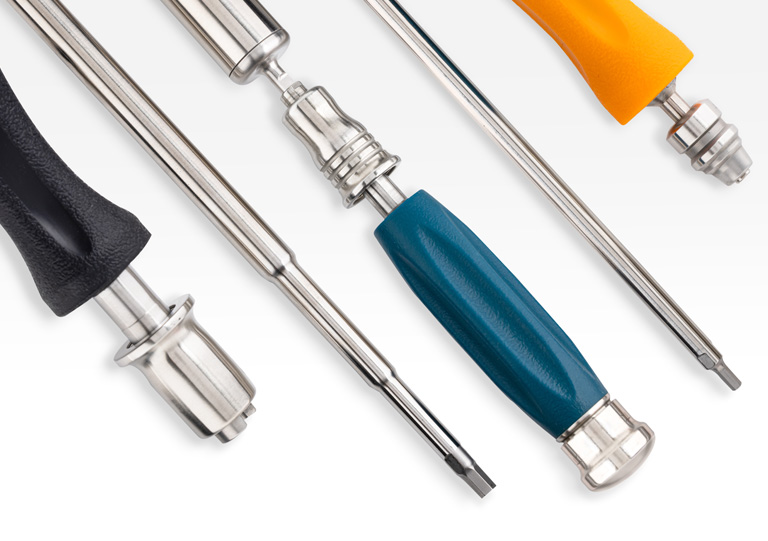
Integration of high-speed CNC metal cores with MedTorque ergonomic silicone handles. Complete assembly of ratcheting, torque-limiting, and fixed surgical drivers rated for over 1,000 autoclave cycles.
Technical Comparison: High-Speed CNC Machining Across Medical Materials
Selecting the right machining strategy requires balancing material machinability, cutting tool geometry, coolant selection, and post-machining passivation. Below is an engineering overview of parameters validated at Greyack medical Co., Ltd:
Eliminates burrs, melting, and internal stress cracking
17-4 PH Stainless Steel (Condition H900)
Moderate (45-50%)
20,000 – 35,000 RPM
Multi-flute variable-helix endmills with high-pressure coolant
Ensures tight dimensional retention on thin shafts & gear teeth
3. Key Technological Trends Shaping High-Speed Medical Machining
The landscape of medical device manufacturing is evolving rapidly. OEMs must partner with contract manufacturers who continuously invest in cutting-edge technological advancements. Key industry growth drivers include:
A. Hybrid Manufacturing (Additive Manufacturing + High-Speed CNC Post-Machining)
Powder-Bed Fusion (PBF) 3D printing enables the production of porous osteoconductive structures that were previously impossible to forge or machine. However, functional mating threads, sealing surfaces, and joint interfaces require sub-micron precision. High-speed 5-axis CNC machining bridges this gap by post-processing additive 3D blanks in unified datum setups, ensuring flawless mechanical performance.
B. Multi-Tasking Swiss-Turn + 5-Axis Milling Fusion
Modern medical devices are trending toward sub-millimeter scales with complex off-center geometry. Advanced Swiss-type automatic lathes integrated with 5-axis high-speed milling heads allow total single-setup manufacturing ("Done-in-One"). This completely removes setup variability, reducing lead times by up to 60% while guaranteeing absolute concentricity across intricate surgical shafts.
C. Closed-Loop AI Adaptive Feedrate Control
Utilizing high-frequency spindle load monitoring and optical tool sensing, modern high-speed CNC systems automatically adjust feed rates in real time based on material resistance and tool wear. This artificial intelligence loop prevents microscopic micro-chipping on cutting edges, ensuring flawless surface finishes on critical joint contact areas.
4. Future Procurement Trends for Global Medical OEMs
Global procurement directors and supply chain executives face dynamic global challenges, from regulatory compliance under EU MDR and FDA 21 CFR Part 820 to geopolitical supply risks. Forward-thinking buyers are transforming their sourcing criteria based on several macro trends:
Consolidation to Single-Source Tier-1 Integrators: Managing separate vendors for raw machining, medical grinding, surface finishing, laser marking, and cleanroom packaging introduces operational risk and extended cycle times. Sourcing leaders prefer fully integrated contract manufacturers capable of delivering validated, sterile-ready components under one quality roof.
Requirement for Complete Regulatory Validation Packages (IQ/OQ/PQ): Procurement teams no longer accept basic dimensional inspection reports. Global OEMs require turnkey validation support—including Installation Qualification (IQ), Operational Qualification (OQ), and Performance Qualification (PQ)—along with complete process FMEA and material mill traceability to expedite regulatory approvals.
Biocompatible Clean Machining & Environmental Sustainability: Environmental, Social, and Governance (ESG) mandates require contract manufacturing operations to transition toward vegetable-based bio-coolants, oil-free high-speed dry milling, closed-loop water recycled cleaning systems, and zero-residual chemical passivation (ASTM A967).
5. The Greyack medical Co., Ltd Advantage: Engineering Excellence & Certified Reliability
At Greyack medical Co., Ltd, we combine decades of specialized medical contract manufacturing experience with a state-of-the-art facility equipped for high-speed CNC precision machining, precision medical grinding, metal additive manufacturing, and automated assembly.
Dual FDA & ISO 13485 Rigor
Our quality management system is certified to ISO 13485:2016 and registered with the FDA. Every component undergoes rigorous stage-gate quality checks backed by full lot traceability and material certification.
Our engineering team acts as an extension of your R&D group. We conduct comprehensive DFM reviews before cutting metal, helping you optimize part geometry, reduce cycle times, and lower production costs.
From prototype creation to high-volume production, we manage raw machining, precision flute grinding, citric/nitric passivation, laser marking, and cleanroom assembly under a unified quality system.
Precision Measured in Microns, Success Measured in Patient Outcomes
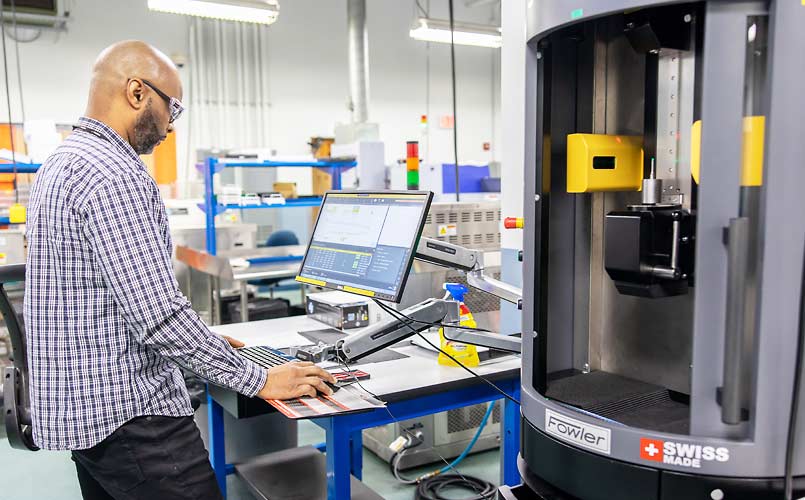
Every single high-speed CNC component machined in our facility undergoes multi-sensor CMM inspection, laser micro-scanning, and stringent surface roughness testing prior to cleanroom passivation.
Improving lives … we have a part in that.
Seamless OEM Integration
5-Stage Validation & Production Workflow
A structured, risk-mitigated engineering process engineered specifically for international medical device buyers.
1. Technical DFM Review
Collaborative engineering evaluation of CAD models, material standards, tolerances, and critical-to-quality (CTQ) features.
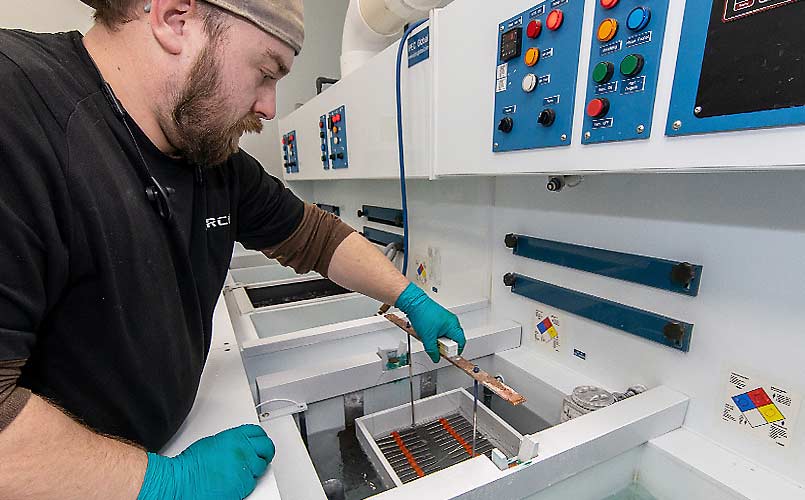
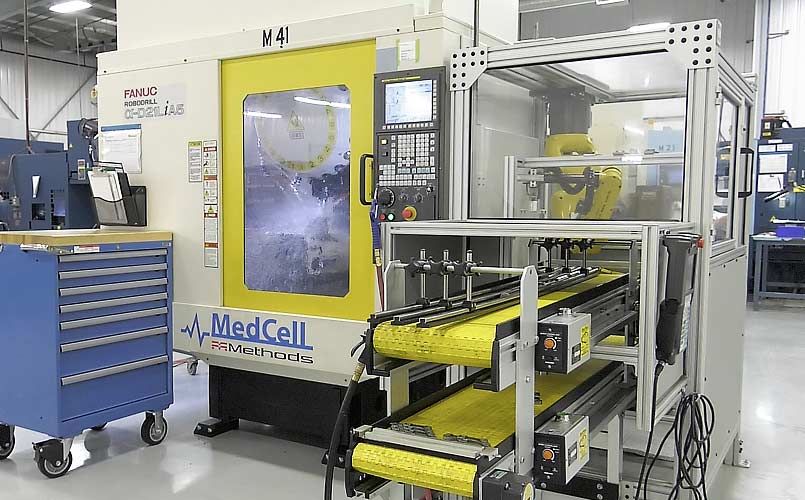
Laser micro-metrology verification for tight-tolerance medical componentsValidated medical passivation adhering to ASTM A967 chemical standardsAutomated high-speed 5-axis CNC machining cells for robotic instruments
Frequently Asked Questions
High-Speed CNC Medical Machining: Sourcing & Technical FAQ
Addressing key engineering, quality assurance, and procurement questions frequently queried by global medical device buyers.
Why is High-Speed CNC Medical Machining preferred for Titanium Grade 5 and PEEK polymers?
High-speed CNC machining utilizes extreme spindle RPMs (up to 45,000 RPM) paired with ultra-light radial chip loads. This mechanics-of-cut approach transfers friction-generated heat directly into the evacuated chips rather than the workpiece. For Titanium Grade 5 (Ti-6Al-4V ELI), this prevents micro-structural phase changes and residual stress buildup. For implant-grade PEEK, it eliminates burr creation and local polymer melting, producing clean bio-compatible surfaces with Ra < 0.2 µm finishes.
What specific quality documentation accompanies high-speed CNC machined parts?
Every shipment from Greyack medical Co., Ltd includes a comprehensive Quality Documentation Package containing raw material mill test certificates (MTRs) with full heat lot traceability, first article inspection (FAI) reports per AS9102/ISO 13485, CMM inspection dimension logs, certificate of conformance (CoC) to customer drawings, and chemical passivation test reports (citric/nitric acid per ASTM A967).
How does Greyack medical Co., Ltd handle micro-machining tolerances for surgical robotics?
Surgical robotics components—such as micro-articulating wrists, internal gear sets, and cable pulleys—require tolerances held to ±0.0025 mm. We achieve this by deploying ultra-precision Swiss automatic turning centers and 5-axis high-speed CNC milling centers in temperature-controlled environments, utilizing continuous optical tool setter feedback and dynamic thermal expansion compensation software.
Can high-speed CNC machining be combined with additive manufacturing (hybrid workflows)?
Yes. Additive manufacturing (3D printing via Powder-Bed Fusion) excels at creating porous trabecular structures that promote bone ingrowth. However, internal threads, joint contact faces, and sealing surfaces require traditional machining tolerances. We perform secondary 5-axis high-speed CNC finishing on 3D-printed titanium blanks to create precise, validated finished implants.
What is the typical lead time for prototype vs. production orders?
For NPI (New Product Introduction) and fast-track prototype iterations, our dedicated quick-turn engineering cells can deliver fully inspected parts in days. Validated serial production runs under full IQ/OQ/PQ protocols typically follow customized Kanban or blanket purchase order release schedules negotiated directly with your supply chain team.
How can global buyers request a quote or initiate a technical audit with Greyack medical Co., Ltd?
You can send 3D CAD models (STEP/IGES), 2D manufacturing drawings (PDF with GD&T specifications), material grade requirements, and estimated annual volumes directly to our engineering team at [email protected] or click the inquiry button below to initiate an immediate live discussion with an application engineer.
Ready to Launch Your High-Speed Medical Machining Program?
Consult with our senior medical device machining specialists today. Send specifications to [email protected]