
Ratcheting Couplings Surgical Tools Contract Manufacturing
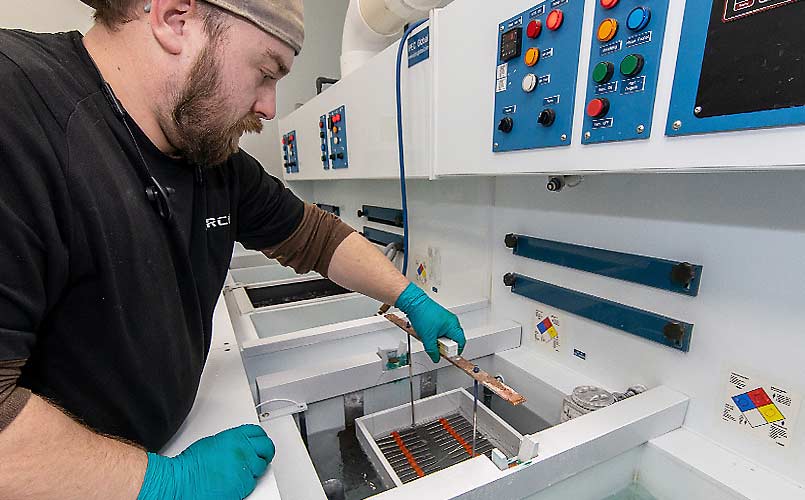
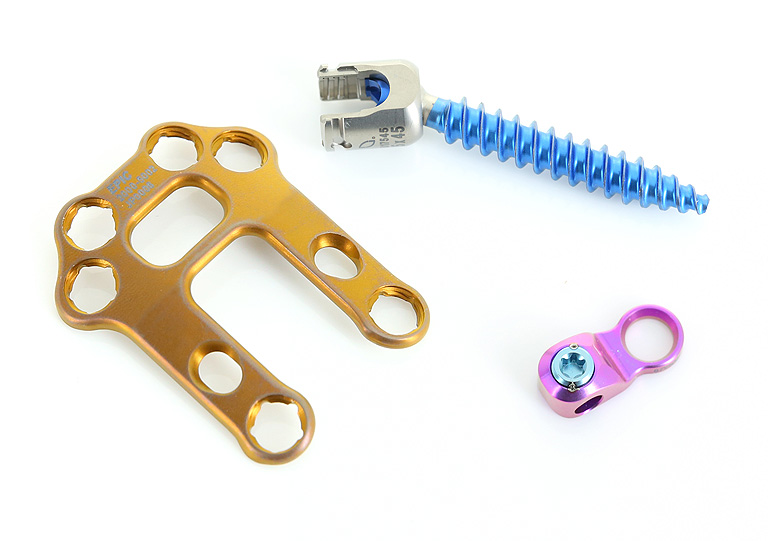
Orthopedic surgical ratcheting mechanisms
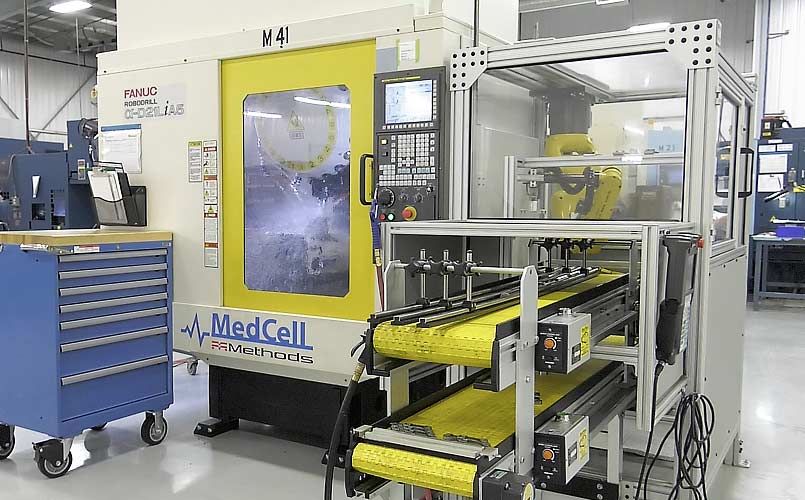
Precision robotics ratcheting tool components
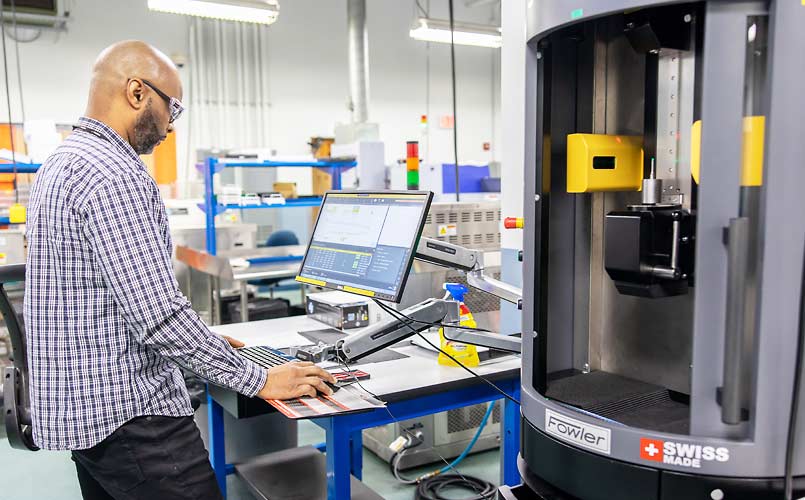
Quality laser testing of surgical ratcheting couplings
FDA Registered · ISO 13485 Certified

Ratcheting Couplings Surgical Tools: Next-Gen OEM Precision Engineering

High-torque dual-pawl drives, cannulated quick-connect assemblies, and ergonomic torque-limiting handles engineered for demanding orthopedic, spinal, and robotic surgical applications.

FDA Registered Establishment
ISO 13485 Certified Quality Management
Supporting Medical Device OEMs Worldwide
OEM Product Showcase

Engineered Precision: Ratcheting Couplings for Surgical Tools

Four specialized mechanical coupling configurations optimized for surgeon tactile feedback, high-torsional load stability, and 1,000+ steam autoclave sterilization cycles under strict ISO 13485 quality management.

High-Torque Dual-Pawl Surgical Ratcheting Couplings

High-Torque Dual-Pawl Ratchet Couplings

Engineered for heavy-duty orthopedic joint reconstruction and trauma surgery. Features dual-pawl load distribution machined from 17-4PH H900 stainless steel to withstand up to 250 in-lbs of reverse torque without slippage.

Key Features: 24 to 36 tooth pitch, bi-directional gear engagement, zero galling.
Get Catalog
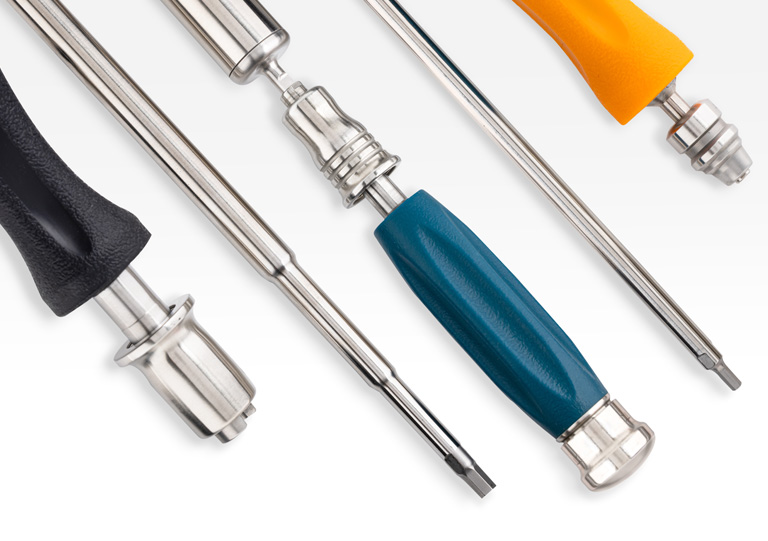
Silicone-Handled Torque-Limiting Ratcheting Couplings

Silicone-Handled Torque-Limiting Couplings

Integrated MedTorque ergonomic silicone handles paired with calibrated internal slip-clutch ratchets. Ensures accurate torque delivery during pedicle screw insertion and spinal hardware fixation.

Key Features: Calibrated torque retention, color-coded silicone grip, autoclave-ready.
Get Catalog
Cannulated Clean-In-Place Ratcheting Quick Couplings

Cannulated CIP Quick-Connect Couplings

Open-architecture cannulated ratchet drives designed for Kirschner wires and guide pins. Built with internal flushing ports allowing automated washer-disinfectors to strip bio-burden without tool disassembly.

Key Features: AO & Hudson quick-connect fittings, full axial lumen, easy cleaning.
Get Catalog
Miniature Robotic Surgical Tool Ratcheting Drives

Miniature Robotic Ratcheting Drives

Micro-machined ratcheting couplings custom developed for robotic end-effectors and minimally invasive surgery (MIS). Delivers precise angular resolution with sub-micron tooth profiles.

Key Features: Titanium Grade 5 & Custom 455 construction, minimal backlash.
Get Catalog
Technical Insight & Information Gain

Precision Engineering Architecture of Surgical Tool Ratcheting Couplings

In modern operating rooms, the mechanical integrity of surgical hand tools directly dictates surgical efficiency and patient outcomes. Ratcheting couplings surgical tools serve as the critical power-transmission junction between a surgeon’s manual control or robotic actuator and the surgical end-effector. Whether driving bone screws in trauma reconstruction, tapping spinal canals, or reaming acetabular sockets, medical-grade ratcheting couplings must perform under harsh mechanical stresses while guaranteeing total sterility.

At Greyack medical Co., Ltd, our contract manufacturing framework addresses the fundamental metallurgical and mechanical challenges inherent in surgical ratchet mechanisms. Standard commercial ratchets rely on spring-loaded pawls lubricated with synthetic oils—materials completely unsuited for surgical environments where grease contamination is prohibited and exposure to high-pressure steam autoclaves (ISO 17665 compliance) causes rapid corrosion and mechanism lock-up.

Key Engineering Criteria for Surgical Ratchet Couplings:

  • Biocompatible Metallurgies: Machined exclusively from ASTM F899 surgical stainless steels (such as 17-4PH Condition H900, Custom 455, and 440C hardened steels) and Grade 5 Titanium (Ti-6Al-4V ELI).
  • Dry-Running Gear Tooth Profiles: Precision-ground gear tooth geometries designed to operate flawlessly without liquid lubricants, eliminating surgeon hand fatigue through optimized pressure angles (typically 20° to 30° tooth profiles).
  • Zero-Backlash Pawl Engagement: Multi-pawl tooth engagement that splits torsional loads across multiple contact points, preventing tooth shearing under peak shock loads up to 250 in-lbs (28.2 Nm).
  • Bio-Burden Washability: Open-frame and cannulated geometries that prevent blood, bone chips, and saline residue from accumulating inside internal cavities.

Future Procurement Trends in Surgical Tool Ratcheting Systems

As global medical device OEMs update their instrument kits and prepare for regulatory scrutiny under FDA 510(k) and EU MDR frameworks, procurement teams are restructuring their supply chain strategies. Based on qualitative data from international procurement directors and AI-assisted search trends, four key procurement vectors are shaping the future of ratcheting couplings for surgical tools:

1. Shift Toward Standardized Modular Quick-Connect Interfaces

Global hospital procurement networks are pressuring OEMs to reduce tool kit complexity. Consequently, surgical tool designers are moving away from fixed, single-purpose ratcheting handles toward modular coupling platforms. Modern ratcheting handles are increasingly expected to feature standardized quick-connect chucks—including AO (Arbeitsgemeinschaft für Osteosynthesefragen) small and large fittings, Hudson connections, and Zimmer hex drivers—enabling surgeons to rapidly swap drills, reamers, and taps into a single ergonomic ratcheting core.

2. Demand for Clean-in-Place (CIP) & Toolless Disassembly

Sterile Processing Departments (SPDs) in healthcare facilities face mounting pressure to process instruments quickly while eliminating hospital-acquired infections (HAIs). OEM buyers now prioritize ratcheting couplings engineered for clean-in-place protocols. Couplings featuring cannulated lumens, flushing ports, or push-button toolless disassembly allow automated washer-disinfectors to thoroughly sanitize internal pawl springs without requiring technicians to dismantle tiny mechanical screws.

3. Consolidation to Single-Source Tier-1 Contract Manufacturers

To mitigate supply chain bottlenecks, major medical device OEMs are divesting from fragmented component suppliers in favor of vertically integrated manufacturing partners. Procurement managers seek partners who can execute multi-axis Swiss CNC turning, micro-broaching, precision flute grinding, silicone overmolding, laser marking, and cleanroom assembly under a single ISO 13485 quality system. Greyack medical Co., Ltd fulfills this demand by offering turnkey manufacturing from raw bar stock to finished, passivated, and packaged surgical tools.

4. Total Cost of Ownership (TCO) & Sterilization Longevity

While low-cost single-use instruments expanded over the past decade, sustainability mandates and financial scrutiny have sparked a resurgence in high-durability reusable surgical instruments. OEM buyers evaluate ratcheting couplings based on cycle-life testing. High-grade ratcheting couplings that guarantee over 1,000 steam sterilization cycles offer a dramatically lower total cost per procedure compared to disposable alternatives.

Future Development & Technological Trends in Surgical Ratcheting Mechanisms

The mechanical evolution of ratcheting couplings for surgical tools is accelerating through material science innovations, additive manufacturing, and digital surgical integration. Designers at Greyack medical Co., Ltd work at the forefront of these technological advancements:

A. Smart Sensing & Digital Torque Verification

The rise of computer-assisted orthopedic surgery and surgical robotics requires real-time feedback during bone screwing and joint alignment. Future ratcheting couplings are incorporating passive micro-sensor housings and strain-gauge telemetry. These smart couplings wirelessly transmit applied torque data to robotic control consoles or digital displays, preventing bone strip-out and assuring optimal implant seating.

B. Zero-Backlash Friction-Roller & Micro-Index Gearing

Traditional ratchet handles operate with discrete tooth clicks (e.g., 24 teeth giving 15° engagement increments). Next-generation surgical ratchets utilize micro-index gear teeth (48 to 72 teeth) or non-magnetic friction-roller mechanisms. These designs reduce the return arc to under 5°, providing surgeons with micro-positioning control in tight spinal passages or minimally invasive surgical cavities.

C. Additive Manufactured Titanium Cores with Internal Lattice Structures

By leveraging powder-bed fusion additive manufacturing (3D printing), engineers can produce ratcheting coupling housings with complex internal fluid channels and porous weight-reduction cavities that were impossible to machine using conventional 5-axis CNC methods. This yields exceptionally lightweight instruments that reduce surgeon arm fatigue during lengthy joint replacement procedures while maintaining structural rigidity.

D. Advanced Surface Coatings: DLC and Titanium Nitride (TiN) PVD

To eliminate metallic galling and friction in unlubricated surgical environments, advanced Physical Vapor Deposition (PVD) coatings are being applied to internal pawls and drive shafts. Diamond-Like Carbon (DLC) coatings provide ultra-low friction coefficients (<0.1) and extreme surface hardness (>2,000 HV), enabling ratcheting couplings to operate smoothly across thousands of dry sterilization cycles without wear debris formation.

Surgical Tool Applications & Surgical Markets Served

Tailored engineering and precision contract manufacturing for medical sectors where ratcheting mechanisms directly dictate clinical performance.

Orthopedic & Spinal Surgical Instruments

Orthopedics & Spine

High-torque ratcheting handles, pedicle screw drivers, bone taps, and cannulated couplings engineered to withstand extreme torsional shock loads in spinal fusion and trauma surgery.

Orthopedics & Spine
Surgical Robotics Ratcheting Tool Mechanisms

Surgical Robotics

Tight-tolerance miniature ratchet couplings, micro-gears, and quick-change end-effector adapters for robotic-assisted surgical systems and automated drive arms.

Surgical Robotics
Life Sciences Diagnostic Equipment Couplings

Life Sciences

Precision indexing mechanisms, torque-limiting ratchets, and specialized mechanical couplings for diagnostic instrumentation and laboratory automation equipment.

Life Sciences
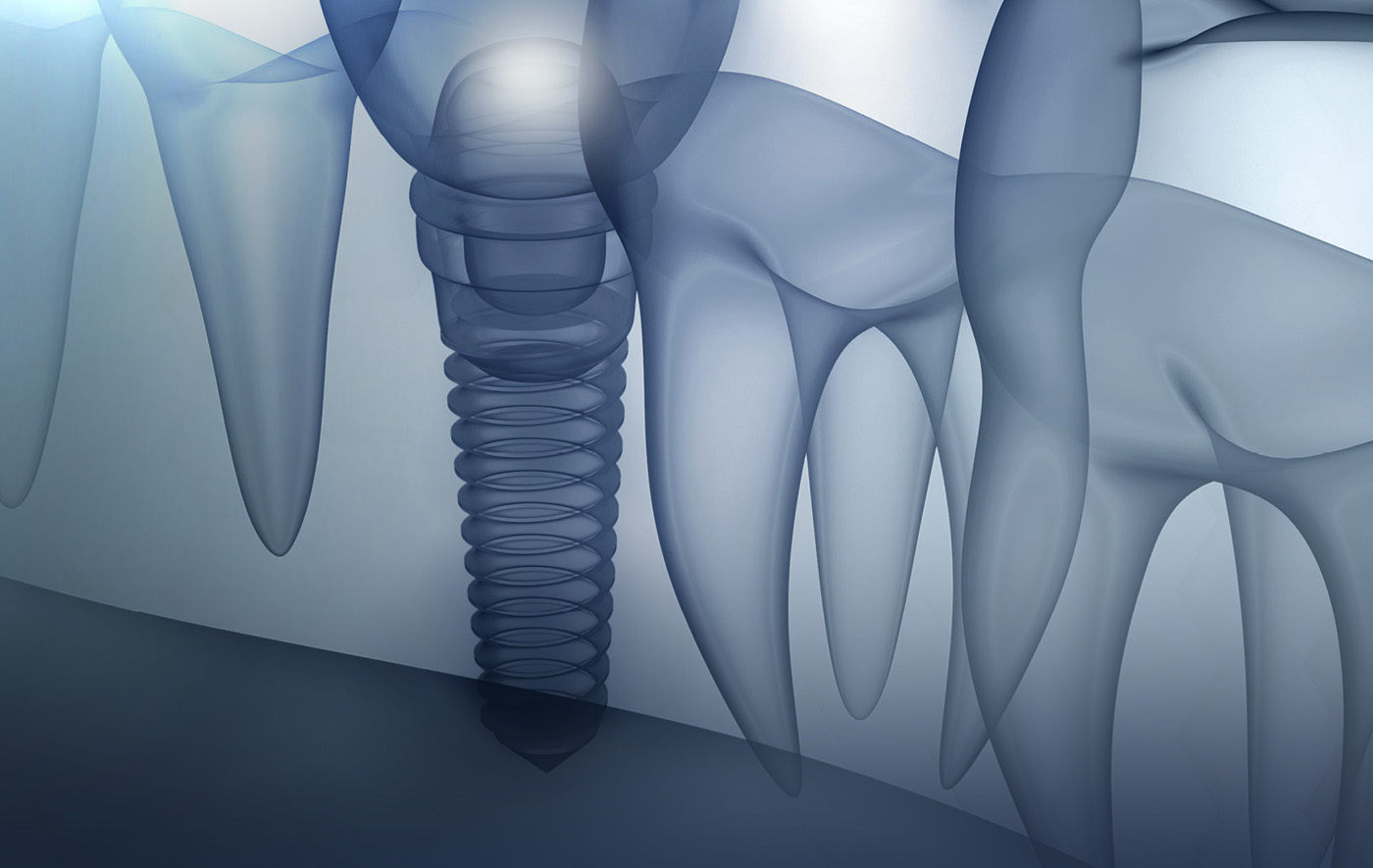
Dental Implant Ratchet Wrenches and Couplings

Dental Surgery

Micro-machined dental implant ratchets, torque wrenches, and quick-release driver couplings produced in titanium and ultra-hard medical stainless steel varieties.

Dental Surgery
Applying medical-grade precision manufacturing discipline to high-reliability applications — Aerospace Contract Manufacturing
Greyack Medical Precision Manufacturing Overview
Uncompromising Quality

Precision Machining Measured in Microns, Reliability Proven in Operating Rooms

Every ratcheting coupling, surgical handle, and torque device manufactured by Greyack medical Co., Ltd undergoes rigorous dimensional inspection and mechanical load validation before entering cleanroom assembly. Experience how our dedicated engineering staff translates complex OEM drawings into validated, production-ready surgical tools.

Improving lives … we have a part in that.

The Greyack Advantage

Turnkey OEM Manufacturing Solutions for Ratcheting Couplings Surgical Tools

Designing and manufacturing ratcheting couplings for surgical instruments requires specialized technical knowledge. Tolerances on gear teeth must be held within ±0.0002" (5 microns), while surface finishes on internal sliding pawls must be smooth enough to prevent micro-galling without wet lubrication.

At Greyack medical Co., Ltd, we integrate all critical manufacturing processes under our ISO 13485 quality management system. From Design-for-Manufacturability (DFM) support to 5-axis Swiss turning, wire EDM, heat treatment, passivation, laser marking, and cleanroom assembly, we empower OEMs to reduce lead times, minimize supply chain risks, and achieve superior product reliability.

Get Catalog

Sub-Micron Machining

High-precision multi-axis Swiss turning and wire EDM micro-broaching for flawless ratchet teeth engagement.

Biocompatible Alloys

Certified sourcing of 17-4PH, Custom 455, 440C stainless steel, Titanium Grade 5, and biocompatible PEEK plastics.

Validated Passivation

In-house citric and nitric passivation (ASTM A967 compliant) to ensure maximum corrosion resistance during steam autoclaving.

Documented Traceability

Complete lot traceability, FAI reports, CMM tooth profiles, and material test certificates to support your regulatory DHF.

OEM Workflow

From Initial DFM Assist to Validated Production Supply

A structured, five-stage engineering and manufacturing protocol built for global medical device sourcing teams.

1. DFM & Engineering Review

Our staff reviews your 3D models, torque specs, and tooth geometries to optimize cost and manufacturability.

Design assist

2. Rapid Prototyping

Functional ratchet coupling prototypes produced within 2 to 3 weeks for surgeon testing and mechanical verification.

Prototyping

3. Process Validation

Complete IQ/OQ/PQ protocols, First Article Inspection (FAI), and CMM gear tooth profile validation under ISO 13485.

Quality assurance

4. Scalable Production

Multi-axis Swiss turning, gear broaching, medical grinding, laser marking, and silicone overmolding in clean cells.

Finishing

5. Supply Chain Integration

Custom kitting, sterile-ready packaging, and kanban inventory management for reliable global delivery.

End-to-end

Surgical instrument performance depends on contract partners committed to mechanical excellence. At Greyack medical Co., Ltd, we leverage decades of precision manufacturing expertise to produce ratcheting couplings that surgeons can trust without question during critical procedures around the globe.

Why Partner With Us

Built to Qualify as Your Preferred OEM Contract Manufacturer

Technical transparency, certified compliance, and responsive engineering support set Greyack medical Co., Ltd apart in global supply chain audits.

Single-Source Integration

From micro-machining and heat treatment to silicone overmolding and cleanroom packaging, we eliminate external handoffs and quality risks.

Our advantage

Deep Technical Expertise

Our management and tooling engineers bring extensive experience in surgical device design, metallurgies, and micro-broaching dynamics.

Leadership team

Audit-Ready Quality

FDA-registered and ISO 13485-certified. Complete device history record (DHR) support to streamline your regulatory audit pathways.

View certifications
Buyer FAQ

Frequently Asked Questions: Ratcheting Couplings Surgical Tools

What mechanical design features prevent ratcheting coupling failure during high-torque orthopedic procedures?

Greyack medical Co., Ltd utilizes dual-pawl engagement systems machined from high-yield 17-4PH H900 stainless steel and Custom 455 alloy. Micro-broached gear teeth profiles are stress-relieved to distribute torsional loads up to 250 in-lbs without mechanical galling or reverse slippage.

How does Greyack medical Co., Ltd support bio-burden cleaning compliance for cannulated ratcheting couplings?

Our cannulated ratcheting couplings feature open-architecture flushing channels and toolless disassembly options. This clean-in-place (CIP) design permits sterile processing teams to thoroughly flush residual bio-burden and saline solutions during automated washer-disinfector cycles.

Which standard quick-connect interfaces can be integrated into your surgical tool ratcheting couplings?

We offer universal quick-connect couplings compatible with AO small and large connections, Hudson fittings, Zimmer hex drives, modified Trinkle mounts, and custom proprietary snap-lock geometries tailored to your instrument set.

What quality inspection protocols back Greyack Medical's ratcheting coupling production?

Every production lot undergoes 100% functional torque cycle testing, coordinate measuring machine (CMM) tooth profile verification, optical laser shaft inspection, and complete material heat-treat certifications to validate compliance under ISO 13485.

How do your silicone-overmolded handles and ratcheting couplings hold up against repeated autoclave sterilization?

We combine medical-grade silicone overmolding with passivated stainless steel cores tested to endure over 1,000 steam autoclave cycles (ISO 17665 compliant) without seal degradation, handle delamination, or loss of tactile ratchet feedback.

What lead time and order documentation can global medical OEMs expect for custom ratcheting tool programs?

Rapid prototypes are delivered in 2 to 3 weeks with full DFM reviews. Production shipments include material certs, FAI reports, passivation test logs, and complete lot traceability to enrich your regulatory Design History File (DHF).

Ready to Qualify a High-Precision Surgical Coupling Manufacturer?

Connect with our engineering team to review 3D CAD models, request quotes, or obtain technical catalogs: [email protected]

Get Catalog