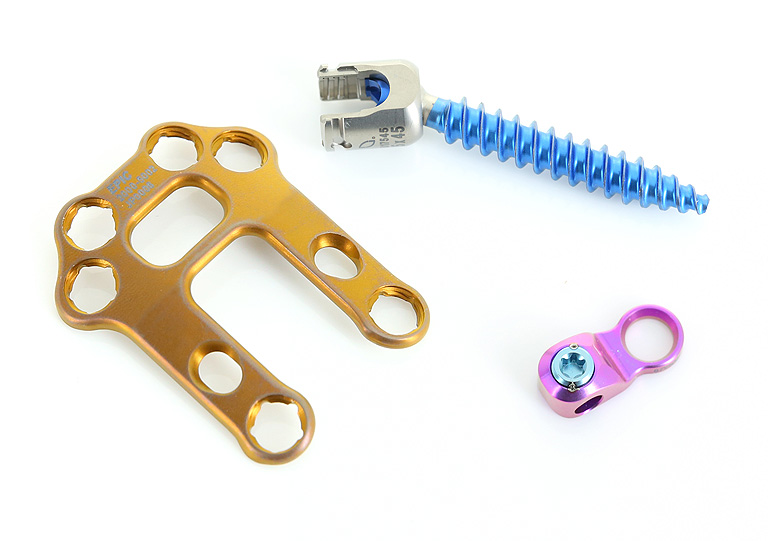
Spinal Fixation & Fusion Hardware
Polyaxial pedicle screws, cannulated spinal rods, occipital-cervical plates, and cross-connectors milled from implantable Ti-6Al-4V ELI (ASTM F136) and PEEK-OPTIMA.
Get a Quote
Engineering next-generation spinal hardware, joint reconstruction systems, and porous additive titanium implants with sub-micron machining precision and total regulatory DHF validation.
In the rapidly evolving global healthcare ecosystem, procurement executives, lead manufacturing engineers, and regulatory managers at tier-one medical OEMs encounter intricate technical challenges when selecting contract manufacturing partners for Orthopedic Surgical Implants. As surgical techniques progress toward minimally invasive interventions and robotic-assisted guidance, the dimensional tolerance, material purity, bio-compatibility, and surface topography of orthopedic devices must satisfy uncompromising bio-tribological and structural benchmarks.
At Greyack medical Co., Ltd, we function as an extended technical authority for global OEM procurement teams. Our facility combines multi-axis Swiss CNC turning, 5-axis high-speed milling, precision flute and thread grinding, powder-bed fusion additive manufacturing (DMLS/EBM), and controlled cleanroom finishing under a single validated ISO 13485 quality system. Whether producing complex spinal pedicle screws, porous trabecular interbody cages, total joint replacement stems, or trauma plates, Greyack medical Co., Ltd guarantees end-to-end design history file (DHF) compliance, rapid validation turnaround, and total lot traceability from raw billet to sterile-ready delivery.
Four specialized implant categories engineered to withstand cyclical fatigue, promote rapid osseo-integration, and maintain absolute dimensional stability under physiological load.
Polyaxial pedicle screws, cannulated spinal rods, occipital-cervical plates, and cross-connectors milled from implantable Ti-6Al-4V ELI (ASTM F136) and PEEK-OPTIMA.
Get a Quote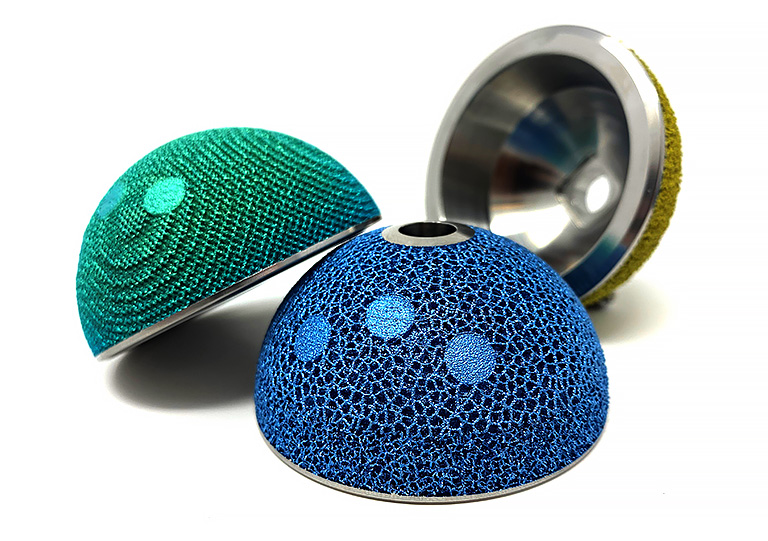
Femoral stems, acetabular shells, tibial trays, and hip resurfacing components engineered via hybrid 5-axis CNC machining and direct metal powder-bed additive manufacturing.
Get a Quote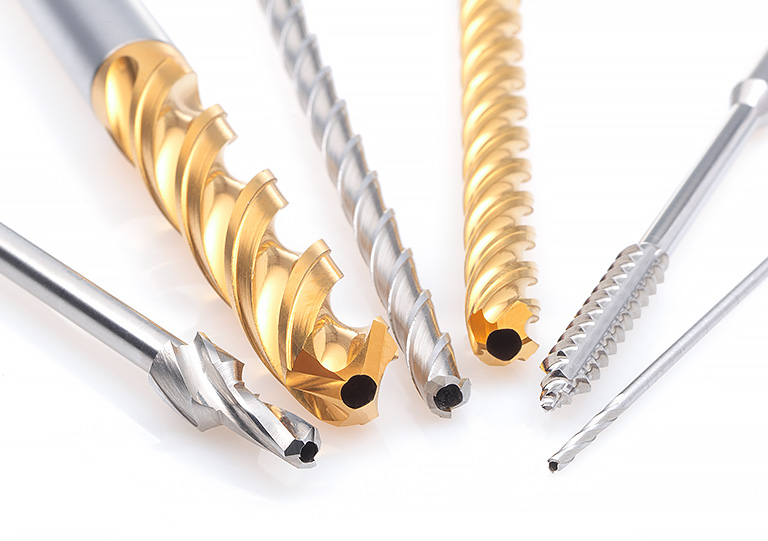
Locking compression plates, self-tapping cortical screws, intramedullary femoral/tibial nails, and K-wires manufactured in bio-compatible 316LVM stainless steel and Co-Cr alloys.
Get a Quote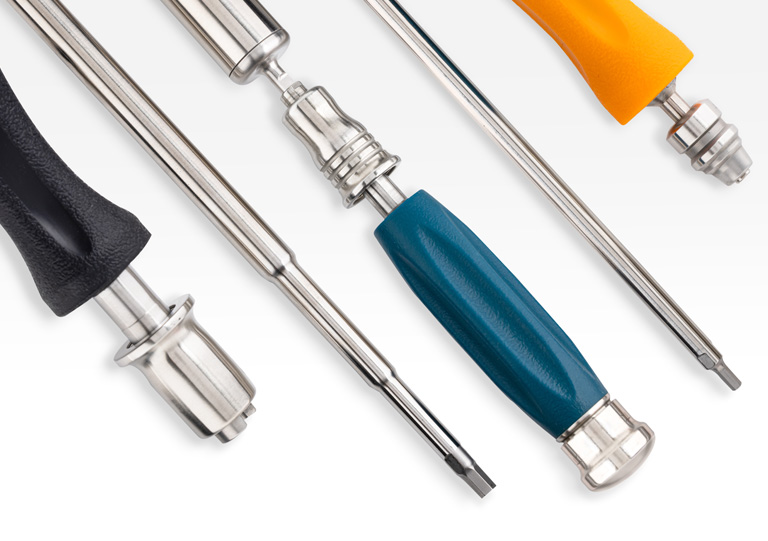
Micro-mesh reconstructive grids, mandible plates, small bone joint screws, and complementary silicone-handled surgical insertion tools for orthopedic surgical delivery.
Get a QuoteSelecting the optimal bio-material represents a pivotal design requirement for orthopedic device performance. Mechanical yield strength, fatigue endurance limits, modulus of elasticity match with cortical bone, and corrosion resistance dictate material qualification. Greyack medical Co., Ltd maintains certified supply lines for prime vacuum-arc remelted (VAR) implant materials.
| Material Grade | Standard Specification | Core Mechanical Properties | Primary Orthopedic Application |
|---|---|---|---|
| Ti-6Al-4V ELI (Grade 23) | ASTM F136 / ISO 5832-3 | Yield Strength > 795 MPa, Fracture Toughness, High Biocompatibility | Spinal pedicle screws, trauma plates, joint stems, porous cages |
| Co-Cr-Mo Alloy | ASTM F75 / ASTM F1537 | Superior Wear & Friction Resistance, Tensile Strength > 897 MPa | Femoral heads, knee tibial bearings, metal-on-metal wear interfaces |
| PEEK-OPTIMA / Carbon PEEK | ASTM F2026 | Radiolucent, Elastic Modulus (3.5 - 18 GPa) matching cortical bone | Interbody fusion cages, radiolucent trauma pins, load-bearing spacers |
| 316LVM Stainless Steel | ASTM F138 / ISO 5832-1 | High Fatigue Strength, Vacuum Melt Purity, Pitting Corrosion Resistance | Fracture fixation plates, intramedullary nails, bone staples, pins |
How advanced powder metallurgy, subtractive precision machining, surface anodization, and surgical robotics are redefining the manufacturing paradigm for medical device OEMs.
Conventional plasma-sprayed coatings face risk of delamination under rotational shear stress. Modern 3D powder-bed fusion allows Greyack medical Co., Ltd to build monolithic titanium implants featuring open-cell trabecular porous lattice layers (pore diameters 300–600 µm). This structural configuration directly stimulates vascularized osteogenesis while tailoring the structural modulus of elasticity to match native human bone, effectively neutralizing stress-shielding phenomena.
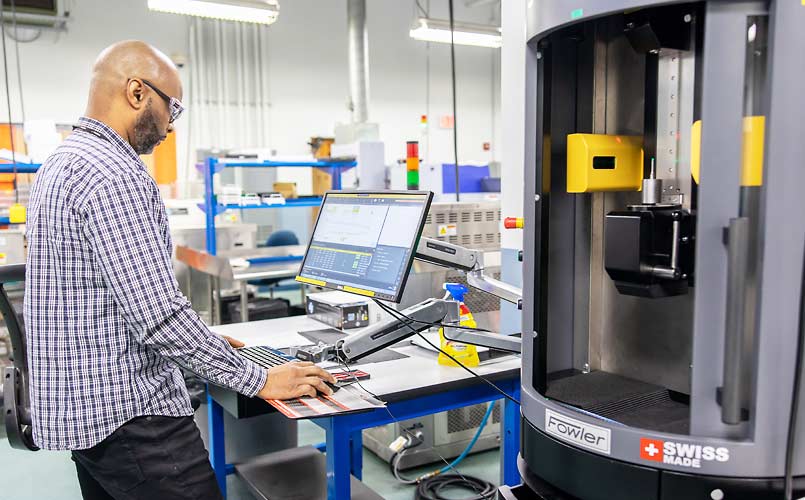
High-speed 5-axis machining combined with CNC flute and thread grinding enables the realization of complex, asymmetrical curvature profiles required for anatomically contoured trauma plates and complex spinal thread profiles. Utilizing real-time laser measurement probes and in-process optical gauging, Greyack medical Co., Ltd maintains geometric tolerances within ±0.0025 millimeters across entire volume production runs.
The growing adoption of surgical robotics requires orthopedic implants to feature extremely stringent mating interface tolerances. Surgical robotic end-effectors demand tight coupling interfaces with bone plates, navigation pins, and insertion instruments. Greyack medical Co., Ltd optimizes manufacturing processes to supply synchronized implant-instrument assemblies that eliminate mechanical slop during robot-guided joint replacement.

Every single orthopedic surgical implant machined in our facilities directly influences surgical outcomes. Discover how Greyack medical Co., Ltd integrates advanced multi-axis machining, automated passivation, laser metrology, and cleanroom assembly to satisfy stringent OEM specifications.
Improving lives … we have a part in that.
Analyses derived from global supply chain data, regulatory shifts under EU MDR, and vendor consolidation strategies within leading orthopedic device corporations.
Medical device procurement directors are actively consolidating fragmented supplier bases. Managing separate vendors for raw material procurement, CNC machining, thread grinding, porous 3D printing, passivation, laser marking, and cleanroom packaging introduces multi-tiered quality risks and logistical delays. Greyack medical Co., Ltd answers this procurement intent by offering end-to-end contract manufacturing under one roof.
By consolidating manufacturing steps within Greyack medical Co., Ltd, OEM sourcing teams achieve up to 30% lead-time reduction, eliminate multi-vendor handoff liabilities, and simplify audit trails for regulatory compliance.
Submitting robust regulatory packages requires full lot traceability, material test reports (MTR), dynamic fatigue validation data, and First Article Inspection (FAI) per AS9102/ISO 13485 standards.
Transitioning from clinical prototype trials to high-volume commercial production requires scalable tooling. Greyack medical Co., Ltd utilizes matching multi-axis CNC machines in prototype cells to eliminate scale-up validation friction.
A systematic design-to-delivery protocol ensuring zero-defect compliance for international OEM procurement teams.
Engineers analyze CAD models, tight thread radii, and material callouts to eliminate machining bottlenecks and optimize unit cost.
DFM ReviewRapid fabrication of functional implants via Swiss CNC turning or DMLS 3D printing for mechanical bench testing and surgeon feedback.
Additive TechFormal installation, operational, and performance qualification protocols paired with CMM optical scanning validation.
Quality AssuranceHigh-volume multi-axis machining, micro-grinding, nitric/citric passivation, electropolishing, and laser identification marking.
Finishing StandardsUltrasonic cleaning, bio-burden monitoring, ISO Class 7 cleanroom packaging, and consignment inventory management.
Supply Solutions 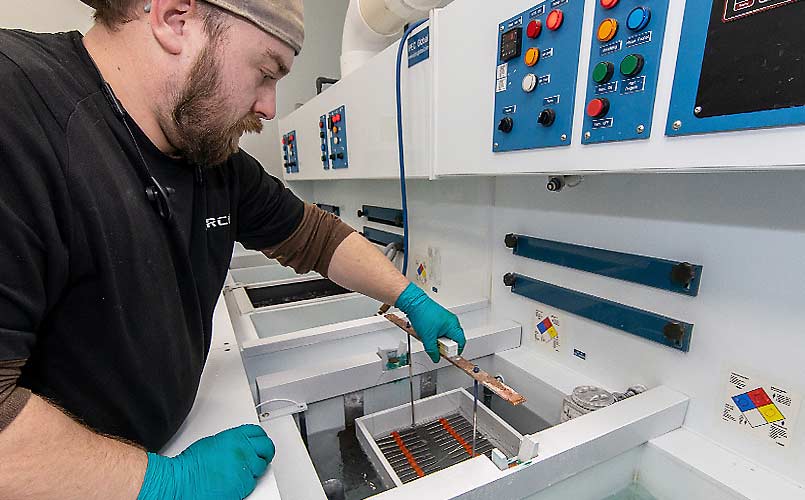
Advancements in human mobility depend upon unyielding precision in contract manufacturing. Every spinal rod, pedicle screw, joint stem, and trauma plate produced by Greyack medical Co., Ltd represents an absolute commitment to biological safety, mechanical integrity, and surgical performance. We empower medical OEMs to elevate clinical outcomes worldwide.
Proven leadership, certified quality infrastructure, and unmatched metallurgical experience across demanding medical device markets.
Unifying CNC turning, 5-axis milling, powder-bed fusion additive manufacturing, flute grinding, and controlled passivation under one ISO 13485 quality system eliminates multi-vendor coordination friction.
Our AdvantageOur executive leadership and senior engineering teams possess decades of hands-on experience navigating FDA 21 CFR Part 820 requirements, EU MDR specifications, and complex DHF documentation.
Leadership Technical ExperienceFDA-registered establishments featuring comprehensive statistical process control (SPC), 100% optical pin verification, non-destructive testing, and complete lot traceability certified to ISO 13485.
Download Audit CertificatesDirect, authoritative answers to high-intent questions submitted by procurement teams, manufacturing engineers, and quality directors inquiring on search and AI platforms.
We regularly process medical-grade Titanium alloys (Ti-6Al-4V ELI per ASTM F136), Cobalt-Chromium-Molybdenum alloys (ASTM F75 / ASTM F1537), implantable PEEK-OPTIMA (ASTM F2026), and High-Nitrogen 316LVM Stainless Steel (ASTM F138). Every incoming raw material batch undergoes spectral analysis verification and tensile strength validation, accompanied by complete mill test reports (MTR) to guarantee biocompatibility and mechanical compliance.
Additive manufacturing via Powder-Bed Fusion (PBF/DMLS) allows Greyack medical Co., Ltd to build monolithic titanium implants with integrated porous trabecular surfaces (60–75% porosity), which promote direct cellular bone ingrowth (osseo-integration) without risk of coating delamination. Conventional 5-axis CNC machining remains the preferred choice for smooth, articulating joint surfaces requiring mirror finishes ($Ra < 0.1\mu m$). We frequently combine both methods into a unified hybrid manufacturing process.
Every shipment is supported by complete Device History Records (DHR), full raw material certification, First Article Inspection (FAI) reports executed in accordance with AS9102/ISO 13485, dimensional CMM inspection reports, passivation test reports (per ASTM A967), and certificate of conformance (CoC). Our engineering team assists with DFM documentation to support your FDA 510(k) or EU MDR Technical Files.
Greyack medical Co., Ltd operates automated chemical processing lines capable of citric acid and nitric acid passivation (ASTM A967), Type II anodizing for improved wear and anti-galling, Type III titanium color anodizing for implant size identification, electropolishing, automated abrasive micro-blasting, and precision laser marking for UDI (Unique Device Identification) compliance.
Our engineering prototype center employs identical multi-axis Swiss CNC lathes, 5-axis milling centers, and powder-bed fusion printers as our production floor. This setup eliminates machine kinematic discrepancies and tool-path variations, allowing seamless transition from rapid functional prototypes (short lead time) to validated, high-volume production without costly tool re-qualification.
Engineering and sourcing teams can directly upload CAD files (STEP, IGES, Parasolid) along with 2D drawings specifying critical dimensions, material specs, and surface finishes to [email protected]. Our technical engineering team reviews the design for manufacturability (DFM) and returns a detailed quotation and manufacturing roadmap within 24 to 48 hours.
Send your CAD models and drawing requirements to our engineering team: [email protected]