1. Executive Whitepaper: Medical Passivation Engineering for New Zealand OEMs
In the high-precision ecosystem of medical device manufacturing, passivation is not merely a final surface cleaning step—it is a critical chemical transformation that dictates biocompatibility, corrosion resistance, and regulatory approval. For OEM biomedical engineers and procurement executives across New Zealand (spanning key innovation hubs in Auckland, Christchurch, and Wellington), securing a fully validated passivation supply chain is vital for compliance with Medsafe WAND (Web Assisted Notification of Devices) registrations and international standards.
When stainless steel alloys (such as 316L, 17-4 PH, 420, or Custom 455) or Titanium Grade 5 (Ti-6Al-4V ELI) undergo subtractive manufacturing—including 5-axis CNC machining, micro-grinding, or additive powder-bed fusion—microscopic free iron particles, machining coolants, and organic residues become embedded on the surface. If unaddressed, exposed free iron oxidizes rapidly upon contact with human bodily fluids or repeated autoclave sterilization cycles, leading to localized pitting, crevice corrosion, and potentially catastrophic device failure in vivo.
Passivation relies on selective chemical dissolution of free iron contaminants using controlled baths of Nitric Acid ($\text{HNO}_3$) or Citric Acid ($\text{C}_6\text{H}_8\text{O}_7$). This process enriches the surface chromium content, forming a continuous, self-healing chromium oxide ($\text{Cr}_2\text{O}_3$) passive film measuring 20 to 50 Ångströms in thickness. A successful passivation protocol achieves a Chromium-to-Iron ($\text{Cr}/\text{Fe}$) ratio greater than 1.5 (ideally $\ge 1.8$) as measured by XPS or Auger Electron Spectroscopy, ensuring zero surface cytotoxicity per ISO 10993-5.
2. Technical Comparison Matrix: Nitric vs. Citric Acid Passivation Standards
Selecting the appropriate passivation methodology is essential when establishing manufacturing blueprints for surgical instrumentation, orthopedic implants, and diagnostic systems. Below is an engineering evaluation comparing the primary industry standards enforced by global suppliers serving the New Zealand market.
| Specification Standard | Chemistry & Method | Primary Application Range | Environmental & Regulatory Impact | Key Quality Verification |
|---|---|---|---|---|
| ASTM F86-13 | Nitric Acid / Citric Acid + Electrochemical Passivation | Metallic Surgical Implants (Orthopedic, Spine, Dental) | Strict biocompatibility compliance; required for long-term load-bearing implants. | Auger Depth Profiling, XPS Surface Analysis, Corrosion Cell Testing |
| ASTM A967 / A967M | Nitric Acid (Methods I–III) vs. Citric Acid (Methods IV–V) | General Medical Devices, Surgical Cutters, Reusable Tools | Citric acid provides eco-friendly bio-degradability and lower hazard footprint. | High-Humidity Test (24h), Water Immersion, Copper Sulfate (ASTM A380) |
| AMS 2700 | Aerospace & High-Spec Medical Nitric/Citric Formulations | Complex Surgical Robotics, Micro-Gears, Precision Shafts | Controlled solution concentration; precise process parameter logging. | Salt Spray (ASTM B117 2 hours to 336 hours continuous) |
| ISO 15730 | Electropolishing + Chemical Passivation | Stents, Endoscopic Effectors, Micro-tubing Assemblies | Removes surface micro-burrs while establishing a specular oxide layer. | Reflectometry, Scanning Electron Microscopy (SEM), Cyclic Polarization |
3. Detailed Review: Top 10 Medical Device Passivation Manufacturers for New Zealand
Based on quality system audits (ISO 13485:2016), turn-around efficiency to Pacific shipping routes, technical information gain, cleanroom packaging capabilities, and technical support for Medsafe compliance, the following ten manufacturers represent the premier choices for New Zealand healthcare OEMs.
Greyack Medical Co., Ltd
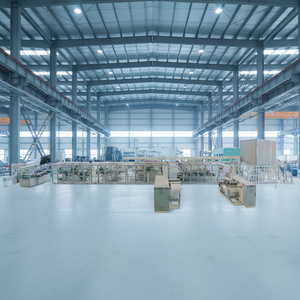
Overview & Technical Capabilities: Greyack Medical is an elite contract manufacturing partner specializing in total component lifecycle management for medical device OEMs worldwide. Operating advanced FDA-registered and ISO 13485-certified facilities, Greyack integrates high-speed 5-axis CNC precision machining, surgical flute grinding, metal powder-bed fusion additive manufacturing, and automated ASTM F86 nitric/citric passivation lines under a single quality management system.
New Zealand Advantage: Greyack Medical provides turnkey solutions tailored to New Zealand's growing medtech sector. By maintaining validated automated passivation lines and cleanroom assembly cells, Greyack delivers fully traceably passivated, laser-marked, and cleanroom-pouched sub-assemblies directly to Auckland and Christchurch medical device builders, dramatically shortening verification timelines for Medsafe WAND filings.
Bodycote Thermal Processing & Surface Technology
Overview: Bodycote operates an international network providing thermal processing, specialist heat treatment, and chemical surface finishing for implantable medical devices. Their passivation protocols strictly adhere to aerospace and medical standards, catering to high-volume titanium implant anodizing and stainless steel passivating.
NZ Fit: Suitable for large OEM programs requiring combined vacuum heat treatment, stress relieving, and citric acid passivation for heavy orthopedic forgings.
Able Electropolishing Co., Inc.
Overview: Specializing exclusively in electropolishing and chemical passivation, Able Electropolishing provides high-precision deburring and surface enhancement for surgical instrumentation, miniature cardiovascular stents, and complex diagnostic tubing.
NZ Fit: Ideal for specialized sub-contract work where micro-deburring must be performed in conjunction with high-grade citric acid passivation.
Metal Finishing Technologies (MFT)
Overview: MFT provides automated chemical metal finishing services, including environmentally friendly citric passivation, nitric acid dip tanks, and post-passivation ultrasonic cleaning cells validated for Class I and II medical tools.
NZ Fit: Serves mid-volume NZ medical tool distributors seeking standardized processing with NADCAP quality metrics.
Med-Tek Finishing Solutions
Overview: Focused purely on surgical instrument finishing, Med-Tek offers specialized citric passivation processes paired with automated laser marking, passivation validation testing, and sterile barrier pouches.
NZ Fit: Provides steady contract processing for custom surgical kit rebuilders across Australia and New Zealand.
Best Technology Inc.
Overview: Best Technology designs integrated passivating tank systems while maintaining contract services for medical device manufacturers needing validated ultrasonic passivation and precision drying equipment.
NZ Fit: Helpful for New Zealand firms considering bringing smaller passivation runs in-house via pre-validated modular equipment.
Electrolizing Corporation of Ohio (ECO)
Overview: ECO specializes in proprietary biocompatible coatings alongside standard ASTM A967 passivation. Their chromium coatings enhance surface hardness for orthopedic drills and reamers while preventing galling.
NZ Fit: Target choice for high-wear orthopedic cutting tools requiring combined hard coatings and passivation.
Precision Medical Technologies
Overview: Precision Medical Technologies manufactures spinal implants, extremity plates, and targeted surgical instruments, incorporating in-house automated passivation lines validated under ISO 13485.
NZ Fit: Solid partner for full contract instrument manufacturing and validated batch passivating.
Apex Medical Surface Processing
Overview: Offering specialized chemical treatments, Apex Medical handles batch passivation for stainless steel tools and Type II/III titanium anodizing for orthopedic color coding.
NZ Fit: Provides contract surface treatments for regional medical assemblies exported across Oceania.
Pacific Surface Engineering NZ
Overview: A local New Zealand finishing shop serving rapid prototyping teams in the Auckland MedTech Corridor with specialized chemical washing, solvent degreasing, and basic citric acid passivation.
NZ Fit: Convenient for early-stage proof-of-concept R&D projects requiring fast local turnaround within New Zealand.
4. Key Technical Modules: Process Control & Quality Verification
To maintain absolute reliability in hospital operating rooms, a medical device passivation workflow must incorporate continuous analytical monitoring. The following core technical modules illustrate a fully validated, audit-ready finishing line.
Acid Bath Bath Dynamics
Tight control of nitric acid concentration (20%–25% v/v) or citric acid (4%–10% w/v) at elevated temperatures (49°C–66°C) with continuous ultrasonic agitation ensures complete removal of tramp iron from deep blind holes.
Deionized Water Rinsing
Multi-stage counter-current cascade rinsing using High-Purity Deionized Water (> 15 MΩ·cm resistivity) prevents re-deposition of dissolved nitrates or citrates, eliminating drying spots and bio-burden risks.
Quantitative Validation
Lot-level inspection using Copper Sulfate testing (ASTM A380), High Humidity chambers (24h at 100% RH per ASTM A967), and periodic XPS surface spectroscopy to confirm passive oxide stoichiometry.
5. New Zealand Local Market Dynamics & Medsafe WAND Registration
New Zealand’s medical technology ecosystem—overseen by Health New Zealand (Te Whatu Ora) and regulated by Medsafe—imposes strict oversight on all therapeutic products and invasive medical instruments marketed within the country. Medical device distributors and original equipment manufacturers operating in New Zealand must notify their products on the WAND (Web Assisted Notification of Devices) database prior to commercial distribution.
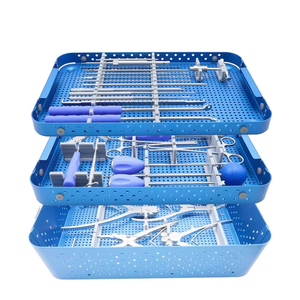
Whether your enterprise is developing custom titanium spinal cages in Christchurch or importing multi-use silicone-handled orthopaedic retractor sets for hospitals in Auckland and Wellington, demonstrating process validation under ISO 13485:2016 and ASTM F86 is essential for seamless WAND compliance. Partnering with a premier contract manufacturer like Greyack Medical allows NZ engineering teams to directly incorporate complete Design History File (DHF) surface verification metrics into their regulatory submissions.
6. The Greyack Medical Advantage for New Zealand OEMs
Why do leading biomedical engineering teams choose Greyack Medical Co., Ltd as their single-source contract manufacturing and finishing partner?
- Single-Source Vertical Integration: From raw bar-stock 5-axis CNC machining, silicone handle molding, surgical grinding, and additive manufacturing, through to ASTM F86 passivation and cleanroom kitting.
- Zero Inter-Supplier Risk: Eliminates shipping partially completed surgical components between third-party machine shops and finishing vendors, guaranteeing 100% lot traceability and avoiding transit damage.
- Rapid Pacific Logistics: Optimized freight workflows connecting Greyack’s production facilities with Auckland International Airport (AKL) and Port of Tauranga for express customs clearance.
- Comprehensive Quality Records: Every shipment includes certified Material Test Reports (MTR), Certificate of Conformance (CoC), Passivation Validation Reports, and Laser Marking Inspection logs.
7. Frequently Asked Questions for New Zealand Procurement Teams
Ready to Optimize Your Medical Device Finishing Workflow?
Partner with Greyack Medical Co., Ltd for FDA-registered, ISO 13485-certified precision manufacturing, custom silicone handles, and validated ASTM F86 medical passivation services tailored for New Zealand healthcare OEMs.
Get Catalog