1. Strategic Overview of the Azerbaijani Spinal Fixation & Orthopedic Market
The Republic of Azerbaijan represents one of the most dynamic medical device procurement hubs within the Transcaucasus and Caspian regions. Driven by systemic modernization initiatives spearheaded by the Ministry of Health of the Republic of Azerbaijan (Səhiyyə Nazirliyi) and the Administration Regional Medical Divisions (TƏBİB), the nation's healthcare infrastructure is undergoing a rapid, structural transformation. A central catalyst for this shift is the nationwide roll-out of the Compulsory Health Insurance framework (İşçi və əhali üçün İcbari Tibbi Sığorta - İTS), which has dramatically improved public access to specialized neurosurgical and spinal reconstruction procedures.
With high-density surgical centers concentrated in Baku—including the Scientific Research Institute of Traumatology and Orthopedics, the Central Clinical Hospital, Leyla Medical Center, and the Republican Clinical Hospital—the clinical demand for advanced spinal stabilization implants has surged. Additionally, regional surgical hubs in Ganja, Sumqayit, Mingachevir, and the Nakhchivan Autonomous Republic are actively expanding their clinical capacities for complex spine operations, including spinal trauma reconstruction, degenerative disc disease stabilization, and scoliosis deformity correction.
For international original equipment manufacturers (OEMs), contract manufacturing partners, and clinical procurement leaders, navigating the Azerbaijani market requires a nuanced understanding of local regulatory pathways, metallurgical standards, biomechanical performance thresholds, and surgical intent. High-performing spinal fixation systems must not only comply with stringent international standards (such as ISO 13485, FDA registration, and CE Class III certification) but must also address specific regional operating realities, including intraoperative adaptability and long-term osseointegration.
Key Procurement Insight: Under TƏBİB and İTSDA guidelines, medical institutions in Azerbaijan prioritize spinal implants that demonstrate verified fatigue life under ASTM F1717 testing, complete raw material lot traceability, and seamless compatibility with universal surgical instrument sets.
2. Biomechanical Engineering & Technical Manufacturing Standards
Modern spinal fixation systems are sophisticated load-bearing bio-assemblies engineered to immobilize vertebral segments while facilitating solid interbody fusion. Manufacturing these implants requires state-of-the-art precision contract manufacturing capabilities, incorporating high-speed Swiss-type CNC machining, multi-axis thread milling, surface passivation, and additive layer manufacturing.
2.1 Metallurgical Selection: Titanium Alloys vs. PEEK Polymers
The choice of material directly impacts implant fatigue life, corrosion resistance, modulus of elasticity, and post-operative radiolucency:
Ti-6Al-4V ELI (Grade 23 ASTM F136): This extra-low-interstitial titanium alloy is the gold standard for pedicle screws, spinal rods, crosslinks, and occipitocervical plates. It offers superior yield strength, exceptional biocompatibility, and an elastic modulus (~110 GPa) closer to bone than stainless steel, reducing stress shielding effects at the screw-bone interface.
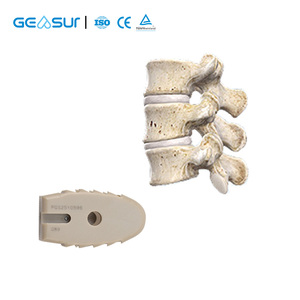
Polyetheretherketone (PEEK Optima): Used extensively in Interbody Fusion Devices (PLIF, TLIF, ALIF cages), medical-grade PEEK possesses an elastic modulus (~3.6 GPa) closely matching human cancellous and cortical bone. This minimizes subsidence into the vertebral endplates while providing radiolucent characteristics, allowing surgeons in Azerbaijan's imaging centers to assess bone graft fusion via routine X-ray and CT scans without metallic artifact disruption.
316L & High-Nitrogen Stainless Steels (ASTM F138): Frequently specified for specialized surgical instrumentation sets, tapers, reamers, and temporary deformity correction rods where extreme torsional stiffness and tactile rigidity are demanded during intraoperative reduction.
2.2 Surface Topography & Advanced Coating Technologies
To accelerate osteoblast adhesion and secondary stability, advanced spinal fixation systems utilize specialized surface treatments:
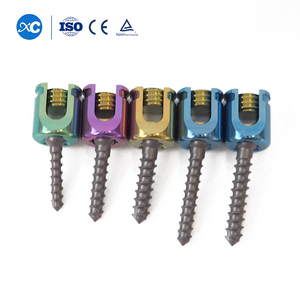
Type II Anodization & Micro-Arc Oxidation (MAO): Creates a controlled, titanium oxide layer that increases surface fatigue resistance, reduces wear debris in dynamic stabilization systems, and enables color-coded dimensional recognition for surgical surgical scrub technicians in the operating room.
Porous Titanium Plasma Spray (TPS) on PEEK: Combines the biomechanical flexural advantages of PEEK with the aggressive cellular adhesion properties of porous titanium, facilitating rapid early-stage bone ingrowth without compromising radiological evaluation.
3. Specialized Product Portfolios & Clinical Applications in Azerbaijan
Our comprehensive spinal hardware catalog spans the full continuum of spinal pathology intervention, supporting orthopedic surgeons across Azerbaijan in performing open, minimally invasive (MISS), pediatric, and veterinary procedures.
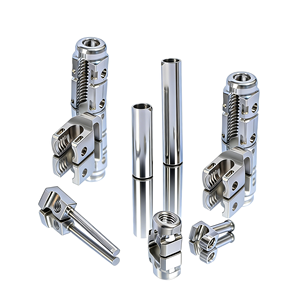
Swiss Precision CNC Machining
Utilizing multi-axis lathe-mill machining centers equipped with high-pressure coolant feeds and live tooling to hold ultra-tight tolerances (±0.005mm) on dual-thread pedicle screws and complex locking mechanisms.
PEEK Interbody Fusion Engineering
Specialized cleanroom machining and porous surface coating of PEEK-OPTIMA PLIF, TLIF, and cervical cages, guaranteeing structural biomechanical integrity and artifact-free post-op imaging.
Ergonomic Surgical Instrumentation
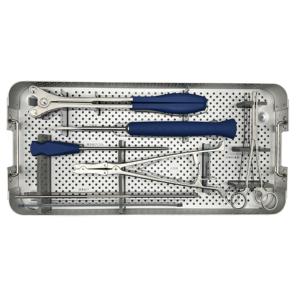
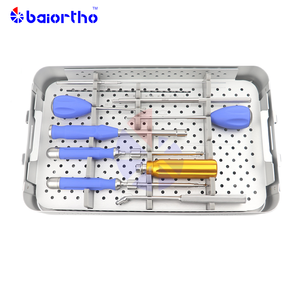
Manufacturing custom silicone-handled ratcheting drivers, torque-limiting handles, benders, and pedicle probes designed to reduce surgeon fatigue and withstand continuous autoclave sterilization cycles.
4. Clinical Application Workflows in Azerbaijani Hospitals
Spinal fixation constructs supplied to Azerbaijani medical institutions are engineered to support both traditional open posterior approaches and modern Minimally Invasive Spine Surgery (MISS) workflows.
4.1 Posterior Lumbar Pedicle Screw Fixation & Fusion (PLIF/TLIF)
In high-volume traumatic and degenerative cases treated across Baku clinics, polyaxial pedicle screws are placed bilaterally into the vertebral pedicles under continuous C-arm or O-arm intraoperative fluoroscopy. The polyaxial head allows for 60 degrees of angulation, accommodating complex anatomical variations without requiring excessive rod bending. Following discectomy, PEEK interbody cages packed with autologous or synthetic bone graft are inserted into the disc space to restore lordosis and disc height.
4.2 Minimally Invasive Percutaneous Fixation (MISS)
For high-risk trauma patients or elderly patients with osteoporotic bone in regional hospitals, percutaneous pedicle screw systems drastically cut surgical time, blood loss, and hospital stays. K-wires are placed transcutaneously under fluoroscopic guidance, followed by dilated tissue splitting, screw insertion over the wire, and sub-fascial rod passaging using specialized extension towers.
4.3 Veterinary Spine Reconstruction & Trauma Care
Azerbaijan's expanding veterinary clinical sector—particularly specialized animal surgical units in Baku, Ganja, and agricultural regional centers—demands specialized mini-pedicle screw systems and dynamic plate assemblies. These systems are specifically scaled for canine and feline spinal trauma reconstruction, vertebral instability correction, and intervertebral disc disease (IVDD) treatment, using biocompatible titanium alloys engineered for rapid bone union.
5. Localized Procurement Trends & Regulatory Compliance in Azerbaijan
Navigating the supply chain dynamics of the Azerbaijani medical device market mandates rigorous compliance with state procurement legislation and healthcare quality standards.
5.1 Regulatory Registration & Certification (Səhiyyə Nazirliyi Compliance)
All medical devices, including Class III spinal implants and reusable surgical instruments, must undergo registration approval by the Analytical Expertise Center of the Ministry of Health of Azerbaijan Republic. Key submission requirements include:
• ISO 13485:2016 Medical Devices Quality Management System Certificate.
• Full CE Mark Declaration of Conformity and/or US FDA 510(k) clearance.
• Biocompatibility evaluation reports adhering to ISO 10993 standards.
• Mechanical testing documentation (ASTM F1717 for pedicle screw assemblies, ASTM F2077 for interbody cages).
• Azerbaijani/Russian language labeling, Instruction for Use (IFU), and sterilization validation protocols.
5.2 TƏBİB & Hospital Tender Procurement Dynamics
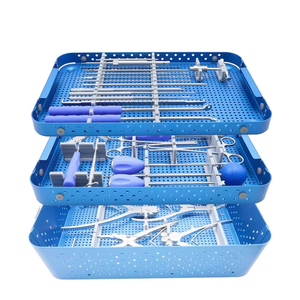
With public hospital tenders centralized through TƏBİB, procurement committees evaluate manufacturers based on total cost of ownership (TCO), continuous local distributor inventory support, modular instrument tray availability, and rapid turn-around times for custom surgical sizing. Overseas factory partnerships offering OEM customization, private labeling, and localized logistics support hold a decisive competitive advantage in winning multi-year supply contracts.