Featured Medical & Surgical Robotics Component Systems
Engineered to exact sub-micron tolerances for clinical applications across Prague, Brno, Olomouc, and global MedTech hubs.
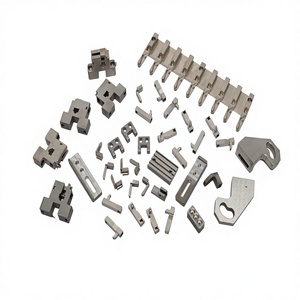
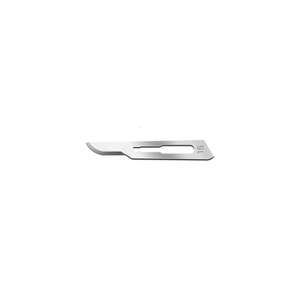
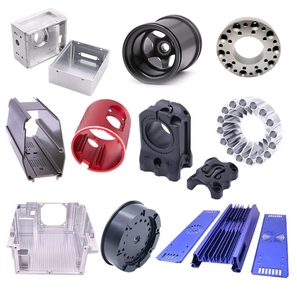
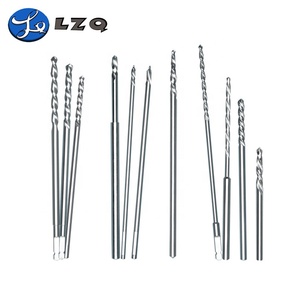
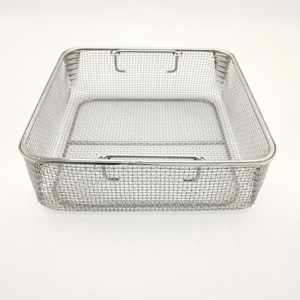
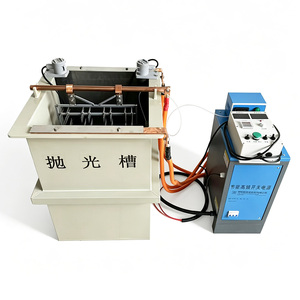
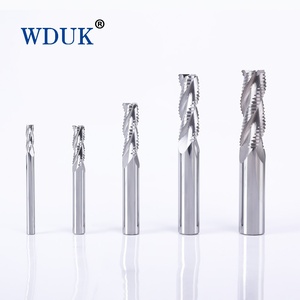
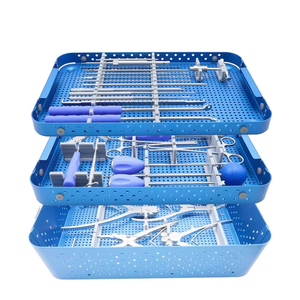
1. Executive Summary & Macro Landscape: Surgical Robotics in the Czech Republic
The Czech Republic has rapidly solidified its position as a strategic epicenter for advanced medical technology innovation, precision engineering, and biopharma research within Central Eastern Europe (CEE). Anchored by world-class academic institutions such as the Czech Technical University in Prague (ČVUT) and the Brno University of Technology (VUT), alongside prominent clinical innovation centers like Motol University Hospital and Na Homolce Hospital, the region's demand for high-reliability robotic-assisted surgical equipment is experiencing exponential growth.
As original equipment manufacturers (OEMs) look to comply with stringently enforced European Union Medical Device Regulations (EU MDR 2017/745), the contract manufacturing supply chain faces unprecedented demands. Robotic-assisted device components—ranging from multi-articulated end-effectors, miniaturized harmonic drive gears, and titanium wrist joints to smart silicone-handled surgical ratchets—require micro-level machining precision, absolute material purity, and end-to-end documentation.
Greyack Medical serves as a premier, FDA-registered, and ISO 13485-certified contract manufacturing partner for Czech and European medical device OEMs. By combining high-speed 7-axis Swiss CNC turning, medical-grade flute and thread grinding, powder-bed fusion additive manufacturing, and automated electropolishing, we empower OEMs to reduce manufacturing risk, bypass capacity bottlenecks, and accelerate clinical commercialization across the European Single Market.
Sub-Micron Machining
Multi-axis Swiss CNC turning and ultra-precision milling designed for complex robotic wrist components, holding tolerances as tight as ±0.001 mm in biocompatible metals.
EU MDR Compliance
Full support for Design History Files (DHF), 100% optical coordinate inspection (CMM), lot traceability, and raw material certifications (ASTM F136 Ti-6Al-4V, 17-4PH SS).
Additive & Subtractive Hybrid
Direct Metal Laser Sintering (DMLS) titanium lattice structures integrated with secondary precision grinding for optimal osseointegration and mechanical fit.
2. Technical Architecture of Robotic-Assisted Surgical Components
Robotic surgical platforms—including laparoscopic systems, orthopedic joint reconstruction robots, neurosurgical guidance arms, and spinal fixation assistants—rely on sub-assemblies where mechanical backlash or material fatigue is unacceptable. Greyack Medical’s engineering team collaborates directly with OEM R&D divisions to optimize component geometry through rigorous Design for Manufacturability (DFM) analyses.
Key Component Engineering Categories
- Robotic Wrist End-Effectors & Micro-Graspers: Machined from implant-grade Titanium (Ti-6Al-4V ELI) and 17-4 PH stainless steel, featuring intricate pulley channels, cable guidance slots, and high-durability pin hinges that endure millions of flex cycles under sterilization pressure.
- Torque-Limiting Couplings & Silicone Handles: Proprietary MedTorque ergonomic silicone-handled surgical drives equipped with dual-direction ratcheting mechanisms. Designed to prevent over-tightening of spinal pedicle screws and orthopedic implants during robotic-guided pedicle preparation.
- Precision Optical & Electronic Sensor Housings: Micro-machined enclosure units protecting delicate force-torque feedback sensors, stereo vision cameras, and laser alignment modules from fluid ingress and autoclave thermal stress.
- Orthopedic Drill Flutes & Reamers: Custom-ground cutting instruments produced via high-precision CNC flute grinding. Optimized flute geometries ensure chip evacuation during robotically guided bone resection, minimizing thermal necrosis risks.
| Component Type | Primary Materials Used | Manufacturing Technology | Typical Tolerance & Finish |
|---|---|---|---|
| Robotic End-Effector Cleaves | 17-4 PH SS, Custom 465, Ti-6Al-4V | 7-Axis Swiss Turning / Micro EDM | ±0.002 mm | Ra < 0.2 µm |
| Spinal Pedicle Screw Drives | 316L SS, PEEK, Silicone Overmold | Precision Milling / Liquid Silicone Injection | ±0.005 mm | Passivated ASTM A967 |
| Harmonic Gear Drive Housings | Titanium Grade 5, Aluminum 7075-T6 | 5-Axis High-Speed CNC Machining | ±0.003 mm | Hard Anodized / Electropolished |
| Porous Osseointegrative Implants | Medical Ti Powder (ASTM F1580) | Powder-Bed Fusion Additive (DMLS) | Pore size 300–500 µm | CNC Finish Interfaces |
3. Localized Application Scenarios Across Czech Regional Healthcare Hubs
The implementation of robotic surgery in the Czech Republic spans diverse clinical disciplines, driven by national health system modernization and private healthcare investments. OEM engineering and procurement teams located in major Czech technology clusters require specialized regional solutions:
Prague & Central Bohemia Healthcare Cluster
As the primary location for high-complexity tertiary care institutions (e.g., General University Hospital in Prague, FN Motol), there is an increasing adoption of soft-tissue robotic platforms and neurosurgical guidance systems. Suppliers must deliver ultra-clean, passivated sub-assemblies ready for immediate Class 7 cleanroom integration, adhering strictly to ISO 11607 packaging standards.
Brno & South Moravian MedTech Ecosystem
Brno represents the scientific heart of Czech micro-electronics, electron microscopy, and advanced robotics research. Local OEMs developing proprietary surgical robots require rapid iterative prototyping, high-mix low-volume (HMLV) production flexibility, and deep engineering collaboration during early-stage clinical trial build-outs.
Furthermore, regional orthopedic centers in Ostrava, Olomouc, and Plzeň are expanding their utilization of robotic joint replacement systems. These surgical systems require high-volume replacement of wear-resistant instrumentation, such as high-carbon stainless steel blades, bone drills, and spinal pedicle screw alignment fixtures engineered by trusted contract partners.
4. Czech & European Market Trends Driving Supply Chain Transformation
Procurement strategies for medical device components in Central Europe have underwent fundamental shifts over recent years. Czech device manufacturers are adapting to three overarching macroeconomic trends:
- Nearshoring & Resilience Against Global Logistics Bottlenecks: Czech medical OEMs are increasingly divesting from vulnerable Far East supply chains in favor of robust, highly audited suppliers offering transparent lead times, strict IP protection, and direct air freight delivery into Vaclav Havel Airport Prague or logistics centers in Brno.
- Stringent Regulatory Compliance under EU MDR 2017/745: The transition from MDD to EU MDR has heightened documentation burdens. Notified Bodies (such as TÜV SÜD or EZÚ Prague) demand comprehensive chemical characterization, full material origin validation, and certified passivation processes (ASTM A967/A380). Every component batch supplied by Greyack Medical includes complete raw material certificates, heat treat charts, and CMM dimension verification logs.
- Convergence of Additive Manufacturing & CNC Machining: Modern robotic surgical tools increasingly incorporate complex internal cooling channels or custom lattice grips that cannot be manufactured via traditional subtractive methods alone. The hybrid integration of laser powder-bed fusion with secondary precision CNC finishing enables lightweight, ergonomic robotic end-effectors that significantly lower motor inertia on robotic arms.
5. Enterprise Core Competencies & Advanced Manufacturing Workflow
Greyack Medical’s integrated state-of-the-art facilities consolidate all critical production stages under one unified Quality Management System. This eliminates multiple vendor handoffs, cuts production lead times by up to 40%, and mitigates supply chain risk.
Advanced Micro-Machining
Equipped with 7-axis Swiss-type CNC lathes and 5-axis high-speed machining centers optimized for micro-scale electronic medical parts, micro-pins, and high-aspect-ratio shafts.
Medical Grinding Excellence
Specialized CNC flute grinding, drill-point grinding, and thread grinding for surgical cutting instruments, bone taps, reamers, and surgical scalpels engineered from medical-grade stainless steel and carbon steel.
Surface Finishing & Passivation
In-house electropolishing, mechanical polishing, bead blasting, laser marking, and citric/nitric acid passivation compliant with ASTM A967 to ensure biocompatibility and zero risk of surface corrosion.
6. Frequently Asked Questions (FAQ) for Czech OEM Procurement Teams
Are Greyack Medical facilities FDA registered and ISO 13485 certified?
Yes. Our manufacturing facilities maintain continuous ISO 13485 certification—the global benchmark for medical device quality management systems—and are fully registered with the U.S. FDA. Official quality certificates, audit reports, and quality manuals are readily accessible to qualified OEM buyers during vendor onboarding.
How do you support European OEMs with EU MDR 2017/745 technical documentation?
We provide full technical documentation packets accompanying every shipment, including raw material heat melt certifications (enabling 100% melt-to-part traceability), Certificate of Conformance (CoC), process validation reports (IQ/OQ/PQ), and full CMM dimensional inspection data required for your Technical File and Design History File (DHF).
What raw materials do you machine for robotic-assisted surgical components?
We work extensively with biocompatible medical-grade metals and polymers, including Titanium alloys (Ti-6Al-4V ELI / Grade 23, Grade 5), Stainless Steels (316L, 17-4 PH, Custom 455, Custom 465, 420 SS), Cobalt-Chrome alloys (CoCrMo), implantable PEEK (Polyether ether ketone), and medical-grade silicone overmolding.
Can you manage projects from initial DFM and prototyping to series production?
Absolutely. Our dedicated NPI (New Product Introduction) engineering team provides complete Design for Manufacturability (DFM) reviews to lower unit cost and cycle time. We rapidly deliver functional prototypes via CNC machining or additive manufacturing, execute process validation, and seamless scale to high-volume automated series production.
What are the standard shipping timelines and incoterms for Czech Republic clients?
We regularly service European clients under DDP (Delivered Duty Paid) or DAP incoterms. Using expedited global air freight networks, finished and inspected shipments arrive at Czech facilities (Prague, Brno, Ostrava) within 3 to 5 business days following final cleanroom packaging release.
7. Why Partner With Greyack Medical for Your Czech MedTech Ventures?
Securing a reliable contract manufacturer for high-stakes robotic-assisted surgical devices requires a partner with demonstrated technical rigor, modern machinery, and unyielding quality controls. Greyack Medical delivers the precise intersection of high-speed micro-machining capacity, specialized surface engineering, and comprehensive regulatory documentation.
Whether you are designing next-generation robotic end-effectors in Prague, developing specialized spinal instrumentation in Brno, or upgrading surgical power tools for Central European distribution, our engineering team is ready to accelerate your product development lifecycle.
Request a Technical Drawings Review
Upload your CAD files, STEP models, or engineering prints for a confidential DFM evaluation and commercial quotation within 24–48 hours.
Get a Quote