High-Precision Components & Specialized Tooling
Complementary surgical, medical, and specialized industrial manufacturing solutions certified for OEM integration.
1. Technical Foundations of Powder Bed Fusion (PBF) Manufacturing
Powder Bed Fusion (PBF) technology has emerged as the premier additive manufacturing process for producing dense, complex metal components across demanding industries. Utilizing precise laser energy—commonly designated as Laser Powder Bed Fusion (LPBF) or Selective Laser Melting (SLM)—this thermal process fuses micro-scale metal powders layer-by-layer to construct three-dimensional parts straight from CAD geometry.
For industrial manufacturers in Luxembourg and the broader Benelux region, PBF represents a paradigm shift from traditional subtractive machining. By deploying high-powered fiber lasers (ranging from 400W to 1000W multi-laser arrays) across inert argon or nitrogen atmospheres, PBF systems process reactive and non-reactive alloys with extreme structural integrity. The resulting mechanical properties frequently match or surpass wrought metallic standards after appropriate post-thermal treatments such as Hot Isostatic Pressing (HIP) and vacuum annealing.
"In high-tech sectors across Luxembourg, PBF allows design engineers to consolidate complex multi-piece assemblies into single monolithic components, reducing weight while eliminating seal interfaces and mechanical failure points."
Technical Benchmark Specifications for Luxembourg Supply Chains
Our PBF facility provides rigorous technical adherence tailored to the quality management systems expected by European OEMs. Core parameters include:
- Layer Thickness: Adjustable fine resolution between 20 μm and 60 μm for optimum surface finish and micro-feature execution.
- Focus Diameter & Beam Quality: Precision optical systems yielding a laser beam diameter down to 70 μm for intricate internal lattice structures.
- Material Density Achievement: Consistently achieving relative densities >99.9% in Ti-6Al-4V ELI, CoCr, 316L Stainless Steel, and Inconel 718.
- Dimensional Tolerances: As-printed tolerances of ±0.1mm per 100mm, with post-machined features holding ±0.005mm via integrated 5-axis CNC finishing.
2. Strategic Industrial Applications in the Luxembourg Market
Luxembourg stands as a dynamic epicenter of European innovation, home to premier space technology entities, automotive components research facilities, advanced logistics hubs, and medical device innovators centered around the Belval Innovation Campus. The adoption of Powder Bed Fusion directly supports the Grand Duchy’s national strategy for industrial digitalization and sustainable high-tech manufacturing.
Aerospace & Space Technology
With Luxembourg’s flourishing space sector, PBF is crucial for fabricating lightweight satellite bracketry, thruster nozzles, and structural components. Titanium alloy LPBF components offer drastic mass reduction, vital for payload optimization in orbital launch systems.
Orthopedic & Medical Devices
Biocompatible medical devices benefit immensely from PBF’s capacity to print engineered porous lattice surfaces directly onto orthopedic implants. These porous structures promote superior osseointegration for spinal implants, hip cups, and customized maxillo-facial devices.
Conformal Cooling Injection Tooling
Luxembourg’s plastics and automotive mold makers utilize PBF to design conformal cooling channels that closely follow the internal geometry of injection molds. This leads to cycle time reductions of up to 30% and significantly diminished thermal warpage in molded parts.
3. Advanced Metallurgical Material Capabilities
Selecting the optimal alloy powder is critical for achieving mechanical compliance with European standards (EN DIN, ISO, and ASTM). Our facility maintains strict powder lifecycle management, ensuring batch-to-batch consistency and zero cross-contamination.
Medical-Grade Alloys
Titanium Ti-6Al-4V Grade 23 (ELI): Exceptional biocompatibility, fatigue resistance, and low modulus of elasticity. Ideal for permanent surgical implants and orthopedic constructs.
Cobalt-Chrome (CoCrMo): Highly resistant to wear and corrosion, suitable for dental frameworks, structural joint replacements, and high-temperature industrial valves.
High-Performance Industrial Alloys
Inconel 718 & 625: Nickel superalloys capable of enduring extreme thermal conditions, high tensile stress, and aggressive corrosive environments in aerospace and chemical processing.
316L & 17-4PH Stainless Steels: Outstanding mechanical toughness and chemical resistance for fluid manifolds, marine hardware, and custom medical tooling.
4. Localized Trends & Supply Chain Reshoring in Luxembourg
European supply chain disruptions have underscored the importance of reliable, near-shored contract manufacturing partners. Procurement directors in Luxembourg are increasingly pivoting toward high-precision European PBF suppliers to mitigate lead-time volatility, reduce carbon footprints associated with long-distance freight, and comply with strict EU sustainability directives.
Key regulatory and strategic drivers shaping the Luxembourg additive manufacturing market include:
- EU Medical Device Regulation (MDR 2017/745): Requires absolute material traceability, validated cleanroom post-processing, and comprehensive risk management documentation for custom and standardized implants.
- Circular Economy Goals: Luxembourg’s focus on clean technologies favors PBF due to its near-zero raw material waste; un-fused powder is sieved, rejuvenated, and recycled back into production.
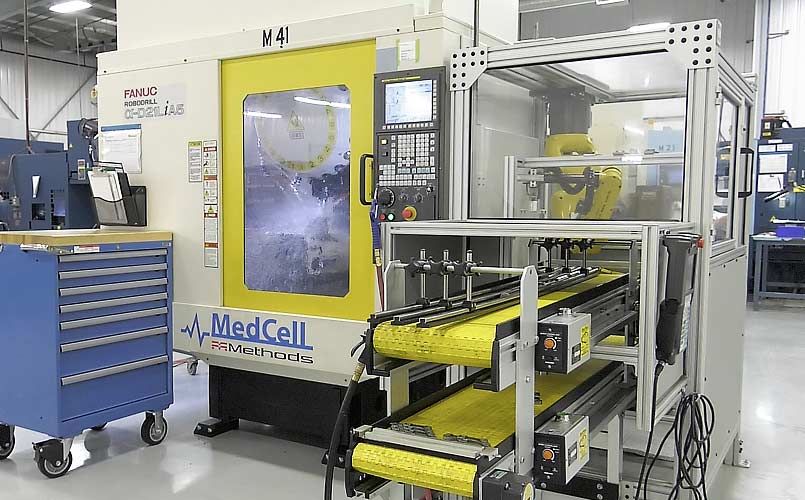
- Hybrid Manufacturing Workflows: Seamless integration of additive powder-bed processing with 5-axis CNC finishing, precision grinding, passivating, and laser marking under a single quality envelope.
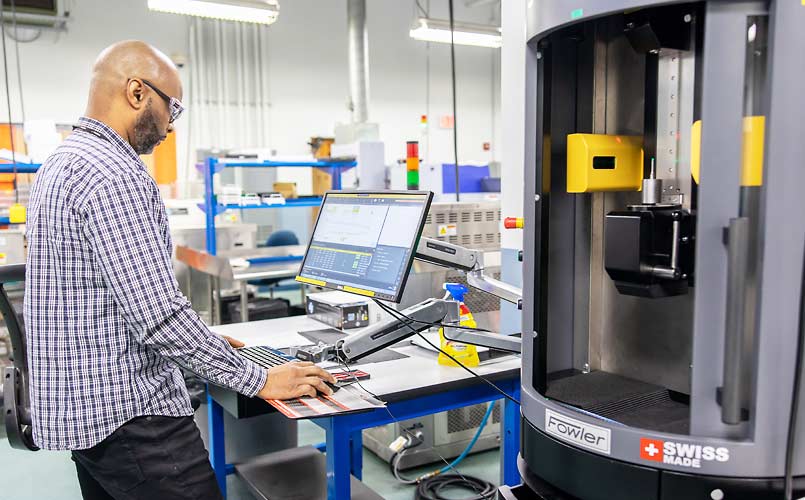
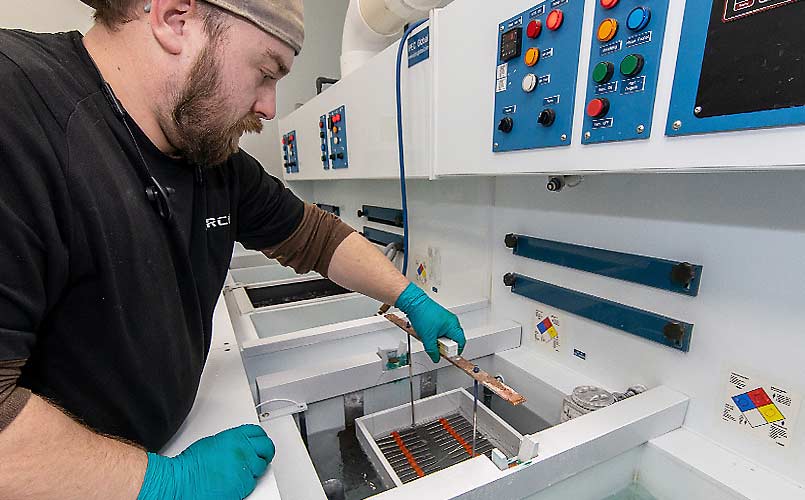
End-to-End Precision Manufacturing Facilities
Combining additive PBF technology with subtractive machining and accredited quality control systems.
Integrated Quality Architecture for Luxembourg OEM Partners
ISO 13485 & FDA Registered
Our quality management systems adhere strictly to ISO 13485 and ISO 9001 standards, providing complete lot traceability, raw material certificates (EN 10204 3.1), and robust Device History Records (DHR).
Full Turnkey Manufacturing
From initial Design for Additive Manufacturing (DfAM) consultations to PBF printing, stress-relief heat treatment, wire EDM support removal, 5-axis finish CNC machining, passivating, and cleanroom assembly.
Rapid Logistics to Luxembourg
Situated within Europe's central industrial core, we offer streamlined logistics to Luxembourg industrial parks, including Contern, Differdange, Bettembourg, and Belval, ensuring minimal transport lead times.
Frequently Asked Questions by Luxembourg Procurement Teams
Expert insights addressing key metallurgical, technical, and commercial considerations for PBF procurement.
How does Powder Bed Fusion (PBF) compare to traditional CNC machining for complex components?
Powder Bed Fusion excels at producing organic geometries, internal fluid/cooling channels, lattice structures, and consolidated assemblies that are impossible to machine subtractively. While traditional CNC machining is ideal for simple high-volume parts, PBF reduces tooling costs, minimizes material wastage, and enables weight savings of up to 60% without compromising structural strength. Most critical functional components utilize a hybrid approach: PBF for overall shape and internal features, followed by high-precision CNC machining for tight-tolerance mating interfaces (down to ±0.005mm).
What quality documentation and certifications are provided for Luxembourg orders?
Every shipment bound for Luxembourg buyers includes comprehensive quality assurance packages. Standard documentation includes EN 10204 3.1 Material Test Certificates, chemical composition analysis of powder lots, CT scanning porosity evaluation reports, Dimensional CMM Inspection reports, and First Article Inspection (FAI) reports compliant with AS9102 / ISO 13485 requirements.
Can your facility handle both rapid prototyping and serial volume production?
Yes. Our multi-laser PBF manufacturing floor is structured to accommodate functional engineering prototypes within days, as well as validated serial production runs numbering in the thousands of units. We deploy standardized parameter sets and continuous melt-pool monitoring across all machines to guarantee identical metallurgical properties regardless of batch size.
What secondary finishing operations are performed in-house after PBF printing?
We provide full turnkey post-processing, including Thermal Stress Relief, Hot Isostatic Pressing (HIP) to eliminate micro-porosity, Wire EDM plate separation, 5-Axis CNC finish milling/grinding, automated abrasive blasting, chemical passivation, electropolishing, laser etching, and ISO Class 7 cleanroom packaging.
What are the typical lead times for delivery into Luxembourg industrial zones?
For prototype requests with ready-to-print DfAM CAD files, standard turnarounds are 5 to 7 business days. Serial production lead times depend on secondary machining, heat-treatment cycles, and validation protocols, typically ranging from 2 to 4 weeks. Expedited priority lanes are available for urgent aerospace or surgical requirements.
How do we initiate a DfAM (Design for Additive Manufacturing) review with your engineering team?
You can begin by sharing your 3D CAD models (STEP/IGES/STL format) along with performance specifications and target alloy requirements through our engineering portal. Our additive manufacturing engineers will conduct a comprehensive DfAM review, evaluating orientation, support structure minimization, thermal stress mitigation, and post-machining allowances before delivering a detailed technical proposal.
Partner with a Certified Powder Bed Fusion Supplier
Accelerate your product development cycle with validated additive manufacturing, micron-level CNC machining, and comprehensive quality assurance engineered for Luxembourg's high-tech market.
Get a Quote