Precision Surgical Instrumentation & Component Portfolio
Explore our ISO 13485 manufactured surgical handles, implant driver components, and precision medical hardware engineered for Australian OEMs.
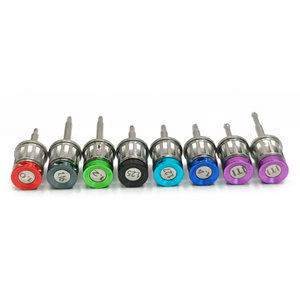
Fixed Coupling Silicone Handles: OEM Technical Architecture
An authoritative technical white paper on high-precision silicone overmolded stainless steel drivers, fixed couplings, and bio-compatible ergonomic assembly for surgical instrumentation.
1. Fundamentals of Fixed Coupling Silicone Handle Engineering
In modern surgical procedures—ranging from complex spinal fusion reconstructions to precision orthopedic joint replacements—the mechanical connection between a surgical tool handle and its driver tip must maintain absolute structural rigidity. Unlike quick-connect ratcheting mechanisms or torque-limiting spring clutch systems, Fixed Coupling Silicone Handles utilize a solid, direct-machined mechanical connection designed to eliminate micro-motion, rotational backlash, and mechanical play under high torsional loading.
Greyack Medical manufactures fixed coupling silicone handles by combining high-precision CNC turned metal cores (typically 17-4PH H900 precipitation hardened stainless steel or Grade 5 Titanium Ti-6Al-4V) with liquid silicone rubber (LSR) overmolding. The internal metallic shank features custom keyways, knurling patterns, and retention grooves. When LSR is injected around the metallic core under elevated temperature and pressure, it forms a mechanical interlock and a vulcanized chemical bond that prevents fluids, proteins, or sterilizing agents from penetrating the metal-silicone interface.
| Engineering Metric | Specification Standard | Performance Baseline |
|---|---|---|
| Silicone Polymer Grade | Medical Grade Liquid Silicone Rubber (LSR) | USP Class VI / ISO 10993 Biocompatible |
| Metallic Core Substrate | ASTM F899 Stainless Steel / Ti-6Al-4V ELI | 17-4PH, 316L, or Custom Titanium Alloys |
| Torsional Fatigue Resistance | ISO 16061 Surgical Instrument Standard | Exceeds 15 Nm ultimate shear torque without bond failure |
| Sterilization Capability | Steam Autoclave (134°C / 2.1 bar), ETO, STERRAD® | Validated for 500+ autoclave standard cycles |
| Surface Grip Durometer | ASTM D2240 Shore A Scale | Shore 50A to Shore 70A custom tactile softness |
| Concentricity & Runout | CMM Multi-Axis Laser Measurement | < 0.015mm TIR along full axial length |
2. Biocompatibility, Chemical Bonding & Overmolding Integrity
A primary failure mode in legacy surgical handles is fluid ingress beneath the elastomeric grip during washer-disinfector cycles and pressurized autoclave sterilization. When fluids become trapped behind silicone grips, they foster bio-burden accumulation, corrosion, and eventual delamination of the handle coating.
To eliminate fluid ingress, Greyack Medical employs a proprietary dual-phase bond preparation protocol. First, the metallic shank undergoes high-speed automated media blasting to achieve a precise surface roughness ($R_a 3.2 - 4.5\mu\text{m}$), establishing micro-mechanical anchor sites. Next, a medical-grade silane coupling primer is applied under controlled cleanroom atmospheric conditions before closed-loop silicone injection molding. This dual approach ensures that the silicone cure creates covalent siloxane bonds across the stainless steel substrate. The resulting fixed coupling silicone handle resists chemical attack from enzymatic detergents, alkaline wash solutions (pH up to 12), and harsh peracetic acid exposure.
3. Fixed Coupling Drive Interfaces for Surgical Drivers
Fixed handles require precision machining at the distal connection point to interface seamlessly with reusable taps, reamers, screwdrivers, and trial implants. Our facility produces custom and standard coupling configurations held to tight tolerance profiles:
- Fixed Hex Drive (2.5mm, 3.5mm, 4.5mm, 5.0mm): Precision broached hex sockets designed for maximum surface contact with orthopedic bone screw drivers.
- Fixed Square Drives (1/4" & 3/8" Drives): Heavy-duty square drive shafts for trauma and spinal surgery instruments needing high torsional transfer.
- AO Type & Hudson Fixed Receivers: Solid-state (non-quick release) mating geometries that lock surgical bits firmly into position with zero rotational slack.
- Custom Keyed Shafts: Specialized OEM geometries built according to customer STEP models, including asymmetrical keyways for intuitive single-orientation instrument insertion.
Localized Application Scenarios Across Australian Healthcare Sectors
How leading Australian medical device OEMs and hospital networks utilize Greyack Medical's fixed coupling silicone handles for localized clinical applications.
Orthopedic Trauma & Joint Reconstruction Sets
Australian orthopedic OEMs in New South Wales and Victoria incorporate our fixed silicone handles into surgical tray sets for total hip and knee replacement. The high-friction silicone grip provides tactile control even when exposed to saline and biological fluids in the operating theatre.
Spinal Fusion & Pedicle Screw Placement
Spinal procedures demand precise torque feedback without mechanical flex. Our fixed-coupling handles allow Australian spinal surgeons in Brisbane and Sydney to feel bone density changes directly when tapping pedicle walls or placing spinal rods, ensuring patient safety.
Robotic-Assisted Surgical Instrument Modules
As robotic surgery centers expand across private and public hospitals in Western Australia and South Australia, our custom-machined fixed handles serve as manual override drivers and calibration tools for robotic end effectors.
Australian Medical Device Trends & Regulatory Alignment
Key drivers shaping medical contract manufacturing, TGA approval pathways, and ergonomic expectations across ANZ medical device sectors.
1. TGA Harmonization with EU MDR Framework
The Australian Therapeutic Goods Administration (TGA) has aligned its regulatory frameworks closely with European EU MDR (Regulation 2017/745) requirements. Medical device sponsors in Australia must submit complete Design History Files (DHF) and full raw material traceability reports. Greyack Medical delivers ISO 13485 documented support, material test reports (MTRs), USP Class VI biological safety documentation, and validated cleaning protocol data to streamline TGA ARTG listing submissions for local distributors.
2. Demand for Sustainable, Reusable Instrument Trays
Environmental sustainability policies in Australian hospital networks (such as Queensland Health and South Australia Health) are driving a shift away from single-use plastic instruments toward high-durability reusable instruments. Our silicone handles are engineered for extended lifecycle performance, retaining grip integrity, mechanical alignment, and color-coded identification across 500+ autoclaving and automated washing cycles.
3. Custom Color Coding & Ergonomic Personalization
Operating theater efficiency requires immediate visual identification of instrument sizes during surgery. Greyack Medical offers custom medical-grade silicone color formulations—allowing Australian OEMs to establish distinct brand identities and color-coded size progression (e.g., blue for 3.5mm drivers, yellow for 4.5mm drivers) using non-fading, steam-stable pigments.
4. Supply Chain Resilience & Rapid OEM Prototyping
Australian medical technology companies face geographic challenges with international freight timelines. Greyack Medical mitigates supply chain risks by offering structured safety stock agreements, DDP (Delivered Duty Paid) shipping to Sydney, Melbourne, and Perth, and rapid DFM (Design for Manufacturability) prototyping with turnaround times measured in days.
Greyack Medical Manufacturing Capabilities & Infrastructure
Combining multi-axis CNC machining, custom liquid silicone overmolding, and full ISO 13485 quality control under one roof.
FDA Registered & ISO 13485
Fully compliant quality management systems audited for medical device implant and instrument contract manufacturing.
Micron-Level CNC Machining
High-speed Swiss-type turning, 5-axis milling, and centerless grinding holding tolerances down to ±0.005mm.
In-House LSR Overmolding
Dedicated medical-grade silicone injection molding machinery for consistent density, color, and bond adhesion.
Complete Traceability
Full material heat lot traceability, 100% optical CMM dimensional inspection, and comprehensive inspection reports provided with every shipment.
Frequently Asked Questions by Australian OEM Buyers
Clear, direct answers regarding customization, TGA support, logistics, minimum order quantities, and quality standards.
Does Greyack Medical assist Australian companies with TGA documentation and compliance?
Yes. We provide complete technical documentation packages required by Australian TGA Sponsors. This includes Raw Material Inspection Certificates (EN 10204 3.1), USP Class VI and ISO 10993 Biocompatibility test reports for our silicone formulations, ISO 13485 Quality System certificates, CMM dimensional reports, and sterilization validation summaries. These documents streamline your Australian Register of Therapeutic Goods (ARTG) application process.
What materials are available for custom fixed coupling silicone handle cores?
We machine metal shanks from medical-grade stainless steel variants such as 17-4PH (Condition H900 or H1150), 316L, 304, and 420 stainless steel. For lightweight or MRI-compatible surgical instrument sets, we also offer custom CNC turned cores in Grade 5 Titanium (Ti-6Al-4V ELI) and PEEK (Polyetheretherketone).
How do your silicone handles withstand aggressive hospital sterilization in Australia?
Our handles utilize high-consistency liquid silicone rubber (LSR) cross-linked with platinum catalysts. This material retains its durometer, color, and tensile strength under repeated standard steam autoclave cycles (134°C at 2.1 bar for 18 minutes), STERRAD® hydrogen peroxide gas plasma, and automated enzymatic washer-disinfector routines, resisting sticky degradation or color yellowing.
Can we customize handle shape, durometer, color, and laser branding for our OEM brand?
Absolutely. We offer complete custom OEM manufacturing. You can specify the handle geometry (axial flutes, teardrop shapes, cylindrical ergonomic palm grips), silicone hardness (Shore 50A to 70A), custom Pantone/RAL color matching, and custom laser-etched OEM logos or part numbers directly on the stainless steel coupling collar.
What is the typical shipping lead time and air freight logistics process to Australia?
For custom production runs, standard lead time is 4 to 6 weeks following prototype and DFM approval. We ship via express air freight (DHL/FedEx/UPS) directly to major Australian destinations including Sydney (SYD), Melbourne (MEL), Brisbane (BNE), and Perth (PER) with typical transit times of 3 to 5 business days. Customs documentation and DDP terms can be arranged based on your purchasing preferences.
What are your Minimum Order Quantities (MOQs) for prototype and production orders?
We support both small-batch prototype validation and high-volume production. Initial prototype runs can be fulfilled in quantities as small as 10 to 50 units for surgical trial feedback. Standard production batch MOQs typically start at 100 to 500 units depending on the complexity of the custom coupling geometry.
Partner with a Premier Medical Handle Manufacturer
Request a technical drawing review, DFM analysis, or custom quote for your surgical instrument project from our senior medical device engineering team today.