CNC Precision
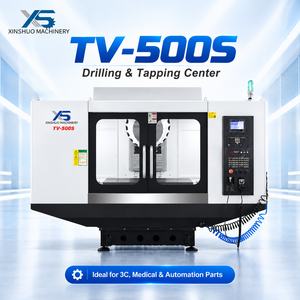
High-precision orthopedic implants, spinal fixation hardware, and CNC machining solutions engineered to meet exacting Irish and European medical device specifications.
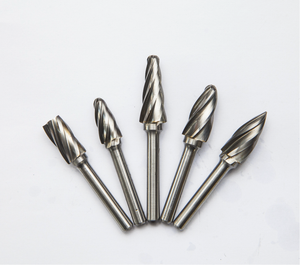
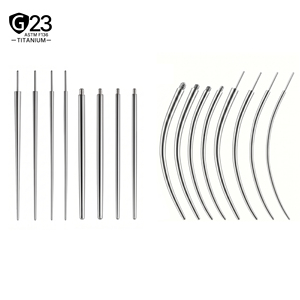
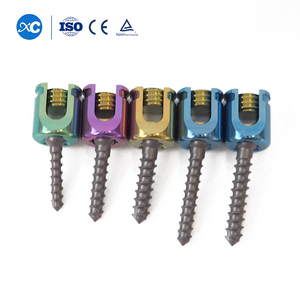
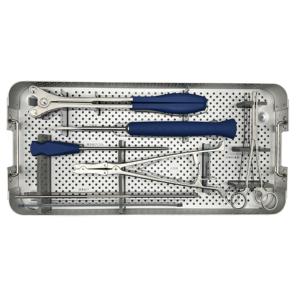
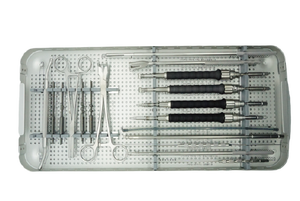
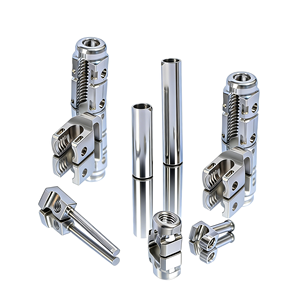
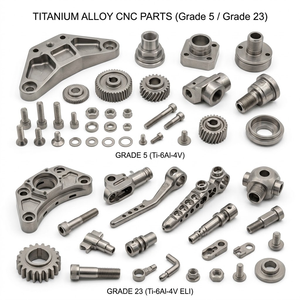
Ireland has established itself as the premier global MedTech powerhouse in Europe, home to over 300 medical technology companies, including 14 of the world’s top 15 MedTech original equipment manufacturers (OEMs). Located predominantly across key hubs such as Galway, Limerick, Cork, and Dublin, Irish medical device original equipment manufacturers require strict adherence to international quality management systems, rigorous regulatory compliance under EU MDR 2017/745, and ultra-precise contract manufacturing capabilities. As a dedicated OEM/ODM contract manufacturer and exporter of custom trauma implants, Greyack Medical bridges the gap between advanced manufacturing engineering and the localized procurement needs of Ireland's orthopedic market.
Trauma implants—encompassing anatomical locking bone plates, cannulated compression screws, intramedullary (IM) nail systems, external fixation frames, and pediatric reconstruction hardware—demand zero-defect reliability. When treating complex osteoporotic fractures, periarticular shaft breaks, or high-energy polytrauma cases in Irish public Health Service Executive (HSE) hospitals and private clinical centers, surgical outcomes depend heavily on the biomechanical integrity, fatigue resistance, and biological compatibility of the underlying titanium alloy or surgical steel implants.
Modern orthopedic trauma engineering in Europe is rapidly moving away from overly rigid internal fixation toward dynamic, micromotion-permissive locking plate constructs. Our custom OEM manufacturing workflows incorporate variable-angle polyaxial locking technology, controlled surface anodization (Type II/III), and precise pitch-matched thread profiles that optimize interfragmentary compression without inducing stress shielding or cortical bone reabsorption.
Our contract manufacturing infrastructure specializes in precision-machined, biocompatible implantable hardware engineered according to custom customer prints, CAD models, or reverse-engineered clinical prototypes. Our primary product ranges exported to Irish distributors and OEM brand owners include:
Pre-contoured titanium locking plates for distal radius, proximal humerus, distal femur, and lateral tibia fractures. Engineered with combi-holes accepting both standard cortex screws and threaded locking screws.
Cannulated femoral, tibial, and humeral interlocking nails crafted from Grade 23 Titanium (Ti-6Al-4V ELI). Featuring multi-planar proximal and distal locking options for maximum rotational stability.
Self-tapping 2.7mm, 3.5mm, 4.0mm, and 6.5mm cortical, cancellous, and headless compression screws with deep StarDrive or Hexagonal drive recesses machined under Swiss CNC turning controls.
Mini-fragment locking systems, K-wires, reconstruction plates, and tension band wiring devices specialized for delicate extremity procedures and pediatric orthopedics.
Polyaxial and monoaxial pedicle screws, spinal cross-links, titanium alloy rods, and minimally invasive (MIS) spinal instrumentation for trauma fusion applications.
Combining 3D Powder-Bed Fusion (PBF) titanium additive manufacturing with high-speed 5-axis CNC finishing to construct bespoke bone defect implants for complex oncological or trauma reconstruction.
In accordance with ISO 13485 standards and European regulatory expectations set by the Health Products Regulatory Authority (HPRA) in Ireland, all raw materials utilized in our custom OEM trauma implants undergo stringent chemical analysis, tensile testing, and microstructural verification. Below is a comprehensive overview of our standard material specifications and machining tolerances:
| Implant Category | Standard Material Grade | International Standards | Machining & Finishing Process | Dimensional Tolerance |
|---|---|---|---|---|
| Anatomical Trauma Plates | Titanium Grade 5 / Grade 23 (Ti-6Al-4V ELI) | ASTM F136 / ISO 5832-3 | 5-Axis CNC Milling, Type II Anodization, Laser Marking | ± 0.005 mm |
| Cannulated & Cortex Screws | Ti-6Al-4V ELI / 316LVM Stainless Steel | ASTM F136 / ASTM F138 (ISO 5832-1) | Swiss Longitudinal CNC Turning, Thread Whirling | ± 0.003 mm |
| Intramedullary Nails | Grade 23 Titanium Alloy / CoCrMo | ASTM F136 / ASTM F75 | Gun Drilling, Deep Hole Boring, Passivation (ASTM F86) | ± 0.010 mm |
| Spinal Rods & Screws | Medical Grade Titanium / PEEK OPTIMA | ASTM F136 / ASTM F2026 | Swiss Turning, Micro-Bead Blasting, Cleanroom Assembly | ± 0.004 mm |
| Surgical Cutting Tools & Drills | Custom 455 / 465 Stainless Steel | ASTM F899 | High-Speed Flute Grinding (20,000 RPM), AlTiN Coating | ± 0.002 mm |
Trauma screw geometry requires flawless surface finishes (Ra < 0.4 µm) to prevent soft-tissue irritation and facilitate smooth surgical insertion. Our manufacturing facilities leverage multi-axis Citizen and Star Swiss CNC turning centers equipped with high-speed thread whirling attachments. This process ensures continuous, single-pass micro-cutting of complex pitch variations, such as variable-step dual threads for cannulated compression screws. By eliminating secondary deburring hand operations, we achieve absolute pitch uniformity and superior shear resistance under extreme fatigue loads.
Surface treatment plays a critical role in cellular adhesion and fatigue strength. All titanium trauma implants exported to Ireland undergo chemical passivation according to ASTM F86 standards, followed by electro-chemical Type II titanium anodization. Type II anodizing creates a dense, non-porous titanium oxide layer that substantially increases surface hardness, minimizes fretting corrosion between plate-screw interfaces, and prevents cold welding (galling) during orthopedic assembly in the operating room.
Ireland’s trauma healthcare delivery relies on major university teaching hospitals, regional orthopedic acute units, and private surgical facilities. Procurement officers and orthopedic surgeons across Ireland evaluate OEM trauma systems based on ergonomic handling, bi-directional intraoperative flexibility, and direct compatibility with standard European surgical tray sets.
Supplying robust, high-load distal femur and proximal tibia locking plate systems to high-volume trauma units including St. Vincent's University Hospital Dublin, Beaumont Hospital, and Cork University Hospital (CUH).
Providing micro-bone plates, mini-fragment screws, and ergonomic silicone-handled surgical drivers to specialized orthopedic centers throughout Galway, Limerick, and the broader West Region.
Serving as a dependable overseas OEM manufacturing partner for Irish medical technology companies seeking to de-risk supply bottlenecks, improve margins, and maintain uncompromised technical file compliance.
The Irish orthopedic market is undergoing rapid evolution driven by three key operational shifts:
With the full implementation of EU MDR, medical device registrants in Ireland must maintain comprehensive Design History Files (DHF) and Technical Documentation (TD). Greyack Medical supports Irish OEM clients by delivering complete lot traceability, raw material melt certificates (EN 10204 3.1), cleaning validation reports, non-cytotoxicity testing data (ISO 10993-5), and First Article Inspection (FAI) reports using automated Coordinate Measuring Machines (CMM).
Hospitals across Ireland are increasingly adopting pre-sterilized, single-use trauma kits to lower operating room setup times and eliminate hospital-acquired infection risks. We offer full contract packaging capabilities within ISO Class 7 cleanrooms, utilizing double-sterile blister pouching and Tyvek sealing ready for EO (Ethylene Oxide) or Gamma sterilization.
Modern trauma treatment frequently requires trabecular bone interface structures that mimic human cancellous bone. Our integrated production capability combines Selective Laser Melting (SLM) 3D titanium printing for porous surface regions with high-speed 5-axis subtractive milling for precise joint articulation surfaces and locking thread interfaces.
Partnering with Greyack Medical provides Irish medical device brand owners with a seamless, highly structured 5-stage product development lifecycle tailored to medical device commercialization:
Our senior manufacturing engineers review customer CAD files and GD&T drawings, proposing geometric optimizations to lower tooling cycle times, eliminate tight-corner stress risers, and reduce manufacturing cost without altering clinical performance.
Accelerated prototype fabrication within 7 to 10 working days. Pre-production samples undergo mechanical bench testing, push-out force evaluation, and cadaveric trial fitting for surgeon evaluation in Ireland.
Full installation, operational, and performance qualification of CNC machining paths, automated passivation systems, and laser etching. Process capabilities (Cpk) are verified to exceed 1.67 for critical dimensions.
High-volume execution on automated robotic cell machining centers. Continuous optical laser gauging ensures 100% inline inspection for key dimensional parameters across extended production runs.
Custom packaging, laser UDI marking (GS1 DataMatrix compliance), and direct expedited air freight forwarding directly into Dublin Airport (DUB) or Shannon Airport (SNN) with full customs documentation.
Detailed answers to technical, regulatory, and logistics queries from orthopedic brand managers and supply chain directors in Ireland.
Elevate your orthopedic product line in Ireland with high-precision Swiss CNC machining, ISO 13485 quality assurance, and dedicated engineering support.
Send an Inquiry