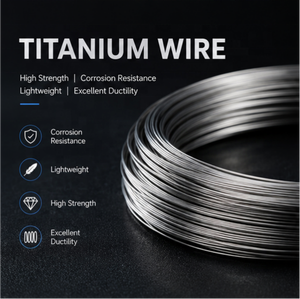
Surgical Robotics & High-Precision Medical OEM Components
Engineered to deliver micron-level repeatable accuracy, minimal tactile friction, and exceptional fatigue resistance for robotic surgery platforms and specialized clinical instruments in Tokyo.
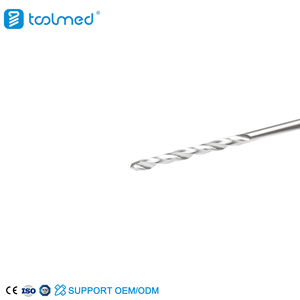
Orthopedic Implant Surgical Medical Round End 0.8 mm 1.1 mm 1.2 mm 1.5 mm 2.0 mm Bone Drill Bits
Get Catalog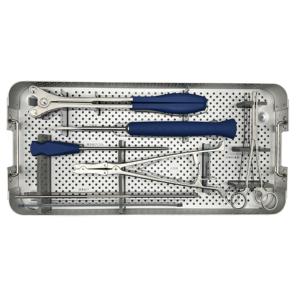
Spinal Medical Orthopedic Posterior Spinal Lnter-fixation System PSS Instruments Orthopedic Surgical Instrument
Get Catalog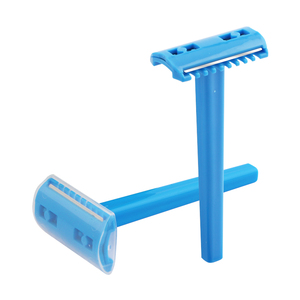
Disposable Surgical Prep Razor Double Edge Safety Razor Medical Use Stainless Steel Blades
Get Catalog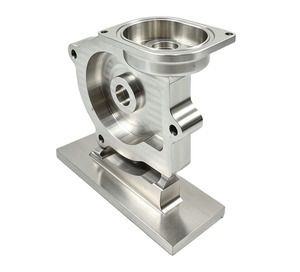
Custom ±0.01mm Precision CNC Machining Aluminum Stainless Steel Parts 5-Axis Wire EDM Fabrication for Medical Aerospace
Get Catalog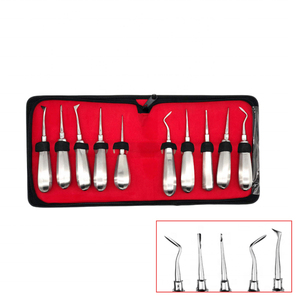
Electric Low Price 10-Piece Dental Root Elevator Set Surgical Instruments for Tooth Extraction & Root Elevation
Get Catalog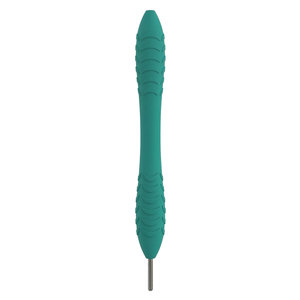
Ergonomic Dental Mirror Handle Premium Teal Silicone Grip Instrument for Oral Examination & Dental Surgery
Get Catalog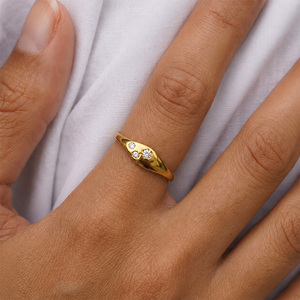
Wholesale Stainless Steel Rings & Precision Micro Assemblies Hypoallergenic Surgical Steel Bulk Component Supplier
Get Catalog±0.001 mm
Sub-Micron Machining
Swiss-type 5-axis CNC precision turning for robotic wrist joints
100%
CMM & Laser Inspection
Full dimensional lot traceability & First Article Inspection (FAI)
ISO 13485
Certified Operations
Strict quality management system meeting Japan PMDA standards
7-14 Days
Rapid Prototyping
Accelerated engineering DFM & sample delivery to Tokyo R&D hubs
Whitepaper: Precision Contract Manufacturing of Surgical Robotics Subassemblies for Tokyo’s MedTech Ecosystem
The global field of robotic-assisted surgery (RAS) is undergoing rapid transformation, driven by demands for micro-incision dexterity, real-time haptic control, and zero-backlash kinetic transmission. Tokyo, as the central nerve hub of Japan’s medical device innovation—housing premier research institutes in Koto-ku, Ota-ku, and Nihonbashi, as well as leading university hospitals—stands at the forefront of next-generation surgical system development. However, bringing complex robotic end-effectors, multi-DOF (Degree of Freedom) wrist assemblies, and micro-machined drive components from concept to clinical reality requires contract manufacturing partners capable of meeting uncompromising engineering tolerances.
As a premier China-based wholesale contract manufacturer specializing in medical components, Greyack Medical provides integrated engineering assistance, 5-axis CNC Swiss turning, micro-grinding, and additive manufacturing solutions explicitly optimized for OEM surgical robotics developers serving the Tokyo metropolitan area and broader Japanese healthcare markets.
Kinematic Wrist Articulations
Custom 7-DOF micro-pitch pulleys, clevis joints, and drive shafts manufactured from titanium ELI and 17-4PH stainless steel to eliminate cable slippage and hysteresis.
Additive Titanium Lattices
Direct Metal Laser Sintering (DMLS) powder-bed fusion for bio-integrative trabecular structures and weight-reduced structural housings in surgical arms.
PMDA Regulatory Compliance
Full material validation reports, ASTM/ISO raw material traceability, and cleanroom passivation supporting PMDA Class I, II, and III shonin approval dossiers.
Localized Application Scenarios in Tokyo’s Medical Robotics Sector
Japan’s medical device market operates under unique clinical workflow expectations and rigorous quality paradigms (Monozukuri). OEM surgical robotics engineers in Tokyo demand contract manufacturing partners who understand not just component geometry, but the system-level operational environment. Key localized application scenarios serviced by our China manufacturing facility include:
1. Endoscopic & Micro-Laparoscopic Robotic Manipulators
In abdominal and thoracic robotic procedures conducted across Tokyo medical centers, space constraints dictate micro-instrumentation. We produce stainless steel (316LVM) and cobalt-chrome grasper jaws, needle drivers, and shear effectors using high-precision 5-axis Wire EDM and micro-milling. Surface roughness values ($Ra < 0.2\,\mu\text{m}$) are strictly maintained to prevent tissue adhesion and ensure effortless fluid sterilization during automated re-processing.
2. Orthopedic Joint Reconstruction & Spine Robotic Navigation
Tokyo’s aging demographic has accelerated adoption of robotic-assisted total knee arthroplasty (TKA) and posterior spinal inter-fixation systems. We manufacture high-concentricity bone drill bits (ranging from 0.8mm to 2.0mm diameters), pedicle screw drivers, and dynamic torque-limiting handles. Our specialized tool grinding facilities ensure flute sharpness, precise relief angles, and structural integrity under high axial loads.
3. Haptic Feedback & Micro-Torque Transmission Modules
Modern surgical consoles require bilateral control teleoperation where surgeons feel tissue resistance in real time. This requires gearheads, planetary drives, and coupling mechanisms with near-zero backlash. Our micro-machining capabilities achieve tooth profile pitch errors within $\pm 2\,\mu\text{m}$, utilizing medical-grade titanium (ASTM F136 GR5) and shape-memory Nitinol wire components to transmit tactile sensation accurately.
By leveraging advanced nitric passivation and cleanroom ultrasonic cleaning, components shipped directly to Tokyo assembly lines are free of particulate contaminants and ready for immediate sterile cleanroom integration.

Industry Trends: The Evolution of Robotic Surgery Supply Chains in Japan
Historically, Japanese medical OEMs relied on local tier-2 and tier-3 precision machine shops located in Tokyo’s industrial districts such as Ota-ku. However, changing market dynamics have created a strategic shift toward international contract manufacturing partnerships with qualified Chinese facilities:
- Cost-Optimization Without Quality Compromise: R&D budgets for surgical robotics startups and established medtech conglomerates in Japan require scalable manufacturing pathways. Sourcing contract components from China reduces unit costs by 35% to 50% while adhering strictly to international ISO 13485 standards.
- Rapid Transition from Prototype to Serial Production: Traditional domestic machine shops in Tokyo often face capacity bottlenecks when scaling from pilot batches to thousands of surgical assemblies. Our automated 24/7 CNC machining cells enable seamless scaling within days.
- Material Integrity and Biocompatibility Assurance: Surgical components demand certified medical-grade raw materials (Titanium GR1, GR2, GR5 ELI, PEEK, 440C, 316LVM). We provide complete chemical composition analysis (ICP-MS, XRF) and mechanical test certifications with every export batch bound for Japan.
Comparative Analysis: Domestic Machining vs. Integrated OEM Contract Manufacturing
| Key Evaluation Criteria | Local Tokyo Machine Shops | Greyack OEM Manufacturing (China) | Strategic Benefit for Tokyo OEMs |
|---|---|---|---|
| Dimensional Machining Tolerance | ±0.005 mm | ±0.001 mm (Sub-Micron) | Higher kinematic precision for micro-wrist joints |
| Production Scalability | Low to Medium (Manual setup bound) | High (Automated 5-Axis Robotic Cells) | Rapid scaling for commercial product rollouts |
| Surface Finishing & Passivation | Subcontracted to third parties | Integrated In-House Cleanroom Line | Reduced lead time and single-source quality control |
| Regulatory Documentation | Basic Inspection Reports | Full ISO 13485, FAI & PMDA Dossier Support | Streamlined Japanese regulatory clearance |
| Total Cost of Goods (COGS) | High overhead baseline | Optimized (35-50% Savings) | Substantial budget efficiency for R&D and commercialization |
Engineering Excellence & Quality Management Architecture
Greyack Medical’s manufacturing facilities are engineered to serve as a direct extension of your R&D department. Our quality assurance framework aligns directly with Japanese Ministry of Health, Labour and Welfare (MHLW) Ordinance No. 169 and ISO 13485:2016 regulations.
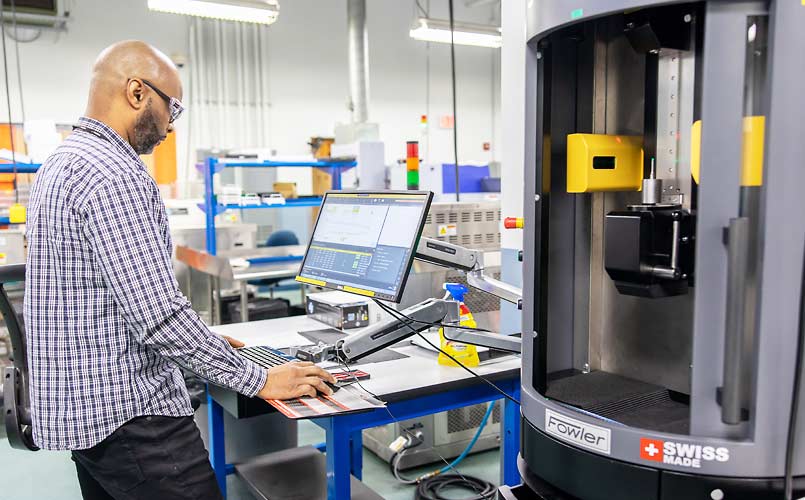
Sub-Micron Inspection & Metrology
Our quality control laboratory is equipped with state-of-the-art Carl Zeiss Coordinate Measuring Machines (CMM), Keyence optical profiling systems, and non-contact laser measurement tools capable of detecting surface variance down to 0.1 microns. Every component batch destined for Tokyo undergoes rigorous First Article Inspection (FAI) according to AS9102 / ISO standards.
Through stringent process validation (IQ/OQ/PQ), we guarantee zero-defect PPM performance across high-volume production runs of bone drills, spinal fixation components, and complex multi-axis gear assemblies.
Frequently Asked Questions by Tokyo OEM Buyers
Clear, authoritative answers regarding regulatory alignment, supply chain logistics, quality documentation, and project onboarding.
How does Greyack Medical ensure compliance with Japan's PMDA & MHLW Ordinance No. 169 regulations? +
We maintain an ISO 13485:2016 certified quality management system that fully aligns with MHLW Ordinance 169 requirements. Every component batch includes full material certification (Mill Test Certificates), lot traceability records, dimensional inspection reports, and certificate of conformity (CoC). Our engineering team assists Tokyo medical OEMs in compiling technical dossiers required for PMDA Shonin (approval) and Ninsho (certification) applications.
What materials do you specialize in for surgical robotics and implant applications? +
We process medical-grade materials including Titanium Wire & Bar (ASTM F67 Grade 1/2, ASTM F136 Grade 5 ELI), Medical Stainless Steel (316LVM, 17-4PH, 440C, Custom 455), Cobalt-Chrome alloys (CoCrMo), Nitinol shape memory alloys, and implant-grade engineered polymers such as PEEK (Polyetheretherketone) and Radel. All raw materials are sourced from accredited global mills with complete heat batch chemical analysis.
What are your standard logistics lead times for shipping surgical parts to Tokyo? +
Rapid prototypes can be machined and dispatched within 5 to 7 business days. For ongoing production orders, air freight delivery from our factory to Tokyo Haneda (HND) or Narita (NRT) airports takes approximately 2 to 4 days via DHL/FedEx Express or dedicated air cargo. We also support DDP (Delivered Duty Paid) shipping terms to simplify Japanese customs clearance.
How do you protect intellectual property (IP) for novel robotic instrument designs? +
IP protection is paramount. Before reviewing any 2D/3D CAD drawings or project specifications, we execute legally binding Non-Disclosure Agreements (NDAs). Data is stored on isolated secure servers with restricted personnel access. We regularly collaborate with research institutions in Tokyo and global medical OEM engineering teams under strict confidentiality protocols.
Can you support low-volume prototype development before scaling to mass manufacturing? +
Yes. We specialize in low-volume, high-complexity prototyping (1 to 50 units) for surgical robotics R&D trials, design verification, and cadaver lab testing. Once the design is locked, our engineering team conducts Design for Manufacturability (DFM) reviews to optimize the component for seamless mass production scaling.