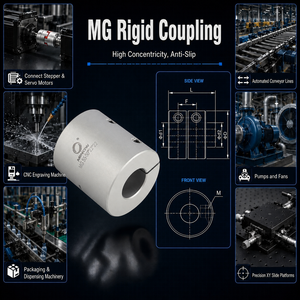
Engineered Precision Components
Featured Metal 3D Printed & Micro-Machined Products
Explore our export-grade medical implants, surgical instrumentation, and high-speed mechanical drive assemblies engineered for global compliance.
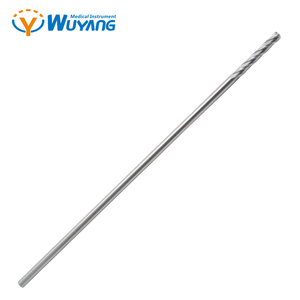
Wuyang Medical Stainless Steel Hollow Drill Bit Cannulated Drill Bit Orthopedic Trauma Implant Hollow Nail Instrument Set China
Send an Inquiry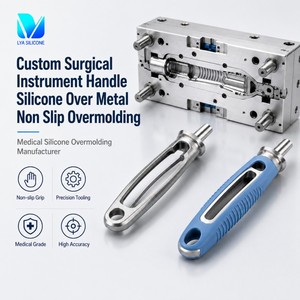
Custom Medical Grade LSR Silicone Over Metal Surgical Instrument Handle Overmolding Service for Non Slip Grip
Send an Inquiry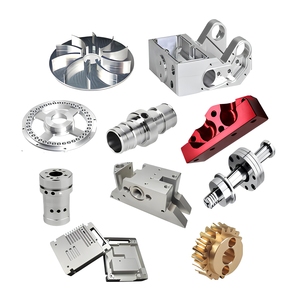
Cnc Machining Service Custom Cnc Parts CNC Turning Spare Parts Custom Medical Parts
Send an Inquiry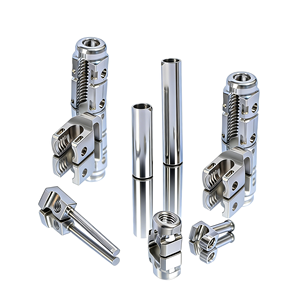
Titanium Spinal Pedicle Screw Rod System Orthopedic Spine Fixation Implant
Send an Inquiry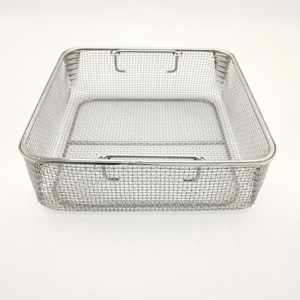
Factory Direct Stainless Steel Mesh Medical Baskets-Kitchen & Surgical Use Low MOQ Hot Sale
Send an Inquiry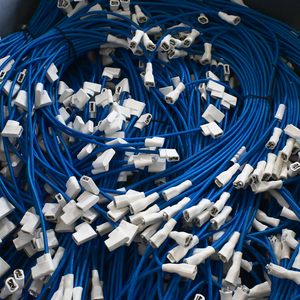
Medical Machine Reusable PVC Insulated Chloride Gold EEG Electrodes Cheaper Price Electronic Application
Send an Inquiry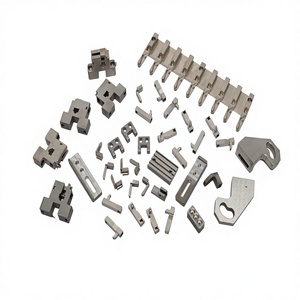
High Speed Precision Micro Machining for Electronic Medical Components Processing Services
Send an Inquiry
Whitepaper & Technical Analysis
Bridging Advanced Chinese Metal Additive Manufacturing with Egypt’s Industrial Transformation
As Egypt accelerates its national industrial development strategy under Egypt Vision 2030, the demand for high-complexity, low-volume, and weight-optimized metal components has surged exponentially. Traditional subtractive manufacturing methods often fall short when tasked with creating highly complex internal geometries, conformal cooling channels, or porous osteointegrative titanium implants. This technical whitepaper explores why premier Egyptian original equipment manufacturers (OEMs), engineering contractors, and medical device buyers are establishing direct supply chain partnerships with leading China Metal 3D printing manufacturers and exporters.
“Metal Additive Manufacturing (AM)—specifically Direct Metal Laser Sintering (DMLS) and Selective Laser Melting (SLM)—redefines production economics for high-value components across Cairo, Alexandria, and the Suez Canal Economic Zone (SCZone).”
1. Fundamental Technologies: DMLS vs. SLM vs. Electron Beam Melting (EBM)
Our manufacturing facilities in China utilize industrial-grade multi-laser Powder Bed Fusion (PBF) systems operating under inert argon atmospheres. By concentrating dual or quad 500W ytterbium fiber lasers onto micro-scale metal powder beds (particle size 15–45 µm), we achieve dense (>99.9%), fully metallurgical bonds without binders:
- Selective Laser Melting (SLM): Complete melting of elemental or alloy powders (e.g., Titanium Grade 5 / Ti6Al4V, Cobalt-Chrome CoCrMo, Stainless Steel 316L), producing mechanical properties equal to or surpassing forged materials. Ideal for orthopedic spine fixation systems and high-pressure fluid manifolds.
- Direct Metal Laser Sintering (DMLS): High-precision sintering optimized for superalloys such as Inconel 718 and Hastelloy X, vital for Egypt's oil and gas infrastructure in the Western Desert and Gulf of Suez.
- Subtractive Post-Processing Integration: Metal 3D printing is rarely a standalone process. We integrate secondary multi-axis Swiss CNC turning, micro-grinding, wire EDM, and chemical passivation under a single ISO 13485 quality control system.
2. Process Capability Matrix: Additive vs. Traditional Machining
The following comparative analysis illustrates why Egyptian engineering teams transition to hybrid manufacturing workflows for complex medical and industrial assemblies:
| Evaluation Parameter | Conventional 5-Axis CNC Milling | Metal 3D Printing (SLM/DMLS) | Hybrid: DMLS + CNC Post-Machining |
|---|---|---|---|
| Design Freedom & Lattice Structures | Restricted to tool path geometry; impossible internal voids | Unlimited; organic lattice & porous structures supported | Unlimited complex geometries with precision sealing surfaces |
| Material Utilization Efficiency | Low (up to 80% material scrap rate for aerospace parts) | High (>95% powder recyclability rate) | High (Subtractive finishing applied only to critical interfaces) |
| Dimensional Tolerance | High (Up to ±0.002 mm) | Standard (±0.05 mm to ±0.1 mm raw print) | Micron-level (±0.005 mm on post-machined features) |
| Lead Time (Small-Batch Prototypes) | 3 to 6 Weeks (Requires fixture setup & custom tooling) | 3 to 7 Days (Direct from CAD to build chamber) | 5 to 10 Days (Includes heat treatment & finishing) |
| Mechanical Properties | Anisotropic/Isotropic forged grain structure | Near-isotropic after Stress Relief & HIP treatment | Fully dense (>99.9%), certified to ASTM & ISO standards |
Regional Market Alignment
Localized Metal Additive Applications across Egyptian Industries
From healthcare infrastructure in Greater Cairo to industrial manufacturing along the Suez Canal, our metal 3D printing export services fulfill critical technical requirements.
Orthopedic & Spinal Implants
Egyptian medical centers and surgical implant distributors require biomaterial-compliant implants. Utilizing Ti6Al4V ELI powder, we print porous trabecular structures for spinal pedicle screw systems and acetabular cups that promote osseointegration and shorten patient recovery times.
Oil, Gas & Energy Turbomachinery
Operating in harsh desert environments and offshore Mediterranean rigs demands extreme corrosion resistance. We manufacture custom Inconel 718 valve trims, impellers, and downhole drilling nozzles with internal conformal cooling passages unmachinable by traditional tooling.
Automotive & Industrial Tooling
For Egypt's automotive assembly hubs in 6th of October City, we supply high-performance clamping screw couplers, motor drives, lightweight arm end-effectors, and injection mold inserts embedded with conformal cooling to reduce injection cycle times by up to 35%.
Market Dynamics & Strategic Foresight
Development Trends: Why Egyptian Enterprises Import Metal 3D Printing from China
The bilateral economic corridor between China and Egypt has strengthened significantly under the Belt and Road Initiative (BRI) and the expansion of the Suez Canal Economic Zone (SCZone). Several macro-economic and technological trends drive the adoption of Chinese metal additive manufacturing among Egyptian procurers:
A. Rapid Localized Assembly & Reduced Tooling Bottlenecks
Traditional forging dies and plastic injection tooling require months to fabricate and import. By leveraging digital CAD-to-part production in China, Egyptian factories receive end-use metal components or complex inserts in days via express air freight to Cairo International Airport (CAI) or sea freight to Alexandria and Port Said ports.
B. Strict Compliance with EDA & ISO 13485 Standards
Egypt's Egyptian Drug Authority (EDA) enforces rigorous quality controls on imported medical implants and surgical tools. Our facilities operate under strict ISO 13485:2016 quality management systems and FDA registration. Every metal 3D printed shipment includes complete material test reports (MTRs), powder batch traceability data, CMM dimensional inspection logs, and certificates of conformity (CoC).
C. Cost-Optimization via Hybrid Manufacturing Models
Pure additive manufacturing can be cost-prohibitive for simple geometry. China's advanced manufacturing ecosystem excels at hybrid solutions: metal 3D printing near-net shape geometries with intricate internal channels, followed by automated CNC turning and grinding. This methodology lowers overall unit cost while guaranteeing micron-level fitting tolerances.
Uncompromising Quality Assurance
Why Partner with Us for Metal 3D Printing & Contract Manufacturing
We combine advanced powder bed fusion platforms with world-class multi-axis machining, silicone overmolding, and validated surface treatment capabilities.
ISO 13485 & FDA Certification
Full compliance with global medical device standards, supporting seamless regulatory approval with the Egyptian Drug Authority (EDA) and international health authorities.
Rapid Prototype to Mass Scaling
From single patient-matched orthopedic implants printed within 48 hours to thousands of high-speed micro-machined medical components shipped on recurring schedules.
Multi-Material Versatility
Processing broad material suites including Medical Stainless Steel (316L, 17-4PH), Titanium Alloys (Ti-6Al-4V Grade 5), Cobalt-Chrome (CoCrMo), Inconel 718, and Aluminum AlSi10Mg.
Procurement FAQ
Frequently Asked Questions by Egyptian B2B Buyers & OEMs
Direct answers regarding custom clearance, shipping logistics, quality certification, and CAD security.
How do you ensure metal 3D printed components clear Egyptian Customs (Alexandria / Port Said / Cairo Airport)?
We provide full export documentation tailored to Egyptian Customs Authority standards, including commercial invoices verified with Nafeza (ACI system), Certificate of Origin (COO), detailed packing lists, and Harmonized System (HS) code classification for additive manufactured metal parts. Material test certificates (EN 10204 3.1) are attached to ensure effortless regulatory approval.
What metal powder materials are available for export to Egypt?
Our standard metal 3D printing powder inventory includes Titanium Alloy (Ti6Al4V ELI / Grade 23), Stainless Steel (316L, 17-4PH), Cobalt-Chromium (CoCrMo), Nickel Superalloy (Inconel 718, Inconel 625), and Aluminum (AlSi10Mg). All powders are virgin-grade, spherical, and verified via particle size distribution (PSD) analysis.
Can you combine metal 3D printing with CNC micro-machining and silicone overmolding?
Yes. We specialize in hybrid manufacturing workflows. For example, surgical tools can be metal 3D printed, CNC micro-machined on critical dimensions to ±0.005 mm tolerances, and subsequently overmolded with medical-grade LSR silicone handles (such as our non-slip surgical instrument handles) in-house.
How is intellectual property and proprietary CAD data protected during quotation and build?
We execute strict Non-Disclosure Agreements (NDAs) prior to receiving any 3D STEP/IGES files. All CAD data is transferred through encrypted servers and accessed strictly by designated project engineers for manufacturability review (DFAM).
What is the typical lead time for delivering metal 3D printed samples to Cairo?
Initial DMLS/SLM prototypes are typically printed within 3 to 5 business days. Following quality inspection and stress relief, air freight via DHL/FedEx/UPS reaches Cairo International Airport in approximately 4 to 6 operational days.
Ready to Scale Your Metal Additive Manufacturing Projects in Egypt?
Upload your 3D CAD files today for a confidential Design for Additive Manufacturing (DFAM) analysis and competitive export quotation within 24 hours.
Send an Inquiry