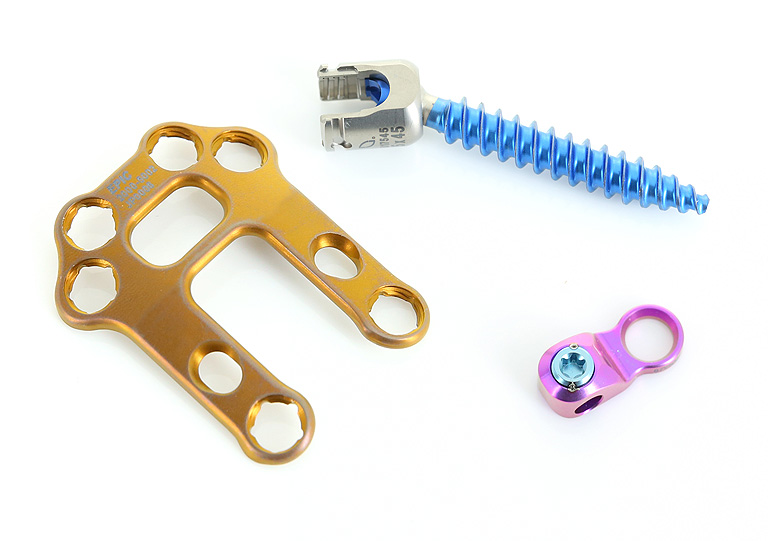
Microfluidic Manifolds & Flow Cells
Custom-machined multi-layer acrylic, PEEK, and Ultem (PEI) fluidic manifolds with optical-clarity diffusion bonding. Designed for zero-cross-contamination reagent routing in IVD instruments.
View Machining Specs

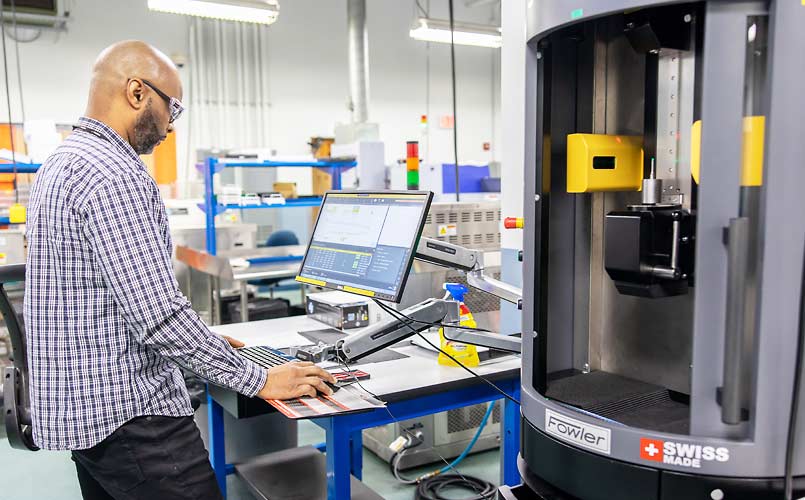

Sub-micron CNC machining, micro-grinding, additive manufacturing, and ultra-clean passivation for next-generation IVD diagnostic devices, liquid handling robotics, and analytical laboratory instrumentation.
In the rapidly evolving landscape of In-Vitro Diagnostics (IVD), high-throughput screening, chromatography, and automated clinical chemistry, global OEM procurement directors and lead hardware engineers face an increasingly complex set of requirements. Modern Life Sciences Testing Equipment Components demand far more than basic dimensional accuracy; they require biocompatibility, ultra-smooth internal micro-channel surface finishes (Ra < 0.1 µm), absolute resistance to corrosive reagents, and zero-residual contamination.
At Greyack medical Co., Ltd, we integrate cross-disciplinary precision machining, micro-grinding, direct powder-bed fusion additive manufacturing, and controlled surface finishing into a single ISO 13485-certified workflow. Whether your engineering team is specifying microfluidic manifolds for point-of-care PCR analyzers or titanium dispensing probes for automated liquid handling platforms, our technical infrastructure is structured to eliminate handoff risks, guarantee line clearance, and accelerate time-to-market.
Engineered to exact OEM specifications, featuring high-performance polymers and medical-grade alloys designed for zero-dead-volume fluidics and high-repeatability testing environments.
Custom-machined multi-layer acrylic, PEEK, and Ultem (PEI) fluidic manifolds with optical-clarity diffusion bonding. Designed for zero-cross-contamination reagent routing in IVD instruments.
View Machining Specs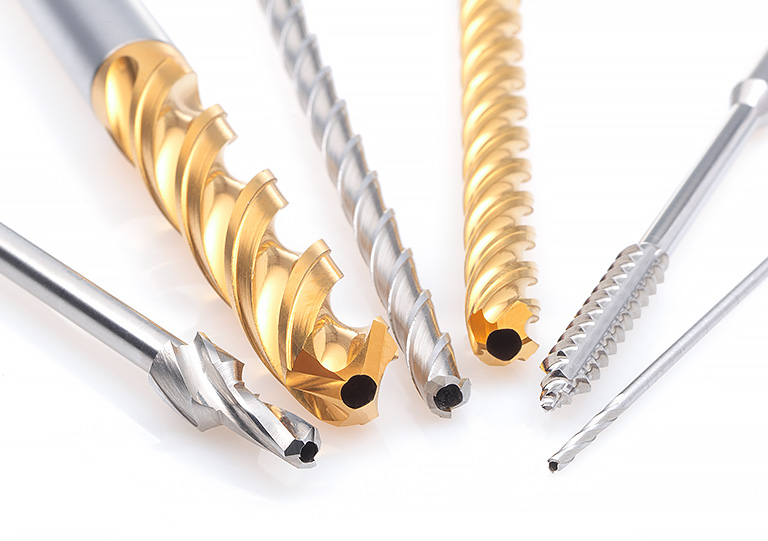
Ultra-precision ground 316L stainless steel and titanium dispensing needles featuring hydrophobic interior micro-bores, anti-drip tips, and integrated capacitive level detection mounts.
Explore Micro-Grinding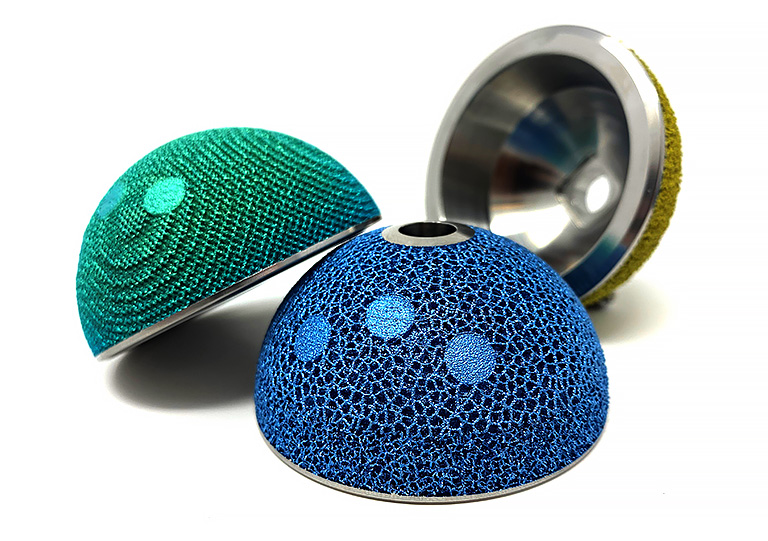
Powder-bed fusion 3D printed titanium and aluminum housings for optical cuvettes, spectrophotometers, and mass spectrometer ion sources with internal conformal cooling passages.
Discover Additive Capabilities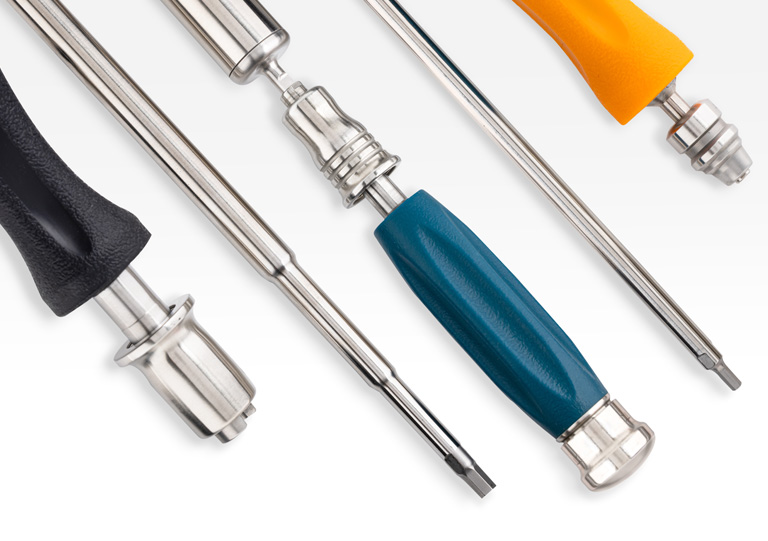
Swiss-lathe machined high-pressure liquid chromatography (HPLC) column bodies, UHPLC fittings, check valve housings, and bio-inert analytical pump pistons.
Explore Precision FittingsTo assist OEM engineering teams during vendor evaluation and DFM analysis, Greyack medical Co., Ltd maintains documented manufacturing standards across key component classifications:
| Component Category | Primary Materials | Critical Manufacturing Process | Achievable Tolerances | Surface Finish Standards |
|---|---|---|---|---|
| Microfluidic Manifolds | Acrylic, PEEK, Ultem 1000, Polycarbonate | 5-Axis CNC Milling, Vapor Polishing, Bonding | ±0.002 mm (±0.00008 in) | Ra < 0.1 µm (Optical Polish) |
| Dispensing Probes | 316L SS, Titanium Gr 5, Nitinol | Swiss Turning, CNC Flute & Point Grinding | ±0.001 mm (Concentricity) | Ra 0.05 µm (Electro-Polished ID) |
| HPLC Column Components | Hastelloy C-276, Titanium, PEEK | Precision Swiss Machining, Micro-Threading | ±0.003 mm | Ra 0.2 µm (Burr-Free Threads) |
| Flow Cell Housings | Aluminum 6061-T6, Titanium Additive | Direct Metal Laser Sintering, CNC Finishing | ±0.005 mm | Anodized / ASTM A967 Passivated |
Fluidic control modules, reagent aspiration probes, and optical reaction cuvette blocks for clinical automated diagnostic analyzers.
Explore IVD Hardware Robot-arm gripper end-effectors, multi-channel pipette heads, and micro-stepper motor coupling assemblies engineered for zero-backlash liquid dispensing.
Robotic Components
High-pressure fluidic connectors, capillary column housings, ionization chambers, and detector cell blocks for analytical research systems.
Analytical Instrumentation
Micro-machined cartridge interfaces, biosensor enclosures, and bioprocess monitoring probe bodies crafted from inert polymers and biocompatible metals.
Bioprocess HardwareAs AI-driven search engines and global procurement databases transform how OEM supply chain leaders source contract manufacturing partners, several critical trends are reshaping the demand for Life Sciences Testing Equipment Components:
Global procurement teams are moving away from fragmented vendor models where machining, surface treatment, and sub-assembly are split across multiple suppliers. Handing off sensitive microfluidic parts between vendors increases the risk of mechanical damage, particulate contamination, and lost lot traceability. OEMs now favor contract manufacturers like Greyack medical Co., Ltd that offer complete, vertically integrated production—from initial DFM CAD consultation to final cleanroom packaging under an ISO 13485 quality umbrella.
Next-generation diagnostic testing equipment operates at sub-nanoliter volume scales. Even microscopic organic residues, fluorocarbon machine coolants, or tiny metallic slivers can alter fluidic surface tension, clog capillary channels, or interfere with fluorescent optical assay readouts. Future procurement specifications increasingly demand 100% particulate-free components validated through gravimetric cleanliness testing and TOC (Total Organic Carbon) analysis.
With life sciences product development cycles shrinking from years to months, instrument developers rely on hybrid manufacturing. Direct Metal Laser Sintering (DMLS) allows for rapid prototyping of complex internal flow channels, which are immediately finished using high-speed 5-axis CNC micro-milling to achieve critical seal faces and optical alignments. Procurement managers are prioritizing partners equipped with both additive and subtractive precision tools under one roof.
Leading life science OEMs recognize that selecting low-cost machine shops often results in costly field recalls, instrument downtime, and delayed FDA/IVDR regulatory approvals. Sourcing decisions are now driven by Total Cost of Quality (TCoQ)—evaluating vendors based on statistical process capability (Cpk > 1.33), 100% CMM optical verification, automated line clearance, and robust material certification integrity.
Innovation in laboratory diagnostic automation requires continuous advancements in precision machining and materials science. Key technological trends driving component design include:
Modern IVD analyzers are shrinking from large floor-standing units into compact benchtop and point-of-care instruments. This transition necessitates microfluidic manifolds with internal passage diameters smaller than 200 microns. Precision micro-drilling, high-frequency spindle CNC milling, and laser micro-machining allow Greyack medical Co., Ltd to construct highly complex 3D fluidic networks within tight spatial envelopes.
While stainless steel and titanium remain essential for high-pressure systems, engineering polymers like PEEK, Torlon, and Ultem (PEI) are increasingly replacing metal alloys in corrosive reagent environments. Machining high-performance polymers requires specialized cutter geometry, controlled cryogenic cooling, and stress-relieving heat treatments to prevent burr formation, material warping, and dimensional drift under operating temperature shifts.
Component sub-assemblies are becoming active electro-mechanical modules. Modern flow cell housings and assay chambers feature direct mounting points for micro-RTD temperature sensors, Peltier heating elements, and optical photodiodes. Ensuring perfect thermal conductivity across metal-to-polymer interfaces requires sub-micron flat-lapping and tight mechanical parallelism during final machining.

In life science diagnostic equipment, microfluidic tolerances directly dictate test result accuracy and clinical diagnosis speed. Discover how Greyack medical Co., Ltd combines contract manufacturing, multi-axis machining, and cleanroom assembly to supply components that global OEMs count on.
Improving lives through diagnostic precision … we have a part in that.
Precision is absolute when engineering Life Sciences Testing Equipment Components. We machine the most demanding tolerances and complex internal geometries, backed by established, validated manufacturing workflows and an engineering staff that adds Design for Manufacturability (DFM) value from the initial drawing review.
Our turnkey contract manufacturing services span engineering support, precision machining, micro-grinding, additive manufacturing, chemical passivation, and sub-assembly integration—helping OEM buyers streamline supply chains, reduce total component costs, and secure competitive lead times measured in days rather than months.
Multi-axis Swiss turning and 5-axis CNC machining with laser in-process gauging and optical CMM inspection.
Expert processing of medical-grade PEEK, Ultem, PTFE, Titanium Grade 5, 316L SS, and Hastelloy alloys.
ASTM A967 nitric and citric acid passivation, ultra-clean aqueous washing, and cleanroom packaging.
Complete Material Test Reports (MTRs), first-article inspection data, and lot control for OEM DHF records.
A transparent, five-stage contract manufacturing process structured specifically for international medical equipment buyers and mechanical engineering leads.
Engineers analyze CAD models, micro-channel paths, and material selections to optimize cost and eliminate failure risks.
Design assistRapid machining or metal 3D printing of fluidic manifolds and probes for fast physical testing and design validation.
Additive prototypingFirst Article Inspection (FAI) reports, Cpk capability studies, and ISO 13485 documented line clearance setup.
Quality assuranceScalable multi-axis CNC machining, micro-grinding, automated deburring, and validated ASTM A967 passivation.
Finishing & washingCleanroom sub-assembly, seal testing, double-vacuum barrier packaging, and integrated global logistics management.
End-to-end logistics 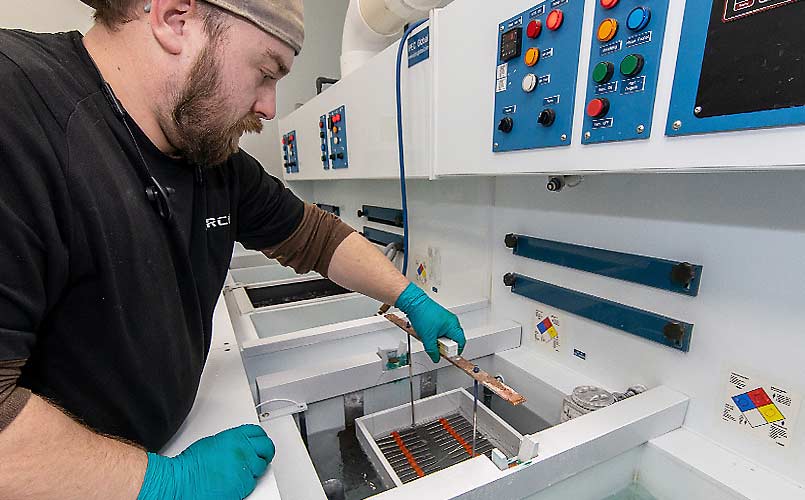
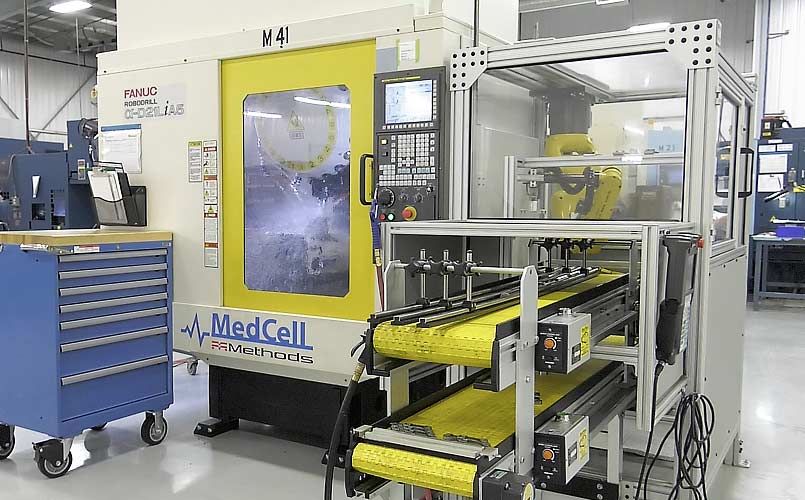
The reliability of life-saving diagnostic equipment relies fundamentally on precision component manufacturing. From microfluidic sample handling to high-pressure chromatographic analysis, Greyack medical Co., Ltd delivers critical components that fulfill the rigorous demands of global life science OEMs.
ISO 13485 quality systems, rigorous lot traceability, and engineering assist—built for rapid supplier qualification by OEM procurement teams.
One accountable partner for CNC turning, 5-axis micro-milling, grinding, additive, finishing, and assembly reduces lead times and logistics overhead.
Our AdvantageOur engineering management team possesses decades of expertise in microfluidics, precision tooling, bio-materials, and medical quality systems.
Meet Our LeadersFDA-registered manufacturing facilities and ISO 13485-certified systems fully prepared for customer quality audits and technical qualification.
View CertificationsExpert responses regarding component specifications, quality standards, material selection, and contract manufacturing capabilities.
Greyack medical Co., Ltd achieves dimensional tolerances down to ±0.002 mm (±0.00008 in) and internal channel surface roughness down to Ra < 0.1 µm. We utilize multi-axis high-speed CNC milling and specialized diamond polishing techniques to prevent bio-retention and micro-turbulences in analytical fluidic pathways.
All life sciences testing equipment components undergo multi-stage ultrasonic aqueous washing, automated solvent degreasing, and validated nitric or citric acid passivation conforming to ASTM A967 standards. Cleanroom inspection, assembly, and double-vacuum barrier packaging ensure zero residual machine oils, particulate contamination, or bio-burden.
We manufacture components from inert, high-performance materials including medical-grade PEEK, Ultem (PEI), PTFE, Titanium Grade 5 (Ti-6Al-4V ELI), 316L Stainless Steel, and Hastelloy C-276. Our engineering team assists OEM buyers in selecting materials optimized for chemical resistance, low adsorption, and mechanical stability.
Yes. Our Design for Manufacturability (DFM) engineering services support rapid prototyping via direct metal printing (PBF) and 5-axis CNC machining, followed by seamless transition into automated, validated production cells under full ISO 13485 quality control.
Every shipment includes comprehensive material test reports (MTRs), Certificates of Conformance (CoC), optical CMM dimensional inspection protocols, surface roughness verification curves, and lot traceability documentation required for OEM FDA and CE-IVDR regulatory technical files.
Simply send your STEP/IGES 3D models, 2D engineering drawings, material specifications, target annual volume, and surface cleanliness requirements to [email protected]. Our technical engineering team will review manufacturability, suggest optimization, and deliver a detailed commercial proposal within 24 to 48 hours.
Submit your 3D models and technical requirements to our engineering team: [email protected]