Featured Precision Medical & Industrial Components
Engineered for stringent regulatory compliance, featuring bio-compatible anodizing, micron-level CNC tolerances, and advanced alloy surface treatments.
1. Comprehensive Overview of Titanium Anodizing & Surface Engineering
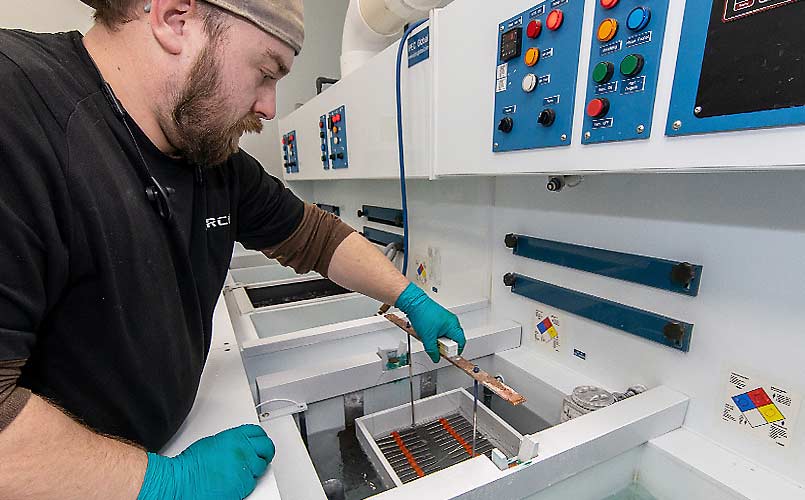
Titanium anodizing stands as a critical electrochemical surface conditioning methodology essential for modern medical technology, surgical robotics, aerospace mechanisms, and defense engineering. Unlike conventional surface deposition or organic painting, titanium anodizing does not apply an external chemical film or pigment onto the component substrate. Instead, it electrolytically transforms the native oxide film ($TiO_2$) into a controlled, highly coherent, dielectric barrier layer that fundamentally enhances material performance without changing critical dimensional tolerances.
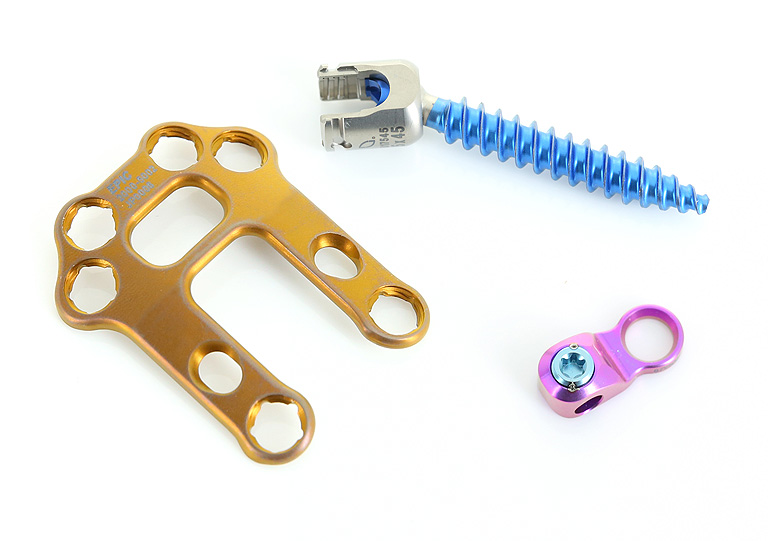
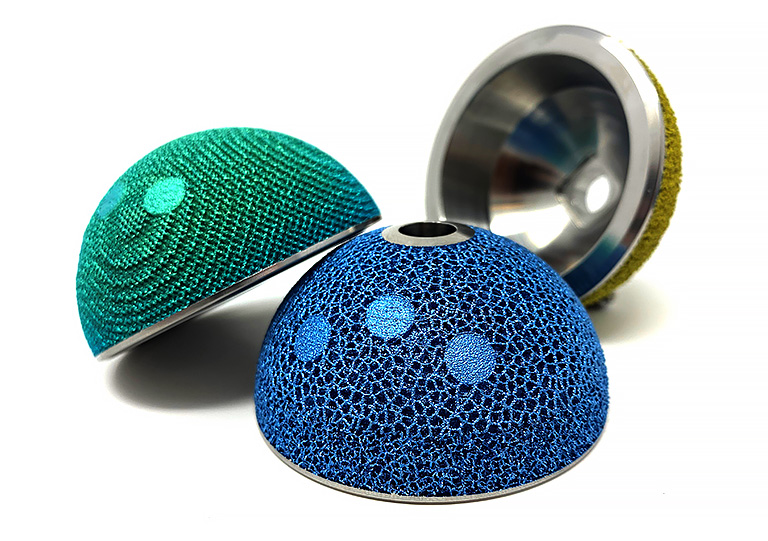
In high-stakes applications—such as orthopedic spinal pedicle screws, acetabular hip shells, micro-dental abutments, and surgical robotic end-effectors—titanium anodizing serves two principal technical functions: functional micro-hardness enhancement with anti-galling friction reduction (Type II) and vivid color identification coding via optical light interference (Type III). By establishing strict controls over electrolyte composition, bath temperature, current density, and cell breakdown potential, global contract manufacturers deliver components capable of enduring aggressive autoclave sterilization cycles, high cyclic fatigue loading, and demanding biological environments.
Information Gain Insight: The optical colors observed in Type III Titanium Anodizing result entirely from optical interference of light waves reflecting off the outer oxide surface and the inner metal-oxide interface. No dyes, pigments, or organic chemistry are introduced, rendering the surface 100% biocompatible, non-toxic, and ISO 10993 compliant for permanent human implantation.
Biocompatibility & Passivation
Controlled anodic oxidation thickens the protective titanium dioxide passive layer, drastically suppressing iron ion elution and enhancing tissue cell attachment in orthopedic applications.
Anti-Galling Performance
AMS 2488 Type II anodizing transforms ductile titanium surface microstructures into dense grey anti-friction layers, eliminating thread galling during high-torque bone screw insertion.
Optical Color Coding
Type III anodizing produces a precise spectrum of color shades (Gold, Violet, Blue, Green) via sub-micron refractive oxide thickness tuning without changing part geometry.
2. Technical Specifications & Anodizing Standards Comparison Matrix
When specifying titanium anodizing services for medical device contract manufacturing or aerospace components, engineering procurement teams must select the appropriate standard classification based on operational stress, wear requirements, and bio-interface demands. Below is the executive engineering matrix outlining the parameters across primary titanium anodizing specifications:
| Anodizing Class | Industry Standard | Oxide Layer Thickness | Primary Functional Mechanism | Biocompatibility & Wear Profile |
|---|---|---|---|---|
| Type I Titanium Anodizing | AMS 2487 / Commercial | 10 nm – 50 nm | High-voltage thin film conditioning for elevated heat masking and surface prep | Basic corrosion resistance; minimal impact on friction coefficient. |
| Type II Titanium Anodizing | AMS 2488 Type II / ISO 20160 | 100 nm – 500 nm | Alkaline bath breakdown anodization yielding dense, grey anti-galling conversion surface | High wear resistance; prevents titanium-on-titanium galling under extreme torque. |
| Type III Color Anodizing | ISO 20160 / Medical OEM Specs | 20 nm – 300 nm (Voltage Dependent) | Light interference oxide layer creation for visual identification and sizing coding | 100% biocompatible, zero organic dye outgassing, resilient to autoclave cycles. |
| Micro-Arc Oxidation (MAO/PEO) | ASTM F3044 / Custom OEM | 5 µm – 50 µm | Plasma discharge oxide ceramic coating formation (Rutile & Anatase crystalline phase) | Extreme wear & abrasion resistance; porous surface ideal for osseointegration. |
3. Strategic Future Procurement Trends in Titanium Anodizing (2025–2030)
As global medical device OEMs and aerospace original equipment manufacturers accelerate their digital transformation and supply chain consolidation, titanium anodizing procurement is evolving from isolated surface finishing jobs into fully integrated, digitally validated contract manufacturing workflows. Key procurement trends shaping the market include:
A. Closed-Loop Spectrophotometric Color Consistency Control
Historically, color matching in Type III titanium color anodizing suffered from batch-to-batch spectral variance caused by minor fluctuations in titanium alloy chemistry (such as Ti-6Al-4V ELI vs Grade 2 Unalloyed Titanium), bath temperature, and bath age. Advanced anodizing facilities now utilize automated closed-loop spectrophotometer measurement systems mapped to the $CIELAB$ color space ($L^*a^*b^*$). By establishing tight delta-E ($\Delta E < 1.5$) thresholds, contract manufacturing exporters guarantee absolute visual uniformity across hundreds of thousands of serialized surgical instrument handles and implant sizes.
B. Laser Micro-Texturing Synergized with AMS 2488 Type II Anodizing
To meet demanding orthopedic implant stability requirements, modern production lines combine ultra-short pulse femtosecond laser ablation with AMS 2488 Type II titanium anodizing. The laser creates controlled nano-groove topographies that accelerate osteoblast differentiation, while subsequent Type II chemical conversion locks in a low-friction surface on non-bonded load-bearing threads. Sourcing managers increasingly favor suppliers who offer this combined laser-anodizing solution under a single quality control standard.
C. Elimination of PFAS Degreasers & Sustainable Electrolyte Recycling
Global environmental mandates—notably EU REACH and US EPA regulations regarding per- and polyfluoroalkyl substances (PFAS)—are pushing premier titanium surface finishing plants toward bio-degradable, aqueous alkaline ultrasonic cleaning chemistries. Next-generation anodizing plants incorporate continuous closed-loop ion-exchange membrane filtration systems that recycle electrolyte bath acid while capturing heavy metallic residues, ensuring zero-discharge compliance for multinational OEM supply chains.
4. Technological Innovations & Metallurgical Evolution
Innovations in titanium surface modification extend beyond traditional anodizing baths. Recent breakthroughs in nanostructured oxide synthesis have positioned anodized titanium as an active functional interface rather than a passive coating.
By adjusting bath voltage and fluoride-containing organic electrolytes during the electrochemical reaction, engineers can grow highly ordered Titania Nanotube ($TiO_2$ NT) Arrays vertically aligned on titanium substrates. These nanoscale tubular matrices can be loaded with anti-microbial silver nanoparticles or therapeutic agents, enabling targeted local drug elution directly from spinal cage implants or dental implants to combat postoperative infections.
Furthermore, Plasma Electrolytic Oxidation (PEO) / Micro-Arc Oxidation (MAO) continues to replace conventional anodizing where extreme dielectric breakdown voltage, fretting wear protection, and micro-hardness ($>1000\text{ HV}$) are required. PEO processes form thick, crystalline rutile and anatase phase ceramics directly from the parent metal, presenting zero delamination risk under intense dynamic shear stresses experienced in surgical robotics torque transmissions and aerospace structural brackets.
5. OEM Procurement FAQ: Essential Buyer & Quality Engineering Questions
To streamline supplier evaluation and technical audits, our senior quality assurance engineering team has compiled definitive answers to common inquiries raised by procurement officers and device design engineers:
Does Titanium Anodizing alter critical machining dimensions or pitch diameters of precision threads?
How does Type II Anodizing prevent galling during orthopedic surgical screw installation?
What documentation and certifications are supplied with exported anodized titanium orders?
Can Type III Anodizing colors withstand repeated hospital steam autoclave sterilizations?
How do engineering teams start a custom titanium anodizing or manufacturing project with Greyack Medical?
Partner with a Global Leader in Titanium Anodizing & Contract Manufacturing
Elevate your medical device or high-precision aerospace components with validated ISO 13485 quality, zero-galling Type II anodizing, and vibrant Type III optical color coding.
Contact Us