High-Precision Surgical Instruments & OEM Components
Manufactured under rigorous ISO 13485 controls with micron-level CNC machining, advanced metallurgy, and strict lot traceability.
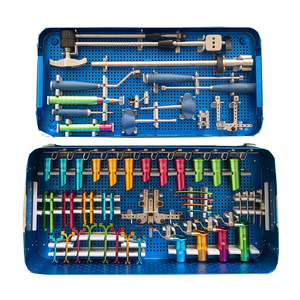
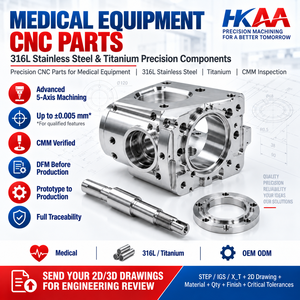
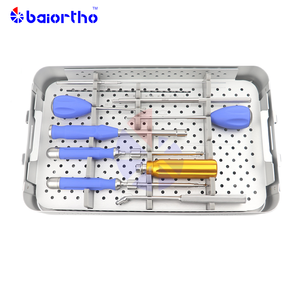
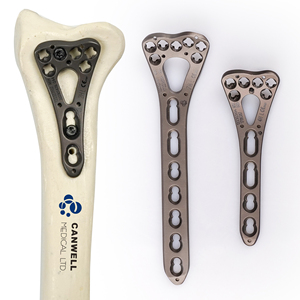
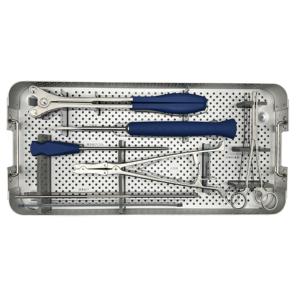
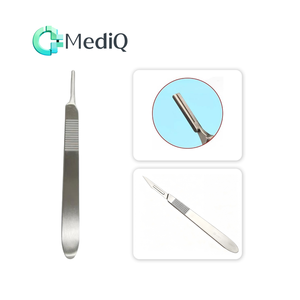
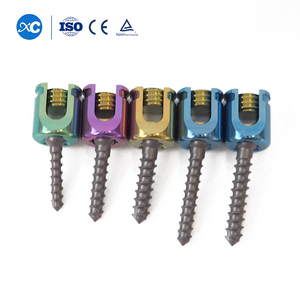

End-to-End Medical OEM Contract Manufacturing Solutions
Integrating multi-axis CNC Swiss machining, powder-bed fusion additive manufacturing, and controlled passivation under a single quality management system.
Swiss CNC & Multi-Axis Machining
High-speed Swiss-type precision turn-milling for complex micro-geometries, pedicle screws, spinal rods, and robotic-assisted surgical instrument shafts requiring sub-micron dimensional repeatability.
PBF Additive Manufacturing
Powder-bed fusion 3D printing engineered for biomimetic porous titanium lattice structures, acetabular cups, and custom patient-specific implants impossible through conventional subtractive tooling.
Medical Grinding & Fluting
High-precision drill point grinding, flute grinding, and thread grinding using medical-grade stainless steel alloys for drills, taps, reamers, burs, and orthopedic cutting tools.
Passivation & Surface Finishing
Controlled ASTM F86 / ASTM A967 citric and nitric passivation, electropolishing, laser marking, and bio-burden controlled cleanroom pre-packaging for sterile boundary readiness.
Silicone & Torque Handles
Ergonomic MedTorque silicone-molded instrument handles featuring modular ratcheting couplers, fixed drive shafts, and precision torque-limiting protection for accurate surgical tensioning.
Validated DFM & DHF Support
Design-for-Manufacturability reviews, IQ/OQ/PQ process validation protocols, FMEA risk mitigation, and complete Design History File documentation for FDA 510(k) and EU MDR filings.
Engineering Standards in Surgical Instrument Manufacturing & Global Export
In the contemporary medical device landscape, global OEMs require contract manufacturing partners that extend far beyond standard machine shop capabilities. As surgical procedures transition toward Minimally Invasive Surgery (MIS), Robotic-Assisted Surgery (RAS), and specialized orthopedic reconstruction, the mechanical specifications imposed on surgical instruments and implants have reached sub-micron thresholds. Selecting a top trusted surgical instruments supplier and exporter requires a comprehensive evaluation of metallurgy, process validation, risk-mitigation frameworks, and compliance with stringent regulatory bodies including the US FDA and European Medical Device Regulation (EU MDR 2017/745).
1. Metallurgical Excellence & Material Selection Criteria
Surgical instruments operating within high-stress or corrosive physiological environments demand uncompromising raw material standards. Premium contract manufacturers utilize raw stock certified under ASTM and ISO specifications to ensure biocompatibility, fatigue resistance, and resistance to repeated autoclave sterilization cycles:
Titanium Alloys (Ti-6Al-4V ELI / ASTM F136): Preferred for permanent bone fixation implants, distal radius locking plates, and pedicle screw systems due to its superior strength-to-weight ratio, low elastic modulus matching human cortical bone, and exceptional osseointegration properties.
Medical Grade Stainless Steels (316L, 17-4PH, 420, 440C): 316L (ASTM F138) provides outstanding pitting corrosion resistance for implantable components, while precipitation-hardened 17-4PH and martensitic 420/440C stainless steels offer high hardness (50+ HRC) essential for reusable scalpels, manual retractors, bone reamers, drill flutes, and cutting shears.
High-Performance Polymers (PEEK / Radel®): Polyetheretherketone (PEEK) is extensively leveraged for radiolucent spinal interbody fusion cages and lightweight, autoclavable instrument handles requiring dimensional stability at temperatures exceeding 134°C.
Technical Specification & Tolerance Matrix
The matrix below outlines standard quality control benchmarks executed across modern surgical instrument production lines:
| Component Category | Primary Material Standards | Tolerance Threshold | Surface Roughness (Ra) | Primary Validation Standards |
|---|---|---|---|---|
| Spinal Pedicle Screw Systems | Ti-6Al-4V ELI (ASTM F136) | ±0.008 mm | Ra < 0.2 μm | ISO 13485, FDA 21 CFR Part 820 |
| Distal Radius Locking Plates | Titanium Grade 2 / 5 (ASTM F67/F136) | ±0.010 mm | Ra < 0.4 μm | ASTM F382, ASTM F136 |
| MIS Tubular Retractors | 316L / 17-4PH Stainless Steel | ±0.015 mm | Ra < 0.2 μm (Electropolished) | ASTM F86 Passivation |
| Robotic End Effectors | 17-4PH / Custom 465 Steel | ±0.005 mm | Ra < 0.15 μm | Micro-CMM Inspection, IQ/OQ/PQ |
| Reusable Scalpel Handles & Shears | AISI 304 / 3Cr13 / 420 Stainless | ±0.025 mm | Satin / Passivated Finish | ISO 7153-1, ASTM A967 |
2. Advanced Manufacturing Methodologies: Subtractive vs. Additive Convergence
Modern surgical instrument manufacturing no longer relies solely on traditional milling or turning. The integration of CNC Swiss Micro-Machining alongside Powder-Bed Fusion (PBF) Additive Manufacturing allows medical device original equipment manufacturers (OEMs) to consolidate supply chains while reducing product development cycles from months to weeks.
Swiss-type turning centers, capable of simultaneous 10-axis movement with high-pressure coolant systems, enable continuous machining of complex cylindrical geometries such as cannula tubes, flexible spinal drivers, and micro-hinges without chatter or deflection. Concurrently, metal PBF 3D printing enables the production of porous trabecular surfaces directly integrated into titanium orthopedic implants, eliminating the need for secondary plasma-spray coatings and reducing delamination risk.
Future Trends in Surgical Instrument Procurement & Technology
Strategic analysis of shifting global supply chains, smart surgical tooling, robotic integration, and sustainable medical device manufacturing.
1. Robotic-Assisted Surgical Tooling (RAS)
As robotic surgical platforms become standard across orthopedic joint replacements and soft-tissue procedures, demand for micro-machined end-effectors, miniaturized wrist joints, and high-durability instrument shafts with near-zero backlash tolerances will dominate global procurement.
2. Single-Use vs. Premium Reusable Hybrid Sets
Global hospitals are re-evaluating total cost of ownership (TCO). Procurement teams are moving toward hybrid instrument kits—combining highly durable, reusable silicone-handled torque drivers with precision single-use patient-contact blades and drill bits to balance sterilization safety with cost efficiency.
3. Smart Sensor-Embedded Instruments
Next-generation spinal and orthopedic instrumentation is increasingly incorporating strain gauges, wireless micro-transmitters, and digital torque limits directly within instrument assemblies to provide real-time intraoperative feedback on bone density and screw seating tension.
4. Supply Chain De-risking & Dual-Sourcing
Geopolitical friction and logistical disruptions have forced medical OEMs to consolidate vendors around vertically integrated contract manufacturers. Suppliers offering machining, heat treatment, grinding, passivation, and packaging under one quality umbrella minimize vendor hand-off risks.
5. Accelerated Regulatory Traceability
With FDA UDI (Unique Device Identification) and EU MDR mandates enforcement, surgical suppliers must provide direct laser marking (2D Data Matrix codes) on micro-components alongside 100% material heat-lot verification, chemical certs, and full dimensional inspection documentation.
6. Sustainable & Eco-Compliant Manufacturing
OEM buyers are prioritizing contract suppliers committed to eco-friendly manufacturing processes, closed-loop cutting fluid recycling, energy-efficient Swiss CNC centers, and REACH/RoHS compliant surface finishing chemistries.
Frequently Asked Questions by Medical Device OEM Buyers
Comprehensive regulatory, technical, and logistics answers for international sourcing teams and engineering leads.
Partner with a Trusted Global Surgical Instruments Exporter
Consult with our engineering team today for Design for Manufacturability, rapid prototyping, or high-volume ISO 13485 contract production quotes.