Featured Precision OEM & Additive Manufacturing Solutions
Explore verified medical components, specialized tooling, and advanced industrial systems engineered to ISO 13485 and sub-micron quality standards.
Executive Industry Overview: Navigating Top Trusted Powder Bed Fusion Suppliers
An authoritative analysis on qualifying Laser Powder Bed Fusion (L-PBF) and Electron Beam Powder Bed Fusion (E-PBF) exporters for mission-critical medical, surgical robotics, and aerospace applications.
The Information Gain Imperative in Additive Manufacturing Sourcing
In the rapidly evolving landscape of advanced contract manufacturing, selecting qualified Powder Bed Fusion (PBF) suppliers and exporters has shifted from a price-per-part comparison to a rigorous multi-variable audit of metallurgical integrity, process repeatability, and regulatory alignment. Powder Bed Fusion technology—encompassing Laser Beam Powder Bed Fusion (PBF-LB) and Electron Beam Powder Bed Fusion (PBF-EB)—stands as the gold standard for producing highly complex metal geometries, biomimetic porous implants, and lightweight aerospace structural components.
However, global procurement teams face significant risks when sourcing PBF components. Mechanical anisotropies, thermal residual stresses, micro-porosity defects, and powder degradation during re-use loops represent real threats to device performance. Leading Tier-1 exporters differentiate themselves not merely by operating high-end multi-laser additive machinery, but by offering integrated End-to-End Manufacturing Workflows. This encompasses Design for Additive Manufacturing (DfAM), raw material powder characterization, in-situ melt pool monitoring, sub-micron post-machining, validated chemical passivation, and full ISO 13485 / AS9100 quality assurance.
Technical Comparison: Powder Bed Fusion Modalities
Engineered selection framework for OEM procurement directors evaluating metal additive manufacturing processes.
| Process Parameter | Laser Powder Bed Fusion (L-PBF / DMLS) | Electron Beam Powder Bed Fusion (E-PBF / EBM) | Sub-Micron Hybrid Post-Machining Integration |
|---|---|---|---|
| Primary Energy Source | Fiber Lasers (Single to Octa-Laser setups, 100W–1000W) | High-Voltage Electron Beam (up to 6kW) | 5-Axis High-Speed CNC & Swiss Milling |
| Atmospheric Control | Inert Argon / Nitrogen Gas (< 100 ppm O2) | High Vacuum (10⁻² to 10⁻⁴ mbar) | Coolant & Cleanroom Controlled Environment |
| Dimensional Precision | ±0.05 mm to ±0.1 mm (as-printed) | ±0.15 mm to ±0.3 mm (as-printed) | Sub-micron precision up to ±0.005 mm |
| Surface Roughness (Ra) | 4.0 µm – 10.0 µm | 15.0 µm – 35.0 µm | Down to Ra 0.1 µm via precision grinding |
| Ideal Application Focus | Complex surgical instruments, thin-walled robotics components, spinal cages | Large orthopedic implants, acetabular cups, titanium aerospace brackets | Critical mating threads, bearing surfaces, drill points, ratcheting couplings |
Key Pillars of Top Trusted PBF Exporters
How industry leaders manage material integrity, process validation, and regulatory compliance.
Powder Metallurgy & Reuse Validation
Trusted suppliers enforce strict powder management protocols. Virgin powder blending ratios, particle size distribution (PSD) analysis via laser diffraction, and morphologic verification prevent interstitial oxygen contamination across multi-reuse build cycles, preserving tensile ductility and fatigue resistance.
In-Situ Monitoring & NDT Auditability
To eliminate internal void defects and keyhole porosity, premier exporters integrate optical tomography (OT) and melt pool pyrometry. Coupled with post-build Industrial Computed Tomography (CT scanning), suppliers guarantee 100% non-destructive validation for sub-surface integrity.
Post-Processing & Passivation Mastery
As-printed PBF parts require stress-relief annealing, Hot Isostatic Pressing (HIP) to eliminate micro-voids, and precision CNC subtractive finishing. Specialized medical chemical passivation (ASTM F86 / citric acid) ensures corrosion resistance and supreme biocompatibility.
Future Procurement Trends in Powder Bed Fusion (2025–2030)
Strategic insights for global sourcing directors, supply chain VPs, and medical device OEMs planning long-term vendor qualification.
1. Multi-Laser Productivity Architectures
The market is rapidly shifting from single and dual-laser systems to quad-laser and 12-laser large-format PBF platforms. This technological leap reduces build times by up to 65%, dramatically lowering part unit cost and making additive manufacturing cost-competitive with conventional casting and forging for medium-to-high volume production runs.
2. Hybrid AM-Subtractive Automated Workflows
Leading exporters are adopting fully integrated hybrid manufacturing cells. PBF machinery is directly networked with 5-axis CNC machining centers, automated robotic wire-EDM part removal, and automated inspection stations, eliminating manual handoffs and enforcing strict lot-to-lot consistency.
3. Closed-Loop Digital Thread & Traceability
Regulatory agencies like the FDA and EMA now demand total digital traceability. Future-ready PBF suppliers provide complete digital twin packages for each build—logging raw material batch data, laser speed vectors, chamber pressure variations, and post-heat treatment logs directly into cloud-accessible Device History Files (DHF).
4. Sustainable & Recycled Powder Supply Chains
ESG compliance is reshaping procurement mandates. Trusted exporters are implementing eco-atomization technologies and closed-loop argon recovery systems, reducing argon gas consumption by 85% and enabling certified zero-waste titanium and stainless steel powder recycling channels.
Product Development & Material Evolution Trends
Innovations in alloy chemistry, biomimetic structural design, and specialized tooling.
Triply Periodic Minimal Surface (TPMS) Structures
In orthopedic and spinal implant design, PBF enables porous TPMS lattice structures (Gyroid, Diamond, Primitive) that closely mimic human trabecular bone stiffness (Elastic Modulus 1.5–5.0 GPa). This mitigates stress shielding, accelerates osseointegration, and enhances long-term implant fixation.
Advanced Bio-Grade & Refractory Alloys
Beyond traditional Ti6Al4V ELI and 316L Stainless Steel, suppliers are expanding PBF parameters for Nickel-Titanium (Nitinol) shape memory alloys, Tantalum, Cobalt-Chrome (CoCrMo), and high-temperature Inconel 718. These materials unlock micro-surgical instruments and high-wear robotics end effectors.
Integrated Micro-Channel Heat Exchangers
For life science diagnostic tools and surgical robotics drive systems, PBF allows internal conformal cooling channels that are physically impossible to drill conventionally. This enables ultra-compact thermal management and extends component operational lifespans under continuous load.
Greyack Medical: Complete Contract Manufacturing Synergy
Harmonizing Powder Bed Fusion Additive Manufacturing with High-Precision CNC Subtractive Machining & MedTorque Tooling.
FDA Registered & ISO 13485 Certified Quality Management
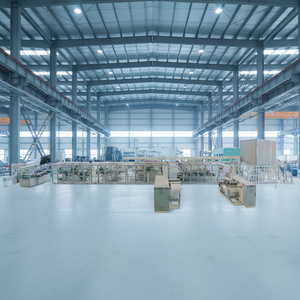
Our state-of-the-art facilities operate under rigorous ISO 13485 quality management standards and FDA registration. Every component—from orthopedic implants to spinal fixation hardware and surgical robotics end-effectors—is manufactured with complete lot traceability, material certification (3.1 certificates), and IQ/OQ/PQ validated processes.
Sub-Micron CNC Machining & Medical Grinding Expertise
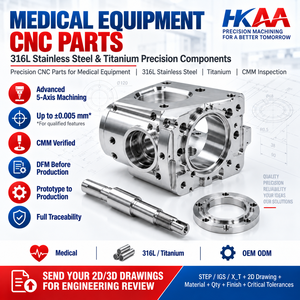
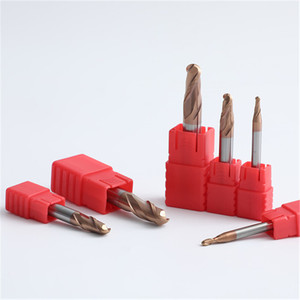
Additive manufacturing is only half the battle. Our in-house subtractive capabilities include multi-axis CNC Swiss machining, high-precision flute grinding, drill-point grinding, and thread grinding. We routinely hold ultra-tight tolerances down to ±0.005mm (±0.01mm across high-volume production), ensuring precise mating interface fit for critical medical assemblies.
MedTorque Ergonomic & Torque-Limiting Instruments
Beyond customized contract manufacturing, we engineer proprietary MedTorque silicone-handled surgical instruments, ratcheting couplings, and torque-limiting drive systems. Designed for surgical comfort and micro-meter precision, these tools withstand rigorous autoclave sterilization cycles without loss of calibration accuracy.
End-to-End Turnkey Support: Prototype to Scaled Production
We assist OEM engineering teams from initial Design for Manufacturability (DfAM) consultations, rapid prototyping, and process validation through to cleanroom finishing, laser marking, chemical passivation, sub-assembly, and direct-to-stock packaging integration.
Frequently Asked Questions (FAQ) for OEM Procurement Teams
Essential insights for qualifying Powder Bed Fusion suppliers, verifying certifications, and managing lead times.
For medical device applications, your supplier must be certified to ISO 13485 (Medical Devices Quality Management Systems) and registered with the FDA (21 CFR Part 820 compliant). For aerospace and defense projects, AS9100D certification is required. Key documentation deliverables should include material test reports (MTRs), powder particle size distribution (PSD) certificates, First Article Inspection Reports (FAIR according to AS9102), and validated cleaning/passivation certificates (ASTM F86).
We achieve part densities exceeding 99.9% by using fully characterized virgin/recycled powder blends, optimized laser scan strategies (stripe/checkerboard patterns), and strict inert gas atmosphere management (<100 ppm O2). Additionally, for fatigue-critical implants and structural components, we perform post-print Hot Isostatic Pressing (HIP) at elevated temperature and pressure (e.g., 920°C at 100 MPa for Ti-6Al-4V), which closes internal voids via plastic deformation and diffusion bonding.
No. PBF and CNC machining are complementary technologies. While PBF is unmatched for creating internal channels, porous lattice structures, and optimized organic shapes, as-printed PBF surface finish (typically Ra 4–10 µm) and dimensional tolerances (±0.05–0.1 mm) cannot meet the strict requirements of surgical mating threads, bearing surfaces, or micro-meter instrument shafts. True precision suppliers combine PBF additive printing with secondary 5-axis CNC Swiss machining and precision grinding to achieve final tolerances down to ±0.005 mm.
Prototype orders (typically 1 to 10 parts) can be turned around within 3 to 7 business days depending on post-processing requirements such as heat treatment and stress relief. Full production runs requiring complete process validation (IQ/OQ/PQ), custom fixtures, 5-axis subtractive finishing, and validated passivation typically range between 3 to 6 weeks from drawing freeze to final shipment.
Excess powder collected after a build is sieved through automated ultrasonic mesh sieves to remove spatters and agglomerates. Before reintroduction into the build chamber, the recycled powder undergoes chemical analysis to measure oxygen, nitrogen, and hydrogen uptake, alongside Hall flow rate testing and PSD verification. Once powder reaches predefined chemical impurity thresholds, it is retired to maintain strict mechanical property consistency across all production batches.
To initiate a project evaluation, submit your 3D CAD files (STEP/IGES) alongside engineering drawings specifying key tolerances, material grades, surface finish expectations, and projected annual volumes. Our application engineering team will perform a Design for Additive Manufacturing (DfAM) analysis and respond within 24–48 hours with cost optimization recommendations, manufacturing feasibility feedback, and a comprehensive quote.
Accelerate Your Additive Manufacturing & OEM Procurement Program
Partner with an FDA-registered, ISO 13485 certified manufacturer equipped with multi-laser Powder Bed Fusion, sub-micron CNC machining, and validated post-processing infrastructure.
Send an Inquiry