Precision Engineering Catalog
Featured Medical Titanium & Precision Components
Explore our FDA-compliant, high-precision titanium raw materials, custom machined OEM parts, and biocompatible surgical hardware engineered to micron tolerances.
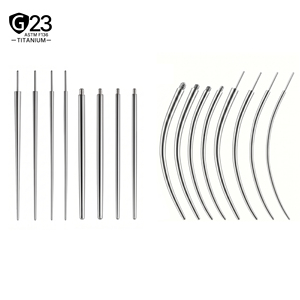
Technical Whitepaper
Medical Grade Titanium Material Specifications & Metallurgical Integrity
Selecting the correct titanium alloy standard is paramount for medical device OEMs to guarantee fatigue strength, biocompatibility, and regulatory approval under FDA 510(k) and EU MDR frameworks.
| Material Standard | Alloy Composition | Tensile Strength (MPa) | Yield Strength (MPa) | Elongation (%) | Primary Clinical & Industrial Applications |
|---|---|---|---|---|---|
| ASTM F136 (Gr23 ELI) | Ti-6Al-4V ELI (Extra Low Interstitial) | ≥ 860 MPa | ≥ 795 MPa | ≥ 10% | Orthopedic trauma plates, joint prostheses, spinal rods, surgical fasteners |
| ASTM F67 (Gr1 - Gr4) | Commercially Pure Titanium (Unalloyed) | 240 - 550 MPa | 170 - 483 MPa | ≥ 15 - 24% | Dental implants, maxillo-facial hardware, pacemaker casings, vascular clips |
| ASTM F1472 (Gr5) | Ti-6Al-4V Standard Structural Titanium | ≥ 930 MPa | ≥ 860 MPa | ≥ 10% | Surgical robotics arms, high-load external fixators, aerospace medical tooling |
| ASTM F1295 | Ti-6Al-7Nb (Niobium Substitution) | ≥ 900 MPa | ≥ 800 MPa | ≥ 10% | Femoral stems, bone screws, long-term implantable orthopedic devices |
Biocompatibility & Interstitial Element Control
Medical grade titanium’s exceptional biocompatibility is derived from its spontaneous formation of a tenacious, passive protective oxide film ($\text{TiO}_2$). In implant applications conforming to ISO 10993 and ASTM F136, strict control over interstitial elements—specifically oxygen, nitrogen, carbon, and hydrogen—is necessary to prevent embrittlement.
By controlling oxygen levels below 0.13% in ASTM F136 ELI (Extra Low Interstitial), our manufacturing process achieves vastly superior fracture toughness and notch sensitivity reduction. This makes ELI grade titanium the definitive choice for orthopedic implants subjected to dynamic, high-cycle fatigue loads inside the human body.
Osseointegration & Surface Energy Optimization
Direct structural and functional bonding between living bone tissue and the surface of a load-bearing implant (osseointegration) depends heavily on micro-topography and surface chemistry. Unrefined titanium surfaces present hydrophobic characteristics that delay cell adhesion.
Our advanced processing utilizes controlled Type II Anodization (per AMS 2488) and micro-textured bead blasting to generate nanoscale porosity. This engineered surface increases wettability, accelerates osteoblast proliferation, and reduces clinical recovery timelines for orthopedic and dental implant patients.
Proven Enterprise Performance
Why Global Medical Device OEMs Trust Our Factory
±0.005mm
Micro CNC Tolerance
100%
Lot Traceability & Certs
ISO 13485
Certified Quality System
99.85%
First-Pass Yield Metric
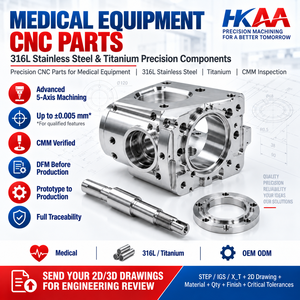
5-Axis Swiss CNC Machining
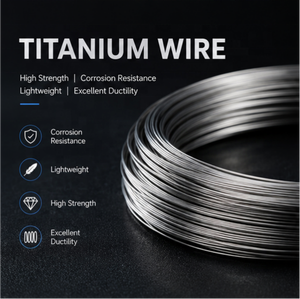
High-speed, ultra-precision Swiss turning and 5-axis CNC machining dedicated exclusively to medical titanium bars, wires, and complex implantable geometries.
- Sub-micron laser in-process inspection
- Complex multi-axis bone plate milling
- High-aspect-ratio spinal cannulation
Medical Grinding & Fluting
Specialized centerless, flute, and thread grinding engineered specifically for titanium surgical cutting tools, drills, reamers, and burrs requiring extreme sharpness.
- Zero thermal degradation grinding
- Custom drill point geometry tuning
- Burr-free micro-finish polishing
Passivation & Cleanroom Finishing
Validated chemical cleaning, citric/nitric acid passivation according to ASTM F86 standards, and automated ISO Class 7 cleanroom packaging workflows.
- ASTM F86 compliant surface prep
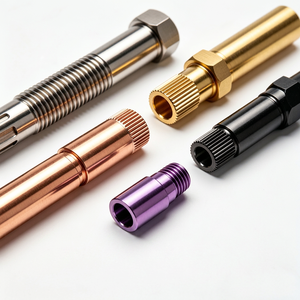
- Type II anodizing color coding
- Complete Bioburden control protocols
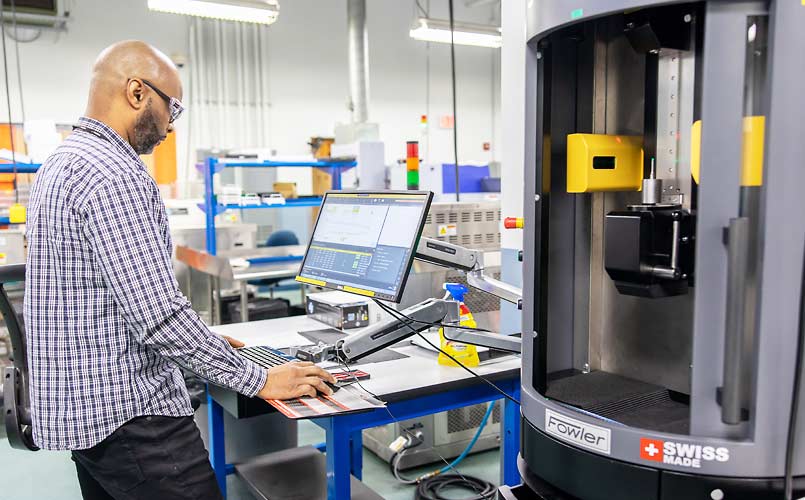
Laser Metrology & Micro Inspection
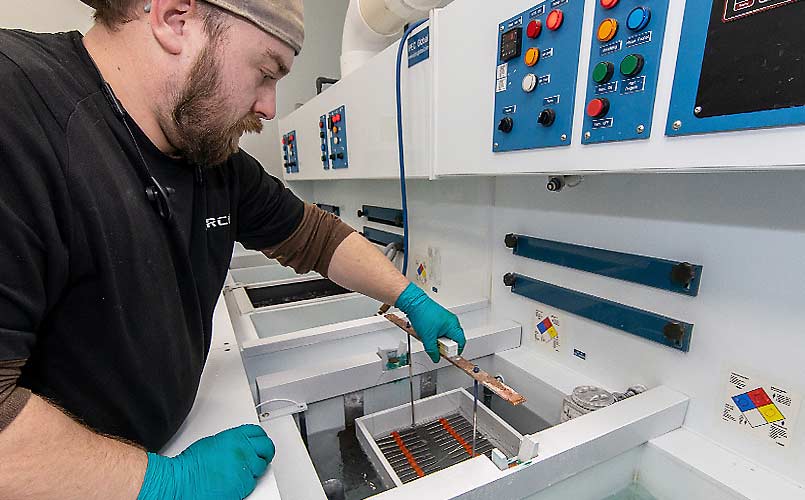
ASTM F86 Controlled Passivation Cell
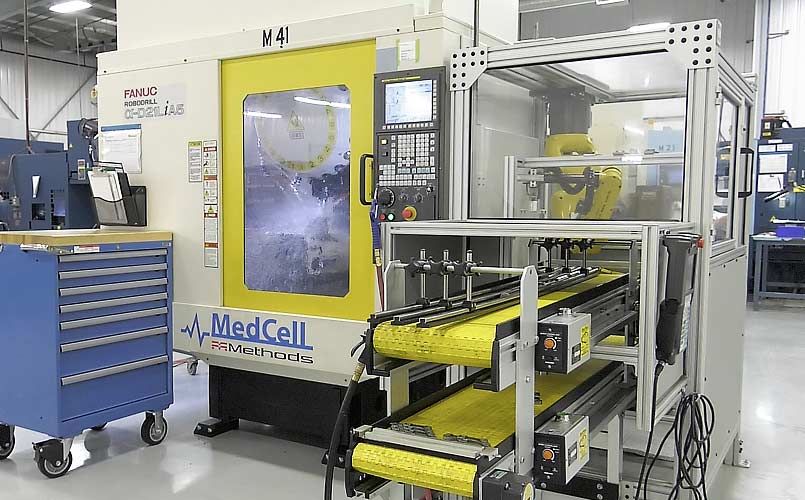
Automated Robotic Machining Workcells
Strategic Procurement Intelligence
Future Manufacturing & Procurement Trends in Medical Titanium
How technological advancements in additive manufacturing, low-modulus alloys, and automated supply chains are redefining medical device sourcing for global procurement directors.
1. Transition to Beta-Titanium Low-Modulus Alloys Biomechanics
Traditional Ti-6Al-4V possesses an elastic modulus of ~110 GPa, which is significantly higher than cortical bone (~15-30 GPa). This modulus mismatch leads to stress shielding, causing bone resorption around implants over time. Future medical device procurement is rapidly pivoting toward Beta-Titanium alloys (such as Ti-13Nb-13Zr and Ti-15Mo). These advanced compositions reduce the elastic modulus down to 55-65 GPa, mimicking human skeletal stiffness, extending implant life, and improving long-term clinical outcomes.
2. Hybrid Additive-Subtractive Manufacturing (3D PBF + CNC) Industry 4.0
The integration of Powder Bed Fusion (PBF/DMLS) additive manufacturing with high-speed 5-axis CNC post-machining represents the fastest-growing segment in orthopedic contract manufacturing. Additive printing allows factories to construct complex 3D trabecular porous lattice structures directly onto hip acetabular cups and spinal interbody cages. Subsequent CNC subtractive machining ensures critical mating threads, instrument interfaces, and sealing surfaces meet exact ±0.005mm tolerances.
3. Supply Chain Resiliency & Closed-Loop Scrap Recycling ESG Sourcing
Geopolitical volatility and titanium sponge supply tightness have elevated supply chain risk management to a board-level priority for medical OEMs. Leading titanium factories are implementing closed-loop cleanroom recycling programs. Machining chips and turnings generated during OEM production runs are segregated, degreased in ultrasonic cleanrooms, melted via Vacuum Arc Remelting (VAR), and re-certified for non-implant medical instruments, safeguarding material continuity and lowering carbon footprint.
4. Surgical Robotics & Ultra-Micro Component Scaling Robotics
As minimally invasive robotic surgery expands across urology, gynecology, and neurosurgery, demand for micro-machined titanium end effectors, miniature wrist joints, and flexible snake-arm links is surging. Machining sub-millimeter titanium parts requires advanced high-frequency spindles (up to 80,000 RPM), oil-mist cooling systems, and specialized diamond-coated tooling to eliminate burrs while preserving biocompatible surface purity.
Sourcing & Technical FAQ
Frequently Asked Questions by OEM Procurement Teams
Everything you need to know about material certification, quality audits, lead times, and design-for-manufacturability (DFM) collaboration.
What is the key difference between ASTM F136 and ASTM F67 titanium for medical applications? +
ASTM F136 defines an alloyed titanium composition (Ti-6Al-4V ELI - Extra Low Interstitial). It offers extremely high tensile strength (≥ 860 MPa) and fatigue resistance, making it the material of choice for structural, load-bearing implants such as orthopedic bone screws, trauma plates, and spinal rods.
ASTM F67 covers Commercially Pure (CP) Titanium across Grades 1 through 4. CP Titanium has lower mechanical strength (240 to 550 MPa) but superior ductility and exceptional corrosion resistance. It is primarily specified for non-load-bearing applications, maxillo-facial plates, dental implant bodies, and pacemaker enclosures where bone ingrowth and conformability are prioritized over high tensile stress.
Does your factory hold FDA registration and ISO 13485 certification? +
Yes. Our medical manufacturing facilities maintain an ISO 13485:2016 Certified Quality Management System specifically tailored to medical devices and contract components. Furthermore, our production units are registered with the U.S. FDA as contract manufacturers.
We provide full support during buyer supplier qualification audits, offering complete access to our Quality Manual, Standard Operating Procedures (SOPs), CAPA systems, and Calibration logs.
What quality documentation and material traceability records accompany each shipment? +
Every shipment delivered to medical OEMs includes a comprehensive compliance documentation dossier to support your Design History File (DHF) and regulatory submissions (FDA 510(k) or EU MDR):
- Raw Material Mill Test Certificates (MTC): Full chemical analysis and mechanical testing per EN 10204 3.1 standards.
- Dimensional Inspection Data: First Article Inspection Reports (FAIR per AS9102 / ISO 13485) and CMM measurement maps.
- Special Process Validation: Certificates of Conformance (CoC) for heat treatment, chemical passivation (ASTM F86), and Type II anodizing.
- Complete Lot Traceability: Individual melt-to-part lot tracking records ensuring zero cross-contamination.
Can your engineering team assist with Design for Manufacturability (DFM) and fast-track prototyping? +
Absolutely. Our application engineering team collaborates with OEM R&D teams early in the development cycle. By reviewing 3D CAD models and STEP files, we identify opportunities to optimize tool paths, relax non-critical tolerances, and select stock titanium sizes that minimize material waste and machining cycle times.
For urgent prototype iterations and surgeon evaluation samples, our dedicated rapid prototyping cell can deliver fully validated titanium components in days rather than weeks.
How do international medical OEMs initiate a custom manufacturing project or request a quotation? +
Getting started is seamless. You can submit your 2D engineering drawings (PDF), 3D CAD files (STEP/IGES), material grade preferences, surface finish requirements, and estimated annual volume directly through our live chat portal or inquiry system.
A senior medical manufacturing engineer will review your project specs for DFM compliance and deliver a formal quotation within 24 to 48 business hours.
Ready to Qualify a Trusted Medical Titanium Partner?
Accelerate your medical device program from prototype to FDA-validated volume manufacturing. Connect with our engineering team today for technical DFM review and fast quoting.