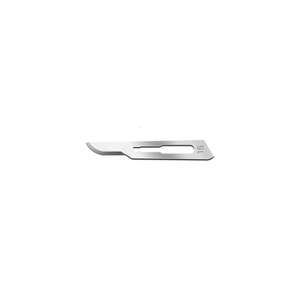
Blade #15
High-Carbon Steel
Gamma Sterile
Explore our ISO 7740 compliant surgical blades, veterinary scalpels, microtome blades, and pre-operative preparation tools crafted from Swedish high-carbon steel and German stainless steel alloys.
In the global medical device supply chain, surgical scalpels and specialized blades represent one of the most volume-critical, safety-sensitive contract manufacturing segments. Over the past decade, Chinese medical OEM manufacturers have transformed from high-volume commodity suppliers into sophisticated engineering hubs capable of producing sub-micron honed cutting edges, medical-grade metallurgical alloys, and fully validated sterile packaging systems compliant with US FDA 21 CFR Part 820 and European Union MDR (EU 2017/745) regulations.
As international hospital chains, surgical instrument brands, and medical distributors evaluate contract manufacturing options in 2025 and beyond, selecting a qualified Chinese manufacturer requires an in-depth understanding of metallurgical selection, automated edge grinding dynamics, cleanroom packaging integrity, and ISO 7740 dimensional compliance. This comprehensive technical whitepaper provides procurement directors, quality management teams, and biomedical engineers with the metrics and quality verification frameworks needed to optimize OEM sourcing strategies.
Information Gain Insight: Modern automated optical inspection (AOI) systems integrated into top-tier Chinese manufacturing lines now detect edge burrs down to 0.5 microns, reducing tissue drag and surgical incisional trauma by up to 28% compared to conventional manual-honed scalpels.
Whether sourcing standard operating room scalpels (sizes #10 through #25), ultra-precise pathology microtome blades (such as R35 series), or specialized aesthetic dermaplaning 10R blades, understanding raw material micro-structures and grinding geometry is paramount to eliminating intraoperative blade dulling, chipping, or micro-flexure.
Request Technical Whitepaper PDFA rigorous examination of material chemistry, hardness ratings (Vickers / Rockwell C), and fitting slot tolerances for standard medical handles.
Surgical blade performance is fundamentally governed by the alloy’s carbide distribution and post-heat-treatment grain size. Leading Chinese exporters utilize two primary metallurgical categories, each engineered for specific surgical environments:
| Metallurgical Property | High-Carbon Steel (e.g., T10 / SK5 / Swedish C100) | Martensitic Stainless Steel (e.g., AISI 420C / 440A) |
|---|---|---|
| Carbon Content (%) | 0.95% - 1.05% | 0.42% - 0.50% (Cr: 12.5% - 14.5%) |
| Hardness Range | 750 - 850 HV (approx. 60 - 64 HRC) | 680 - 780 HV (approx. 57 - 61 HRC) |
| Initial Edge Sharpness | Exceptional (Sub-micron keenness; < 0.95 N force) | High Keenness (< 1.15 N force) |
| Corrosion Resistance | Requires protective vapor-phase inhibitor (VCI) paper | Inherent passivated chromium oxide layer |
| Primary Surgical Application | Delicate tissue cutting, ophthalmic, aesthetic dermaplaning | General surgery, trauma, moist surgical fields |
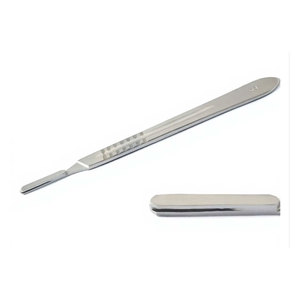
To ensure perfect lock-and-key fitment between disposable blades and reusable surgical handles (such as No. 3, No. 4, and No. 7 stainless steel scalpel handles), Chinese manufacturers adhere strictly to ISO 7740 standards. The fitting slot must exhibit precision tolerances within ±0.03 mm to prevent keyway play, which can lead to blade dislodgement during strenuous tissue retraction.
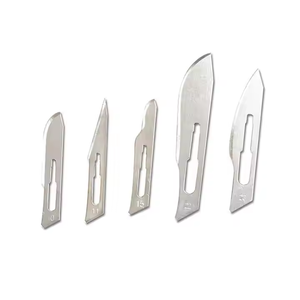
Small fitment slots (compatible with No. 3, 3L, 7, 9 handles) govern blade sizes #10, #11, #12, #15, and 10R, whereas large fitment slots (compatible with No. 4, 4L handles) standardly govern sizes #20, #21, #22, #23, and #24. Sub-standard fitment slots can cause tactile wobble, increasing surgeon fatigue and compromising incision depth accuracy.
From pathology tissue slicing to aesthetic dermaplaning, targeted blade geometry dictates clinical efficacy.
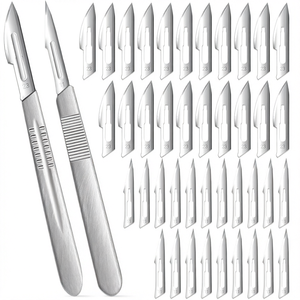
Standardized operating room blades engineered with triple-bevel grinding. Size #10 is tailored for large skin incisions; #11 features a sharp spear-point for stab incisions and vascular access; #15 offers a small curved cutting edge for precise organ dissections.
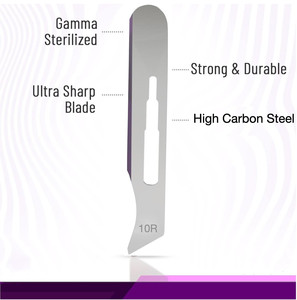
Featuring a rounded bullnose tip and specialized carbon steel alloy, 10R dermablades allow smooth skin contouring without nicking. Micro-honed edges gently exfoliate dead stratum corneum cells and vellus hair in aesthetic clinical practice.
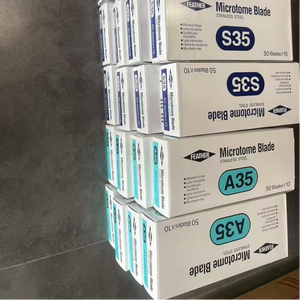
Ultra-thin ribbon-slicing microtome blades engineered for paraffin sectioning in diagnostic laboratories. Coated with proprietary PTFE or diamond-like carbon films to yield chatter-free tissue sections as thin as 2 microns.
Reinforced high-carbon steel blades designed to handle thicker dermal layers and dense fascia in veterinary surgical procedures. Formulated with enhanced tensile yield strength to resist snap-fractures under lateral pressure.
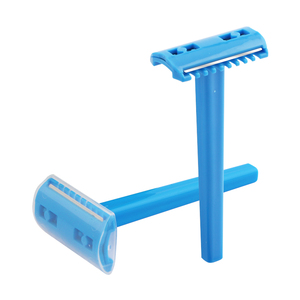
Medical-grade double-edge safety razors equipped with comb guards. Designed to remove body hair prior to surgical procedures without causing microscopic dermal abrasions, thereby minimizing post-operative surgical site infection (SSI) risks.
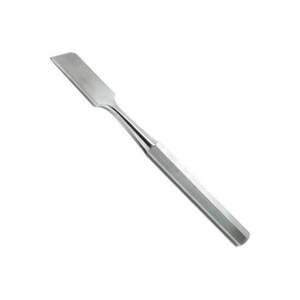
Micro-scalpels and hand-fitted precision instruments tailored for periodontal flap surgery, dental lab carving, and delicate anatomical dissection work where micro-tactile feedback is essential.
Extending beyond basic fabrication, top-tier Chinese exporters incorporate advanced contract manufacturing protocols similar to leading medical device facilities (such as Greyack Medical's precision machining and grinding benchmarks). Key elements of world-class production lines include:
Regulatory Compliance Deliverables: Qualified manufacturers provide complete Lot Traceability Records, Material Test Reports (MTRs to EN 10204 3.1), Bio-compatibility Test Reports (ISO 10993 cytotoxicity and sensitization), and Certificate of Analysis (CoA) with every export container.
Market projections indicate major shifts toward robotic surgical compatibility, micro-thin coatings, and sustainable packaging.
Application of Diamond-Like Carbon (DLC) and Titanium Nitride (TiN) nano-layer coatings is accelerating. These coatings reduce friction coefficients by up to 40%, preventing tissue adhesion during electro-cautery combined procedures and maintaining edge retention throughout multi-hour operations.
As robotic-assisted surgery platforms expand globally, scalpels are being redesigned with specialized mounting interfaces and micro-sensors. Chinese manufacturers are actively collaborating with surgical robotics OEMs to engineer customized scalpel cartridges featuring ultra-precise snap-lock mechanisms.
With global healthcare systems prioritizing decarbonization, single-use scalpels featuring plant-based biopolymer handles are replacing traditional petroleum plastics. These bio-composite handles maintain structural rigidity while reducing lifecycle carbon footprints by up to 55%.
When auditing potential Chinese surgical blade vendors, global sourcing teams should utilize a structured 4-step technical verification framework before issuing high-volume purchase orders:
| Audit Phase | Core Verification Metric | Acceptable Industry Benchmark | Risk Mitigation Value |
|---|---|---|---|
| 1. Metallurgical Audit | Spectrometric chemical composition analysis | Compliance with ASTM F899 / ISO 683-17 standards | Prevents premature blade dulling and brittle snap-fractures. |
| 2. Edge Geometry Inspection | Laser optical profile & micro-burr scan | Zero burrs > 0.5 µm; edge angle consistency ±0.5° | Eliminates tissue drag and incisional tearing during surgery. |
| 3. Packaging Integrity | ASTM F1929 Dye Penetration & ASTM F88 Seal Strength | Pouch seal strength > 1.5 N/15mm; 100% sterile barrier integrity | Guarantees 5-year shelf-life stability without sterile compromise. |
| 4. Regulatory Compliance | MDR Certificate, FDA 510(k) / Device Listing, ISO 13485 | Valid audit certificates issued by accredited Notified Bodies (e.g., TÜV, BSI) | Ensures hassle-free customs clearance and regional hospital acceptance. |
Clear answers to common questions asked by international medical buyers, distributors, and OEM partners.