Precision OEM Medical Components & Assembly Catalog
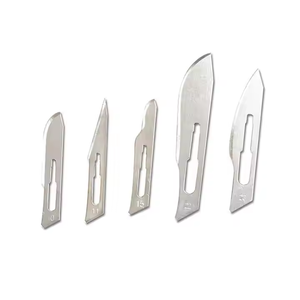
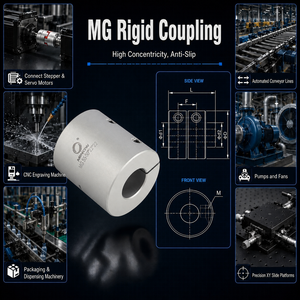
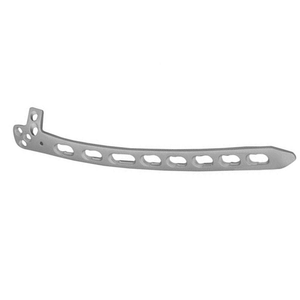
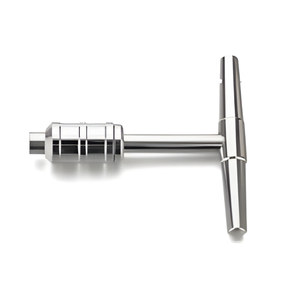
Featured implant-grade orthopedic solutions, precision silicone-handled tools, surgical cutters, and micro-machined medical assemblies engineered to sub-micron tolerances.
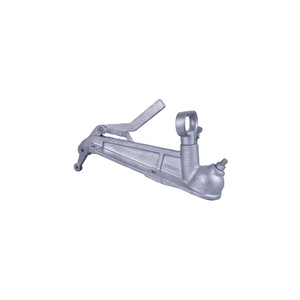
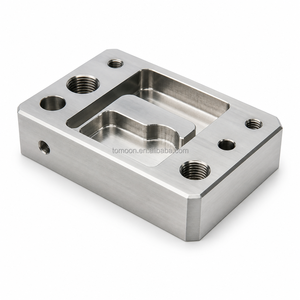
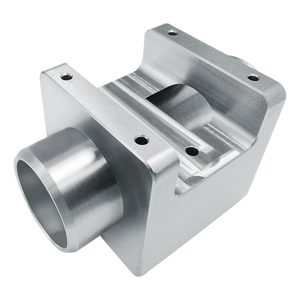
1. Engineering Standards in Custom Implant Machining: Material Science & Multi-Axis CNC Operations
The contract manufacturing ecosystem for medical implants in China has evolved from standardized hardware fabrication into a sophisticated high-precision technology hub. Today, leading Chinese OEMs operating under ISO 13485:2016 management systems and FDA 21 CFR Part 820 regulations provide Tier-1 medical device brands worldwide with implantable components made from biocompatible titanium alloys, cobalt-chrome, implant-grade PEEK, and specialized stainless steels (316L, 17-4PH, 455/465).
In custom medical implant contract manufacturing, precise material specification is paramount to avoid cell toxicity, mechanical failure, or fretting corrosion inside human tissue. The table below outlines the material processing metrics standard across top-tier OEM suppliers:
| Biocompatible Alloy / Polymer | Standard Specifications | Core Mechanical Properties | Primary Implant Applications | Typical Machining Process |
|---|---|---|---|---|
| Ti-6Al-4V ELI (Grade 23) | ASTM F136 / ISO 5832-3 | High Strength-to-Weight, Low Modulus, Superior Osteointegration | Spinal Plates, Trauma Screws, Dental Implants, Joint Reconstruction | 5-Axis Swiss Machining, High-Pressure Coolant Turn-Milling |
| Cobalt-Chromium-Molybdenum (CoCrMo) | ASTM F75 / ASTM F1537 | Extreme Wear Resistance, High Hardness, Biocompatible Passivation Layer | Femoral Heads, Knee Articular Surfaces, Dental Frameworks | Heavy-Duty Milling with Diamond Coated Carbide Tooling, EDM Wire Cut |
| Implant-Grade PEEK (Optima/Zeniva) | ASTM F2026 | Radiolucent, Elastic Modulus Matching Cortical Bone (~3.6 GPa) | Spinal Interbody Fusion Cages, Cranio-Maxillofacial (CMF) Plates | Oil-Free Cleanroom CNC Machining, Ultra-Sharp Uncoated Diamond Cutters |
| Stainless Steel 316L / 22Cr-13Ni-5Mn | ASTM F138 / ASTM F1586 | High Yield Strength, Pitting Resistance, Cost-Effective Surgical Grade | Fracture Fixation Pins, External Fixators, Surgical Instruments | Swiss Turning, Thread Grinding, Electropolishing & Passivation |
Advanced Machining Disciplines: Swiss Turning vs. 5-Axis Simultaneous Milling
Custom implant geometry dictates machine kinematics. Modern Chinese medical manufacturing centers utilize twin-spindle, multi-turret Swiss CNC lathes capable of simultaneous 7-axis to 10-axis operations. This allows micro-drilling of cannulated bone screws (holes down to 0.8 mm diameter across 150 mm axial lengths) alongside high-speed whirling of specialized buttress and pedicle thread profiles in a single setup.
For complex anatomical surfaces—such as hip acetabular shells or custom cranial meshes—5-axis simultaneous CNC machining is paired with direct-drive rotary tables to eradicate cutter dwell marks and maintain surface continuity. Eliminating multi-setup stack-up error guarantees geometric tolerances within ±0.002 mm (2 microns).
2. Technical Competencies of Qualified China Contract Manufacturers
Evaluating foreign supply chain partners requires auditing quality control protocols, validation documentation, and specialized surface treatment capabilities.
ISO 13485 & FDA Compliance
Top Chinese suppliers maintain active FDA registration and ISO 13485:2016 certifications. Cleanrooms (ISO Class 7 and Class 8) handle final ultrasonic washing, passivation, and primary packaging to guarantee bioburden control.
In-Process Metrology & Laser Scanning
Quality assurance labs are equipped with ZEISS 3D Coordinate Measuring Machines (CMM) with contact probes, non-contact optical comparators, and laser micrometer systems capable of measuring complex freeform implant contours.
Controlled Passivation & Finishing
Automated citric acid and nitric acid passivation lines conform to ASTM F86 standards. Surfaces undergo electropolishing, glass-bead blasting, Type II/III titanium anodizing (color coding), and micro-deburring under 40x magnification.
3. Future Procurement & Technological Trends in Implant Manufacturing (2025–2030)
The global OEM medical device landscape is shifting rapidly. Sourcing managers and VP-level procurement directors must account for five structural developments currently transforming custom implant production in China:
Trend 1: The Rise of Hybrid Additive-Subtractive Manufacturing
Direct Metal Laser Sintering (DMLS) and Electron Beam Melting (EBM) enable the creation of complex porous trabecular structures directly integrated into titanium hip stems or spinal cages, mimicking natural cancellous bone density to promote rapid osteointegration. However, raw 3D-printed parts lack the tolerance accuracy required for critical instrument interfaces or thread engagements. Leading Chinese manufacturing plants now feature integrated hybrid cells: additive powder-bed fusion followed immediately by 5-axis high-speed CNC mill-turning to clean interface dimensions down to micron levels.
Trend 2: Micro-Machining and Minimally Invasive Surgical (MIS) Instrumentation
As surgical techniques shift toward robotics and catheter-based interventions, component size requirements continue to shrink. Micro-turning of components smaller than 1.0 mm with internal features measured in tens of microns demands micro-spindles operating at upwards of 60,000 RPM, vibration-damped machine bases, and temperature-controlled cleanroom production environments.
Trend 3: Complete Process Validation (IQ / OQ / PQ) & Digital Traceability
Global regulatory bodies (FDA, EU MDR 2017/745) demand absolute traceability across every lot. Quality management systems now supply complete regulatory validation packages alongside component shipments. This includes Installation Qualification (IQ), Operational Qualification (OQ), and Performance Qualification (PQ) of CNC tooling, software code validation, chemical bath titration records, material heat-lot melt certificates, and 100% full-dimension CMM inspection matrices linked to dynamic Device History Files (DHF).
Trend 4: Integration of Bio-Polymers and Overmolding
Surgical handpieces and trial instruments increasingly combine titanium or stainless steel cores with ergonomic overmolded silicone handles (such as MedTorque silicone-handled systems). Sourcing from unified contract manufacturers capable of handling precision metal machining alongside medical-grade liquid silicone rubber (LSR) injection molding reduces vendor hand-offs, lowers logistical risk, and accelerates time-to-market.
4. Partnering with Top-Tier Chinese OEM Manufacturers: Greyack Medical Advantage
When international medical OEMs transition projects to qualified Chinese precision machining leaders like Greyack Medical, they gain access to a fully integrated contract manufacturing platform engineered specifically to mitigate foreign procurement risks:
DFM & Early Engineering Assistance
Dedicated medical engineering staff review CAD models and technical drawings prior to cutting metal. Design for Manufacturability (DFM) feedback optimizes tool paths, selects standardized radii to prevent custom cutter costs, and flags tight tolerances that increase cost without offering clinical benefit.
Turnkey Rapid Prototyping to Mass Production
Dedicated prototype cells provide initial functional prototypes and surgeon trials in days, complete with material traceability reports. Validated production processes scale seamlessly into high-volume robotic machining cells for long-term commercial supply.
Supply Chain Consolidation & Assembly
Consolidate your multi-vendor supply chains. From raw titanium sourcing and Swiss turning to laser marking, electropolishing, cleanroom assembly, and sterile barrier packaging—obtain ready-to-use finished medical devices from a single vendor base.
Intellectual Property (IP) Protection Controls
Strict IP protection workflows isolate customer drawings, setup sheets, and CAD data within secure, encrypted internal networks. Non-Disclosure Agreements (NDAs) under international contract law safeguard proprietary device innovations.
5. Frequently Asked Questions (FAQ) for Medical Device Procurement
Answers to critical technical, regulatory, and commercial queries raised by OEM procurement teams during supplier qualification audits.
Qualified medical manufacturers source raw titanium rods, cobalt-chrome bars, and PEEK stocks exclusively from certified mills carrying ISO 17025 accredited laboratory test reports. Every material shipment undergoes incoming Quality Control (IQC) testing, including Spectro-chemical analysis, tensile testing, and grain size verification matching ASTM standards (e.g., ASTM F136 for Titanium, ASTM F138 for 316L). Raw material mill certificates are preserved for a minimum of 30 years to maintain 100% lot traceability back to the melt heat number.
Standard quality shipping documentation includes: (1) Certificate of Conformance (CoC), (2) Raw Material Mill Test Reports, (3) First Article Inspection Reports (FAIR per AS9102/ISO 13485), (4) Full CMM Dimensional Inspection Sheets, (5) Passivation & Surface Treatment Certificates conforming to ASTM F86, and (6) Heat treatment / Vacuum hardness logs. Custom bioburden or cleanliness testing reports are available upon request.
Yes. Production layouts utilize flexible manufacturing cells (FMC). Prototype and patient-specific CMF or revision implant programs are managed in agile quick-turn cells equipped with 5-axis CNC machining centers and wire EDM units. High-volume standard bone screw or spinal plate lines utilize automated robotic loading cells for continuous 24/7 lights-out production.
Through micro-milling, diamond burnishing, and electropolishing, surface roughness values down to Ra 0.1 µm (4 micro-inches) are achievable on smooth articular surface regions. Conversely, for areas requiring osseous integration, controlled abrasive blasting or acid-etching can create uniform surface micro-textures with Ra 1.6 µm to 3.2 µm to encourage osteoblast attachment.
Micro-deburring utilizes thermal energy deburring (TEM), high-frequency ultrasonic baths, automated abrasive flow machining (AFM), and manual deburring under 40x stereo microscopes by trained optical technicians. Electropolishing is also used to selectively dissolve micro-burrs while maintaining sharp edge integrity on surgical cutting tools.
Initial DFM feedback and engineering reviews are completed within 24 to 48 hours. Machined prototype samples with complete inspection data are delivered in 10 to 15 business days. Once process validation (IQ/OQ/PQ) and FAIR approvals are finalized by the client, standard mass production lead times range from 4 to 6 weeks depending on secondary finishing requirements.
Start Your Medical Machining Project With Validated Experts
Send your 3D CAD models (STEP/IGES) and engineering specifications to receive an immediate Design for Manufacturability (DFM) review and competitive OEM quotation within 24 hours.
Get Catalog