Featured Biocompatible & Precision Machined Products
Explore our core contract-manufactured medical components, high-speed CNC centers, and custom biocompatible material processing capability.
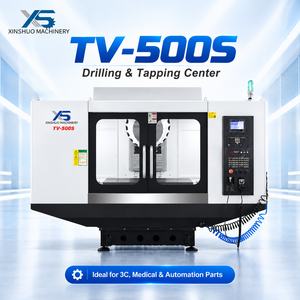
Cost Effective High Speed Tapping Center BT30 CNC Vertical Machining Center 20000rpm for Medical Automation Metal Parts
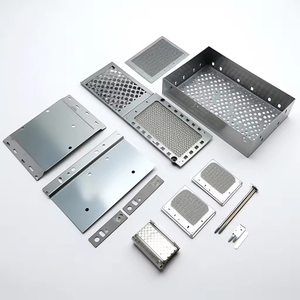
High Quality Custom Precision Sheet Metal Fabrication Stainless Steel Sheet Metal Parts Processing For Industry
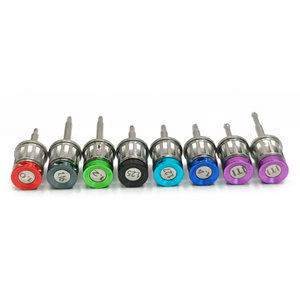
High Quality Dental Implant Driver Universal Fit Universal Dental Implant Screwdriver For Prosthetic Screws
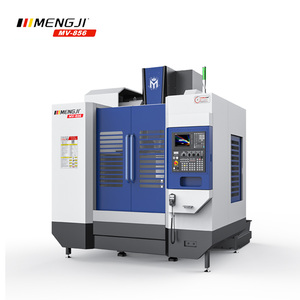
MV-856 X800 Y560 Z560 Vertical High Speed CNC Milling Machine GSK Control BT40 Spindle Taper for 3C Parts Medical Instruments
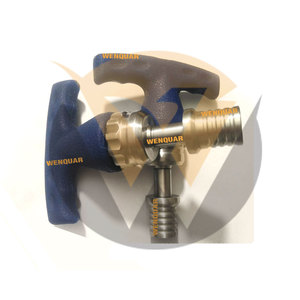
High Quality Ratchet T Handle Orthopedic Surgery Instruments Silicone Grip Handle Stainless Steel Grade
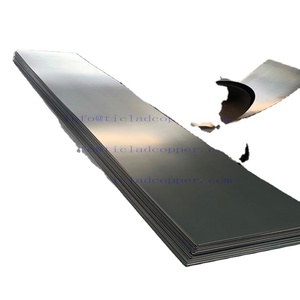
1mm Cold Rolled Titanium Sheet Grade 5 Titanium Plate/Gr2 for Medical Applications
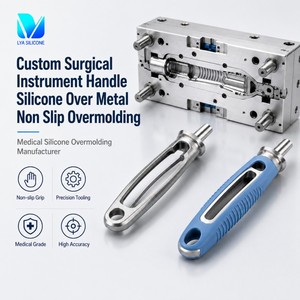
Custom Medical Grade LSR Silicone Over Metal Surgical Instrument Handle Overmolding Service for Non Slip Grip
1. China Biocompatible Material Machining Ecosystem: OEM Executive Analysis
In the globalized medical device ecosystem, original equipment manufacturers (OEMs) specializing in orthopedics, spinal instrumentation, surgical robotics, and dental implants are facing unprecedented supply chain pressures. Sourcing high-precision components machined from biocompatible alloys and advanced polymers demands an uncompromising adherence to international quality management systems (QMS) such as ISO 13485:2016 and strict compliance with FDA establishment registration directives.
China has transformed from a low-cost contract machining destination into a high-tier technological hub for complex biocompatible material processing. Leading Chinese manufacturers now integrate high-speed multi-axis CNC milling, 5-axis Swiss-type turning, direct metal laser sintering (DMLS) hybrid manufacturing, and automated cleanroom passivation within audited, audit-ready facilities. Sourcing managers, quality directors, and regulatory affairs specialists must evaluate suppliers not merely on unit cost, but on complete Information Gain—accounting for material traceability, process validation (IQ/OQ/PQ), surface chemistry integrity, and design history file (DHF) integration.
±0.002mm
Swiss Turning Tolerance
ISO 13485
QMS Certification Standard
Ra < 0.2µm
Superfinishing Surface Quality
Class 7
ISO Cleanroom Assembly
Greyack Medical Co., Ltd. stands at the vanguard of this engineering revolution. By bridging state-of-the-art multi-axis CNC machining, micro-grinding, liquid silicone rubber (LSR) overmolding, and powder-bed fusion additive manufacturing under one unified quality architecture, we empower tier-1 surgical device OEMs to scale production seamlessly while maintaining strict compliance with ASTM and ISO biocompatibility mandates.
2. Biocompatible Material Science & Machining Metallurgy Analysis
Biocompatibility requires that a material performs with an appropriate host response in a specific application without causing systemic toxicity, inflammation, or immune rejection (conforming to ISO 10993 and ASTM F2450 standards). Selecting the optimum alloy or polymer dictates cutting parameters, tool selection, thermal management, and post-processing passivation regimens.
Core Biocompatible Alloys & Polymers Matrix
| Material Designation | Standard Specifications | Key Mechanical Properties | Primary Medical Applications | Machining & Tooling Considerations |
|---|---|---|---|---|
| Titanium Grade 5 (Ti-6Al-4V ELI) | ASTM F136 / ISO 5832-3 | High strength-to-weight ratio, high fatigue limit, modulus ~110 GPa | Orthopedic bone screws, spinal fixation rods, hip stems | Low thermal conductivity; requires high-pressure coolant (PCD/carbide tooling) |
| Commercially Pure Titanium (Gr 2) | ASTM F67 / ISO 5832-2 | Superior corrosion resistance, excellent osseointegration, ductile | Dental implants, craniomaxillofacial plates, vascular clips | Prone to strain hardening and built-up edge (BUE); sharp rake angles required |
| 316L Stainless Steel | ASTM F138 / ISO 5832-1 | Low carbon content, high pitting corrosion resistance, economical | Surgical instruments, temporary fixation pins, structural housings | High work-hardening rate; rigid setups and continuous chip evacuation mandatory |
| Cobalt-Chromium-Molybdenum (CoCrMo) | ASTM F75 / ASTM F1537 | Exceptional wear resistance, high hardness (up to 45 HRC), extreme longevity | Artificial knee joints, femoral heads, dental frameworks | Extremely abrasive; requires heavy-duty rigid 5-axis milling with diamond coatings |
| Medical Grade PEEK / PEKK | ASTM F2026 | Radiolucent, elastic modulus matching human cortical bone (~3.6 GPa) | Spinal interbody fusion cages, suture anchors, neurosurgical implants | Requires strict thermal control to prevent polymer chain degradation and stress warping |
| LSR (Liquid Silicone Rubber) | ISO 10993 Biological Evaluation | Chemical inertness, flexible durometer (30-80 Shore A), autoclavable | Ergonomic surgical instrument handles (MedTorque), seals, diaphragms | Overmolding onto titanium/stainless substrates using precise injection pressure profiles |
Information Gain Insight: Surface oxide layer integrity is critical. Titanium alloys rely on a passive TiO₂ oxide film, while 316L relies on Cr₂O₃. Micro-machining processes must avoid iron contamination from tooling. Greyack Medical utilizes dedicated non-ferrous machining cells and ASTM F86 citric/nitric passivation lines to preserve surface stoichiometry.
3. Future Medical Procurement & Manufacturing Trends (2025–2030)
Global procurement executives are transitioning from transactional vendor relationships to strategic contract manufacturing integration. Key technological macro-trends shaping biocompatible material processing include:
- Hybrid Additive-Subtractive Manufacturing: Combining Powder-Bed Fusion (PBF) 3D printing of porous titanium lattice structures with 5-axis high-speed CNC milling. This allows for trabecular bone-mimicking surfaces on orthopedic implants with micron-precise threaded coupling interfaces created in a single continuous workflow.
- Closed-Loop Optical In-Process Verification: Integrating laser micrometers and high-resolution optical coordinate measuring machines (CMM) directly inside Swiss-turning centers. Parts are inspected real-time at 20,000 RPM, eliminating out-of-tolerance drift before tools wear.
- Custom Ergonomic Overmolding (MedTorque Integration): Surgical handpieces require tactile control, electrical insulation, and steam-autoclave resistance. Custom LSR overmolding onto precision-machined titanium handles provides anti-slip performance and customizable color-coding for rapid operating room identification.
- Regulatory Traceability & Digital DHF Integration: Every batch of biocompatible material requires full raw material heat traceability, chemical composition analysis, heat-treatment logs, and 100% digital dimensional inspection records mapped directly into the buyer's Device History File (DHR).
4. Greyack Medical: Core Competencies & Enterprise Infrastructure
Greyack Medical Co., Ltd. is engineered specifically to eliminate risk in medical contract manufacturing. Operating out of FDA-registered and ISO 13485:2016-certified facilities, our unified manufacturing footprint spans micro-machining to complex sub-assembly.