Featured Surgical & Veterinary Drill Bits
Precision-engineered ISO 13485 compliant cutting tools designed for orthopedics, trauma, dental, and veterinary procedures.
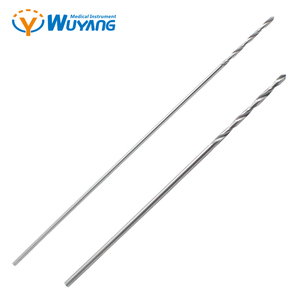
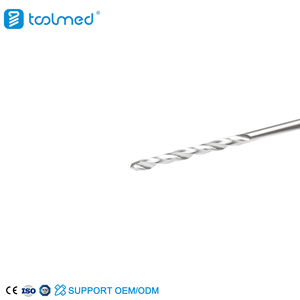
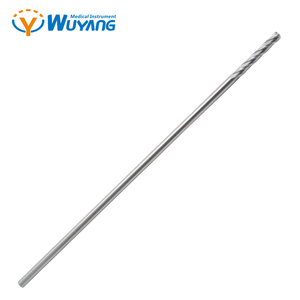
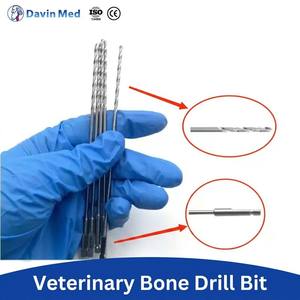
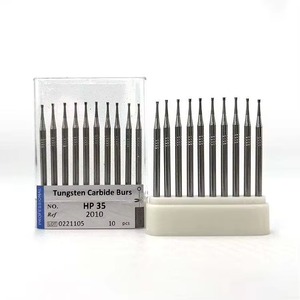
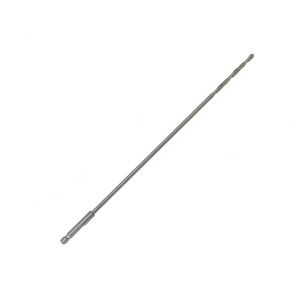
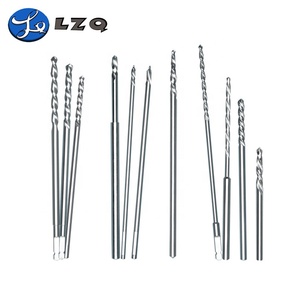
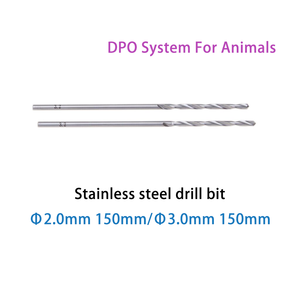
Evaluating Top Surgical Drill Bit Manufacturers: Industry Benchmark 2025
Surgical drill bits are critical active instruments utilized across orthopedic trauma, neurosurgery, spinal reconstruction, dental implantology, and veterinary surgery. Unlike standard industrial cutting tools, surgical bone drills operate under extreme physiological constraints. Procurement teams and medical Original Equipment Manufacturers (OEMs) must evaluate potential suppliers based on raw material purity, thermal mitigation during cutting, concentricity tolerances, and regulatory traceability.
When selecting a contract manufacturer or tier-1 supplier from the global market, OEM sourcing directors must look beyond price per unit and thoroughly audit precision CNC grinding capabilities, passivating workflows, and Design for Manufacturability (DFM) support.
| Evaluation Parameter | Standard Commercial Grade | High-Precision OEM Medical Grade | Clinical Impact / Risk Factor |
|---|---|---|---|
| Flute & Point Tolerance | ±0.05 mm to ±0.02 mm | ±0.002 mm (2 microns) | Prevents wobbling, reduces thermal necrosis risk (<47°C). |
| Raw Material Traceability | Generic Stainless Steel 304/316 | ASTM F899 420MOD / Custom 455 / Ti-6Al-4V | Ensures high tensile strength, fatigue resistance, and zero corrosion. |
| Surface Roughness (Ra) | Ra 0.8 µm | Ra < 0.2 µm (Mirror Flute Finish) | Facilitates chip evacuation and prevents bone debris clogging. |
| Autoclave Cycles | 50 – 100 cycles | 500+ Reusable Cycles (Class I 135°C) | Dramatically lowers overall hospital total cost of ownership. |
| Coupling Standards | Non-standard / Friction fit | AO Quick Coupling / Mini-AO / Hudson / Dental Latch | Guarantees seamless interchangeability with powered handpieces. |
Technical Engineering Criteria for Vendor Audits
A surgical drill bit must maintain structural integrity while rotating at speeds ranging from 800 RPM to over 20,000 RPM depending on the procedure. Key technical capabilities to audit during supplier site visits include:
5-Axis CNC Flute Grinding
Utilizing high-end CNC grinding centers (such as ANCA or SCHÜTTE) to produce precise helical flutes, point angles, and radial relief that reduce friction during cortical penetration.
Cannulated (Hollow) Drilling Technology
Precision deep-hole gun drilling capability to manufacture cannulated drill bits used over guide wires in minimally invasive orthopedic trauma surgery.
Validated Passivation & Cleaning
Automated citric/nitric acid passivation lines and ultrasonic cleanrooms guaranteeing removal of free iron particles to prevent surgical site infection and instrument staining.
Future Procurement & Manufacturing Trends in Surgical Drill Bits (2025–2030)
As surgical procedures shift toward minimally invasive techniques, robotic-assisted surgery, and patient-specific implant placement, the demands on surgical drill bit suppliers are evolving rapidly. Procurement managers must align with manufacturers investing in next-generation material science and smart production lines.
1. Advanced Biocompatible Thin-Film Coatings (PVD & DLC)
Traditional raw stainless steel drill bits are increasingly being replaced by tools coated with Physical Vapor Deposition (PVD) layers, including Titanium Aluminum Nitride (TiAlN), Aluminum Titanium Nitride (AlTiN), and Diamond-Like Carbon (DLC). These advanced coatings offer a friction coefficient below 0.1, significantly lowering cutting temperatures and extending drill bit sharpness across multiple sterilization cycles.
2. Integration with Surgical Robotics & Guided Surgery
With the rapid adoption of orthopedic surgical robots (such as MAKO, ROSA, and NAVIO) and computer-guided dental surgery, surgical drills require stricter runout tolerances (under 0.001 mm) and standardized depth-stop mechanisms. Modern OEM suppliers are incorporating laser-etched depth bands and optical tracking markers directly onto drill shafts to work harmoniously with modern robotic end-effectors.
3. Additive-Machining Hybrid Manufacturing
The combination of Powder-Bed Fusion 3D printing with subtractive CNC finish grinding allows manufacturers to create internal cooling channels inside the drill bit. Internal fluid delivery allows saline irrigation directly to the cutting tip during deep bone drilling, virtually eliminating thermal osteonecrosis risks.
4. Resilient & Traceable Global Supply Chains
Global medical OEMs are diversifying supply chains away from single-source vendors. Sourcing strategy now emphasizes dual-region manufacturing capabilities backed by complete Lot Traceability, Material Test Reports (MTR ISO 10204 3.1), and digital Quality Management Systems (eQMS).
Why Partner with Greyack Medical for Contract Manufacturing?
Greyack Medical Co., Ltd. serves as an FDA-registered, ISO 13485-certified precision contract manufacturer for leading medical device OEMs globally. We bridge the gap between engineering concept and high-volume, validated production for orthopedic, spinal, dental, surgical robotics, and life sciences applications.
End-to-End OEM Integration
From initial Design for Manufacturability (DFM) and rapid prototyping to high-volume multi-axis machining, Swiss turning, and medical grinding under one quality system.
Strict Audit & Regulatory Compliance
Fully compliant with ISO 13485:2016 and FDA 21 CFR Part 820. Complete Device History File (DHF) documentation, First Article Inspection (FAI), and CMM dimensional reporting provided.
Specialized Tooling & Assemblies
Expertise extends to silicone-handled ergonomics, ratcheting torque couplings, custom drill points, taps, reamers, and complex robotic end-effector components.
Frequently Asked Questions (FAQ) for OEM Procurement Teams
Partner with a Certified Medical Manufacturing Leader
Submit your 2D/3D technical drawings, tolerance specifications, and annual volume target to our engineering team for an instant evaluation and quote.