High-Performance Silicone Surgical Instrument Handles
Explore medical-grade Liquid Silicone Rubber (LSR) overmolded handles, ergonomic ratcheting grips, and custom surgical assemblies engineered for 1,000+ steam autoclave cycles.
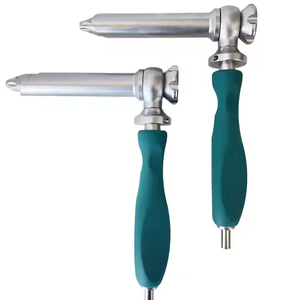
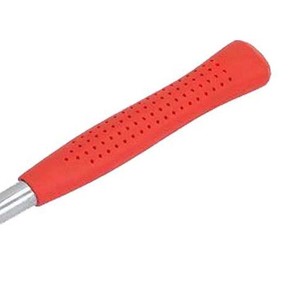
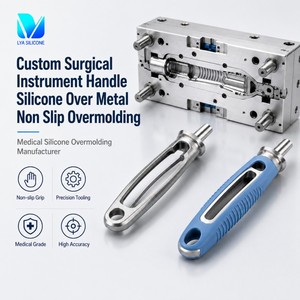
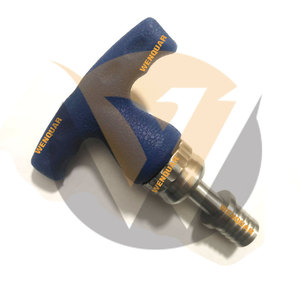
Executive Whitepaper: The Evolution of Medical-Grade Silicone Surgical Handles
In modern surgical environments—spanning minimal-invasive orthopedic procedures, complex spinal instrumentation, and robotic-assisted surgeries—the tactile link between the surgeon and the instrument dictates procedural velocity, ergonomic safety, and surgical precision. Over the past decade, global medical device OEMs (Original Equipment Manufacturers) have largely transitioned from traditional stainless steel knurled handles and rigid PEEK grips to Liquid Silicone Rubber (LSR) overmolded surgical handles.
Silicone surgical handles deliver unmatched tactile feedback, dampening vibrations from power tools, minimizing hand fatigue during multi-hour reaming, and offering non-slip security even when exposed to bodily fluids, saline flushes, and surgical lubricants. However, engineering a silicone handle capable of enduring repeated autoclave sterilization cycles at 134°C (273°F) while maintaining strong mechanical bonding to metal shafts presents complex manufacturing challenges.
Core Industry Benchmark: A premier medical silicone handle must demonstrate zero delamination, zero chemical leaching (compliance with ISO 10993 and FDA 21 CFR 177.2600), and sustain mechanical torque limits exceeding 15 Nm across 1,000+ repeated steam sterilization autoclaving cycles.
Material Science: LSR Overmolding vs. Mechanical Assembly
When evaluating global suppliers and exporters, medical device procurement specialists must distinguish between simple slip-on silicone sleeves and true chemical-mechanical LSR Overmolding Services. Precision overmolding utilizes multi-shot injection molding technology, where liquid silicone rubber is injected under high pressure around a pre-treated stainless steel (e.g., 17-4 PH, 316L, or Custom 455) or titanium alloy core.
Prior to overmolding, the metallic core undergoes grit-blasting, chemical passivation, and specialized silane primer coating to create a covalent molecular bond between the silicone matrix and the metal interface. This eliminates micro-gaps that could harbor blood, bacteria, or moisture—satisfying stringent hospital infection-control protocols.
| Performance Metric | LSR Direct Overmolded Handles | Slip-On Silicone Sleeves | Standard Stainless Knurled |
|---|---|---|---|
| Sterilization Integrity | Hermetically Sealed (Zero ingress) | Risk of bio-burden trap under sleeve | High cleaning effort in knurl grooves |
| Tactile Friction / Non-Slip | Superior (Wet & Dry Grip) | Moderate (Sleeve may roll under torque) | Poor when contaminated with fluid |
| Ergonomic Fatigue Index | Low (Soft-touch Shore 50A–70A) | Moderate | High (Rigid contact points) |
| Torque Transmission | Up to 20+ Nm (Interlocked core) | Limited (< 4 Nm) | Unlimited (Limited by hand grip) |
| Color Coding Integration | Permanent Biocompatible Color Pigments | Surface printed (Fades over time) | Requires laser marking / color bands |
How Sourcing Directors Evaluate Top Silicone Handle Exporters
Qualifying an international contract manufacturer requires assessing technological capability, regulatory rigor, and supply chain maturity.
ISO 13485 & FDA 21 CFR 820 Compliance
Top-tier exporters must operate within an ISO 13485:2016 certified Quality Management System (QMS) with full lot traceability, material heat lot tracking, and FDA registration for medical device contract manufacturing.
ISO 10993 Biocompatibility
Every silicone resin formulation must hold valid testing for Cytotoxicity (ISO 10993-5), Sensitization (ISO 10993-10), and Irritation. Only USP Class VI medical-grade solid and liquid silicones are permissible.
Precision Metal Machining + Overmolding
Leading suppliers maintain in-house high-speed CNC Swiss machining, flute grinding, and ratchet mechanism assembly, ensuring single-source accountability from raw stainless bar to finished silicone handle.
Custom Ergonomics & Mold Tooling
Exporters must possess rapid tooling development and 3D silicone prototyping capabilities, allowing OEM engineers to refine T-handles, teardrop profiles, and axial grips for surgeon comfort before mass production.
Advanced Coupling & Torque Systems
Integration of fixed, ratcheting, and torque-limiting internal mechanisms (AO, Hudson, Hex, or custom quick-connect couplings) within the silicone body without compromising handle balance or seal integrity.
Total Cost of Ownership (TCO)
Evaluating suppliers on total landed cost, design-for-manufacturability (DFM) support, flexible MOQs, custom laser-etched branding, and validated cleanroom packaging solutions.
Future Procurement & Design Trends in Surgical Handles (2025–2030)
As the global surgical device market moves toward greater miniaturization, procedure-specific customization, and robotic assistance, the demands placed on surgical handle exporters are evolving rapidly. Procurement managers must align with suppliers investing in next-generation manufacturing technology.
1. Color-Coded Modular Systems for Operating Room Efficiency
Hospitals are focusing heavily on reducing OR setup times and preventing surgical errors. Future procurement cycles favor manufacturers offering vibrant, non-fading silicone color schemes. Multi-color overmolding allows immediate visual identification of instrument sizing (e.g., bone reamers, taps, drivers) and surgical procedure stages (e.g., trial vs. final implant insertion).
2. Antimicrobial Silicone Additives & Micro-Textured Grips
Innovations in silicone compounding now permit the integration of inorganic antimicrobial silver-ion agents throughout the LSR matrix. This provides active bacterial resistance between sterilization cycles. Furthermore, advanced laser-etched mold cavities allow suppliers to create micro-textured surface patterns that enhance wet traction without creating deep crevices where bio-burden can collect.
3. Smart Torque-Limiting and Sensor-Embedded Handles
With the rise of robotic-assisted orthopedic surgery (e.g., knee and hip replacement systems), surgical handles are increasingly integrating precise mechanical torque-limiting couplings and electronic sensor housings. Exporters capable of overmolding sensitive internal ratchets while maintaining hermetic seals are setting the benchmark for high-value contract manufacturing.
4. Sustainable & Waste-Reduced LSR Manufacturing
Top global exporters are adopting cold-runner injection system molds and automated robotic picking arms. This minimizes material sprue waste, lowers energy consumption per part, and reduces production costs—enabling suppliers to pass structural savings to OEM procurement partners.
Enterprise Excellence: Greyack Medical Manufacturing Solutions
Greyack Medical Co., Ltd stands as an FDA-registered, ISO 13485-certified contract manufacturing partner dedicated to global medical device OEMs. We bridge the gap between initial engineering prototypes and high-volume, validated device production across orthopedics, spine, dental, and surgical robotics markets.
Full-Spectrum Capabilities
From high-speed Swiss CNC turning, 5-axis milling, and precision flute grinding to liquid silicone overmolding, chemical passivation, and laser marking—all completed under one unified quality management system.
MedTorque Handle Expertise
Our specialized MedTorque product line offers fixed, ratcheting, and torque-limiting silicone-handled instruments designed for maximum ergonomic comfort, smooth ratcheting engagement, and extreme sterilization endurance.
Turnkey OEM / ODM Support
We provide comprehensive Design-for-Manufacturability (DFM) analysis, custom mold engineering, material certification packages, first article inspection (FAI) reports, and full lot traceability for seamless regulatory filings.
Frequently Asked Questions by Medical Device Sourcing Teams
Essential guidance on custom silicone overmolding, material compliance, lead times, and quality assurance.