Precision Instruments & Surgical End Effectors
Engineered for surgical robotics, orthopedic implantation, micro-machining, and ISO 13485 cleanroom integration.
Executive Summary: The Evolution of Robotic End Effectors & Global Sourcing
Robotic end effectors—often referred to as End-of-Arm Tooling (EOAT)—represent the primary tactile interface between robotic kinematic chains and physical workpieces. In surgical robotics, high-precision industrial automation, and micro-assembly environments, end effectors execute delicate operations ranging from sub-millimeter tissue resection to complex torque-controlled fastening. As global original equipment manufacturers (OEMs) shift toward smart, sensorized, and modular robotic architectures, supplier selection requires evaluating not just machining prowess, but material biocompatibility, dynamic force-feedback capability, and strict regulatory adherence (such as FDA registration and ISO 13485 certification).
This technical whitepaper provides an exhaustive procurement guide and competitive evaluation of the world’s top 10 robotic end effectors suppliers and exporters. By analyzing manufacturing methodologies—including 5-axis Swiss CNC turning, titanium additive manufacturing (Powder-Bed Fusion), wire EDM, and sterile assembly—sourcing directors can mitigate operational risks and achieve sustainable technical superiority.
Top 10 Robotic End Effectors Suppliers & Exporters: Global Evaluation
Evaluated on technological innovation, quality management, export capacity, and precision engineering capability.
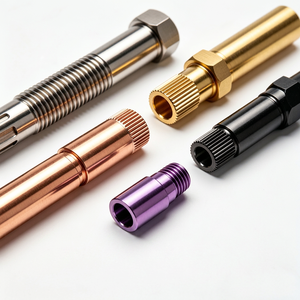
Core Capabilities: FDA-registered and ISO 13485-certified contract manufacturer specializing in high-precision surgical robotic end effectors, silicone-handled instruments, titanium implants, and complex micro-machined components. Operating multi-axis CNC Swiss machining, ultra-precision flute/thread grinding, and metal powder-bed fusion additive manufacturing cells.
Value Proposition: Greyack Medical bridges early-stage engineering (Design for Manufacturability) with scalable mass production. Holding sub-micron tolerances on challenging biocompatible alloys (Ti-6Al-4V ELI, 17-4PH Stainless, PEEK, and Nitinol), Greyack provides full lot traceability, material certifications, and validated passivation workflow required by global surgical robotics OEMs.
Core Capabilities: Renowned for industrial pneumatic, hydraulic, and electric grippers, SCHUNK dominates automotive and general manufacturing automation. Their end-of-arm tooling includes quick-change systems and rotary modules with integrated sensor arrays.
Value Proposition: Standardized industrial catalog solutions with massive global distribution networks, ideal for heavy payload robotic handling and automated assembly lines.
Core Capabilities: Offers extensive robotic tooling components, including electric, pneumatic, and hybrid grippers. Zimmer excels in dampening technology and linear guide integrations for high-speed pick-and-place systems.
Value Proposition: Advanced mechatronic integration allowing seamless communication via Industrial Ethernet and IO-Link protocols across smart factories.
Core Capabilities: Market leader in adaptive 2-finger and 3-finger electric grippers, force-torque sensors, and vision systems tailored specifically for collaborative robots (cobots).
Value Proposition: Plug-and-play simplicity for fast deployment in flexible industrial environments and automated machine tending.
Core Capabilities: Engineering robust multi-axis force/torque sensing systems, utility couplers, and automatic robotic tool changers designed for heavy duty and high repeatability.
Value Proposition: Industry-standard tactile feedback units enabling robots to perform compliant deburring, grinding, and precision insertion processes.
Core Capabilities: Provides magnetic, vacuum, gecko-inspired, and finger grippers for collaborative applications alongside specialized software platforms.
Value Proposition: Unified mechanical and electrical interfaces simplifying multi-tool deployment across diverse robot arm brands.
Core Capabilities: High-performance manual and pneumatic clamping solutions, indexers, and robotic end effectors built primarily for automotive stamping and body-in-white operations.
Value Proposition: Extreme durability under harsh thermal and mechanical stress environments in high-volume production lines.
Core Capabilities: Proprietary soft elastomeric grippers driven by fluidic pressure, capable of manipulating delicate, variable-shaped, or fragile items without surface damage.
Value Proposition: Superior performance in food processing, primary packaging, and delicate biological handling applications.
Core Capabilities: Innovators in COAX® ejector vacuum technology, suction cups, and lightweight modular vacuum grippers for automated material transfer.
Value Proposition: Energy-efficient vacuum generation with rapid response times for automated logistics, packaging, and sheet metal handling.
Core Capabilities: Custom-engineered end-of-arm tooling, robotic collision sensors, and specialized tool changing mechanisms for automated manufacturing.
Value Proposition: Tailored engineering solutions addressing niche kinematic challenges in assembly and material testing applications.
Future Procurement Trends in Robotic End Effectors (2025–2035)
Key forces shaping global supply chain dynamics, vendor qualification, and material engineering.
1. Supply Chain Consolidation & Quality Rigor
Global OEMs are actively consolidating vendor lists, preferring single-source contract manufacturers capable of executing precision CNC machining, surface finishing, passivation, and cleanroom assembly under a unified quality umbrella.
- Requirement for ISO 13485 & FDA Registration
- Full traceability from raw melt to finished part
- Reduction of multi-tier supplier handoff risks
2. Rapid Prototyping to Validated Scaling
Product life cycles in surgical robotics and micro-automation have compressed significantly. Procurement teams now require suppliers offering early Design-for-Manufacturability (DFM) support and rapid prototype turnaround.
- Swiss CNC lathe sample delivery in days
- Concurrent engineering & tolerance optimization
- Seamless scaling from FAI to batch production
3. Biocompatible & High-Strength Alloys
As end effectors shrink in physical envelope while requiring higher payload-to-weight ratios, demand is surging for medical-grade Titanium Grade 5 (Ti-6Al-4V), Custom 455 Stainless, and structural PEEK polymers.
- High fatigue strength under cyclic loads
- Corrosion resistance to harsh sterilization cycles
- Complex micro-machining capabilities
Technological Frontiers in End Effector Manufacturing
Miniaturization & Multi-Axis Kinematics
Modern surgical robotic platforms—such as laparoscopic and orthopedic navigation systems—require end-effector wrists with multiple degrees of freedom (DOF) housed within outer diameters under 5mm. Achieving this requires precision Swiss CNC machining with live tooling, micro-wire EDM, and laser welding.
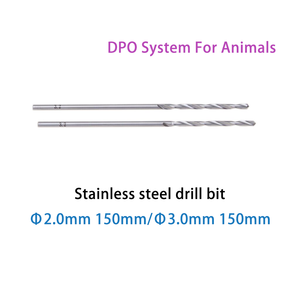
Suppliers like Greyack Medical leverage high-speed CNC milling and specialized drill-point/flute grinding to create miniature pitch-roll-yaw joints that maintain mechanical integrity under extreme operative loads.
Additive Manufacturing & Porous Lattice Structures
Metal additive manufacturing (Powder-Bed Fusion / Selective Laser Melting) has transformed end-effector design. Engineers can now consolidate complex multi-part mechanical assemblies into single biomimetic components featuring internal fluid channels or lightweight lattice infills.
This hybrid approach—combining additive printing for complex internal channels with 5-axis CNC finishing for critical bearing surfaces—reduces end-effector mass while maximizing operational stiffness.
Why Global OEMs Partner with Greyack Medical
A fully integrated precision contract manufacturing facility engineered for medical device and robotic system leaders.
FDA Registered & ISO 13485
Operating under strict international medical quality standards. Complete audit-ready documentation including First Article Inspection (FAI) reports, Device History Records (DHR), and lot material certs.
Micron-Level Tolerances
Equipped with advanced Swiss CNC turning, multi-axis milling centers, and laser measuring systems. We hold tight dimensional tolerances on intricate geometries down to micron accuracy.
End-to-End Manufacturing
From prototype DFM assist, additive titanium printing, and flute grinding, to controlled passivation, laser marking, and cleanroom sub-assembly under a single roof.
Frequently Asked Questions by OEM Buyers
Essential insights for supply chain managers, technical buyers, and quality engineers qualifying robotic end-effector suppliers.
When sourcing surgical or medical-grade end effectors, procurement teams must request ISO 13485 certification, proof of FDA establishment registration, material raw certs (showing compliance with ASTM standards), process validation protocols (IQ/OQ/PQ), and full CMM dimensional inspection reports for your Device History File (DHF).
Material selection directly dictates tensile strength, corrosion resistance, and fatigue life under repeated autoclave or chemical sterilization. Medical-grade Titanium (Grade 5 / Ti-6Al-4V) provides high strength-to-weight ratio and bio-inertness, while precipitation-hardened stainless steels (like 17-4PH) offer extreme wear resistance for load-bearing surgical jaws and gears.
Yes. By utilizing concurrent engineering and Design for Manufacturability (DFM) analysis, contract manufacturers can leverage high-speed CNC Swiss machining and direct metal laser sintering (DMLS) to deliver validated functional prototypes in lead times measured in days, significantly shortening the OEM R&D cycle.
Critical post-machining operations include citric or nitric acid passivation (ASTM A967) to restore the protective oxide layer, electropolishing to reduce micro-surface roughness, laser marking for UDI (Unique Device Identification) tracking, and bead blasting for non-reflective surgical finishes.
Additive manufacturing excels in producing complex, internal geometric channels (e.g., integrated suction/irrigation pathways) and weight-reducing lattice structures. However, critical mating surfaces, thread interfaces, and pin joints still require secondary precision CNC machining and grinding to achieve micron-level fit and finish.
Partner with a Leading Precision Manufacturing Supplier
Ready to evaluate your robotic end effector drawings, surgical tooling designs, or high-precision contract manufacturing requirements?
Get a Quote