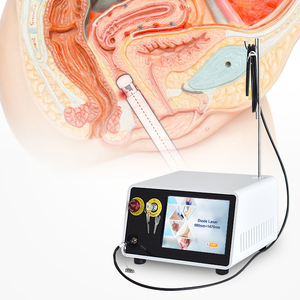
OEM / ODM Medical Catalog Showcase
Featured Micro Medical Instruments & Component Assemblies
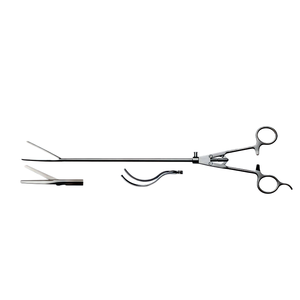
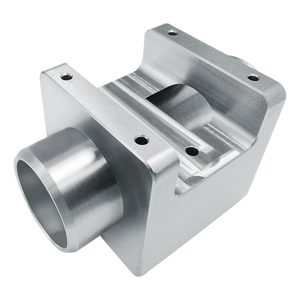
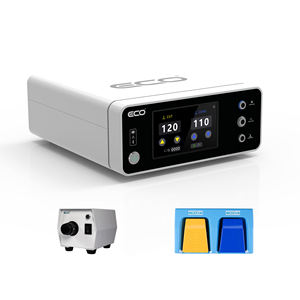
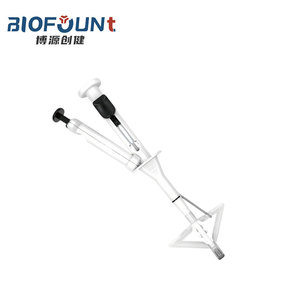
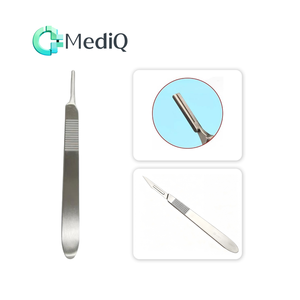
Explore our top-tier precision medical components, laparoscopic instruments, plasma ablation wands, and high-precision CNC surgical sub-systems engineered for global medical OEMs.
±0.001 mm
Micro-Machining Tolerance
ISO 13485
Certified Quality System
FDA
Registered Establishment
100%
Full Material Traceability
Industry Intelligence Whitepaper
Navigating Global Sourcing for Micro Medical Components
An authoritative engineering guide for Original Equipment Manufacturer (OEM) procurement executives, medical device designers, and surgical instrument buyers evaluating top micro medical contract manufacturers worldwide.
1. The Strategic Role of Micro Medical Contract Manufacturing
In the rapidly evolving landscape of minimally invasive surgery (MIS), endoscopic procedures, ophthalmic operations, and surgical robotics, the demand for extreme miniaturization has never been greater. Modern medical devices require complex metallic and polymeric components with dimensional features measured in microns. Selecting an qualified partner among the Top 10 Micro Medical Manufacturing Factories & Exporters is a critical strategic decision that impacts product reliability, regulatory compliance speed, and market launch timelines.
Micro medical contract manufacturing encompasses advanced engineering disciplines including Swiss-type precision CNC turning, micro wire-EDM (Electrical Discharge Machining), micro laser ablation, electrochemical polishing, and cleanroom bio-burden control. Leading global exporters differentiate themselves not only through precision machinery, but by offering fully integrated Design-for-Manufacturability (DFM) input and robust Risk Management frameworks (ISO 14971 compliance) that bridge the gap between initial prototype concepts and high-volume commercial production.
Key Engineering Insight: When qualifying a micro medical factory, OEM buyers must look beyond static tolerance specs. True manufacturing capability lies in statistical process control (Cpk > 1.67) across thousands of micro-machined units under strict ISO 13485 quality control loops.
2. Micro Manufacturing Technical Evaluation Matrix
To assist global procurement officers in vendor qualification, the following matrix outlines the core technical benchmark standards established by leading international exporters:
| Process Capability | Standard Micro Tolerance | Target Materials | Key Medical Device Applications |
|---|---|---|---|
| Swiss-Type CNC Turning | ±0.001 mm (1 micron) | Titanium Gr 5 (Ti-6Al-4V ELI), 316L, Nitinol | Bone screws, dental abutments, spinal rods, biopsy shafts |
| Micro-Wire EDM & Sinking | ±0.002 mm | Cobalt-Chrome (CoCr), MP35N, Hardened Steels | Surgical robotics end-effectors, micro-grippers, scalpels |
| Laser Ablation & Cutting | ±0.005 mm (Kerf < 15µm) | Stainless Steel, Nitinol Tubing, Polyimide | Hypotubes, vascular stents, plasma ablation wands, catheters |
| Micro-Grinding & Fluting | ±0.002 mm | Medical Grade Stainless Steel, Carbide | Surgical reamers, drills, dental burs, trocars, guide pins |
| Polymer Micro-Injection | ±0.008 mm | PEEK, Radel, Silicone, Bio-resorbable polymers | Fascia closure jaws, implants, handles, electrical insulators |
3. Enterprise Advantage: Core Capabilities of Greyack Medical
As a leading contract manufacturer serving world-class medical device OEMs, Greyack Medical combines state-of-the-art precision machinery with a deeply ingrained quality management system. Our integrated production facilities eliminate multi-vendor friction, significantly reducing lead times for critical surgical components.
End-to-End Precision CNC
High-speed 5-axis milling, Swiss multi-axis turning, and automated wire EDM engineered specifically for implantable micro-geometries and surgical handpieces.
Controlled Passivation & Surface Treatment
In-house citric and nitric passivation, electropolishing, laser marking, and ultrasonic cleaning under controlled cleanroom conditions meeting ASTM F86 standards.
Audit-Ready Compliance
ISO 13485:2016 certified and FDA registered. Complete validation deliverables including IQ/OQ/PQ, First Article Inspection Reports (FAIR), and 100% material lot traceability.
Strategic Sourcing Trends
Future Procurement Trends in Micro Medical Manufacturing
How global healthcare dynamics, regulatory evolution, and advanced technology are reshaping the supply chain strategy for medical device original equipment manufacturers.
1. Vendor Consolidation & Turnkey Sub-Assembly Contracts
Global medical OEMs are moving away from fragmented supply chains where raw machining, heat treatment, surface finishing, and sub-assembly are split across multiple sub-contractors. The elevated risks of part damage, bio-burden contamination, and non-conformance during vendor handoffs are driving OEMs toward single-source contract manufacturers. Top exporters now offer complete vertical integration—handling raw bar stock processing, micro-grinding, silicone handle overmolding, laser etching, sterile packaging support, and complete Device History Record (DHR) documentation under one roof.
2. Accelerated Demand for Robotic-Assisted Surgery Components
The global rapid adoption of robotic-assisted surgical systems (RAS) has created an unprecedented demand for micro-scale end-effectors, miniaturized articulated wrist mechanisms, high-torque micro gears, and specialized drive shafts. These components require tight geometric tolerances (< 3 microns) and high fatigue resistance. Micro manufacturing exporters equipped with multi-axis Swiss CNC turn-mill centers and automated micro-laser welding stations are positioned to dominate this fast-growing sector over the next decade.
3. Hybrid Manufacturing: Additive Micro-Printing + Ultra-Precision Machining
The integration of Powder-Bed Fusion (PBF) 3D metal printing with post-process 5-axis micro CNC milling represents a massive technological breakthrough. Additive manufacturing enables porous trabecular structures on orthopedic implants that mimic natural bone in-growth, while subtractive micro-machining ensures precision thread interfaces and critical mating surfaces adhere to exact micron specifications. Global buyers are prioritizing factories that master this hybrid workflow.
R&D & Material Science
Material Innovations in Micro Medical Component Fabrication
Understanding material behavior at micron scales is essential for engineering biocompatible, durable, and functional surgical devices.
Titanium Grade 5 ELI (Ti-6Al-4V)
Extra Low Interstitial (ELI) titanium offers superior fracture toughness and bio-compatibility. Micro-machining Ti-6Al-4V requires specialized carbide tooling, optimized coolant delivery, and high-rigidity spindles to prevent work hardening during micro-threading.
Superelastic Nitinol Alloys
Nitinol (Nickel-Titanium) exhibits shape memory and superelasticity crucial for vascular stents, endoscopic grasping jaws, and micro-flexible needles. Specialized micro-laser ablation and stress-relief heat treatment cycles are mandatory to retain superelastic properties.
Medical-Grade PEEK & Carbon PEEK
Polyetheretherketone (PEEK) replaces metals in radiolucent spinal cages, orthopedic implants, and reusable surgical tool handles. High-precision CNC machining of PEEK requires precise temperature control to prevent thermal degradation during tool engagement.
Procurement & Technical FAQ
Frequently Asked Questions by Medical Device Buyers
Detailed answers regarding quality standards, lead times, regulatory compliance, and prototyping protocols when sourcing from top micro medical exporters.
What quality management certifications are required for micro medical contract manufacturing? +
Qualified micro medical device factories must hold ISO 13485:2016 certification, which specifies requirements for a quality management system where an organization needs to demonstrate its ability to provide medical devices and related services that consistently meet customer and applicable regulatory requirements. Furthermore, facilities supplying the US market must be registered with the US FDA as a finished device manufacturer or component contract manufacturer under 21 CFR Part 820 (Quality System Regulation / QSR).
What are the minimum micro-machining tolerances your facility can reliably hold? +
Using high-precision Swiss-type CNC lathes, micro wire-EDM, and laser ablation systems, our facility routinely achieves dimensional tolerances of ±0.001 mm (1 micron) on cylindrical turning features and ±0.002 mm on complex micro milling geometries. In-process laser gauging and optical coordinate measuring machines (CMM) ensure statistical capability (Cpk > 1.67) for critical-to-quality (CTQ) dimensions across high-volume production runs.
How do you handle prototype development versus full production scaling? +
We provide a structured 5-stage engineering workflow: (1) Design for Manufacturability (DFM) review, (2) Rapid Prototyping (machined or additive), (3) Process Validation under ISO 13485 (IQ/OQ/PQ), (4) Pilot production run with complete First Article Inspection Reports (FAIR), and (5) Validated high-volume automated production. This seamless bridge ensures prototypes transition into production without re-engineering delays.
What documentation and traceability records are provided with exported shipments? +
Every shipment includes a comprehensive Device History File (DHF) compliance package: Mill Test Certificates (MTC) for raw materials verifying chemical composition and mechanical properties, Certificate of Conformance (CoC), full dimensional inspection reports (optical CMM), heat treatment / passivation validation logs, and complete lot numbers to maintain full audit traceability from raw bar stock to finished product.
Can you manufacture custom silicone-handled tools and ratcheting surgical torque wrenches? +
Yes. Our proprietary MedTorque division specializes in fixed, ratcheting, and torque-limiting surgical handles overmolded with bio-compatible silicone. These handles provide precise ergonomics, autoclave steam sterilization resistance, and reliable torque control for orthopedic, spinal, and dental surgical procedures.
How do international OEMs initiate an engineering review and RFQ? +
OEM sourcing teams and engineering leads can click the "Get Catalog" button or submit 2D/3D CAD models (STEP, IGES, SolidWorks) along with material specifications, target annual volume, and quality requirements directly to our engineering team. An experienced medical manufacturing engineer will review your drawings under non-disclosure agreement (NDA) and provide a DFM feedback report and commercial quote within 24 to 48 hours.
Accelerate Your Micro Medical Manufacturing Program
Partner with an FDA-registered, ISO 13485-certified contract manufacturer. Access high-precision Swiss CNC turning, micro-grinding, and silicone instrument assembly today.
Get Catalog & Technical Specs