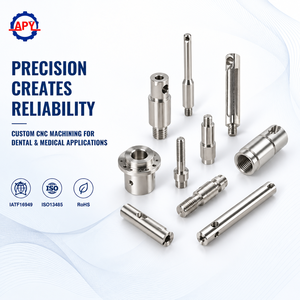
Precision Engineering Catalog
Featured Medical Implants & Precision Surgical Instruments
Explore our contract-manufactured components designed for orthopedic, spinal, dental, and trauma applications. Built to strict ISO 13485 tolerances with multi-axis CNC micro-machining and medical-grade metallurgy.
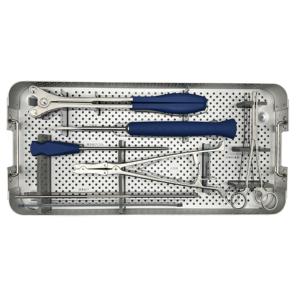
Spinal Medical Orthopedic Posterior Spinal Lnter-fixation System PSS Instruments Orthopedic Surgical Instrument
Request Specifications & Quote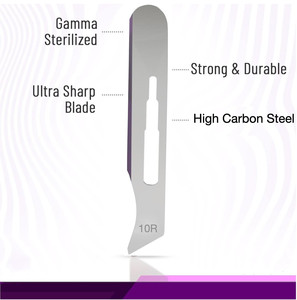
ZS Disposable 10r Blades Dermaplaning Dermaplane Blades 10r High Carbon Steel Dermablade Surgical Scalpel Blades Sterile
Request Specifications & Quote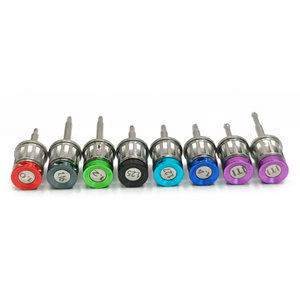
High Quality Dental Implant Driver Universal Fit Universal Dental Implant Screwdriver For Prosthetic Screws
Request Specifications & Quote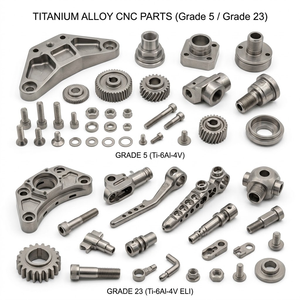
High Tolerance CNC Machining Service Grade 23 Medical Titanium Grade 5 Aerospace Titanium Custom Machined Components
Request Specifications & Quote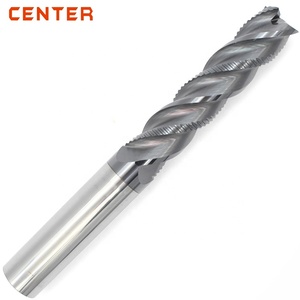
CENTER 4 Flute Roughing End Mill High Precision Cutting Tools for Medical Device Machining
Request Specifications & Quote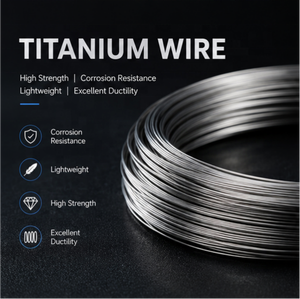
Medical Grade GR1 GR2 Titanium Wire ASTM F67 F136 0.15-8mm Biocompatible for Implant Surgical Applications OEM
Request Specifications & Quote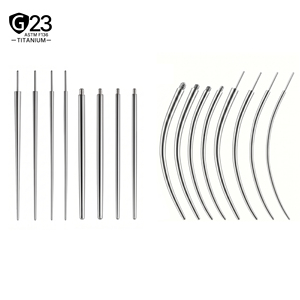
ASTM F136 Titanium Threadless Threaded Piercing Insertion Tapers 14G 16G 18G 20G Curved Needle Body Piercing Titan De Titanio
Request Specifications & Quote±0.002 mm
Ultra-Precision Machining Tolerance
ISO 13485
Certified Quality Management System
100%
Full Material Traceability & DHF Logs
FDA
Registered Contract Manufacturing Facility
Enterprise Competence
Why Tier-1 Medical Device OEMs Partner With Our Manufacturing Ecosystem
From rapid DFM prototyping to validated cleanroom production, Greyack Medical bridges high-level orthopedic engineering with zero-defect manufacturing discipline. We eliminate handoff risks by housing 5 core manufacturing processes under one roof.
Multi-Axis Swiss CNC Precision Machining
Equipped with 10-axis Swiss sliding headstock turning centers and high-speed 5-axis milling units, we produce intricate bone screws, locking plates, and spinal rod systems with surface finishes down to Ra 0.2 µm without secondary manual polishing.
Additive Manufacturing & Porous Lattice Printing
Utilizing Laser Powder Bed Fusion (LPBF / DMLS) technology in medical titanium (Ti-6Al-4V ELI), we manufactureTrabecular-structured acetabular cups and interbody spinal cages that directly encourage biological osseointegration.
Specialized Medical Grinding & Fluting
Our ultra-precision CNC grinding cells execute micron-accurate thread grinding, point grinding, and spiral flute grinding for surgical drills, taps, reamers, and dermaplaning scalpel blades crafted from surgical-grade stainless steels and carbon steels.
Automated Passivation, Anodizing & Finishing
Fully compliant with ASTM A967 nitric/citric acid passivation standards and AMS 2700 certification. We provide Type II and Type III titanium anodizing, laser etching UDI marking, and high-purity ultrasonic cleaning inside Class 8 cleanrooms.
Regulatory Documentation & DHF Integration
Every batch shipped comes with exhaustive Quality Assurance packets: Material Mill Test Certificates (MTRs), First Article Inspection Reports (FAIR per AS9102), CMM dimensional verification, process validation (IQ/OQ/PQ), and full lot traceability.
Design-for-Manufacturability (DFM) Co-Engineering
Our senior biomedical manufacturing engineers collaborate directly with your R&D teams to refine tool paths, eliminate stress concentration points, optimize raw material yield, and accelerate your FDA 510(k) or EU MDR market submission timelines.
Technical Whitepaper
Trauma Implant Metallurgy, Biomechanics & OEM Sourcing Standards
A comprehensive engineering breakdown of biomaterial selection, stress distribution physics, and surface modification technologies for next-generation orthopedic fixation systems.
1. Biomaterial Selection & Metallurgical Integrity in Trauma Fixation
The performance of trauma implants—such as intramedullary nails, locking compression plates (LCP), and cannulated screws—is fundamentally constrained by material mechanics under dynamic loading. Modern trauma surgery requires an optimal combination of fatigue strength, fracture toughness, low modulus of elasticity to mitigate stress shielding, and exceptional biocompatibility.
At Greyack Medical, contract manufacturing centers around certified high-grade medical alloys tailored for temporary internal fixation and permanent skeletal stabilization:
| Medical Biomaterial Standard | Mechanical Yield Strength (MPa) | Young's Modulus (GPa) | Primary Orthopedic Applications |
|---|---|---|---|
| Titanium Grade 5 (Ti-6Al-4V ELI) - ASTM F136 | ≥ 795 MPa | 110 GPa | Locking bone plates, trauma screws, intramedullary nails, anatomical joint plates. |
| Commercially Pure Titanium (CP Grade 2/4) - ASTM F67 | 275 - 480 MPa | 105 GPa | Cranial-maxillofacial (CMF) plates, low-load fracture mesh, biocompatible wire staples. |
| Stainless Steel 316LVM - ASTM F138 / ISO 5832-1 | ≥ 690 MPa | 190 GPa | Temporary trauma pins, Kirschner wires (K-wires), external fixation rods, surgical drills. |
| Cobalt-Chromium-Molybdenum (Co-Cr-Mo) - ASTM F75 | ≥ 840 MPa | 220 GPa | High-wear joint trauma components, spinal fixation hooks, sub-condylar plates. |
| PEEK (Polyetheretherketone) OPTIMA - ASTM F2026 | 95 - 110 MPa | 3.6 - 18 GPa | Radiolucent trauma plates, interbody spinal fusion cages, cranioplasty implants. |
By controlling interstitial elements (specifically Oxygen & Iron limits in Ti-6Al-4V ELI), our contract manufacturing processes maintain material ductility exceeding 10% elongation, guaranteeing that contoured trauma plates can be manually bent intraoperatively by orthopedic surgeons without risk of micro-fracture propagation.
2. Precision CNC Machining & Micro-Thread Geometry Mechanics
Trauma screws demand intricate thread profiles—including self-tapping flutes, variable-pitch lead threads, and cannulated central bores down to 0.8 mm diameter. Machine chatter or thermal distortion during high-speed CNC turning degrades the fatigue life of the fastener.
To overcome this, Greyack Medical utilizes multi-axis Swiss lathe technology equipped with high-pressure coolant delivery (100 bar) directly targeting the cutting zone. This technique prevents micro-burr generation and strain hardening during titanium processing. Critical features such as the Torx-style star drive recess (ISO 10664) or internal hexagonal socket are produced via high-precision rotary broaching or 5-axis micro-milling, maintaining pitch tolerances within ±0.0025 mm.
3. Surface Engineering: Anodizing, Passivation, and Tribology
Surface integrity directly governs cellular response and implant corrosion resistance within hostile physiological fluids. Metallic trauma implants undergo a rigorous multi-stage chemical finishing workflow:
- Type II Titanium Anodizing: Transforms the surface oxide layer into a dense, non-porous titanium dioxide barrier (TiO₂), dramatically improving fatigue resistance by up to 20% and preventing cold welding (galling) between locking screws and plate holes.
- Type III Color Anodizing: Provides instant color-coded identification for surgical teams (e.g., color coding 2.7mm vs. 3.5mm vs. 4.5mm cortex screw systems).
- Citric & Nitric Acid Passivation (ASTM A967): Eliminates free iron particles left behind by cutting tools, restoring a passive chromium oxide or titanium oxide surface film.
Strategic Sourcing Insights
Future Procurement Trends in OEM/ODM Trauma Implant Manufacturing
Analysis for procurement executives, strategic sourcing directors, and supply chain managers navigating global medical market shifts over the next decade.
1. Consolidation Toward Single-Source Turnkey Manufacturing
Global medical OEMs are aggressively reducing supply chain complexity by phasing out multi-tier vendor setups. Sourcing managers are consolidating suppliers into single-source partners who can deliver completely finished, validated, laser-marked, cleaned, and sterile-packaged trauma kits directly to distribution hubs.
2. Stringent Regulatory Compliance (EU MDR & FDA 21 CFR 820)
With the transition from EU MDD to EU MDR (2017/745), regulatory burden on technical files has surged. OEMs now require contract manufacturers to possess comprehensive digital lot traceability, validated cleaning protocols (ISO 19227), and robust risk management documentation (ISO 14971) prior to vendor qualification.
3. Transition to Digital Device History Records (eDHR)
Manual paper-based quality logging is rapidly becoming obsolete. Procurement leaders prioritize suppliers operating fully integrated ERP/MES systems that automatically log optical coordinate measuring machine (CMM) data, spindle runtimes, and heat-treat furnace graphs straight into immutable digital device records.
4. Dynamic Demand Planning & Safety Stock Buffer Programs
In response to geopolitical disruptions, trauma implant OEMs demand vendor-managed inventory (VMI) and safety stock agreements. Preferred contract factories maintain raw titanium bar stock reserves and kanban buffer assemblies to buffer against demand spikes in trauma surgical procedure volume.
Innovation Roadmap
Future Technological Trends in Trauma & Surgical Device Manufacturing
How emergent biomaterial science, hybrid additive manufacturing, and digital surgery ecosystems are redefining internal fixation devices.
1. Hybrid Manufacturing: 3D Printing Meets Swiss CNC Turning
The future of complex trauma implants lies in hybrid production workflows. Bone contact surfaces are 3D-printed with randomized porous trabecular structures to encourage bone ingrowth, while high-stress load points and internal screw threads are finished via high-precision 5-axis CNC machining in a single continuous setup.
2. Bio-Absorbable & Resorbable Alloy Implants
To eliminate secondary hardware removal surgeries, next-generation trauma devices are incorporating bio-absorbable Magnesium alloys (WE43) and bio-resorbable polymers. Contract manufacturing requires ultra-controlled inert gas machining environments to prevent rapid oxidation of bio-magnesium during cutting.
3. Patient-Specific Implants (PSI) & Rapid Customization
Shift from standard off-the-shelf plate sizes to anatomical patient-specific implants constructed from pre-operative 3D CT scan DICOM data. Contract manufacturers must establish agile validation frameworks capable of producing custom plates within 72 hours for complex maxillofacial or pelvic trauma reconstructions.
4. Smart Implants with Embedded Telemetry & Micro-Sensors
The integration of micro-strain sensors and passive RFID chips into intramedullary nails enables orthopedic surgeons to remotely monitor fracture healing and dynamic load distribution in real-time. Manufacturing involves deep micro-drilling and laser hermetic sealing of sensor cavities.
Strategic Sourcing FAQ
Frequently Asked Questions for OEM Purchasing & Engineering Teams
Direct answers to critical questions asked during supplier audit, quality qualification, and contract negotiation phases.
What quality certifications and regulatory registrations does your manufacturing facility maintain?
Our contract manufacturing facilities are ISO 13485:2016 certified for medical device component manufacturing and assembly. We are an FDA Registered Establishment (21 CFR Part 820 compliant). Our quality management system supports complete Device Master Record (DMR) compilation, Risk Management according to ISO 14971, and validation protocols (IQ/OQ/PQ) required for FDA 510(k), PMA, and European Union MDR technical submissions.
What medical grade raw materials do you regularly stock for OEM trauma production?
We maintain dedicated, fully traceable inventories of medical-grade metals and polymers. Key stock includes Titanium Grade 5 / Ti-6Al-4V ELI (ASTM F136), Commercially Pure Titanium Grades 2 and 4 (ASTM F67), Stainless Steel 316LVM (ASTM F138), Custom 455 & 17-4PH Stainless Steels, Cobalt-Chromium-Molybdenum (ASTM F75 / F1537), and implantable-grade PEEK OPTIMA (ASTM F2026). All material stock includes full mill test certification (MTR) with heat/lot number traceability.
Can Greyack Medical handle both rapid prototyping and full-scale contract production?
Yes. We operate a dedicated NPI (New Product Introduction) engineering fast-track cell. This team focuses exclusively on prototype development, surgeon design-feedback revisions, and short-run production batches (5 to 100 units). Once design freeze is achieved, our automation engineers seamlessly transfer part programs, custom tooling, and CMM inspection routines to high-volume multi-axis Swiss CNC work centers for scalable commercial manufacturing.
What surface treatment and finishing operations are performed in-house?
To eliminate cross-contamination and handoff delays, we manage an end-to-end finishing suite inside controlled environments. In-house processes include: Nitric and Citric Acid Passivation (ASTM A967), Type II and Type III Color Titanium Anodizing, Micro-Bead Blasting, Electropolishing, Rotary & Stationary Deburring, Laser Etching UDI (Unique Device Identification) Barcodes, Ultrasonic Solvent Cleaning, and Class 8 Cleanroom Packaging.
How do you ensure dimensional compliance on micro-geometry features and bone screw threads?
We employ a multi-layered quality control architecture. Machine operators utilize in-process high-resolution optical comparator gauging and tactile probes. Final article inspection relies on automated 3D Coordinate Measuring Machines (CMM), non-contact laser scanning systems, and keyence optical measuring stations accurate to ±0.001 mm. We provide complete 100% critical feature inspection reports, First Article Inspection Reports (FAIR per AS9102), and Process Capability Studies (Cp/Cpk analysis > 1.33).
What is your typical turnaround time for RFQs and standard production leads?
Engineering RFQ reviews with DFM analysis are typically completed within 24 to 48 hours upon receipt of 3D CAD files (STEP/IGES) and 2D engineering drawings. Prototyping lead times average 2 to 3 weeks depending on material availability and surface finishing requirements. Production batch lead times range from 4 to 8 weeks, with vendor-managed inventory (VMI) buffer programs available for established OEM agreements.
How do international buyers initiate a supplier audit or project NDA with Greyack Medical?
You can initiate project discussions directly by clicking the Send an Inquiry button on this page. Our OEM project management team will instantly provide a standard mutual Non-Disclosure Agreement (NDA), establish a secure file transfer portal for your CAD models, and schedule a technical conference call with our Lead Manufacturing Engineer.
Accelerate Your Medical Device Sourcing Pipeline
Partner with an FDA-registered, ISO 13485-certified contract manufacturer specialized in precision trauma implants, spinal instrumentation, and high-tolerance surgical tools. Submit your CAD models or specifications for a comprehensive DFM review today.