Precision Medical Components & Finished Assembly Support
Comprehensive OEM/ODM contract manufacturing seamlessly integrated with advanced passivation and surface treatment capabilities.
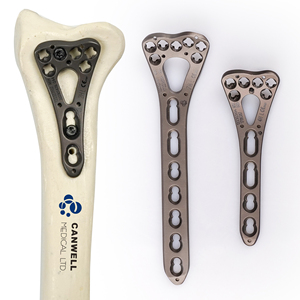
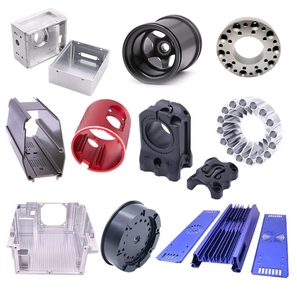
Engineering Whitepaper: The Metallurgy & Chemistry of Medical Passivation
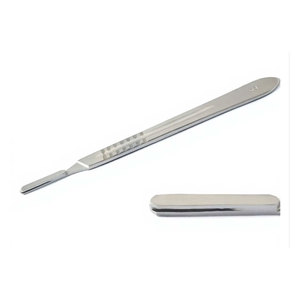
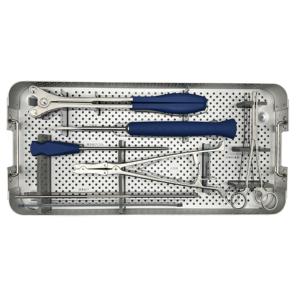
In medical device contract manufacturing, surface integrity dictates clinical outcome. Metallic medical components—such as orthopedic spinal rods, joint prostheses, bone screws, micro-endoscopic instruments, and surgical scalpels—are exposed to harsh biological environments. Without rigorous chemical passivation, trace free iron left by CNC machining cutting tools, wire EDM sparks, or polishing compounds can precipitate localized corrosion, pitting, galvanic failure, and adverse host tissue reactions (cytotoxicity).
Medical passivation is not merely a surface wash; it is a precisely controlled chemical oxidation reaction designed to preferentially dissolve exogenous free iron ($Fe$) and non-metallic contaminants from the surface of stainless steels (316L, 17-4PH, 440C, Custom 455) and titanium alloys (Ti-6Al-4V ELI). This process enriches the surface layer with chromium ($Cr$), facilitating the spontaneous formation of a continuous, thermodynamically stable, passive chromium oxide coating ($\text{Cr}_2\text{O}_3$).
Technical Insight for Sourcing Engineers: According to ASTM F86 (Standard Practice for Surface Preparation and Marking of Metallic Surgical Implants), passivation is mandatory to achieve optimal biocompatibility. The passive oxide thickness must range between 1.5 to 5.0 nm, with a minimum Cr/Fe atomic ratio > 1.5 as verified by Auger Electron Spectroscopy (AES) or X-ray Photoelectron Spectroscopy (XPS).
Comparison of Passivation Standards: ASTM A967 vs. ASTM F86 vs. AMS 2700
Procurement and quality assurance teams must specify chemical treatments tailored to device metallurgy, surgical exposure duration, and structural geometry. Below is an engineering matrix comparing primary passivation standards utilized in medical OEM manufacturing:
| Standard Specification | Chemical Chemistry | Primary Medical Applications | Key Validation Requirements |
|---|---|---|---|
| ASTM F86 | Nitric Acid / Citric Acid Formulations | Implantable Surgical Devices, Orthopedics, Spine | High Humidity (ASTM F86), Cytotoxicity ISO 10993-5, XPS Depth Profile |
| ASTM A967 (Method Citric) | Citric Acid (Bath Concentrations 4-10%) | Reusable Surgical Instruments, Endoscopic Tooling | Water Immersion Test, Copper Sulfate Test, Salt Spray (ASTM B117) |
| ASTM A967 (Method Nitric) | Nitric Acid + Sodium Dichromate Additive | High-Carbon Martensitic Stainless (420/440C Scalpel Blades) | Potentiodynamic Polarization, Ferroxyl Test for Free Iron |
| AMS 2700 (Method 1 & 2) | Controlled Nitric / Bio-Citric Passivation | Aerospace-Grade Surgical Robotics & Actuators | Total Dissolved Metal Monitoring, Corrosion Resistance 2 hour / 24 hour |
Mechanisms: Citric Acid vs. Nitric Acid Passivation Chemistry
Historically, nitric acid was the universal industry benchmark for chemical passivation. However, modern medical OEM manufacturing has heavily shifted toward advanced Citric Acid Chemistry (Method Citric per ASTM A967). Citric acid acts as a chelating agent that selectively targets and complexes iron ions ($Fe^{2+}/Fe^{3+}$) on the surface without attacking nickel, chromium, or molybdenum matrix elements. This provides three critical advantages for medical OEMs:
- Enhanced Surface Cr/Fe Ratio: Citric acid consistently yields higher chromium-to-iron surface ratios compared to traditional nitric acid baths on precipitation-hardened steels like 17-4PH and 15-5PH.
- Substrate Preservation: Citric formulations eliminate the risk of "flash attack"—an aggressive acid-etching phenomena that destroys micro-machined surface finishes ($Ra < 0.2\,\mu\text{m}$) on delicate instruments.
- Environmental Compliance & Safety: Citric acid releases zero hazardous nitrogen oxide ($\text{NO}_x$) fumes, dramatically reducing cleanroom air handling overhead and meeting international ISO 14001 environmental benchmarks.
Integrated OEM/ODM Surface Finishing Capabilities
End-to-end processing under one roof eliminates multi-vendor logistical handoffs, ensuring uninterrupted supply chain security and batch-to-batch consistency.
Precision Electropolishing
Micro-deburring and surface levelling down to sub-micron $Ra$ finishes. Removes microscopic peaks to enhance corrosion resistance prior to chemical passivation.
Titanium Anodizing (Type II & III)
Biocompatible color coding and wear-resistant coating for titanium implants, plates, and orthopedic screws compliant with AMS 2488 standards.
Cleanroom Ultrasonic Washing
Multi-stage automated ultrasonic detergent washing and DI water rinsing (18 M$\Omega\cdot\text{cm}$) ensuring zero particulate contamination prior to passivation.
Laser Marking & UDI Traceability
FDA-compliant Unique Device Identification (UDI) laser engraving performed before chemical passivation to preserve anti-corrosion barrier integrity.
5-Axis CNC & Micro-Grinding
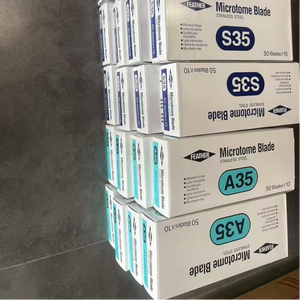
In-house manufacturing of microtome blades, drills, reamers, and spinal implants designed for zero-defect downstream surface passivation.
Validated Packaging Solutions
Class 7 cleanroom packaging, sterile barrier pouch sealing, and customized protective trays designed for global device distribution.
Future Procurement & Technological Trends in Medical Passivation
As global medical device OEMs accelerate the development of robotic-assisted surgery systems, patient-specific 3D-printed titanium implants, and ultra-miniaturized cardiovascular devices, passivation specifications are undergoing a technological evolution. Sourcing managers and quality leaders must prepare for several macro trends impacting medical surface engineering over the next decade:
1. Surface Passivation of Additive Manufactured (3D Printed) Implants
Direct Metal Laser Sintering (DMLS) and Powder Bed Fusion (PBF) produce titanium and cobalt-chrome implants with highly complex porous lattice structures designed for osseointegration. Passivating additively manufactured implants presents unique challenges: un-sintered metallic powder trapment, deep internal capillary geometry, and elevated surface roughness. Leading OEMs are adopting closed-loop ultrasonic-assisted chemical passivation systems that utilize vacuum degasification to drive citric passivation chemistry deep within complex porous matrixes.
2. Automated Closed-Loop Passivation Lines with In-Line Spectroscopy
Manual tank immersion is rapidly being replaced by fully automated, robotic closed-loop passivation cells. Industry 4.0 medical passivation lines incorporate real-time pH monitoring, conductivity sensors, total organic carbon (TOC) analyzers, and spectrophotometry. This ensures chemical baths automatically adjust chemical concentration, maintaining bath integrity and providing digital lot validation records linked directly to the device Design History File (DHF).
3. Micro-Lumen Passivation for Surgical Robotics & Endoscopy
Surgical robotic end effectors and steerable endoscopic tools require micro-tubing with internal diameters below $0.5\,\text{mm}$. Standard dip tanks fail to overcome fluid surface tension, leading to air pockets and un-passivated internal lumens. Emerging passivation protocols employ high-pressure micro-fluidic recirculation systems to ensure complete passive layer formation across internal surfaces, preventing corrosion caused by bodily fluids during minimally invasive procedures.
4. Stringent Global Biocompatibility & Environmental Regulation
Global regulatory bodies (FDA, EU MDR 2017/745) are increasing scrutiny on chemical residues and heavy metal leachables. Passivation processes must undergo rigorous verification per ISO 10993-18 (Chemical Characterization of Materials) and ISO 10993-5 (Cytotoxicity testing). Furthermore, REACH and RoHS mandates are accelerating the global phase-out of hexavalent chromium dichromate sealers, solidifying bio-citric formulations as the global standard for medical device passivation services.
Why Global OEMs Partner with Greyack Medical Co., Ltd.
Greyack Medical Co., Ltd. stands as an FDA-registered, ISO 13485-certified contract manufacturing partner engineered specifically to support global medical OEMs. By integrating high-precision 5-axis CNC machining, Swiss lathe turning, medical flute grinding, electropolishing, and validated chemical passivation under a single Quality Management System (QMS), we eliminate supply chain complexity, compress production lead times, and guarantee total traceability.
ISO 13485 & FDA Registration
Our quality management systems are specifically audited for Class I, II, and III medical device component manufacturing and surface finishing.
Complete Material Certification
Full raw material traceability back to mill heat numbers. Compliance documentation includes chemical analysis, mechanical testing, and passivation certificates.
Micron-Level Tolerances
State-of-the-art CMM laser measuring equipment, automated optical inspection (AOI), and surface profilometry ensure tight dimensional compliance.
Whether you require prototype fabrication for novel spinal instrumentation, high-volume production of surgical scalpels, or specialized citric passivation for 3D-printed orthopedic locking plates, our technical engineering team delivers validated, audit-ready solutions tailored to your exact regulatory and mechanical specifications.
Frequently Asked Questions (FAQ) for OEM Sourcing Teams
What is the main difference between passivation and electropolishing?
Passivation is a purely chemical process that removes free iron from the surface of stainless steel or titanium to enhance the natural passive chromium oxide layer ($\text{Cr}_2\text{O}_3$) without altering surface dimensions or micro-geometry. Electropolishing, on the other hand, is an electrochemical process that removes material from the surface (typically 0.0001" to 0.001"), smoothing micro-peaks, improving surface roughness ($Ra$), and deburring parts while simultaneously passivating the metal.
Which specification should I mandate for medical device passivation: ASTM A967 or ASTM F86?
For implantable medical devices (such as orthopedic plates, spinal screws, and joint implants), ASTM F86 is the gold standard specified by regulatory authorities. For reusable non-implantable surgical instruments, laboratory tools, and diagnostic hardware, ASTM A967 (Method Citric or Nitric) is widely accepted and cost-effective.
How do you verify the effectiveness of a passivated oxide layer?
We perform non-destructive and destructive testing per customer specifications, including High-Humidity Testing (ASTM F86/A967), Water Immersion Testing, Copper Sulfate Testing (for free iron detection), and Salt Spray Testing (ASTM B117). For critical implant validation, quantitative surface analysis techniques such as XPS (X-ray Photoelectron Spectroscopy) or AES (Auger Electron Spectroscopy) are conducted to measure exact Cr/Fe atomic ratios and oxide layer thickness.
Can you passivate small micro-machined parts with complex internal geometries?
Yes. Our automated passivation lines feature multi-frequency ultrasonic agitation and vacuum degasification systems capable of displacing trapped air pocket bubbles inside micro-lumens, deep blind tapped holes, and fine internal threads, ensuring uniform chemical contact and passive layer formation.
What documentation is supplied with passivated medical shipments?
Every shipment is delivered with a comprehensive Quality Certificate of Conformance (CoC), specifying chemical bath parameters, processing lot numbers, total processing duration, verification test results (e.g., copper sulfate or humidity testing), material heat numbers, and compliance statements matching your Design History File requirements.
How does Greyack Medical handle rapid engineering prototypes?
Our dedicated fast-track NPI (New Product Introduction) engineering department supports rapid turnaround times for prototypes and clinical trial batches, providing DFM (Design for Manufacturability) analysis, custom tooling design, and quick-turn passivation validation within days.