Featured OEM/ODM Flute Tooling & Grinding Solutions
Explore our export-validated array of solid carbide end mills, rotary burrs, indexable inserts, and specialized CBN fluting wheels designed for micron-accurate stock removal and surface perfection.
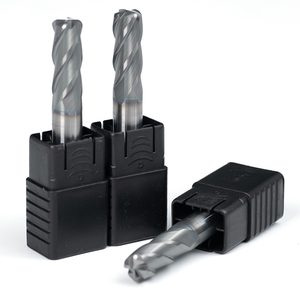
Factory Direct 4-Flute Corner Radius End Mill High-Precision Mold-Specific Solutions for Grinding Applications OEM/ODM
Contact Us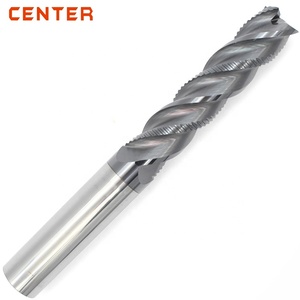
CENTER 4 Flute Roughing End Mill
Contact Us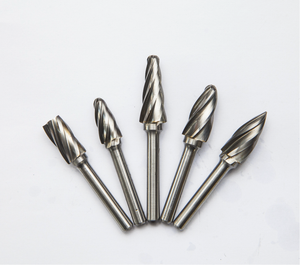
Carbide AlTin Coated 4 Flutes Face Mill Double Diamond Cut CNC Router Wood Grinding Tool with Shank Burr OEM Customizable
Contact Us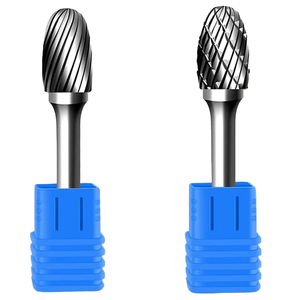
OEM Supported Single-Cut/Double-Cut Cylindrical Shank Tungsten Carbide Rotary Burrs for Grinding Deburring Cutting
Contact Us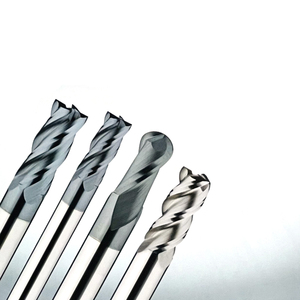
Precision End Mills Helical Flute Cutting Tools with Cylindrical Shank for General Milling and Industrial Machining
Contact Us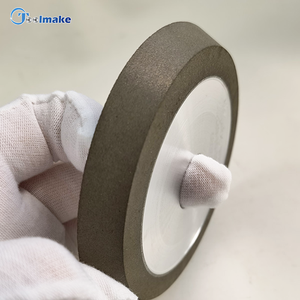
Precise 1V1 Type Cbn Grinding Wheels Used for Flute and End Mill Processing With High Rpm Speed
Contact Us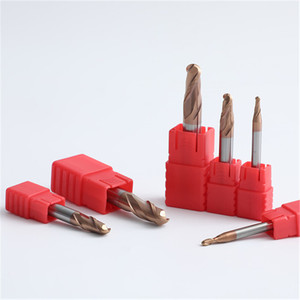
Wholesale Cheap High Quality Ball Endmill Grinder 2 Flute Carbide End Mill
Contact Us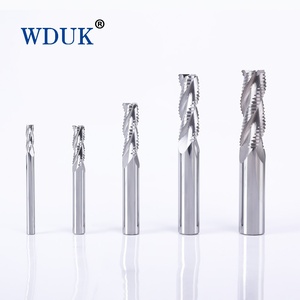
High Precision Wave Flute Roughing End Mill with Stable Cutting Performance for Aluminum Alloy CNC Precision Machining
Contact UsAdvanced Kinematics & Physics of CNC Flute Grinding: An OEM/ODM Contract Manufacturing Guide
In modern high-speed metalworking, medical device production, and aerospace machining, the geometry of a rotary tool's flute is the single most decisive factor governing chip evacuation, thermal loading, chatter suppression, and tool longevity. Flute grinding is not merely a machining phase; it is an applied material science engineering process. As global original equipment manufacturers (OEMs) and original design manufacturers (ODMs) seek enhanced cutting performance, contract manufacturers must utilize high-precision multi-axis CNC fluting techniques that balance helix angles, core tapers, and rake rake geometries to sub-micron accuracy.
1. The Tribology & Thermodynamics of Flute Geometry
During high-efficiency milling or orthopedic bone drilling, up to 80% of generated frictional heat is carried away by the ejected chips. If the internal flute trough exhibits micro-scale striations or inconsistent rake angles, chip packing occurs. This leads to catastrophic thermal buildup, material micro-welding, and premature edge chipping.
Our OEM/ODM manufacturing processes leverage specialized 1V1 and 1F1 superabrasive CBN (Cubic Boron Nitride) and resinoid diamond grinding wheels. By calculating real-time wheel contact arcs and maintaining dress ratio stability, our 5-axis grinding centers engineer ultra-smooth flute valleys with a surface roughness ($Ra$) under 0.1 micrometers. This mirror-like surface drastically reduces friction coefficients, allowing seamless chip evacuation in dry, MQL (Minimum Quantity Lubrication), or flood-coolant environments.
2. Variable Helix & Asymmetric Flute Indexing for Chatter Suppression
Traditional fixed-pitch cutting tools suffer from regenerative chatter—a destructive resonant frequency phenomenon occurring when cutting edges repeatedly strike the workpiece at uniform intervals. OEM tooling engineers increasingly demand customized variable helix angles (e.g., 35°/38° staggered flutes) and non-equal pitch spacing.
- Variable Helix Profiling: Modulates the chip-load distribution along the axial length of the end mill, disrupting standing wave vibrations during deep pocketing.
- Parabolic Core Tapers: Increases shank stiffness while preserving deep flute gullet volume near the tool tip for maximum chip clearance.
- Dynamic Wheel Contact Compensation: Utilizes 3D CAD/CAM software to adjust wheel tilt ($\lambda$) and lateral offset ($Y$-shift) continuously, ensuring edge wall integrity and preventing flute undershoot.
3. Superabrasive Wheel Dress Dynamics & Thermal Stress Prevention
Grinding carbide or hardened stainless steel generates extreme local temperatures exceeding 1,000°C at the contact point. Without precise hydrodynamic oil filtration and specialized nozzle arrays, micro-cracking (thermal shock) can compromise the tungsten carbide grain matrix. Our production facilities deploy high-pressure (up to 40 bar) oil delivery systems pointed precisely at the wheel-workpiece interface, sweeping away microscopic swarf and maintaining tool metallurgical stability.
Materials, Alloys & Surface Treatments Specially Tailored for Global Exporters
Custom flute grinding requires deep compatibility with advanced substrate materials, ranging from ultra-fine carbide grains to surgical-grade stainless alloys.
Tungsten Carbide Substrates
We grind sub-micron ($0.2\mu m - 0.6\mu m$) and micrograin tungsten carbide rods with Cobalt content ranging from 6% to 12%. This ensures maximum hardness (up to 93 HRA) paired with superior transverse rupture strength (TRS > 4,000 MPa).
Medical & Aerospace Alloys
Fully equipped to grind stainless steels (316L, 17-4PH, Custom 455), Titanium (Ti-6Al-4V ELI), and Cobalt-Chrome. Flutes are finished without burrs to guarantee strict biocompatibility and cleanroom packaging readiness.
PVD/CVD Surface Coating Integration
Post-flute grinding treatments include AlTiN, nACo nanocomposite, DLC (Diamond-Like Carbon), and true CVD Diamond coatings. Optimized surface preparation prevents coating delamination under extreme shear forces.
Enterprise OEM/ODM Infrastructure & Metrology Controls
As a leading international exporter and contract manufacturing factory, our facilities unite top-tier European and Asian CNC grinding machinery under a single, audit-ready Quality Management System (QMS).
Multi-Axis CNC Grinding Cells
Equipped with 5-axis Rollomatic, ANCA, and WALTER grinding machines featuring robotic loader arms for continuous 24/7 unmanned lights-out production with automated wheel dressing.
Non-Contact 3D Metrology
100% inspection verified using Zoller Genius micro-metric optical measuring stations and Keyence laser profile systems. Detailed inspection reports accompany every export batch.
Full Traceability & Compliance
FDA registered establishment and ISO 13485 certified processes. Complete lot traceability from raw rod melt certificates to final passivation and packaging logs.
Future Procurement Trends in Global Tooling & Flute Grinding (2025–2030)
Supply chain managers and tooling procurement directors face evolving challenges. Here are the micro and macro trends reshaping the custom flute grinding export ecosystem.
Closed-Loop AI Adaptive Grinding
Modern grinding centers incorporate in-process acoustic emission sensors and real-time spindle load feedback. Machine algorithms adjust feed rates dynamically to prevent thermal degradation during heavy fluting passes.
Micro-Tooling & High-Aspect Fluting
Demand is surging for micro-end mills ($\varnothing < 0.2\text{ mm}$) and ultra-long medical flutes with length-to-diameter ratios exceeding 20x. Maintaining flute depth uniformity without rod deflection requires advanced steady-rest supports.
Resilient OEM Dual-Sourcing Strategies
Global buyers are transitioning from single-region sourcing to validated OEM factory partners capable of offering rapid engineering design-for-manufacturability (DFM) input alongside scalable mass production.
B2B Procurement & Technical Flute Grinding FAQ
Detailed answers regarding technical capabilities, engineering tolerances, minimum order quantities (MOQs), and global shipping standards.
What tolerances can your OEM/ODM flute grinding service hold across production runs? +
Our standard production tolerance for outer diameter (OD) and flute core concentricity is ±0.002 mm (2 microns). For high-precision mold milling tools and custom medical drills, our 5-axis CNC grinding centers equipped with closed-loop optical feedback routinely achieve ultra-tight tolerances of ±0.001 mm (1 micron) with a $Cpk > 1.67$.
Which grinding wheel technologies do you use for solid carbide vs. stainless steel fluting? +
For solid tungsten carbide substrates, we utilize synthetic diamond wheels with specialized polyimide or metallic bonds, selected according to grain size (mesh 400 to 1200). For medical stainless steels, high-speed steels (HSS), and titanium alloys, we deploy 1V1 and 1F1 Cubic Boron Nitride (CBN) wheels to prevent chemical reactions between iron and diamond carbon atoms at elevated grinding temperatures.
Can you support custom flute profile design (DFM) for proprietary tooling prototypes? +
Yes. Our application engineering team assists global clients in optimizing core taper ratios, variable helix angles, dish angles, and gash geometries. You can submit 2D drawings (DWG/DXF) or 3D CAD models (STEP/IGES), and we will run kinematic grinding simulations (such as VirtualGrind or NUMroto) prior to cutting metal to ensure zero wheel interference.
What surface finish quality ($Ra$) can be achieved inside the flute channels? +
With our multi-pass grinding cycles and high-pressure oil lubrication systems, internal flute channel surface roughness typically reaches $Ra < 0.1 \mu m$ (4 micro-inches). We also offer secondary polish-fluting processes that yield a mirror finish ($Ra < 0.04 \mu m$), crucial for non-ferrous aluminum milling and sticky sticky surgical bone drilling where material adhesion must be eliminated.
What are your minimum order quantities (MOQs) for custom OEM orders vs standard catalog items? +
For standard catalog end mills and burrs, our MOQ starts at 10 to 50 pieces. For custom OEM/ODM fluting geometry projects requiring specialized grinding wheel dressing and dedicated CNC setup, our prototype trial batches begin at 10 pieces, moving into scalable production lots of 500 to 50,000+ units per batch.
How do you handle quality control and export documentation for overseas buyers? +
Every shipment is accompanied by a comprehensive inspection package including Material Test Reports (MTRs), raw material heat lot certifications, Zoller 3D optical measurement prints, and Certificate of Conformance (CoC). Our export division manages anti-corrosion VCI packaging, custom wooden/plastic protective tubing, and express air freight logistics to Europe, North America, and Asia-Pacific regions.
What passivation and surface coating services are performed in-house? +
We perform ultrasonic cleaning, citric and nitric acid passivation (per ASTM A967 for medical tools), laser marking/etching (part numbers, QR codes, logos), and physical vapor deposition (PVD) coating such as AlTiN, TiSiN, DLC, and CrN under strict cleanroom conditions.
Partner With a Premier OEM/ODM Flute Grinding Factory
Send your CAD drawings, required material specifications, and target quantities directly to our engineering desk. Our team will deliver a comprehensive Design-For-Manufacturability (DFM) review and competitive factory quote within 24 hours.