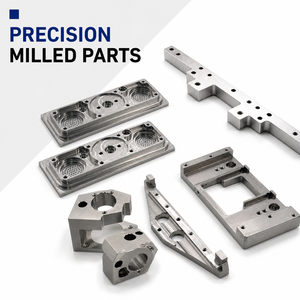
Precision Portfolio
OEM Machined Components & Surgical Tooling Showcase
Explore our core engineering deliverables engineered for orthopedic, surgical robotics, minimally invasive instruments, and industrial assemblies.
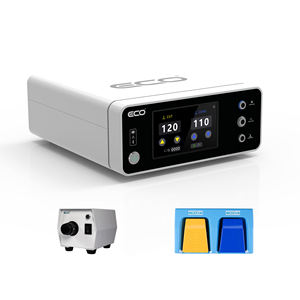
Fine-Quality Low Operating Temperature Metal Minimally Invasive Plasma Ablation Wand For Ent Clinical Plasma Surgery Use
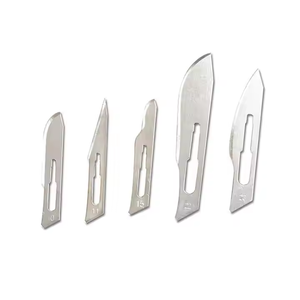
Super Quality Medical Stainless Steel Surgical Scalpel Blade Carbon Steel Surgical Blade With Different Sizes
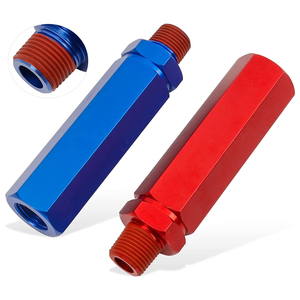
Factory Wholesale Aluminum Semi Truck Air Brake Coupling Glad Hands Lock Extension Handle Set for ABG Models Easier Coupling
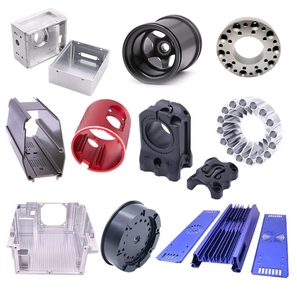
Custom Surface Finishing Services Metal Polishing Electropolishing for Medical Automotive Components Sanding and Polishing
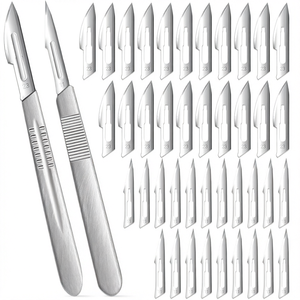
40 PCS Surgical Scalpel Blades #11 & #23 with #3 & #4 Handles Stainless Steel Instrument Manual Powered OEM CE/ ISO
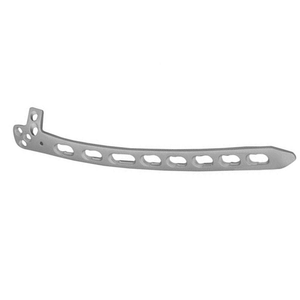
Premium Orthopedic Implants Stainless Steel and Titanium Surgical Implant Solutions
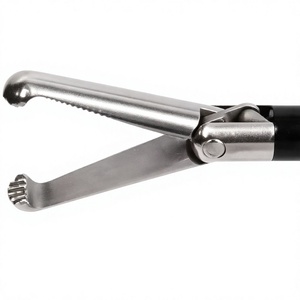
Disposable Laparoscopic Hollow Grasper, Stainless Steel Minimally Invasive Surgical Instrument
Technical Whitepaper & Engineering Guide
State-of-the-Art Swiss CNC Machining for Critical Medical & High-Tech Applications
An authoritative engineering analysis of sliding-headstock kinematic principles, material deflection control, and micro-scale precision turning.
Sliding Headstock Kinematics: Why Swiss Lathes Excel at High Aspect-Ratio Components
In modern contract manufacturing, achieving sub-micron repeatability on slender, high-aspect-ratio (length-to-diameter ratio $L/D > 3:1$) components presents a fundamental mechanical challenge: workpiece deflection. Conventional fixed-headstock CNC turning machines clamp the bar stock in a chuck, leaving the unsupported cantilevered length vulnerable to cutting force chatter, radial deflection, and harmonic vibration.
Swiss-type CNC turning eliminates radial deflection by shifting the Z-axis motion from the cutting tool to the spindle headstock itself. The workpiece bar stock is fed axially through a guide bushing—a tungsten carbide-lined sleeve positioned millimeters away from the cutting tool point. Because material support occurs immediately adjacent to the tool cut zone, shear force vectors are transferred directly through the rigid guide bushing into the machine chassis. This structural arrangement enables high-volume manufacturing of complex bone screws, spinal rods, biopsy needles, and miniature pneumatic shafts with length-to-diameter ratios exceeding $20:1$ without sacrificing positional accuracy.
| Engineering Attribute | Swiss CNC Automatic Lathe | Conventional Fixed-Headstock Lathe | OEM Advantage & Impact |
|---|---|---|---|
| Length-to-Diameter ($L/D$) Capability | Up to $30:1$ without steady rest | Limited to $< 3:1$ without steady rest | Eliminates secondary grinding operations on long shafts |
| Tolerance Hold (±) | ±0.001 mm (±0.00004 in) | ±0.005 mm (±0.0002 in) | Ensures perfect mating in surgical assemblies |
| Surface Roughness (Ra) | Ra 0.1 μm to Ra 0.4 μm | Ra 0.8 μm to Ra 1.6 μm | Superior biocompatibility & fatigue life |
| Multi-Axis Live Tooling | Up to 13-Axes with synchronized sub-spindle | Typically 2-Axis to 4-Axis twin turret | Single-pass complete part machining (Done-in-One) |
Enterprise Advantage
Vertically Integrated Manufacturing & ISO 13485 Quality Control
How Greyack Medical streamlines supply chain complexity for tier-1 medical OEMs through validated processes and rigorous compliance.
ISO 13485 & FDA Registration
Our facilities strictly operate under certified ISO 13485 Quality Management Systems and FDA 21 CFR Part 820 regulations. Complete Design History File (DHF) integration ensures audit-ready compliance for international regulatory submissions.
Exotic Metallurgy Mastery
We possess deep domain expertise machining biocompatible metals, including Titanium Grade 5 (Ti-6Al-4V ELI), Medical Stainless Steels (316L, 17-4PH, Custom 455), Cobalt-Chrome (CoCrMo), Nitinol shape memory alloys, and PEEK polymers.
High-Pressure Coolant (2000 PSI)
Equipped with micro-bore high-pressure oil systems, our Swiss turning centers eliminate heat build-up during deep-hole drilling ($> 30\times D$) and micro-fluting, ensuring chip control and micro-smooth internal lumens.
Passivation & Surface Finishing
In-house chemical cleaning, ultrasonic degreasing, citric/nitric acid passivation per ASTM A967, electropolishing, and laser marking guarantee sterile-ready medical parts straight off the production line.
In-Process Laser Metrology
Utilizing high-speed optical comparators, laser micrometer arrays, and contact coordinate measuring machines (CMM) calibrated to NIST standards, we deliver 100% automated feature verification for critical dimensions.
Dedicated DFM Engineering Team
Our senior manufacturing engineers partner with OEM design teams during early prototyping phases (NPI), optimizing tool geometry, chip breaking, and tolerance stacks to slash unit production costs by up to 30%.
Industry Foresight
Next-Generation Trends Shaping Custom Swiss CNC Manufacturing
Key technological shifts defining the future of high-precision component export and supply chain integration through 2030.
1. Convergence of Femtosecond Laser Ablation with Swiss Lathes
The integration of ultrashort pulse (femtosecond) laser heads directly into multi-axis Swiss CNC platforms represents a paradigm shift for micro-medical manufacturing. Femtosecond lasers ablate material via cold photo-ablation, eliminating thermal damage, micro-cracking, or heat-affected zones (HAZ). This hybrid combination allows engineers to perform high-speed mechanical turning of titanium cannula tubes followed immediately by laser-cutting burr-free micro-slots, side ports, and complex stent geometries within a single machine setup.
2. Closed-Loop Autonomous In-Line Process Calibration (Industry 4.0)
High-volume OEM exporters are transitioning from post-process CMM sampling to continuous closed-loop monitoring. Optical sensors and high-frequency acoustic emission transducers embedded within Swiss guide bushings monitor cutting tool wear and thermal expansion in real time. When thermal shifts occur, machine controllers dynamically adjust offset tables in sub-micron increments, eliminating scrap generation during unmanned, 24/7 "lights-out" manufacturing cycles.
3. Multi-Axis Simultaneous Machining for Complex Implant Geometries
Legacy 3-axis turning machines are rapidly giving way to 9-axis to 13-axis Swiss machining centers equipped with dual independent channels, B-axis tilting live tools, and Y-axis sub-spindles. These advanced kinematics allow simultaneous machining on both ends of a part, enabling complex off-axis milling, helical thread swirling for orthopedic pedicle screws, and complex polyaxial head contours without secondary fixations.
Strategic Sourcing
Future OEM Procurement Trends: Risk Mitigation & Total Cost Sourcing
Strategic insights for procurement directors navigating global supply chain volatility, regulatory shifts, and dual-sourcing imperatives.
Shift from Piece-Price to Total Cost of Acquisition (TCA)
Leading medical device and aerospace OEMs are moving away from simple piece-price sourcing. Modern procurement models evaluate supplier non-conformance risk, delivery lead times, DHF compliance, and secondary cleaning costs. Partnering with a fully certified exporter that provides deburring, electropolishing, and cleanroom packaging reduces systemic overhead.
Dual-Sourcing & Regionalized Supply Chain Resilience
To guard against geopolitical friction and freight bottlenecks, global medical device manufacturers are establishing resilient supply hubs. Export suppliers with established international logistics networks, VMI (Vendor-Managed Inventory) programs, and multi-facility capabilities are winning long-term contract manufacturing agreements.
ESG Compliance & Sustainable Precision Machining
Institutional buyers increasingly demand documented environmental accountability. Modern Swiss manufacturing operations implement closed-loop oil recovery systems, 99.8% chip reclamation, energy-efficient servo drives, and non-hazardous chemical cleaning processes per ISO 14001 guidelines to fulfill global corporate ESG metrics.
Procurement FAQ
Frequently Asked Questions for OEM Buyers & Engineers
Detailed engineering and supply chain answers regarding OEM qualification, tolerances, materials, and order logistics.
What is the minimum diameter and maximum length ratio you can machine on Swiss CNCs?
Our Swiss turning equipment can comfortably handle micro-component bar stock diameters down to 0.5 mm (0.020 in) up to 32 mm (1.25 in). Due to sliding headstock guide bushing support, we achieve length-to-diameter ($L/D$) ratios up to 30:1 in a single continuous pass without tool deflection or mechanical chatter.
Are your operations ISO 13485 certified and FDA registered for medical components?
Yes. Greyack Medical maintains an FDA-registered manufacturing establishment and a certified ISO 13485 Quality Management System. We provide full material test reports (MTRs), first article inspection reports (FAIR per AS9102), and lot traceability documentation required for regulatory filings.
Which biocompatible materials do you standardly process for surgical OEM parts?
We routinely machine titanium alloys (Ti-6Al-4V ELI, Grade 2, Grade 4), surgical stainless steels (316L, 304L, 17-4 PH, 420, Custom 455), Cobalt-Chromium alloys (CoCrMo), Nitinol, along with implantable-grade polymers such as PEEK (Polyetheretherketone) and Radel (PPSU).
How do you ensure concentricity and burr-free surfaces on micro-miniature parts?
Concentricity is maintained by machining both internal and external features in a single clamping cycle using synchronized main and sub-spindles. Burr-free execution is achieved through high-speed micro-milling, automated thermal deburring, ultrasonic bath cleaning, and electro-chemical polishing routines.
Can you assist with Design for Manufacturability (DFM) during the prototyping stage?
Absolutely. Our application engineers provide early-stage DFM evaluations for prototype drawings. We review radius requirements, thread relief grooves, material hardness specifications, and tolerance stack-ups to recommend cost-saving optimizations before tooling up for mass production.
What passivations and post-processing services are conducted in-house?
We offer comprehensive post-machining treatments including citric and nitric acid passivation (conforming to ASTM A967 and AMS 2700), electropolishing, anodizing (Type II and Type III hardcoat), laser etching/marking, grit blasting, and cleanroom assembly/kitting.
What are your typical production lead times for international custom exports?
Standard lead times for quick-turn prototype evaluation are 1 to 2 weeks. Production batch volumes typically ship in 4 to 6 weeks, depending on material availability and secondary processing requirements. Blanket PO ordering and VMI safety stock programs are available for strategic high-volume customers.
How do international buyers initiate a quote or supplier audit?
You can upload 3D CAD models (STEP/IGES) and 2D engineering drawings with dimensional tolerances, material callouts, and expected annual volumes via our direct engineer chat link. Our technical team responds within 24 business hours with a comprehensive engineering review and quotation.
Partner with a Certified Swiss CNC Manufacturing Exporter
Consult with our senior precision engineering team today to review your drawings, optimize unit production costs, and accelerate your regulatory timeline.
Inquire Now