Precision Medical Components & Implantable Solutions
Explore our high-precision contract manufacturing capabilities engineered for orthopedic, spinal, surgical robotics, and specialized surgical instrumentation OEMs.
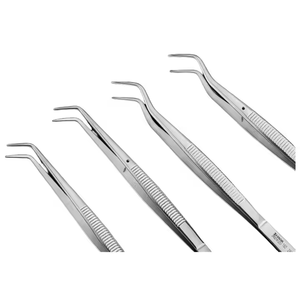
Dental Surgical Forceps Set Dental Orthodontic of the Dental Tweezers for Dental Surgical Instruments
Send an Inquiry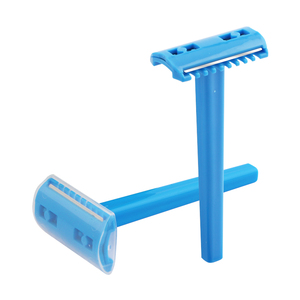
Disposable Surgical Prep Razor Double Edge Safety Razor Medical Use Stainless Steel Blades
Send an Inquiry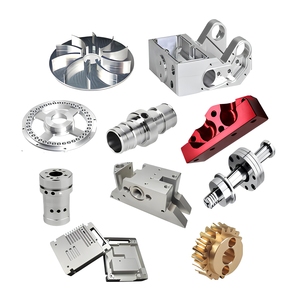
Cnc Machining Service Custom Cnc Parts CNC Turning Spare Parts Custom Medical Parts
Send an Inquiry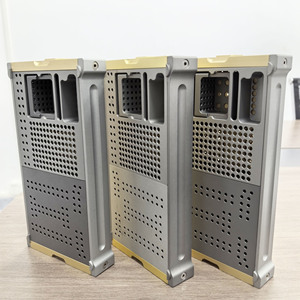
Custom High Precision CNC Machining & Wire EDM Services for Medical Device Components-5-Axis ISO Certified
Send an Inquiry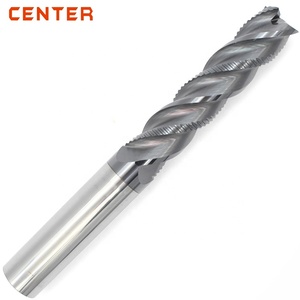
CENTER 4 Flute Roughing End Mill
Send an Inquiry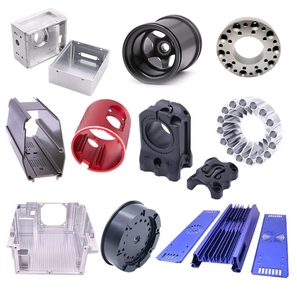
Custom Surface Finishing Services Metal Polishing Electropolishing for Medical Components
Send an Inquiry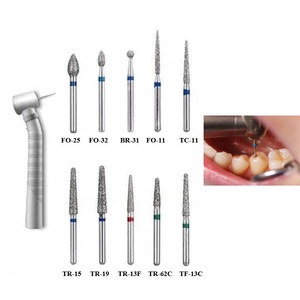
Hight Speed Handpiece FG Burs High Quality Dental Diamond Burs For Endodonic
Send an Inquiry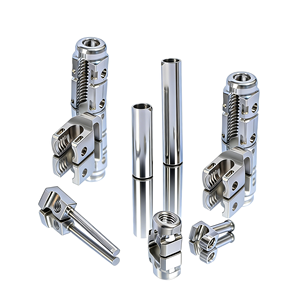
Titanium Spinal Pedicle Screw Rod System Orthopedic Spine Fixation Implant
Send an InquiryCustom OEM Spinal Implants: Engineering Excellence & Manufacturing Rigor
In the high-stakes domain of spinal surgery, the margin for error is absolute zero. As a global Custom OEM Spinal Implants Supplier & Exporter, Greyack Medical bridges the gap between complex biomechanical concepts and mass-producible, implantable-grade surgical hardware. Spinal fixation systems, including polyaxial pedicle screws, occipitocervical plates, expandable interbody fusion cages (TLIF, PLIF, ALIF, XLIF), and complex spinal deformity correction rods, require advanced metallurgical understanding, extreme micro-machining capabilities, and rigorous quality assurance protocols compliant with FDA 21 CFR Part 820 and ISO 13485:2016 standards.
Modern spinal OEMs face mounting challenges: compressing product development lifecycles, ensuring biostability across decades in vivo, navigating stringent international regulatory landscapes, and managing cost-per-unit metrics without compromising patient safety. Greyack Medical delivers an integrated contract manufacturing platform engineered specifically to address these procurement and manufacturing hurdles. By pairing 10-axis Swiss automatic lathes, multi-axis wire EDM, and selective Laser Powder Bed Fusion (PBF) additive manufacturing with automated in-line laser metrology, we empower medical device brand owners to scale production with complete quality assurance.
Enterprise Core Advantages: Why Leading Medical OEMs Partner With Us
Our infrastructure is custom-built to function as a seamless extension of your R&D and supply chain teams. When you contract Greyack Medical as your spinal implant exporter and production vendor, you gain direct access to audited, world-class production capabilities:
- FDA-Registered Facilities & Full Regulatory Traceability: Every lot produced undergoes complete material melt traceability, heat treatment validation, non-destructive testing (NDT), dimensional measurement reporting, and passivation certification (ASTM F86). DHF (Design History File) and DHR (Device History Record) data packages accompany every shipment to streamline your FDA 510(k), PMA, or EU MDR Technical Documentation filings.
- Micron-Level Tolerances for Complex Articulating Geometries: Pedicle screw tulip heads, friction-fit locking caps, and dual-lead buttress thread profiles demand internal tolerances tighter than ±0.0025 mm. Utilizing Swiss-type CNC machines equipped with high-pressure oil cooling and high-resolution optical gauging, we maintain flawless repeatable feature concentricity across continuous production runs of over 100,000 units.
- Comprehensive Material Mastery: We process medical-grade Implantables including Titanium Ti-6Al-4V ELI (Grade 23, ASTM F136), Cobalt-Chromium-Molybdenum alloys (Co-Cr-Mo, ASTM F75/F1537), Implant-Grade PEEK (Polyetheretherketone Optima), and Stainless Steels (316L, Custom 455, 17-4PH).
- End-to-End Cleanroom Assembly & Packaging: Beyond raw machining, our cleanrooms (ISO Class 7 and Class 8) perform ultrasonic multi-stage cleaning (validated to ISO 19227 standards), laser marking (UDI compliant GTIN code engraving), final assembly, and double-blister sterile packaging integration.
Engineering Material Science & Biomechanical Specifications
Selecting the optimal substrate and surface treatment is critical for spinal implant performance under dynamic fatigue loading (evaluated via ASTM F1717 and ASTM F2077 testing standards). Below is a technical comparative matrix illustrating the mechanical properties, biocompatibility profiles, and primary spinal applications of materials machined and 3D printed at our facilities.
| Material / Alloy | Modulus of Elasticity (GPa) | Tensile Strength (MPa) | Key Advantage | Primary Spinal Applications |
|---|---|---|---|---|
| Titanium Ti-6Al-4V ELI (Grade 23) | 110 - 114 | ≥ 860 | Superior strength-to-weight ratio, outstanding osseointegration, low magnetic susceptibility (MRI compatible). | Pedicle Screws, Fixation Rods, Cross-Links, Cervical Plates, Spinal Hooks. |
| Porous Additive Titanium (Trabecular) | 3 - 10 (Bone-matched) | 150 - 300 (Lattice dependant) | Mimics cancellous bone architecture, eliminates stress shielding, promotes rapid vascularized bone ingrowth. | 3D Printed Interbody Fusion Cages (TLIF, PLIF, ALIF, XLIF), Sacroiliac Joint Fusion Implants. |
| Implant-Grade PEEK (Optima / Carbon-Reinforced) | 3.5 - 18 | 100 - 170 | Radiolucent (enables post-op artifact-free X-ray evaluation), modulus close to natural cortical bone. | Interbody Spacers, VBR (Vertebral Body Replacement) Cages, Dynamic Stabilization Elements. |
| Cobalt-Chromium Alloy (Co-Cr-Mo, ASTM F1537) | 210 - 230 | ≥ 1000 | High flexural rigidity, extreme wear resistance, higher stiffness for complex deformity correction. | Deformity Correction Spinal Rods, Artificial Disc Replacement (Total Disc Arthroplasty). |
| 316L / Custom 455 Surgical Stainless Steel | 190 - 200 | ≥ 750 | High ductility, proven mechanical stability, cost-effective instrumentation and temporary fixation. | Spinal Surgical Instruments, Retractor Blades, Rod Benders, Trial Spacers, Drill Guides. |
Surface Engineering, Passivation & Biostability Processing
Implant longevities are directly dependent on surface chemistry. Unprocessed titanium or stainless steel surfaces are prone to micro-fretting, wear debris release, or ion leaching. Greyack Medical incorporates comprehensive in-house post-processing lines:
- Anodizing Type II & Type III (Color Anodizing): Type II titanium anodizing forms a dense, non-reflective gray titanium oxide layer that substantially increases fatigue strength and reduces galling between threaded components (such as set screws and pedicle screw tulips). Type III color anodizing allows instant visual color coding for implant sizing and intraoperative identification.
- ASTM F86 Chemical Passivation: Utilizing citric or nitric acid baths, we remove free iron contaminants resulting from machining tools, restoring a corrosion-resistant passive oxide skin on all stainless steel and titanium components.
- Controlled Micro-Surface Roughness (RA Optimization): For fusion interfaces, surfaces are grit-blasted with medical-grade aluminum oxide or ceramic media to achieve target surface roughness (Ra 2.0 – 4.5 µm), providing ideal mechanical interlocks for initial bone apposition.
- Electropolishing: Removes micro-burrs and surface stress risers on complex internal channels of surgical instruments and flexible spinal rods, drastically improving cyclic fatigue life under continuous spinal biomechanical loads.
Global Procurement Trends in OEM Spinal Implant Manufacturing
The global market for spinal surgery implants is undergoing a fundamental structural transition. Procurement directors, supply chain VPs, and engineering executives at tier-1 medical OEMs are shifting away from fragmented sub-contracting models toward strategic single-source contract manufacturing partnerships. Analyzing global tender data and OEM sourcing behaviors reveals four pivotal market trends:
Consolidation from Machining to Finished Kit Delivery
OEMs are drastically eliminating multi-vendor handoffs. Managing separate suppliers for blank turning, 5-axis milling, porous coating, passivation, laser etching, and cleanroom packaging introduces high risk of quality leakage, extended lead times, and compounding freight costs. Modern sourcing contracts favor turnkey suppliers capable of delivering ready-to-sterilize or pre-sterilized packaged kits.
Rapid Adoption of 3D Printed Additive Interbody Cages
Conventional solid PEEK and machined titanium cages are rapidly surrendering market share to additive 3D-printed titanium implants featuring continuous biomimetic lattice architectures. Sourcing managers are actively qualifying suppliers equipped with validated Laser Powder Bed Fusion (LPBF) printers that combine complex internal porous structures with high-precision CNC finish-machined threads and locking interfaces.
Minimally Invasive Surgery (MIS) & Expandable Implant Architecture
Surgical techniques are increasingly prioritizing smaller incision footprints and faster patient recovery times. This shift demands expandable interbody cages and complex cannulated pedicle screws with internal micro-mechanisms (gears, drive shafts, wedge linkages). Contract manufacturers must offer micro-machining, micro-EDM, and zero-defect micro-assembly capabilities.
Supply Chain Resiliency & Regional Risk Mitigation
Global logistics disruptions have forced medical brand owners to dual-source or transition production to highly established, ISO 13485-certified contract manufacturers capable of maintaining buffer stock, offering flexible inventory stocking programs (VMI/Kanban), and guaranteeing rapid turnarounds on specialized custom orders.
Future Technology Horizons in Spinal Implants (2025–2030)
Looking ahead, the spinal implant landscape is converging with digital health, advanced material sciences, and surgical robotics. Contract manufacturers who fail to innovate will quickly become obsolete. Greyack Medical actively invests in R&D and advanced manufacturing technologies aligned with the following next-generation paradigms:
1. Smart Implants with Embedded Micro-Sensors
The next frontier in spinal reconstruction involves "smart" pedicle screws and interbody spacers equipped with micro-electromechanical systems (MEMS) and strain gauges. These embedded, passive sensors monitor postoperative strain distribution, lordotic angle maintenance, and real-time bone fusion progress, wirelessly transmitting telemetry to surgical teams. Manufacturing these smart devices requires sub-millimeter cavity machining, hermetic laser sealing, and micro-welding without damaging sensitive bio-electronics.
2. Robotic-Navigated Compatibility & High-Index Instrument Interface
As surgical robots (such as Medtronic Mazor, Globus ExcelsiusGPS, and Intuitive ecosystem equivalents) become standard in operating rooms worldwide, spinal implants and their corresponding insertion instruments must feature hyper-accurate mechanical reference indexing points. We manufacture implants with micro-milled optical registration markers and geometric locating features held to tolerances under 5 microns, ensuring flawless hand-off between robotic arms and patient anatomy.
3. Patient-Specific (Custom Anatomical) 3D-Printed Implants
For severe spinal deformities, revision surgeries, or oncological reconstruction, off-the-shelf implants are frequently inadequate. Utilizing CT scan DICOM data converted into 3D CAD models, our additive manufacturing unit produces patient-matched anatomical implants within days. This process combines rapid custom engineering, finite element analysis (FEA) verification, LPBF 3D printing, post-heat treatment (HIP - Hot Isostatic Pressing), and fast-track quality release.
From Concept to Validated Supply: Our 5-Stage OEM Contract Workflow
Partnering with Greyack Medical ensures a predictable, transparent, and fully validated pathway from prototype development through commercial mass production. We execute a disciplined 5-stage engineering workflow tailored to international sourcing protocols:
- Stage 1: DFM (Design for Manufacturability) & CAD Review: Our senior orthopedic manufacturing engineers analyze your solid models and engineering prints. We evaluate tool clearance, thread relief, draft angles, material yield, and tolerance stacks to reduce unit manufacturing cost without altering biomechanical function.
- Stage 2: Prototype & Surgeon Verification Support: We utilize dedicated prototype machinery cells to deliver quick-turn prototype implants and silicone-handled trial instruments within compressed timelines, enabling rapid biomechanical bench testing and surgeon design feedback.
- Stage 3: Process Validation (IQ / OQ / PQ): For commercial launch, we establish fully validated processes under strict ISO 13485 guidelines. Installation Qualification (IQ), Operational Qualification (OQ), and Performance Qualification (PQ) protocols guarantee that every machining center, passivation tank, and laser welder operates within validated parameter windows.
- Stage 4: Full-Scale Production & Automated Metrology: Utilizing high-speed multi-axis CNC machines and automated robotic loading cells, we run continuous production. 100% optical coordinate measurement (CMM) and laser scanning verify critical dimensions in real time.
- Stage 5: Supply Chain Integration, Kitting & Packaging: We consolidate manufactured implants, fixation screws, connecting rods, and silicone-handled ratcheting surgical tools into complete procedure-ready sets, complete with laser-etched UDI barcodes, custom trays, and validated protective packaging.