Featured OEM Products & Precision Assemblies
Engineered to sub-micron tolerances using medical-grade Titanium, Stainless Steel, and high-performance polymers under strict ISO 13485 quality control.

FOCUS YJ Multifunction Stainless Steel BBQ Shears Durable Stainless Steel Handle Eco-Friendly 3Cr13 Blade Home Kitchen Use Model
Inquire Now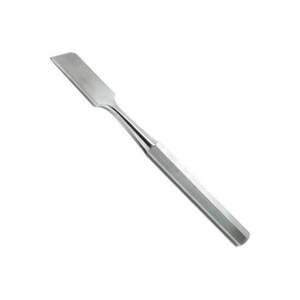
Surgical Scalpel Blade Manual CE Certified For General Surgery Class I Instrument
Inquire Now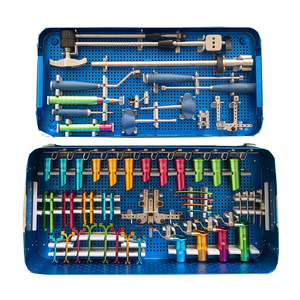
High Quality Stainless Steel Spine Pedicle Screw Instruments Set Minimal Invasive Manual Tubular Retractor For OLIF
Inquire Now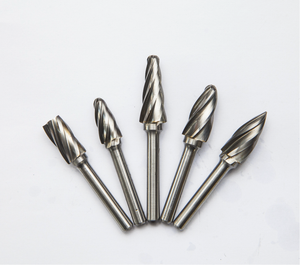
Carbide AlTin Coated 4 Flutes Face Mill Double Diamond Cut CNC Router Wood Grinding Tool with Shank Burr OEM Customizable
Inquire Now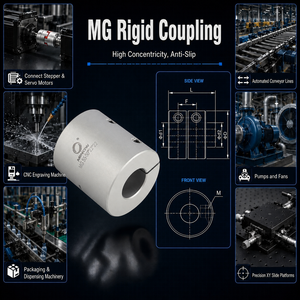
Clamping Screw Fixed Coupling Shaft Coupler for 3D Printer Laser Cutting Machine Engraver Stepper Motor Drive Assembly Line
Inquire Now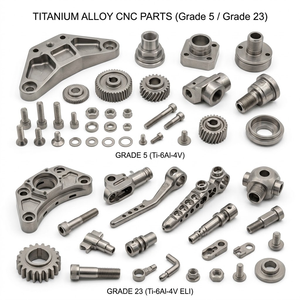
High Tolerance CNC Machining Service Grade 23 Medical Titanium Grade 5 Aerospace Titanium Custom Machined Components
Inquire Now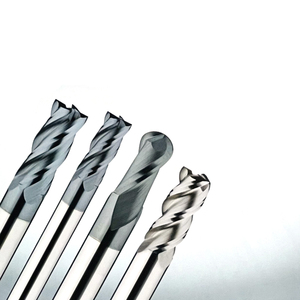
Precision End Mills Helical Flute Cutting Tools with Cylindrical Shank for General Milling and Industrial Machining
Inquire Now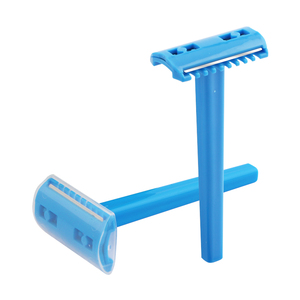
Disposable Surgical Prep Razor Double Edge Safety Razor Medical Use Stainless Steel Blades
Inquire NowWhy OEM Medical Brands Partner With Greyack Medical
Consolidating sub-tier suppliers through a single, vertically integrated contract manufacturing powerhouse.
FDA & ISO 13485 Regulatory Alignment
Our infrastructure operates under rigorous quality management controls. Every device series undergoes process validation (IQ/OQ/PQ), ensuring zero-defect deliverables for global audit compliance.
Multi-Axis Swiss CNC Machining & Grinding
Equipped with 5-axis, 11-axis Swiss-type lathes and high-precision flute grinding units, we execute complex anatomical geometries in Grade 23 Titanium, CoCr, and PEEK.
Proprietary MedTorque & Silicone Tooling
Custom ergonomic silicone-handled surgical drivers, ratcheting couplings, and calibrated torque-limiting handles engineered specifically to eliminate surgeon fatigue and maximize tactile control.
Technical Evolution in Orthopedic Instrument Manufacturing
The global orthopedic medical device market is undergoing a seismic structural transition. Driven by the expansion of Minimally Invasive Surgery (MIS), the integration of surgical robotics, and patient-specific implant designs, original equipment manufacturers (OEMs) face unprecedented engineering challenges. Simple mechanical tolerances are no longer sufficient; modern surgical instruments must act as seamless extensions of both surgeon ergonomics and robotic end-effectors.
1. Micro-Machining and Minimally Invasive Surgical (MIS) Platforms
Traditional open-surgical procedures are increasingly replaced by tubular retractor access systems, such as Oblique Lumbar Interbody Fusion (OLIF) and Direct Lumbar Interbody Fusion (DLIF). This clinical migration demands surgical instruments with elongated, ultra-slim profiles that maintain immense torsional rigidity under load. Contract manufacturing now leverages specialized micro-grinding and deep-hole Swiss drilling techniques to achieve aspect ratios exceeding 30:1 without causing thermal micro-cracking or dimensional drift in 17-4PH stainless steel shafts.
2. Robotic-Assisted Surgery (RAS) End-Effectors
As robotic surgical systems gain widespread adoption in total joint arthroplasty and complex spinal reconstructions, the requirement for dynamic force feedback and dynamic coupling has skyrocketed. Custom OEM suppliers must now manufacture drive components, pedicle screw taps, and bone burs capable of mating seamlessly with robotic quick-connect interfaces. Dynamic runout tolerances must be held under 0.005mm to prevent vibration chatter during automated bone reaming.
3. Additive Manufacturing Integration (Powder-Bed Fusion)
Metal additive manufacturing (Direct Metal Laser Sintering - DMLS) has moved from rapid prototyping to full-scale validated production. By synthesizing porous titanium structures directly onto solid instrument handles or custom drill guides, contract manufacturers create osseointegration-friendly surface textures and complex internal cooling channels for power-tool attachments that were physically impossible via subtractive CNC machining alone.
4. Surface Passivation and Advanced Biocompatible Coatings
Surgeons demand extended tool lifespan through thousands of autoclave sterilization cycles. OEM manufacturers are incorporating advanced surface treatments, including citric and nitric acid passivation, electro-polishing, and Physical Vapor Deposition (PVD) coatings such as Titanium Nitride (TiN) and Aluminium Titanium Nitride (AlTiN). These thin-film coatings dramatically reduce friction coefficients, protect against cross-contamination corrosion, and preserve laser-etched lot barcode markings over the product's entire operational lifecycle.
Future Global Procurement Trends for Medical Device Buyers
Strategic sourcing directors in top-tier medical device conglomerates are drastically changing how they manage global supply chains. The historical model of sourcing individual components across multiple boutique machine shops is being phased out due to heightened regulatory overhead under the EU Medical Device Regulation (EU MDR 2017/745) and stringent FDA 21 CFR Part 820 enforcement.
Trend 1: Single-Source Vendor Consolidation
To mitigate compliance friction and reduce vendor audit expenses, OEMs are actively shrinking their approved supplier lists (ASLs). Preference is granted to turnkey contract manufacturers capable of executing raw material procurement, multi-axis machining, precision flute grinding, passivation, cleanroom assembly, and sterile packaging under a unified ISO 13485 framework.
Trend 2: Early Supplier Involvement (ESI) & DFM Real-Time Modeling
Waiting until design freeze to involve manufacturing engineers is a recipe for costly engineering change orders (ECOs) and delayed time-to-market. Modern procurement teams collaborate with suppliers during the conceptual drawing stage. Design for Manufacturability (DFM) input identifies tolerance stack-ups, material selection bottlenecks (e.g., swapping Grade 5 Ti for Grade 23 Ti-6Al-4V ELI for enhanced fracture toughness), and optimized tool paths prior to initial prototype validation.
Trend 3: Transparent Supply Chain Traceability & Risk Mitigation
Global logistics vulnerabilities have elevated supply chain transparency from a secondary metric to a board-level imperative. OEMs require full heat-lot material certifications, 3D Coordinate Measuring Machine (CMM) dimensional verification reports, and documented risk management protocols (ISO 14971) bundled with every batch shipment to ensure flawless regulatory submissions (510(k) and PMA files).
Trend 4: Sustainable and Closed-Loop Medical Manufacturing
Environmental, Social, and Governance (ESG) criteria are rapidly becoming mandatory standard evaluation metrics in supplier scorecards. Leading contract manufacturers are implementing closed-loop coolant filtration, scrap metal reclaim streams for high-value titanium and cobalt-chrome alloys, and energy-efficient CNC machining centers to support overall OEM carbon neutrality objectives.
Frequently Asked Questions (FAQ)
Answers to critical questions asked by medical OEM procurement managers and quality engineers.
Is Greyack Medical FDA registered and ISO 13485 certified?
What biomaterials do you specialize in for orthopedic instruments and implants?
Can Greyack Medical assist with low-volume prototyping through to full-scale production?
What documentation and quality deliverables are provided with each shipment?
How do international OEM buyers initiate a custom manufacturing project?
Partner with a World-Class OEM Instrument Manufacturer
Accelerate your product launch, guarantee sub-micron precision, and simplify your global medical supply chain with Greyack Medical.