Precision Medical Components & Surgical Instrumentation
Engineered for global medical OEM buyers, orthopedic surgeons, and clinical robotics integrators. Explore our core export-grade manufacturing portfolio.
Executive Synthesis: The Paradigm Shift in Medical OEM Additive Manufacturing
The global medical device sector is undergoing an unprecedented technological evolution. Modern surgical procedures—ranging from patient-specific orthopedic reconstructions and minimally invasive spinal interventions to complex robotic-assisted surgeries—demand hardware geometries that traditional subtractive manufacturing cannot achieve efficiently. As a premier custom OEM medical additive manufacturing manufacturer and exporter, Greyack Medical bridges the critical gap between complex biomechanical design and scalable, audit-ready mass production.
Additive manufacturing (AM), specifically Direct Metal Laser Sintering (DMLS), Laser Powder Bed Fusion (LPBF), and Electron Beam Melting (EBM), has elevated medical manufacturing from simple prototyping to direct fabrication of implantable Class II and Class III medical devices. By seamlessly integrating biomimetic porous structures directly into solid implant cores, OEMs can now eliminate secondary plasma spray coatings, eliminate delamination risks, and dramatically accelerate natural bone in-growth (osseointegration).
However, successful OEM adoption of medical additive manufacturing requires far more than acquiring 3D printers. It demands a fully validated, closed-loop contract manufacturing ecosystem. Every step—from raw powder characterization, Design for Additive Manufacturing (DfAM), dynamic 5-axis CNC post-machining, validated chemical passivation, to ISO Class 7 cleanroom packaging—must strictly adhere to FDA 21 CFR Part 820 quality system regulations and ISO 13485 standards.
Trabecular Lattice Engineering
Engineered micro-porous matrices with pore diameters ranging from 300 to 700 microns, optimized for vascularization and rapid bone cell attachment in spinal cages and acetabular cups.
Hybrid 5-Axis Subtractive Finishing
Combining the geometric freedom of 3D printing with sub-micron 5-axis CNC milling to achieve perfect mating interfaces, polished screw threads, and mirror-finished joint surfaces.
Strict ASTM & ISO Compliance
100% full lot traceability with documented chemistry verification (ASTM F136 Ti6Al4V ELI, CoCr F75), powder reuse tracking, and mechanical tensile testing for every build cycle.
Biocompatible Metallurgy & Material Selection Matrix
Selecting the optimal alloy system is the cornerstone of custom medical additive manufacturing. OEM procurement officers and R&D engineering leads must weigh mechanical strength, fatigue resistance, density, and imaging artifact interference. Below is a comprehensive engineering comparison of medical-grade materials validated within our production facilities:
| Material Alloy / Grade | Standard Specification | Tensile Strength (MPa) | Porosity Range (%) | Primary Medical Application |
|---|---|---|---|---|
| Titanium Ti-6Al-4V ELI | ASTM F136 / ASTM F3001 | 860 – 960 (Post-HIP) | 55% – 80% | Spinal Cages, Acetabular Cups, Craniofacial Plates, Dental Implants |
| Cobalt-Chromium-Molybdenum | ASTM F75 / ASTM F3055 | 950 – 1200 | 40% – 65% | Total Knee Arthroplasty (TKA), Femoral Heads, Dental Frameworks |
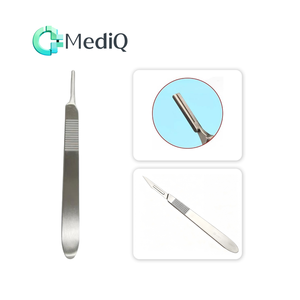
| Stainless Steel 316L / 17-4PH | ASTM F138 / ASTM F3184 | 550 – 1100 | Solid / Fully Dense | Surgical Scalpels, Reusable Drill Guides, Surgical Robotics Arms |
| PEEK & Carbon PEEK | ASTM F2026 | 90 – 170 | Solid / Custom Lattice | Radiolucent Spinal Fusion Devices, Trauma Fixation Pins |
Our facility utilizes high-precision Multi-Laser Powder Bed Fusion systems operating in inert Argon atmospheres (Oxygen levels maintained below 100 ppm) to prevent interstitial oxidation. This ensures that every manufactured batch retains maximum fracture toughness and fatigue strength exceeding ASTM benchmarks.
Future Procurement Trends in Medical Additive Manufacturing
Navigating the next decade of medical supply chain management requires anticipating key technological shifts. OEM procurement directors who align with forward-thinking additive manufacturers gain substantial cost and speed-to-market advantages:
1. Consolidation to Hybrid Workflows
Global OEMs are moving away from multi-tiered supply chains (where additive printing, CNC finishing, and passivation are handled by separate vendors). Sourcing strategy now favors single-source contract partners capable of providing end-to-end processing under one quality umbrella, eliminating shipping lag and inter-vendor non-conformance disputes.
2. Mass-Customization & Patient-Specific (PSI)
The demand for patient-matched implants (derived from patient CT/MRI DICOM data) is expanding from oncology cases into mainstream orthopedic surgeries. Suppliers must possess robust DfAM engineering teams to rapidly convert clinical digital files into validated 3D build files within 48 to 72 hours.
3. In-Situ Process Monitoring
Next-generation medical procurement guidelines mandate real-time optical emission spectroscopy and thermal imaging during the laser melting process. Layer-by-layer pyrometry detection ensures zero internal keyhole voids or porosity defects, streamlining post-build non-destructive testing (NDT).
Technology Roadmap: Where Medical 3D Metal Printing is Heading
The horizon of medical additive manufacturing is expanding beyond standard titanium alloys into advanced multi-material printing, bio-resorbable metals, and automated post-processing. Industry leaders are investing in several breakthrough domains:
A. Bio-Absorbable Metallic Implants (Magnesium & Zinc Alloys)
Traditional permanent implants often require secondary surgical removal or cause long-term localized tissue irritation. Next-generation additive manufacturing enables the fabrication of porous Magnesium (Mg) and Zinc (Zn) bone fixation screws and vascular stents. These implants structurally support bone healing over 6–12 months and then safely degrade into non-toxic biological byproducts, eliminating the need for removal surgeries.
B. Automated Powder Removal & Supercritical Cleaning
Un-sintered powder trapped inside ultra-fine lattice structures poses a major risk for embolisms or inflammation if released into a patient’s bloodstream. Modern OEM exporters are deploying automated high-frequency ultrasonic vibration chambers, vacuum desorbers, and supercritical CO2 cleaning processes to guarantee 100% loose powder evacuation prior to final cleanroom packing.
C. Integrated Surface Modification & Anodizing
Additive titanium surfaces are no longer left purely as-printed. Advanced electrochemical polishing, Type II anodization (for friction reduction), and Type III color anodization (for instant surgical size identification) are integrated directly into automated post-machining lines.
Why Global OEM Medical Brands Partner With Greyack Medical
Greyack Medical Co., Ltd. is an established, FDA-registered, ISO 13485-certified contract manufacturer dedicated exclusively to high-precision medical device fabrication. Our global reputation as a trusted exporter rests upon four key operational pillars:
-
✓Closed-Loop Validation & Quality Governance: We maintain full compliance with FDA 21 CFR Part 820 and ISO 13485 guidelines. Every production run undergoes rigorous Installation Qualification (IQ), Operational Qualification (OQ), and Performance Qualification (PQ).
-
✓Complete In-House Manufacturing Spectrum: From metal powder 3D printing, 5-axis CNC high-speed milling, precision flute & thread grinding, to silicone handle overmolding, we control 100% of the manufacturing value chain under one roof.
-
✓Advanced Metrology & Non-Destructive Testing: Our quality assurance labs are equipped with Zeiss CMM systems, laser micrometers, micro-CT scanning for internal lattice inspection, and optical comparator systems ensuring tolerances down to ±0.002mm (±2 microns).
-
✓Export Compliance & Supply Chain Resilience: We support global OEMs across North America, Europe, and Asia-Pacific with complete Design History File (DHF) documentation, material test report certifications (MTR), customs clearance compliance, and buffer inventory management.
Essential Medical OEM Sourcing FAQ
Key technical, regulatory, and logistics answers for procurement engineers and quality auditors.
What specific documentation is delivered with custom additive medical exports?
How does Greyack Medical control powder recycling and contamination?
Can you execute hybrid manufacturing combining 3D printing and 5-axis CNC machining?
What post-build thermal treatments are applied to 3D printed titanium implants?
What is your standard prototype-to-production schedule for custom OEM orders?
How do international buyers initiate a confidential OEM quote or site audit?
Accelerate Your Medical Device Innovation Today
Partner with an FDA-registered, ISO 13485-certified leader in custom medical additive manufacturing and precision CNC contract manufacturing. Contact our application engineering team to request technical drawings review, sample prototypes, or product catalogs.