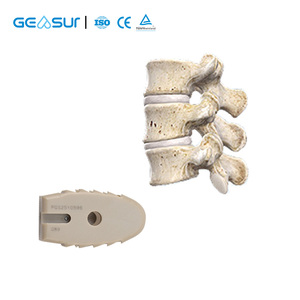
Product Portfolio
Featured Spinal Fixation Systems & Surgical Implants
Explore our precision-engineered spinal fusion hardware, PEEK interbody cages, pedicle screw rods, and specialized veterinary spine fixation systems manufactured to stringent international quality standards.
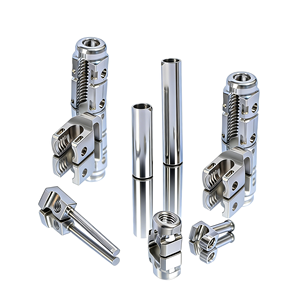
Titanium Spinal Pedicle Screw Rod System Orthopedic Spine Fixation Implant
Inquire Specs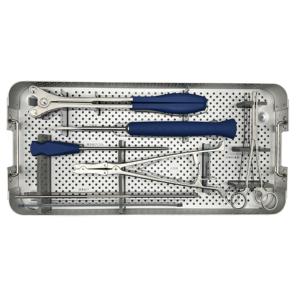
Spinal Medical Orthopedic Posterior Spinal Lnter-fixation System PSS Instruments Orthopedic Surgical Instrument
Inquire Specs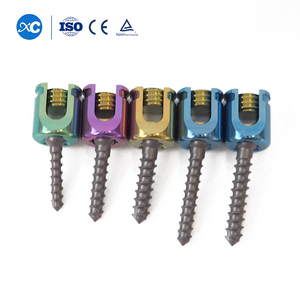
XC MEDICO Veterinary Orthopedic Device Titanium Spinal Screw System for Animal Spinal Fusion & Trauma Reconstruction Surgery
Inquire Specs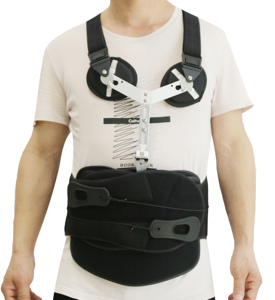
Adjustable Comfortable Speed Spinal System(Front & TLSO Panel) Back Support Belt Waist Immobilization Back Brace
Inquire Specs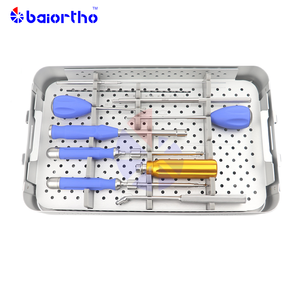
Veterinary Spine Fixation System, Stable Spinal Implant Kit for Small Animal Surgery,Baiortho Medical
Inquire Specs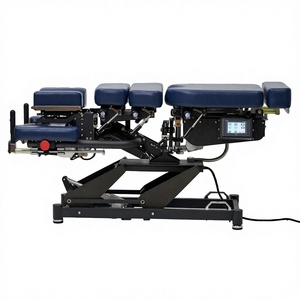
Electric 3D Automatic Swinging and Stretching Integrated Spinal Orthopedic Correction and Massage Equipment
Inquire Specs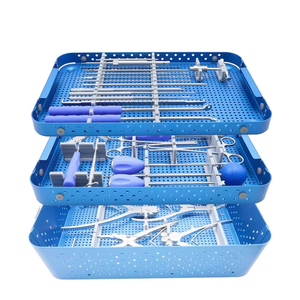
Spinal Pedicle Screw System Set Premium Stainless Steel Orthopedic Spinal Fixation Reusable Titanium Compatible Hospital Tools
Inquire Specs
Executive Sourcing Report
Navigating Global Procurement in Spinal Fixation Manufacturing
As global healthcare demographics shift toward aging populations and the prevalence of degenerative spinal disorders increases, the international demand for high-precision Spinal Fixation Systems has reached unprecedented levels. Original Equipment Manufacturers (OEMs) and medical device distributors face a dual challenge: procuring implants manufactured to sub-micron tolerances while maintaining stringent cost structures, regulatory compliance, and robust supply chain resilience.
±0.002 mm
Machining Micro-Tolerance
ISO 13485
Certified Quality Control
FDA Registered
OEM Contract Facilities
100%
Lot Traceability & Verification
The Biomechanical Benchmark for Modern Spinal Implants
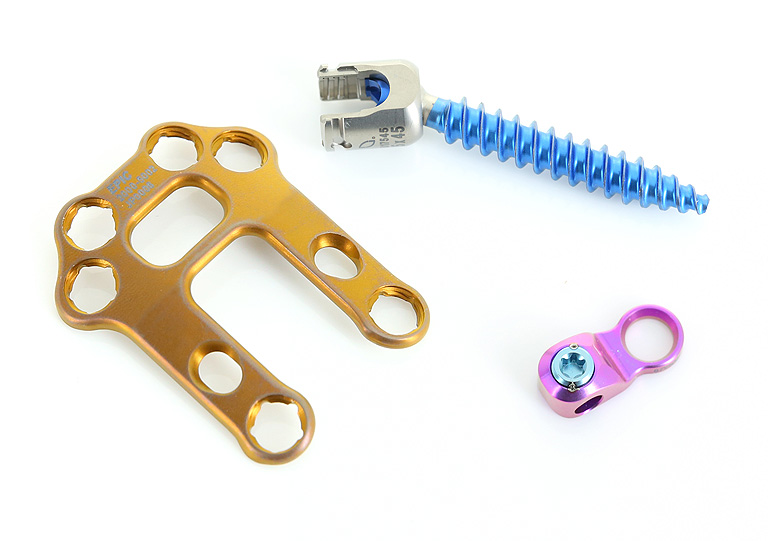
Modern spinal fixation devices—ranging from polyaxial pedicle screws, cross-links, and spinal rods to anterior lumbar interbody fusion (ALIF) and posterior lumbar interbody fusion (PLIF) cages—must withstand severe cyclic fatigue loads within harsh physiological environments. Material selection and precise metallurgical machining dictate clinical success.
China has transitioned from a high-volume manufacturing center into an advanced hub for high-precision medical engineering. Utilizing state-of-the-art multi-axis Swiss CNC turn-mill machinery, medical-grade grinding, and additive manufacturing (laser powder-bed fusion), certified Chinese manufacturers produce spinal hardware that strictly adheres to ASTM F136 (Ti-6Al-4V ELI) and ASTM F2026 (PEEK) standards.
Technical Deep-Dive
Material Metallurgy & Precision Manufacturing Capabilities
Contract manufacturing of Class II and Class III spinal fixation devices requires rigorous process controls. The mechanical efficacy of a pedicle screw rod system depends directly on thread geometry engineering, surface passivation, and fatigue strength optimization.
PEEK Interbody Cages
Polyetheretherketone (PEEK-OPTIMA) exhibits a modulus of elasticity closely matching human cortical bone, reducing stress shielding. CNC-machined PLIF, TLIF, and ALIF cages feature radio-opaque titanium markers and micro-textured radiolucent surfaces to facilitate clear post-operative radiographic imaging.
Titanium Pedicle Screws
Manufactured from Grade 5 Titanium alloy (Ti-6Al-4V ELI), our pedicle screw systems feature cannulated dual-thread geometries for optimal pull-out strength in osteoporotic bone, friction-fit polyaxial heads allowing 52-degree articulation, and color-anodized modular identification.
Trabecular 3D Additive Printing
Utilizing Powder-Bed Fusion (PBF) technology, additive manufacturing creates biomimetic titanium cages with porous lattice structures (60-70% porosity, 300-500µm pore sizes). This promotes rapid osseointegration and vascularization directly through the matrix.
| Material / Implant Type | Standard Specification | Tensile / Fatigue Strength | Biocompatibility & Clinical Advantage | Primary Surgical Application |
|---|---|---|---|---|
| Ti-6Al-4V ELI (Grade 5) | ASTM F136 / ISO 5832-3 | Yield Strength > 795 MPa | High strength-to-weight ratio, excellent fatigue endurance, passivated oxide film. | Pedicle Screws, Posterior Rods, Connectors |
| PEEK-OPTIMA Polymer | ASTM F2026 / ISO 10993 | Tensile Strength ~ 100 MPa | Elastic modulus matches bone (~3.6 GPa), non-magnetic, radiolucent under CT/MRI. | PLIF, TLIF, Cervical Interbody Cages |
| Porous 3D Printed Titanium | ASTM F3001 (PBF Additive) | Custom engineered pore matrix | Direct osteoblast proliferation, elimates need for bone graft extenders in select cases. | Complex Deformity & Revision Implants |
| Medical Stainless Steel (316LVM) | ASTM F138 / ISO 5832-1 | Ultimate Tensile > 860 MPa | Cost-effective structural rigidity, compatible with specialized instrument drivers. | Reusable Surgical Instruments, Fixation Sets |
Industry Trends & Outlook
Future Procurement & Product Development Trends (2025–2030)
The spine care market is undergoing a rapid evolution driven by minimally invasive surgery (MIS), digital healthcare integration, and automated manufacturing. Sourcing directors must align with suppliers capable of supporting next-generation clinical workflows.
1. Robotic-Assisted & Navigation-Ready Systems
Surgeons increasingly rely on robotic surgical platforms (e.g., Mazor, Rosa) and real-time optical intraoperative navigation. Modern spinal fixation systems must be manufactured with extreme dimensional uniformity so that driver connections, registration arrays, and guide sleeves interface seamlessly with robotic end-effectors without mechanical slop.
2. Expansion of Minimally Invasive Surgery (MIS) Hardware
Open surgical procedures are continually giving way to MIS approaches. Sourcing trends show a sharp increase in demand for percutaneous cannulated pedicle screws, extended-tab screw heads, and specialized retraction instruments. These systems reduce tissue disruption, minimize blood loss, and shorten patient recovery times.
3. Surface Technology Innovations (Titanium-Coated PEEK & HA)
While PEEK remains popular for radiolucency, hydrophobic inertness can delay bone ongrowth. The industry is moving toward hybrid solutions: plasma-sprayed titanium coatings on PEEK implants, or Hydroxyapatite (HA) nanocoatings that combine radiolucency with cellular-level bioactivity.
4. Supply Chain Consolidation & Contract Partnering
Global medical OEMs are downsizing their vendor lists to partner with vertically integrated contract manufacturers. OEM buyers look for "one-stop" contract partners capable of providing raw material procurement, 5-axis machining, precision grinding, passivation, cleanroom cleaning, laser marking, and final sterile kit packaging.
Manufacturing Advantage
Greyack Medical Contract Manufacturing Capabilities
At Greyack Medical Co., Ltd., we combine decades of precision contract engineering with dedicated Class III medical device production lines. We serve international OEMs in orthopedics, spine, dental, and surgical robotics.
FDA-Registered & ISO 13485 Certified Infrastructure
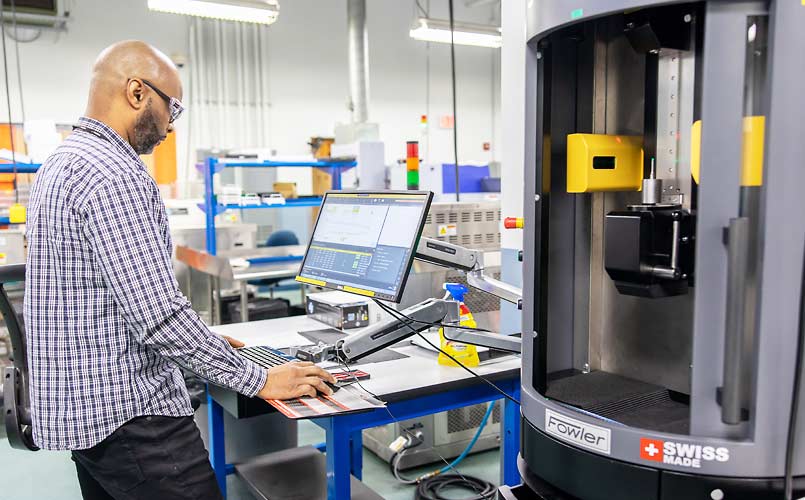
Quality assurance forms the core of our operation. Our facilities operate under full ISO 13485 compliance and FDA 21 CFR Part 820 Quality System Regulations (QSR). Every batch of spinal screws, rods, or interbody devices undergoes comprehensive coordinate measuring machine (CMM) inspection, laser profilometry, and lot-traceability documentation.
- Swiss Multi-Axis CNC Machining: Specialized high-speed machining of complex titanium and PEEK geometries holding micro-tolerances.
- Medical Grinding & Threading: High-precision flute, drill-point, and thread grinding for surgical cutting tools and pedicle screw threads.
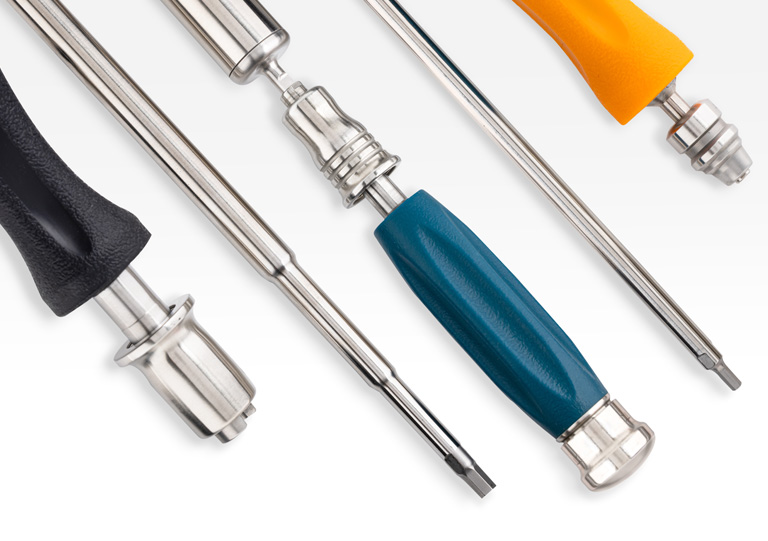
- MedTorque Ergonomic Handles: Custom silicone-handled drivers, fixed, ratcheting, and torque-limiting couplings designed for surgical comfort and exact tightening torque.
- Validated Finishing & Passivation: Automated citric/nitric passivation, electro-polishing, color anodizing, and laser etching to ensure corrosion resistance.
Design for Manufacturability (DFM) & Rapid Prototyping
Transitioning a spinal construct from CAD models to validated production requires engineering collaboration. Our DFM engineering team assists OEM clients during early development stages to refine geometric tolerances, optimize cutting tool paths, select optimal biocompatible grades, and shorten cycle times.
Whether you require prototype runs for clinical trials or high-volume commercial production, our scalable cell structure provides flexibility with lead times measured in days rather than months.
Procurement FAQ
Frequently Asked Questions by Medical Device Buyers
Detailed responses to common technical, quality control, and international commercial inquiries regarding OEM spinal fixation supply contracts.
What certifications and regulatory approvals support your spinal fixation manufacturing? +
Our medical manufacturing facilities are fully FDA registered and certified to ISO 13485:2016, the international standard for medical device quality management systems. Deliverables include full Material Test Reports (MTRs), Certificate of Conformance (CoC), First Article Inspection (FAI) reports according to AS9102/ISO standards, and complete Device History Record (DHR) documentation to support your regulatory 510(k), CE MDR, or NMPA submissions.
Which biocompatible materials do you utilize for spinal implants and instruments? +
We machine and print implants exclusively from premium, certified biocompatible materials:
- Titanium Alloys: Ti-6Al-4V ELI (ASTM F136 / ISO 5832-3) and Commercially Pure Titanium (CP Grade 2/4).
- Engineered Polymers: Implant-grade PEEK-OPTIMA (ASTM F2026), Radel (PPSU), and UHMWPE.
- Medical Stainless Steels: 316LVM (ASTM F138), 17-4PH, 455/465 stainless steel, and Custom 630 for high-torque surgical instruments.
Can you support custom OEM/ODM design modifications and white-label manufacturing? +
Yes. We specialize in contract contract manufacturing (OEM/ODM). We work directly with your engineering drawings (STEP/IGES/DWG) or assist in reverse engineering and DFM optimization. We offer customized laser mark labeling (UDI compliant GTIN laser etching), color-anodized dimension matching, and tailored tray/instrument packaging according to your OEM branding specifications.
What are the typical lead times for prototype development versus mass production orders? +
Prototyping cycles utilizing 5-axis CNC or Additive PBF technology can typically be delivered within 10 to 15 business days following final drawing sign-off and material approval. Commercial mass production order lead times generally range from 4 to 8 weeks depending on raw material sourcing, post-processing passivation requirements, secondary grinding, and cleanroom assembly requirements.
How do you guarantee thread accuracy and mechanical fatigue resistance on pedicle screws? +
Pedicle screw threads undergo specialized thread-grinding or high-precision Swiss turning with optical sensor monitoring. 100% in-process visual checking and contact CMM inspection are performed. Fatigue testing protocol aligned with ASTM F1717 (Standard Test Methods for Spinal Implant Constructs in a Vertebrectomy Model) is conducted during design verification to guarantee static axial compression, bending resistance, and torsional fatigue life.
How do international buyers initiate a supplier qualification or request a quotation? +
International procurement teams can initiate project evaluations by submitting CAD files, technical drawings, material specifications, and target volume forecasts to our engineering department via our interactive chat link or email. A dedicated medical engineer will conduct a thorough manufacturability evaluation and provide a comprehensive proposal within 24 to 48 hours.
Partner with a Trusted Medical Device Contract Manufacturer
Accelerate your time-to-market, reduce component costs, and ensure absolute compliance for your spinal fixation systems and surgical instrument lines.
Contact Us