Engineered Medical & Surgical Cutting Components
Explore our core portfolio of micro-machined scalpels, surgical drills, spinal fixation implants, and ultra-precision industrial manufacturing tooling engineered for high-rigidity surgical environments.
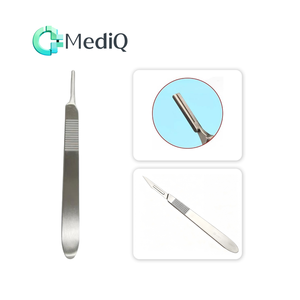
High Quality Reusable Medical Grade Thickened Stainless Steel Surgical Blade Scalpel No.3 Handle
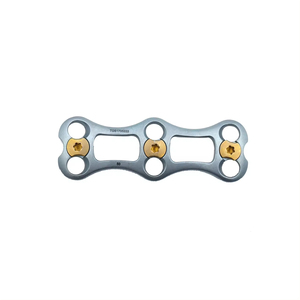
High Quality Orthopedic Anterior Cervical Plate Screw Implants for Hospital Surgical Spinal Interventions & Materials
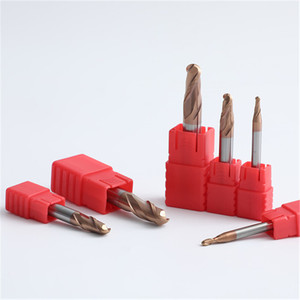
Wholesale Cheap High Quality Ball Endmill Grinder 2 Flute Carbide End Mill
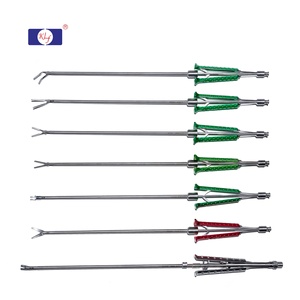
Cardiac Surgery Instruments Set Minimum Invasive Invasive Basis of Surgical Tools
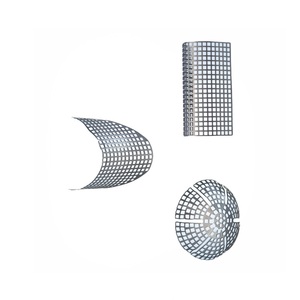
Competitive Price Titanium Alloy Material MESH Orthopedic Implants for Hospital
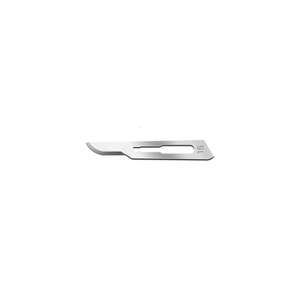
Surgical Blade #15 Sterile Veterinary Scalpels ISO Certified High-Carbon Steel for Animal Surgical Procedures
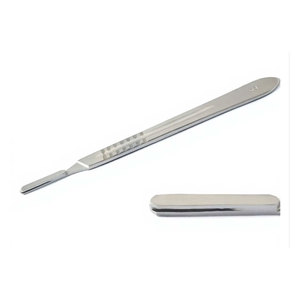
Professional Manual Surgical Scalpel Handle Blades Germany Stainless Steel Medical Dental Carving Dissection Instrument
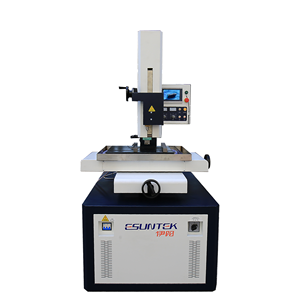
ESUNTEK Small Hole Drilling EDM Machine High Precision and Speed Reliable for Aerospace Medical Device& Industrial Manufacturing
Technical Whitepaper: Engineering Next-Generation Surgical Cutting Tools in China
Modern surgical procedures—ranging from minimally invasive cardiac interventions and spinal decompression to robotic-assisted orthopedic resections—demand an uncompromising standard of metallurgical consistency, dimensional accuracy, and edge retention. As global medical Original Equipment Manufacturers (OEMs) navigate dynamic supply chains and stringent regulatory frameworks, China has evolved into a powerhouse for high-tier medical contract manufacturing.
At our FDA-registered and ISO 13485-certified facilities, we bridge the gap between advanced material science and cost-optimized volume manufacturing. Surgical cutting instruments, including scalpels, reamers, drills, bone saws, and ultrasonic tips, are not merely mechanical components; they are extension points of a surgeon's dexterity where micron-level deviations directly impact clinical outcomes.
Metallurgical Architecture: Selecting Alloys for Surgical Razor Sharpness and Corrosion Resistance
The performance of a surgical cutting tool depends primarily on its crystal matrix and heat-treatment response. Standard industrial cutting alloys are insufficient for medical applications due to biocompatibility requirements and hostile sterilization environments (autoclaving, gamma irradiation, ethylene oxide). We utilize refined, vacuum-melted medical grades:
- Martensitic Stainless Steels (AISI 440C, 420, 1.4116 / X50CrMoV15): Formulated with elevated carbon content to achieve hardness values up to 58-60 HRC. High hardness ensures extreme edge keenness and minimal deformation during bone contact or prolonged soft-tissue dissection.
- Austenitic & Precipitation-Hardening Steels (316LVM, 17-4PH / Custom 455): Preferred for surgical scalpel handles, spinal instrumentation drivers, and cervical plates where high fracture toughness and resistance to cyclic fatigue supersede absolute blade hardness.
- Medical-Grade Titanium Alloys (Ti-6Al-4V ELI / Grade 23): Essential for implants (such as cervical plates and mesh cages) and lightweight instrument bodies. Titanium exhibits unmatched biocompatibility, zero magnetic interference (MRI compatible), and superior modulus of elasticity.
- Sub-Micron Tungsten Carbide (WC-Co): Employed in surgical burs, micro-drills, and rotary endmills. The sub-micron grain structure prevents micro-chipping along the cutting edge, providing extended sharpness life during continuous high-speed orthopedic resection.
Material & Technical Specifications Matrix
To assist OEM procurement managers and biomechanical design engineers, the following matrix outlines the physical and mechanical properties of primary materials used across our precision surgical cutting tool manufacturing lines:
| Material / Grade | Hardness Range | Tensile Strength (MPa) | Biocompatibility Standard | Primary Surgical Applications |
|---|---|---|---|---|
| AISI 440C Stainless | 58 - 60 HRC | 1900 - 2050 | ASTM F899 / ISO 7153-1 | Scalpel Blades, Micro-Scissors, Bone Chisels |
| AISI 420 (Martensitic) | 52 - 55 HRC | 1600 - 1750 | ASTM F899 | Surgical Drills, Reamers, Taps, Osteotomes |
| Ti-6Al-4V ELI (Grade 23) | 32 - 38 HRC | 860 - 960 | ASTM F136 / ISO 5832-3 | Cervical Plates, Titanium Mesh, Spinal Implants |
| 17-4PH Stainless (H900) | 40 - 44 HRC | 1310 - 1400 | ASTM F899 | Instrument Handles, Torque Limiting Couplings |
| Sub-Micron Carbide | 91 - 93 HRA | 2800 - 3200 | ISO 10993 Compliant | Bone Rotative Burs, 2-Flute Endmills, Micro EDM |
Technological Innovations Driving China’s Medical Manufacturing Industry
The manufacturing landscape for surgical instruments is undergoing a paradigm shift. Traditional manual grinding and multi-step forging setups are being replaced by automated, ultra-precision manufacturing ecosystems. As a leading factory in China, we integrate state-of-the-art production technologies to ensure total repeat tolerance across multi-million unit batches.
5-Axis CNC Flute Grinding
Utilizing high-rigidity CNC grinding centers with automated wheel dressing, we achieve parabolic flute geometry and micro-bevels on surgical drills, reducing burr generation and heat buildup during cortical bone penetration.
Small Hole EDM Micro-Drilling
For internal fluid channels in minimally invasive surgical tools and endoscopic shavers, Electrical Discharge Machining (EDM) creates burr-free coolant pathways as small as 0.15mm diameter without altering metallurgy.
PVD & Titanium Nitride Coating
Physical Vapor Deposition (PVD) coatings like TiN, TiAlN, and Diamond-Like Carbon (DLC) provide extreme surface hardness (up to 3000 HV), reduce friction coefficients, and enhance corrosion resistance during repeat sterilization cycles.
Automated Laser Passivation
Fully compliant with ASTM A967 standards, our chemical and citric passivation lines eliminate free iron contaminants from stainless steel surfaces, creating a dense chrome oxide layer that halts rust formation.
Robotic-Assisted Tool Calibration
With the rapid adoption of surgical robotics (e.g., orthopedic total joint replacement systems), our cutting tools are engineered with digital alignment notches and optical tracking arrays accurate to within 2 microns.
Cleanroom Final Assembly & Packaging
Finished surgical blades, scalpels, and cervical implants are processed through ultrasonic aqueous cleaning lines and packaged within Class 7 cleanrooms to meet bioburden and endotoxin safety standards.
Future Procurement Trends: What Global Medical OEMs Need to Know
As healthcare costs continue to scrutinize hospital spending while demand for elective surgeries rebounds globally, medical device procurement teams are drastically revising their sourcing strategies. Key trends defining surgical cutting tool procurement include:
1. Supplier Consolidation and One-Stop Contract Manufacturing
OEMs are moving away from fragmented supply chains where raw material sourcing, CNC machining, heat treating, passivation, and cleanroom packaging are handled by separate vendors. Partnering with a consolidated Chinese manufacturer that offers end-to-end execution eliminates handoff friction, shortens lead times by 35-50%, and streamlines Device History File (DHF) audits.
2. Rigorous Validation Frameworks (IQ / OQ / PQ)
Modern B2B procurement demands more than competitive unit pricing. International buyers require robust Installation Qualification (IQ), Operational Qualification (OQ), and Performance Qualification (PQ) protocols. Chinese manufacturing leaders now routinely supply comprehensive process validation packages, Cpk data (>1.33), and material lot certifications directly with every shipment.
3. Transition to Single-Use Precision Instruments
To reduce Hospital-Acquired Infections (HAIs) and the significant labor cost of sterilizing instruments in Central Sterile Services Departments (CSSD), the industry is transitioning toward single-use pre-sterilized procedure kits. This shift requires scalpel and drill suppliers to produce high-performance cutting tools at a price point optimized for single-patient disposal without sacrificing edge sharpness.
4. Sustainable & Traceable Supply Chains
Traceability is no longer optional. From raw material melt certificates to final laser etching of UDI (Unique Device Identification) barcode matrices, medical suppliers must maintain complete digital visibility across the manufacturing lifecycle.
Why Partner With Our Factory in China?
Our facility combines decades of precision engineering heritage with modern advanced manufacturing. We serve as a trusted contract manufacturing partner for orthopedic, spinal, dental, cardiac, and general surgery brands across North America, Europe, and Asia-Pacific.
Certified Regulatory Compliance
Our facility operates strictly under ISO 13485:2016 quality management systems and maintains active FDA establishment registration. We welcome customer quality audits and third-party inspections.
Advanced DFM & Rapid Prototyping
Our engineering staff offers expert Design for Manufacturability (DFM) support to optimize blade profile, flute geometry, and tolerance stacks. Prototypes can be delivered within days using multi-axis CNC cells and additive manufacturing.
In-House Metrology & Quality Inspection
Equipped with high-resolution laser micrometers, 3D optical Coordinate Measuring Machines (CMM), surface profilometers, and micro-hardness testers to guarantee 100% adherence to technical drawings.
Cost-Effective Scale & Supply Chain Resilience
Leveraging China's mature industrial raw material network, we offer OEM partners high-tier precision components at competitive costs, mitigating margin pressure for medical device distributors.
Frequently Asked Questions (FAQ) for OEM Procurement Teams
Is your factory ISO 13485 certified and FDA registered?
What mechanical tolerances can your 5-axis CNC grinding machines hold?
Can you supply customized OEM/ODM surgical tools based on 3D CAD drawings?
What documentation accompanies each production shipment?
What surgical grade raw materials do you keep in stock for rapid production?
How do you ensure sharpness and edge retention across continuous production runs?
What is your typical lead time for prototype vs. volume production orders?
Partner with China's Premier Medical Cutting Tool Manufacturer
Need custom surgical scalpels, orthopedic reamers, spinal cervical implants, or specialized micro-drills? Contact our engineering team today to request a comprehensive product catalog, DFM evaluation, or rapid quotation.
Get Catalog