Precision Implants & Surgical Tooling Solutions
Explore our certified orthopedic fixation components, specialized surgical instruments, and high-tolerance contract manufacturing capabilities.
China's Role in Next-Generation Orthopedic Screw Manufacturing & Global Supply Integration
In modern trauma surgery, spinal reconstruction, and craniomaxillofacial procedures, the mechanical integrity of internal fixation hardware directly governs clinical outcomes. As global medical original equipment manufacturers (OEMs) face pressure to streamline supply chains while maintaining strict compliance with FDA 21 CFR Part 820 and EU MDR 2017/745, China has evolved from a low-cost contract machining hub into a center of technical innovation for bio-compatible micro-fasteners and orthopedic hardware.
1. Technical Classification of Orthopedic Bone Screws & Structural Mechanics
Orthopedic screws function as force-transmitting components that convert rotational torque into linear axial tension, clamping internal fixation plates to bone fragments or stabilizing spinal pedicles. Manufacturing processes vary significantly based on clinical application, anatomical geometry, and load-bearing requirements:
A. Cortical Screws: Designed for dense cortical bone, featuring fine thread pitches, shallow thread depths, and a high core-to-outer diameter ratio. Manufactured using precision Swiss-type CNC lathes equipped with high-frequency live tooling to eliminate micro-chatter along the length of the shaft.
B. Cancellous Screws: Engineered for soft, spongy bone structures, featuring deeper thread profiles, wider thread pitches, and self-tapping flutes. Machining cancellous thread forms into implant-grade titanium requires custom carbide tooling inserts to prevent material work-hardening during the thread-whirling process.
C. Cannulated Bone Screws: Characterized by a continuous central longitudinal lumen through which a guide wire passes. Deep-hole gun drilling of thin-walled titanium tubes (lumens ranging from 0.8mm to 2.5mm) demands tight concentricity monitoring (TIR < 0.01mm) to prevent wall blowouts during insertion torque testing.
D. Pedicle Screw Systems: Complex multi-component spinal implants comprising polyaxial heads, threaded shafts, and locking set screws. Machining requires 5-axis simultaneous CNC milling to ensure smooth angular movement of the saddle head while guaranteeing fatigue-resistant thread geometry on the pedicle shaft.
2. Metallurgical Specifications & Material Selection Criteria
Selecting the appropriate biomaterial is critical to avoiding galvanic corrosion, stress shielding, or fatigue failure under cyclic load. Chinese medical-grade raw material suppliers work strictly with certified vacuum-arc remelted (VAR) alloys:
Medical-Grade Material Matrix for Orthopedic Screw Manufacturing
| Material Grade | Standard Specification | Mechanical Yield Strength | Biocompatibility & Corrosion Resistance | Primary Surgical Application |
|---|---|---|---|---|
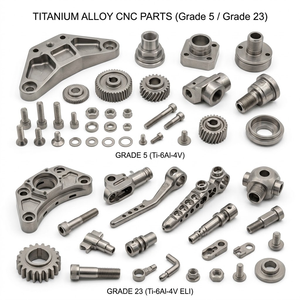
| Titanium Grade 5 (Ti-6Al-4V) | ASTM F136 / ISO 5832-3 | ≥ 860 MPa | Excellent (Passivated Titanium Oxide layer) | High-load pedicle screws, trauma plates, locking screws |
| Titanium Grade 23 (Ti-6Al-4V ELI) | ASTM F136 (Extra Low Interstitial) | ≥ 795 MPa | Superior (Enhanced fracture toughness) | Cannulated screws, pediatric spinal instrumentation |
| Stainless Steel 316LVM | ASTM F138 / ISO 5832-1 | ≥ 690 MPa | High (Double Vacuum Melted) | Temporary trauma fixation, bone pins, fracture wires |
| PEEK (Polyetheretherketone) | ASTM F2026 | ≥ 110 MPa | Radiolucent (Similar modulus to bone) | Interbody fusion markers, ligament anchor screws |
3. Precision CNC Machining & Thread Whirling Technologies
Traditional single-point threading often introduces localized stress points and micro-burrs along bone screw threads. Leading Chinese exporters utilize high-speed thread whirling attachments mounted on multi-axis CNC Swiss automatic turning machines (Citizen, Star, Tsugami). Thread whirling offers several distinct technical advantages:
- Superior Thread Surface Finish: Achieves surface roughness values below Ra 0.4 µm without manual polishing, reducing friction during bone insertion.
- Single-Pass Thread Formation: Eliminates heat build-up and cold-working stresses, maintaining metallographic consistency in thin-walled cannulated designs.
- Complex Thread Profile Generation: Easily cuts variable-pitch, dual-lead, and buttress thread geometries designed for rapid surgical deployment.
End-to-End Medical Contract Manufacturing Excellence
Combining state-of-the-art multi-axis CNC machining, medical grinding, additive manufacturing, and automated finishing under rigorous quality protocols.
Multi-Axis Swiss CNC Machining
High-volume precision turning and milling of micro-implants with tolerances down to ±0.002mm (2 microns).
- Citizen & Star 10-axis Swiss lathes
- In-process laser tool measuring & optical inspection
- Micro-drilling down to Ø0.3mm lumens
Additive Manufacturing (DMLS)
Powder-bed fusion technology creating porous titanium structures designed for direct biological osseointegration.
- 3D printed acetabular cups & spinal cages
- Custom trabecular bone lattice structures
- Integrated solid-to-porous transition zones
Surface Finishing & Passivation
Automated ultrasonic cleaning, electropolishing, and chemical passivation adhering strictly to ASTM F86 standards.
- Citric and Nitric acid passivation lines
- Type II and Type III Color Titanium Anodizing
- Laser marking for UDI (Unique Device Identification)
Key Future Trends Shaping Orthopedic Screw Procurement
As the global orthopedic device sector expands toward a projected USD 65 Billion market size, OEM procurement teams are shifting strategic priorities. Understanding these technological and regulatory vectors allows procurement executives to select contract partners capable of long-term alignment:
1. Bio-absorbable & Composite Fixation Hardware: While Titanium and Stainless Steel remain the dominant alloys, bio-resorbable magnesium-based alloys and PLLA (Poly-L-Lactic Acid) polymers are gaining traction in pediatric and soft-tissue fixation. Precision micro-machining of reactive magnesium alloys requires specialized inert gas machining environments to prevent oxidation.
2. Robot-Assisted Surgical Tool Integration: Modern spine and joint replacement procedures increasingly rely on surgical robotics (e.g., Stryker Mako, Intuitive, Globus ExcelsiusGPS). Bone screws now require tighter drive feature tolerances (Torx-Plus, Hexalobular) to ensure seamless robotic end-effector engagement without cam-out or axial wobble.
3. Supply Chain Consolidation & Fully Finished Delivery: OEMs are actively reducing supplier count. Rather than sourcing raw machining from one vendor, anodizing from another, and packaging from a third, buyers favor single-source contract manufacturers offering validated cleanroom washing, sub-assembly, and sterile barrier pouch packaging.
4. Digital Traceability & Regulatory Compliance (EU MDR / FDA UDI): Every exported screw must carry high-density micro laser-etched matrix codes. Advanced vision inspection systems verify matrix readability after passivating processes to eliminate non-conformance risks at port customs or hospital reception.
Frequently Asked Questions by OEM Procurement Teams
Direct technical answers regarding compliance, lead times, custom manufacturing, and quality deliverables.
Partner with China's Premier Orthopedic Screw Manufacturer
Consult with our senior biomedical manufacturing engineers today to review your CAD files, optimize DFM, and receive a competitive contract manufacturing quotation.
Get a Quote