Precision Components & OEM Manufacturing Portfolio
Direct contract manufacturing capabilities combining Additive Manufacturing (AM), high-precision CNC machining, and specialized finishing under ISO 13485 & FDA registered workflows.
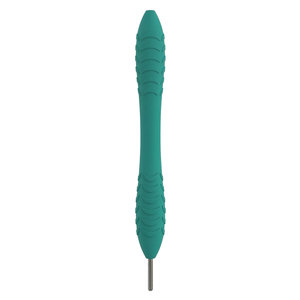
Ergonomic Dental Mirror Handle Premium Teal Silicone Grip Instrument for Oral Examination & Dental Surgery Made in Pakistan
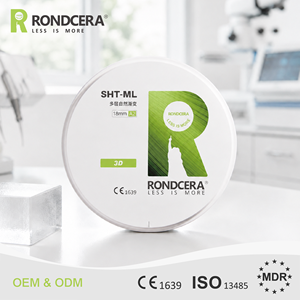
LTD 25% OFF Rondcera CE Hot Selling Dental Zirconia Disk 3D Multilayer 98mm Monolithic Bridge Dental Zirconia Supplier
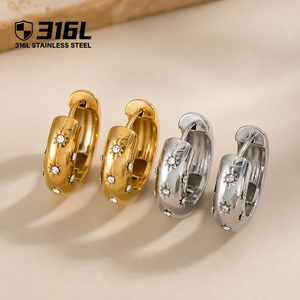
316L Stainless Steel 18K Real Gold Plated Classic Versatile C Shaped Inlaid Zircon Geometric Earrings For Women Jewelry
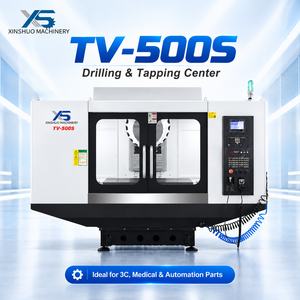
Cost Effective High Speed Tapping Center BT30 CNC Vertical Machining Center 20000rpm for Medical Automation Metal Parts
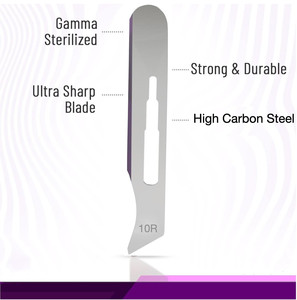
ZS Disposable 10r Blades Dermaplaning Dermaplane Blades 10r High Carbon Steel Dermablade Surgical Scalpel Blades Sterile
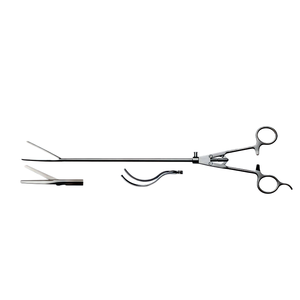
Minimally Invasive Manual Thoracic Clamp-High Quality 220MM Single-Jointed Reusable for Lung Grasping and Laparoscopic Surgery
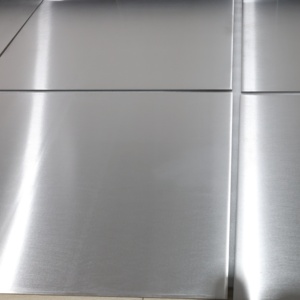
Gr1 Titanium Mirror Sheet 8K Polished ASTM B265 99.9% Purity for Semiconductor & Medical Device Applications
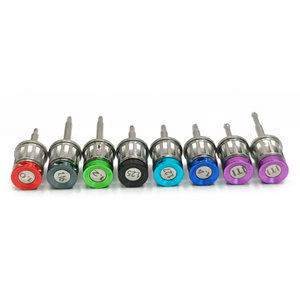
High Quality Dental Implant Driver Universal Fit Universal Dental Implant Screwdriver For Prosthetic Screws
1. Industrial Landscape of Metal 3D Printing Manufacturers in China
Over the past decade, China has transitioned from an emerging participant to a global epicenter of industrial metal Additive Manufacturing (AM). Tier-1 Chinese manufacturers have integrated state-of-the-art Laser Powder Bed Fusion (LPBF), Selective Laser Melting (SLM), and Direct Metal Laser Sintering (DMLS) technologies with advanced metallurgical research, revolutionizing OEM contract manufacturing for aerospace, orthopedics, surgical robotics, and high-performance automotive tooling.
For global engineering and procurement directors, evaluating top-tier Chinese metal 3D printing exporters involves analyzing key operational metrics: powder chemistry consistency, optical beam galvo-scanner precision, multi-laser overlap calibration, thermal stress management, and rigorous sub-micron post-processing machining. Leading Chinese suppliers no longer compete purely on unit cost; they deliver Information Gain by providing end-to-end Design for Additive Manufacturing (DfAM) consultation, reducing structural weight, optimizing internal conformal cooling channels, and accelerating time-to-market for complex mission-critical components.
Technical Benchmark: Premium Chinese OEM additively manufactured titanium and cobalt-chrome components routinely achieve volumetric density exceeding 99.9%, matching or surpassing mechanical properties defined by ASTM F136 (Ti-6Al-4V ELI) and ASTM F75 (Co-28Cr-6Mo) cast/wrought standards following Hot Isostatic Pressing (HIP).
2. Core Metal Additive Manufacturing & Post-Processing Disciplines
Achieving medical and aerospace compliance requires integrating multiple manufacturing technologies under a single validated Quality Management System (QMS). Industrial metal 3D printing is rarely a standalone process; it represents the primary structural forming phase in a tightly controlled manufacturing chain.
Multi-Laser SLM / LPBF Systems
Deploying quad-laser and 8-laser synchronized optical galvo platforms capable of building complex geometries up to 800mm x 800mm x 1000mm. Optimized laser power density distribution ensures zero keyhole porosity and uniform microstructure evolution across large build envelopes.
Sub-Micron CNC Post-Machining
Bridging AM geometric freedom with high-precision subtractive finishing. High-speed 5-axis milling and CNC Swiss turning achieve critical mating surface tolerances down to ±0.005mm (5 microns) for orthopedic implant tapered interfaces and surgical robotic gearing.
Biomechanical Lattice Structures
Direct printing of stochastic and deterministic porous structures with controllable pore sizes (300µm – 800µm) and porosity ranges (60% – 80%). Enables bone-ingrowth (osseointegration) in spinal cages, acetabular cups, and custom maxillofacial implants without secondary coating steps.
Medical Stainless & Flute Grinding
High-precision CNC grinding of surgical cutting tools, drills, reamers, and burs from custom 455, 465, and 17-4 PH stainless steel alloys, delivering razor-sharp edge retention, corrosion resistance, and micro-concentricity.
Automated Passivation & Cleaning
Validated citric and nitric passivation lines operating within ISO Class 7 cleanroom environments. Ensures complete removal of un-sintered micro-powders and iron contaminants to meet strict FDA 21 CFR Part 820 requirements.
CT Tomography & Quality Verification
Non-destructive examination using high-resolution industrial Micro-CT scanning, Coordinate Measuring Machines (CMM), and laser interferometry to verify complex internal fluid passages, void-free melt pools, and geometric fidelity.
3. Metallurgical Specifications & Qualified Material Matrix
In metal additive manufacturing, the structural integrity of the final component relies on raw material powder characteristics—such as spherical morphology, particle size distribution (PSD 15–53µm), hall flow rate, and low oxygen/nitrogen pickup during laser melting. Leading Chinese exporters maintain complete raw powder lot traceability backed by chemical composition certification (ICP-OES) and mechanical tension testing.
| Material Grade | Applicable Standards | Tensile Strength (UTS) | Yield Strength (0.2%) | Key Industry Applications |
|---|---|---|---|---|
| Ti-6Al-4V Grade 23 (ELI) | ASTM F136 / ASTM F3001 | ≥ 970 MPa | ≥ 860 MPa | Orthopedic implants, spinal fixation, surgical robotics end-effectors, aerospace brackets. |
| Cobalt-Chrome (CoCrMo) | ASTM F75 / ASTM F3055 | ≥ 1100 MPa | ≥ 700 MPa | Dental copings, partial denture frameworks, orthopedic knee/shoulder joint replacements. |
| Inconel 718 Superalloy | ASTM B637 / AMS 5662 | ≥ 1350 MPa (Aged) | ≥ 1100 MPa | High-temperature aerospace turbine blades, rocket nozzle injectors, oil & gas manifolds. |
| 316L Surgical Steel | ASTM F138 / ASTM A240 | ≥ 650 MPa | ≥ 500 MPa | Laparoscopic surgical instruments, medical housings, food & pharmaceutical automation tooling. |
| 17-4 PH Stainless Steel | ASTM A564 / AMS 5643 | ≥ 1150 MPa (H900) | ≥ 1000 MPa | High-strength structural surgical handles, orthopedic reamers, aerospace fasteners. |
| AlSi10Mg Aluminum | ASTM F3318 / EN AC-43000 | ≥ 400 MPa | ≥ 240 MPa | Lightweight drone frames, automotive thermal exchangers, robotics motor housings. |
4. Future Procurement Trends in Metal Additive Manufacturing
As global OEMs seek supply chain resilience and accelerated engineering iteration cycles, the contract procurement strategy for metal 3D printed components is undergoing structural shifts. Sourcing directors are moving away from treating AM purely as a prototyping tool toward integrating it as a scalable, high-volume production technology.
Trend A: Transition to Multi-Laser Synchronized Platform Architecture
Procurement efficiency in metal LPBF relies heavily on build speed and machine productivity. Modern Chinese manufacturing facilities are expanding build envelopes utilizing 8, 12, and 16-laser synchronized systems equipped with automated powder sieving and closed-loop recirculation systems. This setup dramatically reduces hourly machine rates, allowing additive manufacturing to achieve cost parity with traditional investment casting for medium-batch production (1,000 to 50,000 units annually).
Trend B: In-Process Quality Monitoring and Artificial Intelligence
Tier-1 suppliers are deploying real-time melt pool monitoring systems (pyrometry and optical imaging) integrated with AI anomaly detection algorithms. By monitoring laser power absorption, thermal dissipation, and layer recoating uniformity at microsecond intervals, suppliers can provide buyers with a 100% digital birth certificate for every build layer, mitigating the risk of hidden internal defects.
Trend C: Hybrid Manufacturing (Additive + Subtractive Integration)
Leading Chinese contract manufacturers are seamlessly linking metal 3D printers with high-precision 5-axis CNC machining centers under unified CAM software setups. By printing near-net-shape structural blanks with complex internal features (such as internal oil passages or lightweight ribs) and subsequently machining critical mounting faces, micro-threads, and sealing grooves, total lead times are compressed by up to 65% compared to conventional forging and long-bed machining.
5. Technology Roadmap: Next-Generation DfAM & Material Innovations
The competitive advantage in metal 3D printing is increasingly driven by software-guided design optimization (Design for Additive Manufacturing - DfAM) and advanced alloy processing capabilities.
Topology Optimization and Generative Design
By leveraging Finite Element Analysis (FEA) algorithms, engineers can eliminate dead weight from structural components without compromising stress distribution or fatigue life. Generative design produces biomimetic structures optimized for specific loading vectors, achieving weight savings of 30% to 60% in aerospace fittings and surgical robotic arms. This reduction in material mass directly lowers build time and argon gas consumption, yielding significant cost savings.
Processing High-Refractory & Pure Metals
Advanced Chinese AM laboratories have solved processing challenges associated with highly reflective and thermally conductive materials. The deployment of short-wavelength green (515nm) and blue (450nm) industrial lasers enables stable melt-pool dynamics when printing pure copper (Cu-ETP), pure tantalum, and precious metals for high-power electronics, semiconductor heat sinks, and radiopaque medical markers.
6. Frequently Asked Questions (FAQ) for OEM Buyers
What quality certifications should I require when sourcing metal 3D printed parts from China?
Qualified manufacturers should hold ISO 13485 (for medical devices), AS9100D (for aerospace), and ISO 9001 quality management certifications. For US-bound medical exports, the supplier's facility must be registered with the FDA (21 CFR Part 820) and capable of supplying complete Device Master Record (DMR) and Design History File (DHF) supporting documentation.
How do Chinese exporters ensure porosity-free metal 3D printed components?
Density control is achieved through three stages: First, utilizing high-spheric powder with optimized particle packing density. Second, utilizing calibrated laser parameter windows (volumetric energy density J/mm³ balance). Third, conducting post-print Hot Isostatic Pressing (HIP) at high temperatures and pressures (>1000 bar) to close micro-voids, ensuring mechanical properties exceed 99.9% theoretical density.
What surface finish (Ra) can be achieved directly from metal 3D printing, and what post-processing options exist?
As-printed metal LPBF surface roughness typically ranges from Ra 6.3µm to 12.5µm depending on build orientation and powder mesh size. Post-processing options include automated abrasive flow machining (AFM), electropolishing, bead blasting, and CNC micro-milling, which refine critical sealing surfaces to Ra < 0.4µm (16 micro-inches).
What documentation is provided with international B2B shipments?
Standard export quality dossiers include Raw Material Chemical/Physical Test Certificates (Mill Test Reports), First Article Inspection (FAI) reports per AS9102, CMM Dimensional Inspection Sheets, Heat Treatment Furnace Charts, Micro-CT Scan non-destructive test certificates, and Certificate of Conformance (CoC).
Can Chinese OEM manufacturers take a project from early design prototype to full mass production?
Yes. Leading contract manufacturing facilities provide full end-to-end integration: DfAM engineering analysis, rapid metal prototyping within 3-5 business days, IQ/OQ/PQ process validation, post-machining, automated surface treatment, laser marking, cleanroom assembly, and consolidated global supply chain delivery.
7. Why Partner With Leading Chinese Metal AM Manufacturers
Integrating Chinese metal additive manufacturing expertise into your OEM supply chain provides substantial strategic leverage. By uniting cutting-edge multi-laser powder bed fusion infrastructure with centuries of collective tooling experience, high-precision Swiss CNC turning, specialized medical grinding, and rigid ISO 13485 quality oversight, top Chinese suppliers serve as a seamless extension of your engineering department.
Whether developing next-generation minimal-invasive surgical instruments, low-weight aerospace structural brackets, or custom orthopedic joint implants, our technical engineering team delivers validated manufacturing repeatability, complete lot traceability, and competitive lead times.
Accelerate Your Metal AM Engineering Project
Submit your 3D CAD models (STEP/IGES) and technical drawings for a detailed Design for Additive Manufacturing (DfAM) evaluation, material consultation, and instant OEM quotation.
Get a Quote