Featured Precision Medical Components & Finishing Solutions
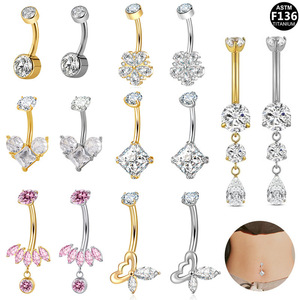
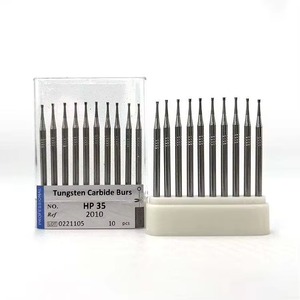
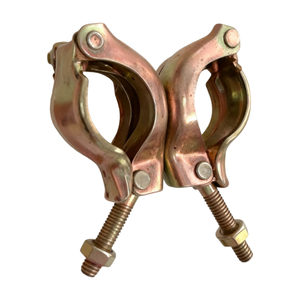
Engineered for rigorous clinical applications: Orthopedic Trauma Implants, Dental Burrs, Titanium Sheets, and Micro-Machined Robotic Components.
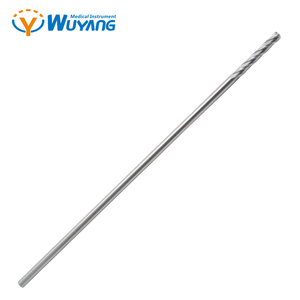
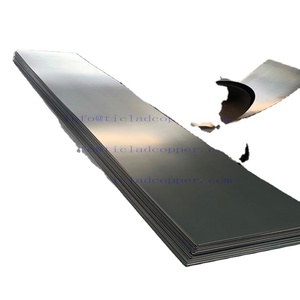
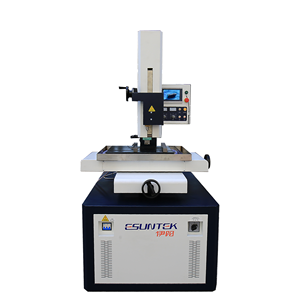
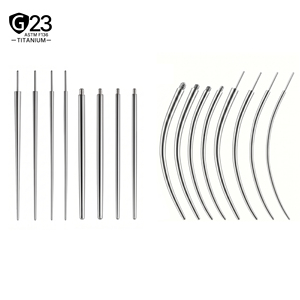
Advanced Medical Surface Finishing: Engineering Excellence & Regulatory Compliance
In the highly regulated ecosystem of global medical device manufacturing, surface finishing is not merely an aesthetic step—it is a critical, bio-enabling engineering discipline. As a premier China Top Medical Surface Finishing Supplier & Exporter, our operations sit at the intersection of material science, metallurgical integrity, and stringent international compliance. From load-bearing orthopedic trauma implants forged from ASTM F136 Grade 5 Eli Titanium to micro-drills, dental carbide tools, and surgical robotic end effectors, the surface properties of a medical component dictate its biological safety, fatigue life, corrosion resistance, and clinical performance.
Information Gain Insight: Chemical passivation according to ASTM F86 and ASTM A967 does not merely "clean" titanium and stainless steel surfaces. It chemically alters the surface atomic layer, raising the Chromium-to-Iron ratio (Cr/Fe > 1.5) and growing a homogeneous passive layer of Titanium Dioxide (TiO₂) or Chromium Oxide (Cr₂O₃) measuring between 2 to 5 nanometers in thickness.
Core Surface Engineering Technologies for Medical OEMs
Modern medical devices demand bespoke surface finishing tailored to specific clinical tissue interfaces. Our facility integrates full-spectrum surface modification techniques within a controlled ISO Class 7 cleanroom environment:
Medical Passivation (Nitric & Citric)
Validated chemical immersion under ASTM A967 and ASTM F86 standard practices. Completely dissolves free iron contaminants, preventing micro-pitting corrosion in saline and biological fluid environments.
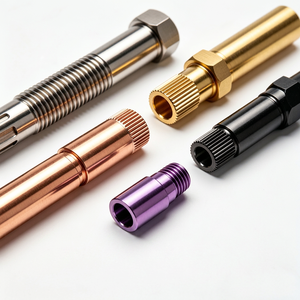
Type II & Type III Titanium Anodizing
Color-coded anodic oxidation (Type III) for surgical tool sizing identification and anti-galling Type II gray anodizing for high-friction thread interfaces in spinal plates and trauma screws.
Electropolishing & Micro-Deburring
Anodic electrochemical material removal that eliminates microscopic burrs, reduces surface roughness down to Ra 0.1 µm, and rounds sharp stress-concentration points to extend fatigue cycle limits.
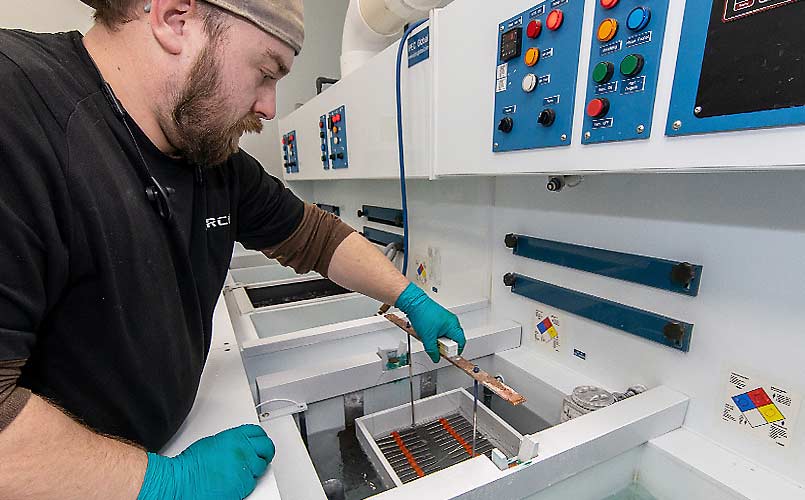
Validated Passivation & Quality Inspection
Our surface finishing protocols adhere to FDA 21 CFR Part 820 quality standards. Every batch undergoes rigorous surface validation including Auger Electron Spectroscopy (AES), X-ray Photoelectron Spectroscopy (XPS), and Copper Sulfate testing to verify total iron removal.
Send an InquiryDetailed Technical Comparison of Surface Modification Processes
Selecting the optimal surface treatment requires balancing mechanical durability, biocompatibility requirements, and material compatibility. Below is a comprehensive engineering breakdown of standard medical finishing processes supplied to global OEMs:
| Finishing Process | Target Substrates | Achievable Surface Roughness (Ra) | Primary Clinical Benefit | Key Standard Compliance |
|---|---|---|---|---|
| Citric Acid Passivation | Stainless Steel (316L, 17-4PH, 420) | Unchanged baseline | Eco-friendly iron removal, biocompatibility enhancement | ASTM A967, ISO 10993-5 |
| Electropolishing | 316L Stainless, CoCrMo Alloys | 0.08 µm – 0.2 µm | Elimination of micro-cracks, extreme corrosion resistance | ASTM B912, ISO 15730 |
| Titanium Type II Anodize | Grade 5 Ti-6Al-4V, Ti-6Al-4V ELI | Unchanged baseline | Anti-galling, wear resistance on threaded implants | AMS 2488D, ASTM F136 |
| Physical Vapor Deposition (PVD/DLC) | Tungsten Carbide, Stainless Steel | < 0.1 µm coating thickness | Ultra-hard (> 2500 HV) cutting edge retention for drills | ISO 10993-10, ISO 10993-11 |
| Laser Surface Texturing | Titanium Grade 2 & Grade 5 | Micro-porous topography | Accelerated osteoblast attachment & osseointegration | FDA 510(k) DHF Support |
Future Procurement Trends in Medical Device Surface Finishing (2025–2035)
As international medical device buyers navigate changing supply chain dynamics, stricter EU-MDR (Medical Device Regulation) enforcement, and evolving FDA guidelines, several macro procurement trends are shaping how medical OEMs select their finishing partners in China:
1. Shift Toward Non-Toxic Eco-Passivation Protocols
Global medical OEMs are rapidly phasing out traditional Nitric Acid passivation in favor of advanced Citric Acid formulations (such as ASTM A967 Citric Formulations 1–5). Citric acid selectively chelates free iron on stainless steel surfaces without generating hazardous nitrogen oxide fumes or leaving toxic heavy metal residue. Overseas procurement teams prioritize exporters capable of delivering fully validated citric acid passivation lines integrated with automated ultrasonic cleaning and RO (Reverse Osmosis) deionized water rinsing systems.
2. Post-Processing Integration for Additive Manufactured Implants
With the widespread adoption of Powder-Bed Fusion (PBF) 3D printing for porous acetabular cups, spinal cages, and patient-specific structural implants, post-machining surface finishing has become a highly complex capability. Raw 3D-printed titanium implants possess partially fused powder granules and high surface roughness (Ra 10-25 µm). Advanced suppliers must combine chemical chemical etching, abrasive flow machining (AFM), and electropolishing to clean internal porous lattice cavities without compromising structural strength or cellular attachment properties.
3. 100% Traceability and Digital Quality History Files (DHF)
Medical procurement is no longer just about purchasing physical metal parts; it is about acquiring complete quality documentation. OEMs require full lot-level traceability—from raw material melt certificates (e.g., ASTM F136 Titanium sheet or CoCrMo rod) down to automated passivation tank temperature charts, chemical titration logs, and cleanroom packaging records. High-capability Chinese exporters are adopting digital smart manufacturing Execution Systems (MES) to deliver seamless Quality History Records alongside shipped batches.
Additive Manufacturing & Precision Grinding Integrations
Combining precision micro-grinding of stainless cutting instruments with 3D-printed titanium lattice structures allows us to supply complete surgical kits. Our engineering team assists with Design for Manufacturability (DFM) to optimize your medical device for post-finish operations.
Send an Inquiry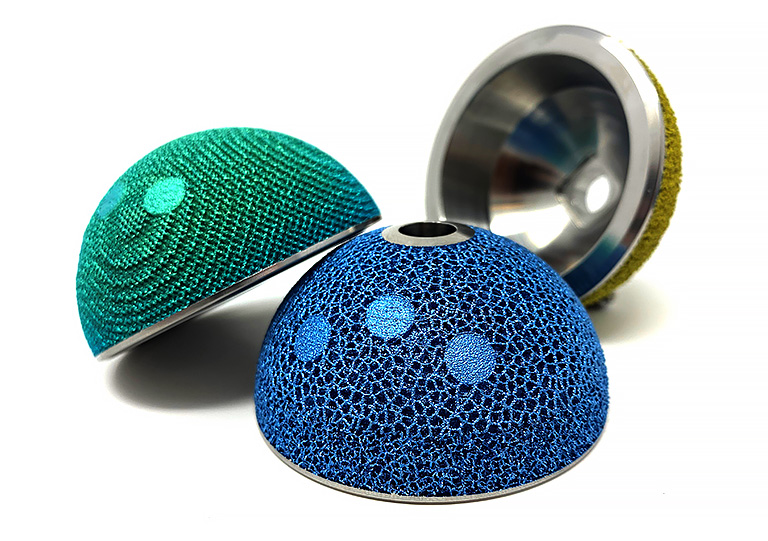
Enterprise Advantage: Why Global Medical OEMs Partner With Us
Our reputation as a premier China Top Medical Surface Finishing Supplier & Exporter is built on deep technical expertise, absolute regulatory transparency, and end-to-end contract manufacturing capabilities. By unifying CNC high-speed machining, precision flute grinding, additive post-processing, and multi-stage surface finishing under one ISO 13485 certified quality system, we solve the common supply chain vulnerabilities experienced when outsourcing across fragmented vendors.
Micron-Level Tolerance Precision
Swiss-type multi-axis CNC turning and automated flute grinding cells holding tolerances down to ± 0.002 mm on complex surgical drills, taps, and dental burs.
MedTorque Silicone-Handled Tools
Proprietary overmolding capabilities producing ergonomic, autoclavable silicone-handled surgical ratchets, torque-limiting couplers, and fixed drivers.
End-to-End Supply Chain Integration
From initial design assist and rapid prototyping to validated production, electropolishing, laser marking, and sterile-barrier pouch packaging.
Frequently Asked Questions by OEM Sourcing Teams
What quality certifications and regulatory credentials do you hold?
Our manufacturing facility is FDA registered and certified under ISO 13485:2016 for medical device contract manufacturing. Certificates, facility master files, and ISO audit summaries are readily available to qualified OEM procurement auditors upon request.
How do you verify passivation quality on stainless steel and titanium parts?
We execute batch validation testing per ASTM A380 / ASTM A967 standards, including high-humidity cabinet testing, water immersion testing, copper sulfate testing, and chemical composition analysis via XPS/Auger to measure surface Cr/Fe ratios.
Can you provide full raw material traceability and mill test reports?
Yes. Every production lot is delivered with comprehensive documentation including heat lot numbers, raw material chemical and mechanical test certificates (MTR), first article inspection reports (FAIR), and heat-treatment certification.
What is the typical lead time for custom surface finishing and machining projects?
Rapid engineering prototypes can be finished and shipped within 5 to 7 business days. Full production orders typically range between 3 to 5 weeks depending on component complexity, required anodizing/coating cycles, and cleanroom packaging protocols.
Do you support design-for-manufacturability (DFM) for medical instruments?
Absolutely. Our experienced engineering staff collaborates with OEM design engineers to evaluate part geometries, radius callouts, surface finish callouts, and thread specs to lower production costs while improving manufacturing yield.
How do we initiate a quote or technical review for a new project?
Simply click the inquiry button below to send your 2D drawings (with GD&T callouts), 3D CAD files (STEP/IGES), material specs, and estimated annual volume to our technical engineering sales team.
Partner with China's Premier Medical Surface Finishing Specialist
Streamline your medical device supply chain with certified precision machining, validated micro-surface passivation, and audit-ready quality management.
Send an Inquiry