Featured Precision Medical Components & Surgical Tooling
Engineered to micron-level tolerances utilizing ISO 13485 validated workflows, certified bio-compatible alloys, and advanced surface finishing protocols.
Navigating China's Medical Component Machining Ecosystem: An Engineering & Procurement Executive Guide
In the rapidly evolving global healthcare landscape, original equipment manufacturers (OEMs) specializing in orthopedics, spinal instrumentation, surgical robotics, and dental implantology face a dual challenge: accelerating clinical innovation while adhering to stringent global regulatory hurdles. As medical devices shift toward minimally invasive procedures, micro-scale implantability, and patient-specific geometries, contract manufacturing partners must supply far more than basic machining capabilities.
China has transitioned from a low-cost contract machining hub into an advanced precision manufacturing powerhouse. High-tier Chinese suppliers operating in key industrial clusters—such as Jiangsu, Zhejiang, and Guangdong—now deploy state-of-the-art multi-axis CNC Swiss lathes, 5-axis micro-milling machining centers, powder-bed fusion additive manufacturing systems, and ISO Class 7 cleanrooms. Selecting top-tier China medical component machining factories requires rigorous evaluation of quality management systems (QMS), risk management compliant with ISO 14971, and verified Design for Manufacturability (DFM) expertise.
Core Regulatory & Quality Compliance Standards
Qualified medical component manufacturers must demonstrate complete compliance across international frameworks. The foundation of medical contract manufacturing centers around three crucial credentials:
- ISO 13485:2016 Certification: Governs the comprehensive quality management system specifically for medical devices, ensuring design controls, process validation, and risk analysis throughout the manufacturing lifecycle.
- FDA Establishment Registration (21 CFR Part 820): Mandatory for contract manufacturers supplying finished medical devices or critical components to the United States market, requiring compliance with Quality System Regulations (QSR).
- MDR (EU) 2017/745 Traceability: EU Medical Device Regulation demands full material origin verification, passivation testing, and technical documentation to populate the Device Master Record (DMR).
High-Precision Production Disciplines for Medical OEMs
Consolidating supply chain operations into a integrated manufacturing workflow eliminates redundant handoffs, mitigates tolerance stack-up risks, and drastically shortens product launch lead times.
5-Axis CNC & Swiss Turning
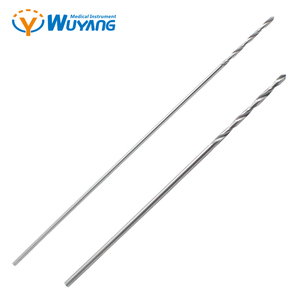
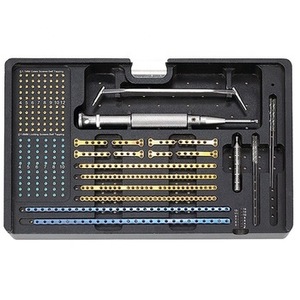
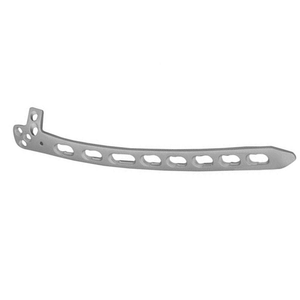
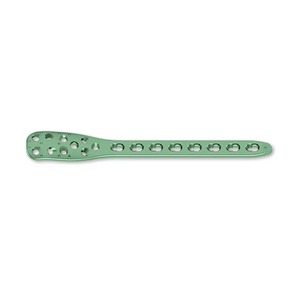
Complex implant geometries—such as pedicle screws, bone plates, and hip acetabular shells—demand multi-axis simultaneous machining. Swiss-type CNC automatic lathes achieve micro-tolerances (+/- 0.0015 mm) on high-aspect-ratio surgical drill bits, taps, and shaft assemblies.
Medical CNC Micro-Grinding
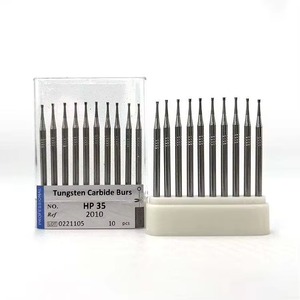
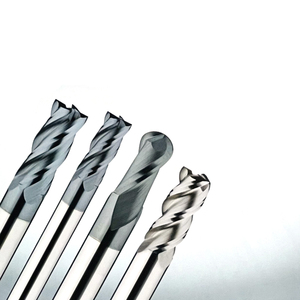
Precision flute grinding, drill-point shaping, and thread profiling using diamond wheel machinery. Essential for surgical cutting tools, surgical burs, orthopedic twist drills, and dental carbide cutters requiring razor-sharp edge retention and zero burr formation.
Additive & Hybrid Manufacturing
Direct Metal Laser Sintering (DMLS) and Electron Beam Melting (EBM) enable porous titanium structures that promote direct bone ingrowth (osseointegration). Post-additive CNC machining refines critical mating surfaces to exact dimensional requirements.
Passivation & Surface Engineering
Automated citric and nitric acid passivation (conforming to ASTM A967 and ASTM F86) removes free iron particulates to maximize corrosion resistance. Anodizing (Type II & III), electropolishing, and PVD titanium nitride coatings elevate biocompatibility.
Silicone Overmolding & Ergonomics
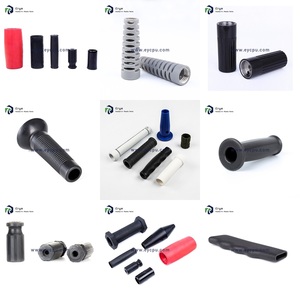
Custom medical-grade silicone handles overmolded onto stainless steel tool shafts. Provide ergonomic surgeon grip, color-coded surgical identification, dynamic torque-limiting mechanisms, and resistance to repeated autoclave steam sterilization cycles.
CMM & Optical Quality Assurance
Equipped with 3D Coordinate Measuring Machines (CMM), non-contact optical measuring systems, and laser micrometers. 100% inspection routines verify critical dimensions against CAD files with full First Article Inspection Reports (FAIR).
Biocompatible Alloys and Engineering Polymers in Medical Machining
Selecting the correct raw material is fundamental to clinical safety, mechanical fatigue endurance, and implant longevity. Machining bio-grade alloys requires specialized cutting geometry, optimized tool coatings, and strict temperature control to prevent stress corrosion cracking.
| Material Category | Standard Specification | Key Performance Attributes | Primary Medical Applications |
|---|---|---|---|
| Titanium Alloys | ASTM F136 (Ti-6Al-4V ELI), ASTM F67 Grade 4 | High strength-to-weight ratio, extreme biocompatibility, excellent osseointegration capability. | Bone plates, pedicle screws, dental implant posts, joint replacement components. |
| Cobalt-Chrome | ASTM F75, ASTM F1537 (Co-Cr-Mo) | Exceptional wear resistance, high hard-metal corrosion resistance, superior fatigue limit. | Artificial knee joints, femoral heads, dental frameworks, spinal fixation rods. |
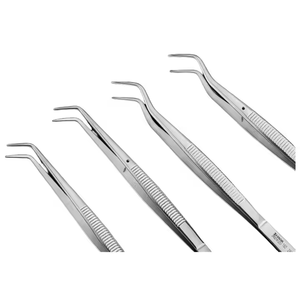
| Medical Stainless | 316LVM (ASTM F138), 17-4PH, 440C, Custom 455 | High tensile strength, superior edge sharpness for cutting tools, magnetic/non-magnetic variants. | Surgical scalpels, twist drills, reamers, forceps, retractor blades, drill guides. |
| PEEK & Polymers | PEEK OPTIMA®, Radel® PPSU, UHMWPE | Radiolucent (X-ray transparent), modulus of elasticity matching human bone, light weight. | Spinal interbody fusion cages, cranial implants, trial sizers, instrument handles. |
| Tungsten Carbide | ISO K10-K30 Micrograin Grades | Ultra-high hardness, extreme wear resistance, chip-resistant micro-geometry. | High-speed dental burs, bone cutter tips, surgical shears inserts. |
Future Sourcing Trends in Medical Component Manufacturing (2025–2030)
The strategic relationship between medical device OEMs and contract manufacturers is undergoing a paradigm shift. Procurement leaders are migrating away from fragmented vendor lists toward single-source strategic partnerships capable of delivering fully validated sub-assemblies. Key trends shaping medical manufacturing include:
1. Transition to Turnkey Contract Manufacturing
Sourcing teams no longer wish to purchase raw machined parts from one vendor, send them to a second supplier for passivation, and a third for laser marking and packaging. Modern medical component factories in China provide complete end-to-end integration: raw material forging/bar-stock sourcing, multi-axis machining, automated finishing, cleanroom washing, assembly, and pouch sealing.
2. Micro-Machining for Surgical Robotics & Minimally Invasive Surgery (MIS)
As robotic-assisted surgical platforms (such as da Vinci systems) gain worldwide adoption, demand for complex micro-components—such as miniature wrist joints, pulley shafts, cables, and end-effectors—has surged. Machining features below 0.5 mm with sub-micron tolerances requires specialized ultra-high-speed Swiss spindles and micro-EDM (Electrical Discharge Machining) capability.
3. Digital Traceability & IQ/OQ/PQ Process Validation
Global regulatory authorities require robust evidence that manufacturing processes are stable and repeatable. Leading suppliers now provide complete Installation Qualification (IQ), Operational Qualification (OQ), and Performance Qualification (PQ) validation protocols alongside digital material test reports (MTRs) linked to individual lot serial numbers via laser UDI (Unique Device Identification) etching.
The Strategic Advantage of Greyack Medical Manufacturing
Combining deep biomedical engineering heritage with state-of-the-art production infrastructure to serve global healthcare leaders.
FDA Registered & ISO 13485 Certified Facilities
Our manufacturing operations strictly adhere to international medical device quality management standards. Qualified OEM buyers gain direct access to complete audit trail documentation, regulatory filings, and process validation files.
Dedicated DFM Engineering Support
Our senior engineering staff conducts rigorous Design for Manufacturability reviews before chips fly. By optimizing tool paths, material selection, and tolerance schemes early, we reduce production costs while eliminating manufacturing risks.
MedTorque Silicone-Handled Tools
Proprietary capability in manufacturing fixed, ratcheting, and torque-limiting silicone surgical handles. Ergonomically optimized for orthopedics and spine surgery, built to endure hundreds of autoclave cycles without degradation.
Agile Prototype-to-Production Scaling
Whether you require short-run prototype quantities for clinical trials and surgeon feedback, or high-volume automated production for global commercial launch, our flexible machining cells scale seamlessly.
Medical OEM Machining Sourcing & Technical FAQ
Direct answers to the critical engineering, quality, and supply chain questions asked by medical device procurement managers.
What quality certifications are required for China medical component manufacturers? +
At a minimum, medical component suppliers must hold ISO 13485:2016 certification for medical device quality management systems. For companies exporting to the US, registration with the FDA (21 CFR Part 820) as a contract manufacturer is mandatory. Additional certifications such as ISO 9001 and ISO 14001 are standard among top-tier production facilities.
How do you guarantee material purity and bio-compatibility traceability? +
All raw materials (such as Ti-6Al-4V ELI titanium bar stock, 316LVM stainless steel, or PEEK OPTIMA) are sourced strictly from certified raw material mills with Mill Test Reports (MTR). Every batch undergoes incoming positive material identification (PMI) testing. Complete lot traceability is maintained throughout machining, finishing, and packaging, allowing full tracking from raw melt to final sterile pouch.
What tolerances can be achieved on complex orthopedic and dental components? +
Utilizing multi-axis Swiss CNC lathes and precision micro-grinders, we routinely achieve dimensional tolerances of ±0.0015 mm (1.5 microns) on critical diameters and surface finishes down to Ra 0.1 µm (4 micro-inches). Laser measuring instruments and 3D CMM machines verify these parameters inside climate-controlled inspection labs.
Can your facility handle process validation (IQ/OQ/PQ) for custom OEM medical projects? +
Yes. Our engineering team prepares comprehensive Installation Qualification (IQ), Operational Qualification (OQ), and Performance Qualification (PQ) documentation. We conduct capability studies (Cpk/Ppk analysis) to prove process stability prior to full production release, facilitating your regulatory submissions (510(k), PMA, or CE mark).
What surface passivation standards do you comply with for surgical stainless steel instruments? +
We perform automated chemical passivation in full compliance with ASTM A967 (citric acid or nitric acid methods) and ASTM F86 standards. Passivation removes surface free iron contaminants, generating a passive chromium oxide layer that prevents corrosion during clinical use and steam sterilization.
How does Design for Manufacturability (DFM) assist in reducing medical component costs? +
DFM engineering reviews identify tight tolerances that may not be clinically necessary, optimize internal radius dimensions for standard cutting tools, suggest suitable alternative biocompatible materials, and design parts to minimize machine setups. This proactive collaboration can reduce unit production costs by 15% to 35% without compromising mechanical integrity.
What is the standard lead time for medical component prototyping versus volume production? +
Rapid prototype orders for surgical tools or implant concepts can typically be delivered within 5 to 15 business days depending on design complexity and coating requirements. Standard production runs typically require 4 to 6 weeks, which includes process validation, complete inspection reporting, and passivation testing.