Precision Electrosurgical Components & Medical Machining Solutions
Featured contract-manufactured medical assemblies, CNC precision components, and specialized surgical tooling supporting global OEMs.
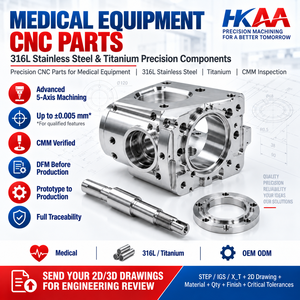
ISO 13485 Certified Medical CNC Machining Parts 316L Stainless Steel Titanium Precision Components OEM ODM ±0.01mm
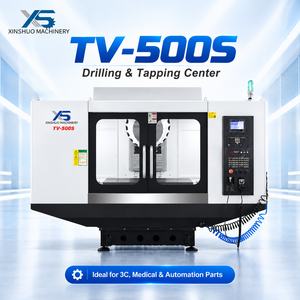
Cost Effective High Speed Tapping Center BT30 CNC Vertical Machining Center 20000rpm for Medical Automation Metal Parts

FOCUS YJ Multifunction Stainless Steel BBQ Shears Durable Stainless Steel Handle Eco-Friendly 3Cr13 Blade Home Kitchen Use Model
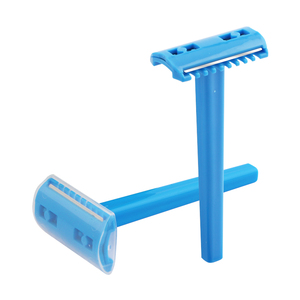
Disposable Surgical Prep Razor Double Edge Safety Razor Medical Use Stainless Steel Blades
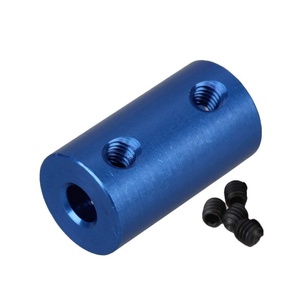
Cnc Machining Parts Aluminum Alloy Fixed Coupling Shaft Coupler with 5mm to 5mm
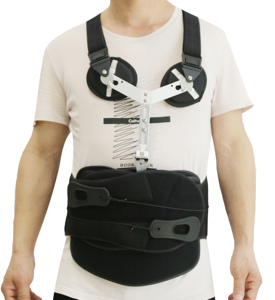
Adjustable Comfortable Speed Spinal System(Front & TLSO Panel) Back Support Belt Waist Immobilization Back Brace
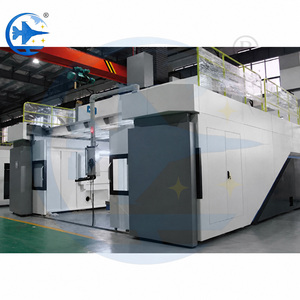
High Speed 5 Axis Simultaneous CNC Milling Machine Efficient Metal Cutting Center for Medical Implants and Dental
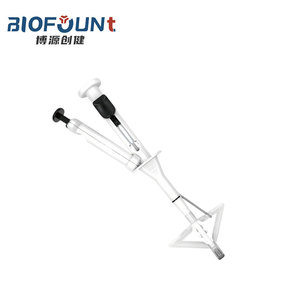
OEM ODM Precise Surgical Equipment Minimally Invasive Fascia Closure Device RYFB 50mm Jaw Opening for Laparoscopic Port Closure
Engineering Architecture of High-Frequency Electrosurgical Instrumentation
Modern minimally invasive surgery (MIS) relies fundamentally on energy-based surgical tools. Electrosurgical units (ESUs) operating at high frequencies (typically 350 kHz to 4.7 MHz) require precision-machined end-effectors, bipolar forceps, vessel sealing jaws, and monopolar electrodes capable of concentrated thermal energy delivery while preserving adjacent cellular structures. As global medical OEMs seek strategic contract manufacturing partnerships in China, understanding the convergence of ultra-precision CNC metallurgy, dielectric polymer engineering, and rigorous regulatory compliance becomes paramount.
Core Metallurgical Foundations: Material Selection for RF Energy Transfer
The selection of substrates for monopolar and bipolar electrosurgical tips dictates electrical conductivity, thermal dissipation, charring resistance, and long-term fatigue strength. Leading OEM factories utilize specialized medical-grade alloys:
- 316L & 304 Stainless Steel: Standard for structural instrument shafts, outer cannulas, and rigid mechanical couplings where high tensile yield strength (>620 MPa) and corrosion resistance during cleaning/autoclaving are mandated.
- Titanium Grade 5 (Ti-6Al-4V ELI): Utilized in high-frequency ultrasonic electrosurgical handpieces and lightweight bipolar actuation arms. Ti-6Al-4V delivers superior acoustic wave propagation, lower density, and exceptional biocompatibility under ISO 10993 standards.
- High-Conductivity Copper Alloys & Beryllium-Free Coppers: Applied internally within bipolar electrosurgical tip cores to promote rapid heat dissipation, minimizing eschar formation and tissue adhesion during thermal coagulation cycles.
- 3Cr13 & Specialty Martensitic Steels: Engineered specifically for surgical cutting shears and laparoscopic scissor inserts requiring hardened cutting edges (>52 HRC) combined with RF current conduction.
Dielectric Insulation
Deposition of heat-shrinkable fluoropolymers (PTFE/FEP), micro-molded PEEK, and ceramic coatings ensuring zero high-voltage breakdown under monopolar activation.
Micromachining Precision
Swiss CNC turning and micro-EDM machining achieving dimensional tolerances of ±0.005mm for complex laparoscopic jaw tooth profiles and pivot joints.
Surface Passivation
Citric and nitric acid passivation, electropolishing, and anti-adhesion fluoropolymer treatments resulting in surface finishes with Ra < 0.2 µm.
Electrosurgical Tool Categorization & Manufacturing Benchmarks
When selecting a contract manufacturer in China, procurement directors must evaluate technical capability matrix parameters against clinical intended use. Below is an engineering framework comparing primary electrosurgical device categories:
| Tool Category | Primary Substrate | Dielectric / Coating Tech | Critical Tolerance | IEC 60601-2-2 Testing Protocol |
|---|---|---|---|---|
| Monopolar Hook / Needle Electrodes | 316L SS / Tungsten wire | FEP Heat Shrink / Ceramic spray | ±0.01 mm tip radius | 100% Spark Test @ 3.0 kV RMS |
| Bipolar Coagulation Forceps | Stainless Steel + Ag Core | Overmolded PEEK / PTFE insert | ±0.008 mm alignment | Thermal Impedance & Leakage Current |
| Advanced Vessel Sealers | Ti-6Al-4V / 17-4PH SS | Plasma-sprayed Ceramic / Silicone | ±0.005 mm jaw pivot | Burst Pressure & Jaw Force Validation |
| Laparoscopic Scissor End-Effectors | 3Cr13 / 440C Hardened SS | Electropolished + Passivated | Ra < 0.15 µm edge | Edge Retention & Cleanroom Assembly |
| Argon Beam Plasma Electrodes | Tungsten / Inconel 625 | High-temp Quartz / Ceramic tube | ±0.02 mm lumen ID | Gas Flow Rate & Arc Stability Verification |
Future Development Trends in China Electrosurgical Manufacturing (2025–2035)
The global market for electrosurgical devices is projected to expand significantly, driven by the acceleration of robotic-assisted surgery (RAS) and outpatient ambulatory surgical center (ASC) adoption. To maintain competitive advantage, China’s tier-one medical contract manufacturers are making structural technological transitions:
1. Integration with Robotic Surgical End-Effectors
Next-generation electrosurgical instruments are no longer rigid, hand-actuated tools. Modern Chinese factories are engineering multi-articulating wrist assemblies for surgical robots. These require miniature tungsten cable routing channels, micro-pulley systems, and flexible dielectric sleeves that maintain insulation integrity through 90-degree wrist articulation cycles.
2. Smart Energy Delivery & Integrated Sensor Fibers
Future RF vessel-sealing instruments incorporate real-time tissue impedance feedback sensors directly into the micro-machined jaw substrate. Advanced OEM factories integrate thermocouples and optical fibers into the metal matrix, enabling ESUs to dynamically modulate radiofrequency power and prevent collateral thermal damage to surrounding healthy tissue.
3. Integrated Surgical Smoke Evacuation Channels
With stringent OSHA and EU regulations regarding surgical smoke safety, modern electrosurgical handpieces must incorporate coaxial smoke evacuation lumens. OEM suppliers are leveraging co-extrusion technology and thin-wall metal tubing to capture hazardous surgical plumes right at the active electrode tip without inflating instrument diameter.
4. Sustainable & Circular Medical Device Manufacturing
Contract manufacturers are reducing environmental footprints by implementing closed-loop cutting fluid filtration systems, adopting eco-friendly cleaning agents, and shifting from single-use plastics to fully recyclable medical grade polymers like PEEK and modular stainless steel designs suitable for validated reprocessing workflows.
Why Partner with Leading Chinese Electrosurgical Manufacturers
Qualifying a overseas contract manufacturer demands meticulous evaluation of quality management systems (QMS), equipment infrastructure, technical expertise, and supply chain transparency. Leading Chinese OEM centers offer a comprehensive solution for global medical device brands:
ISO 13485 & FDA Compliance
Operating under certified ISO 13485 QMS frameworks with full Device Master Record (DMR) maintenance, complete lot traceability, and FDA-registered cleanroom facilities (ISO Class 7 and Class 8).
High-Precision CNC Fleet
Equipped with high-speed 20,000 RPM BT30 vertical tapping centers, 5-axis simultaneous milling centers, Swiss-type automatic lathes, and high-precision flute/drill-point grinding machinery.
End-to-End DFM & Prototyping
Dedicated medical design engineers supporting rapid prototyping, additive manufacturing (Powder-Bed Fusion for porous titanium implants), and seamless transition into validated mass production.
OEM Buyer Guide & Electrosurgical Procurement FAQ
How do Chinese contract manufacturers ensure high-voltage dielectric insulation on electrosurgical tools?
Insulation integrity is guaranteed through a multi-layer quality protocol. First, polymer shafts and insulating coatings (FEP, PTFE, PEEK, or ceramic sprays) undergo automated thickness inspection using eddy-current or optical profilometry. Second, 100% of manufactured units are subjected to in-line high-voltage spark testing (typically 3.0 kV to 5.0 kV RMS at 100 kHz) according to IEC 60601-2-2 standards to detect micro-pinholes, air voids, or structural defects prior to cleanroom packaging.
What documentation is provided to support global regulatory filings (FDA 510(k) & EU MDR)?
Comprehensive regulatory submission packages accompany every validated production lot. Deliverables include Material Test Reports (MTRs) with full heat-lot chemistry melt source traceability, First Article Inspection (FAI) reports per AS9102/ISO standards, Cpk capability studies for critical-to-quality (CTQ) dimensions, Biocompatibility testing certificates (ISO 10993 cytotoxicity, sensitization, hemolysis), and Process Validation protocols (IQ/OQ/PQ).
Can Chinese electrosurgical tool factories produce customized OEM designs from CAD models?
Yes. Engineering teams routinely accept STEP, IGES, and SolidWorks parametric models. The typical process starts with Design for Manufacturability (DFM) feedback, highlighting potential tooling stress points or wall thickness constraints. Rapid functional prototypes can be produced within 5 to 7 business days using micro-CNC machining or powder-bed metal additive manufacturing, followed by pilot production runs upon prototype sign-off.
What surface treatment options are available to prevent tissue adherence and eschar buildup?
To prevent tissue charring and sticky eschar accumulation on active electrosurgical tips, factories apply specialized surface coatings. Options include medical-grade non-stick PTFE fluoropolymer coatings, plasma-deposited hydrophobic fluorocarbon films, gold or silver plating for rapid thermal dispersion, and mirror-finish electropolishing achieving surface roughness ratings of Ra < 0.1 µm.
How are small-batch prototype volumes managed versus full high-volume production?
Leading suppliers operate flexible cellular manufacturing structures. Dedicated prototype cells utilize high-speed multi-axis CNC machines for low-volume engineering builds (10 to 500 units) without requiring custom hard tooling. Upon design freeze and validation, production transfers to automated Swiss lathe centers and multi-cavity plastic overmolding cells capable of producing hundreds of thousands of components monthly.
What precision limits can be achieved on micro-jaw teeth and pivot joints for laparoscopic tools?
Utilizing high-precision wire-cut EDM, micro-milling, and Swiss turning, factories achieve micro-jaw tooth profiles with pitch accuracy down to ±0.005 mm and pin hole concentricity within 0.003 mm. This ensures smooth tactile engagement, zero slop in the mechanical linkage, and precise tissue grasping force during delicate surgical procedures.
How is supply chain risk managed for international medical OEMs?
Contract manufacturers implement robust supply chain resilience protocols, including dual-sourcing for critical raw material inventory (certified medical-grade stainless steel and titanium rods), safety stock management in bonded warehouses, VMI (Vendor Managed Inventory) agreements, and fully traceable international freight logistics with temperature and humidity controls.
Partner with China's Premier Electrosurgical Tools OEM Manufacturer
Accelerate your surgical device development cycle with certified ISO 13485 precision machining, advanced dielectric insulation, and engineering design assist.
Inquire Now