CE Certified Thread Grinding Services Suppliers & Exporters
Technical Whitepaper & Global Procurement Guide on Ultra-Precision CNC Thread Grinding, Micron-Level Tolerances, and Medical Device OEM Manufacturing Compliance
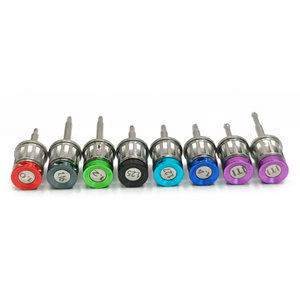
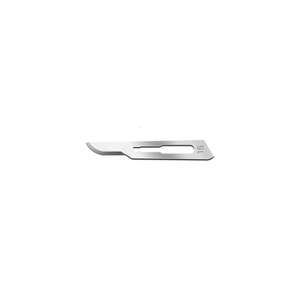
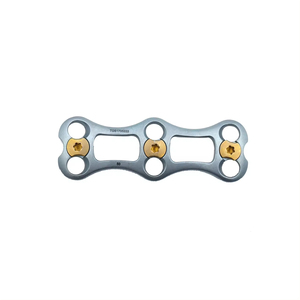
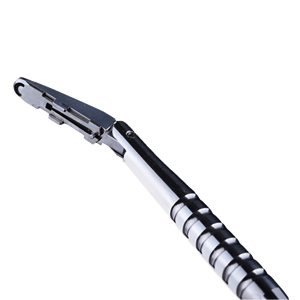
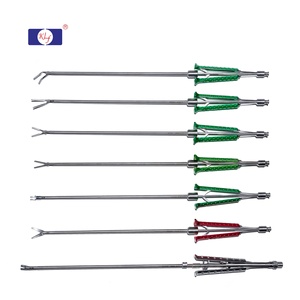
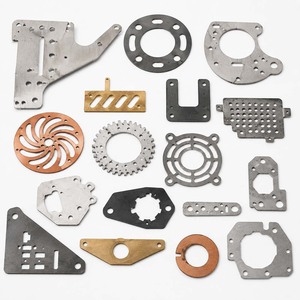
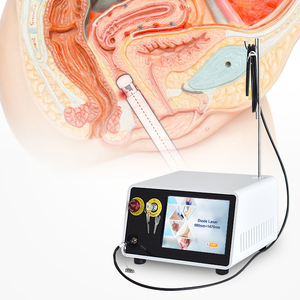
Featured Precision Medical & Industrial Components
Engineered through advanced multi-axis CNC grinding, Swiss-type turning, and certified bio-compatible surface finishing.
Technical Mechanics of Precision Thread Grinding in Medical & Aerospace OEMs
In modern precision contract manufacturing, thread grinding services represent the apex of material shaping, particularly for applications requiring sub-micron dimensional fidelity, zero-backlash power transmission, and extreme fatigue resistance. Unlike traditional thread cutting, single-point turning, or thread rolling, CNC thread grinding uses vitrified Cubic Boron Nitride (CBN) or diamond grinding wheels to generate thread profiles into hardened stock (up to 64 HRC) without introducing thermal stresses or tensile micro-cracks.
For original equipment manufacturers (OEMs) in orthopedics, spinal instrumentation, surgical robotics, and aerospace motion systems, precision threads perform structural and kinematic functions where component failure is unacceptable. Thread grinding eliminates micro-burrs and grain disruption common in Single Point Threading (SPT), producing surface finishes below Ra 0.15 µm (6 micro-inches). This level of surface smoothness dramatically reduces friction coefficients, prevents fatigue failure, and guarantees precise axial positioning.
Comparative Analysis: Thread Grinding vs. Conventional Thread Production
Manufacturing Method
Pitch Accuracy
Surface Finish (Ra)
Material Hardness Handling
Structural Fatigue Risk
CNC Thread Grinding
±0.001 mm (Sub-Micron)
< 0.15 µm
Up to 68 HRC (Ti-6Al-4V, CoCr, 17-4PH)
Zero micro-cracks; Compressive residual stress
Thread Rolling
±0.008 mm
0.4 - 0.8 µm
Limited to < 40 HRC
Grain boundary distortion at thread crests
Thread Chasing / Turning
±0.012 mm
0.8 - 1.6 µm
Up to 45 HRC
High tool wear causing pitch wander & burrs
Thread Milling
±0.005 mm
0.4 - 0.6 µm
Up to 55 HRC
Cutter dwell marks and scalloped profiles
Enterprise Capabilities & Quality Infrastructure (Greyack Medical OEM Standards)
As a globally audited contract manufacturer registered with the FDA and certified under ISO 13485:2016, Greyack Medical integrates multi-axis thread grinding into a complete, end-to-end medical device manufacturing ecosystem. Global OEM buyers face stringent compliance hurdles; our infrastructure is specifically designed to eliminate supply chain vulnerabilities, guarantee batch-to-batch repeatability, and streamline regulatory DHF (Design History File) submission.
Micron-Level Metrology
Equipped with non-contact optical CMMs, laser thread pitch interferometers, and profile projectors that verify flank angle, lead error, and pitch diameter in climate-controlled labs.
Full Traceability & Certs
Every order ships with raw material EN 10204 3.1 certifications, dimensional inspection matrices, heat treatment logs, and lot traceability documentation.
Validated Post-Processing
In-house passivating (ASTM A967 citric/nitric), automated ultrasonic cleanroom washing, laser marking, and cleanroom pouch packaging for immediate sterile processing.
Biocompatible Alloys & Exotic Material Mastery
Grinding threads on high-performance alloys requires specialized grinding wheel dressers, custom coolant chemistry, and precise wheel speed compensation (SFPM). Greyack Medical specializes in thread grinding across demanding medical and aerospace materials:
Titanium Grade 5 (Ti-6Al-4V ELI): Critical for orthopedic bone screws, pedicle screws, and dental implant abutments where thread strength and osseointegration are paramount.
Cobalt-Chromium Alloys (CoCrMo): Used in joint replacement systems and structural spinal fixators requiring extreme wear resistance and bio-inertness.
Medical Grade Stainless Steels (316L, 17-4PH, 455 Custom): Ideal for surgical drills, taps, reamers, drive shafts, and torque-limiting couplers.
Engineering Polymers (PEEK / Radel): Precision micro-thread grinding on radiolucent spinal cages and diagnostic components without thermal deformation.
Global Procurement & Technology Trends in Precision Thread Grinding
As global medical device OEMs adapt to updated regulatory frameworks—most notably the EU Medical Device Regulation (MDR 2017/745)—procurement strategies are undergoing a structural shift. Buying teams no longer source components based on piece-part price alone; they prioritize vendor risk mitigation, validated processing capabilities, and technological sophistication.
1. Rise of Micro-Thread Geometry
Surgical robotics and minimally invasive procedures demand ultra-fine, zero-backlash leadscrews with pitch widths down to 0.2mm for ultra-precise haptic feedback in robotic end-effectors.
2. Industry 4.0 Closed-Loop Grinding
Modern thread grinding machines integrate in-process optical sensors that monitor wheel wear and automatically adjust CNC axis offsets in real time during production runs.
3. EU MDR Sub-Tier Audit Rigor
CE Certification requires total supplier auditability. Contract suppliers must provide complete chemical verification, bio-burden testing, and validated cleaning protocols.
Standard metric and unified threads often fail to meet the mechanical demands of specialized orthopedic and industrial applications. Modern thread grinding enables complex profile geometries tailored to specific load distribution vectors:
Cannulated Bone Screw Threads
Internal lumen design allows guide-wire placement during minimally invasive surgery. Grinding ensures concentricity between the outer thread pitch and inner cannula diameter within 0.003mm.
Asymmetric Buttress Threads
Optimized for unidirectional axial thrust loading in spinal fixation. Ground thread flanks absorb immense pull-out forces while maintaining stress-free structural transition points.
Variable-Pitch Lead Screws
Custom ground leadscrews where the thread pitch changes along the axial length, allowing controlled acceleration profiles in micro-metering surgical pumps.
Essential insights for supply chain managers, design engineers, and quality assurance directors qualifying thread grinding partners.
What CE & ISO certifications validate Greyack Medical’s thread grinding services?
Our precision contract manufacturing facilities maintain active ISO 13485:2016 quality management certification specifically scoped for medical implants and instruments, alongside FDA Establishment Registration. All CE-marked products adhere strictly to the European Union Medical Device Regulation (EU MDR 2017/745), ensuring seamless integration into your CE technical documentation file.
What dimensional tolerances and surface finishes can your thread grinding achieve?
Utilizing state-of-the-art multi-axis CNC thread grinders equipped with vitrified CBN wheels and continuous diamond dressing, we reliably achieve pitch diameter tolerances of ±0.001 mm, lead error control within 0.002 mm per 300 mm, and surface roughness as fine as Ra 0.10 µm to 0.15 µm.
Can you handle prototype quantities up to full high-volume OEM production?
Yes. Our dual-track manufacturing workflow supports rapid DFM (Design for Manufacturability) prototyping within days, process validation (IQ/OQ/PQ), and seamless scaling to high-volume production runs exceeding 500,000 components annually—all backed by statistical process control (SPC).
Which materials are best suited for high-precision thread grinding?
Thread grinding excels on hard or difficult-to-machine materials, including Titanium alloys (Ti-6Al-4V ELI), Cobalt-Chrome (CoCrMo), Medical Stainless Steels (316L, 17-4PH, 455, 420), Inconel, Nitinol, and high-performance polymers like PEEK.
How do you verify thread profile accuracy and deliver audit-ready quality paperwork?
Every shipment includes comprehensive documentation: Material Test Reports (EN 10204 3.1), First Article Inspection (FAI) reports per AS9102 / ISO standards, non-contact optical CMM profile scans, surface roughness measurements, and Certificate of Conformance (CoC).
How do international OEM buyers initiate a project quote or supplier audit?
Simply submit your 3D STEP/IGES models and 2D engineered drawings (including GD&T requirements) through our technical inquiry button below. Our senior engineering team will provide a comprehensive DFM analysis and formal quotation within 24-48 hours.
Partner with a World-Class Thread Grinding Exporter
Consult with our senior manufacturing engineers today to review your drawings, optimize component tolerances, and accelerate your CE MDR compliance.