Precision Machined Surgical Products & Tooling Systems
Explore our CE-marked and ISO 13485 manufactured surgical instruments, implants, raw titanium materials, and precision tooling. Each part undergoes rigorous CMM inspection and cleanroom passivation.
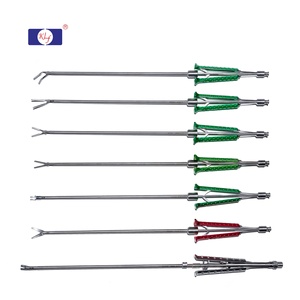
Cardiac Surgery Instruments Set Minimum Invasive Surgical Tools
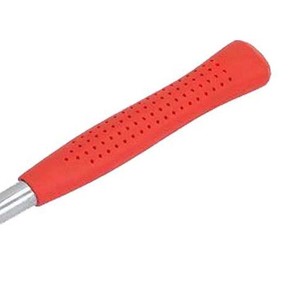
Red Silicone Handle Surgical Instrument Grip (Veterinary & Human Grade)
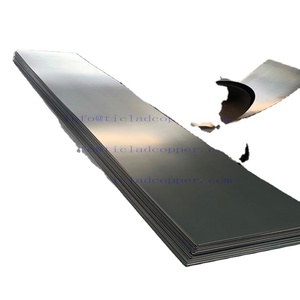
1mm Cold Rolled Titanium Sheet Grade 5 / Gr2 Plate for Medical Devices

Electrolytic Polishing Systems for Medical Hardware Finishing
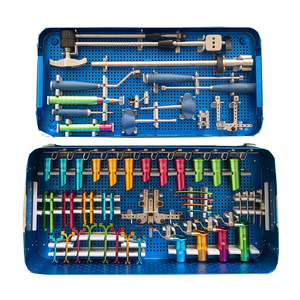
Stainless Steel Spine Pedicle Screw Set & OLIF Tubular Retractor
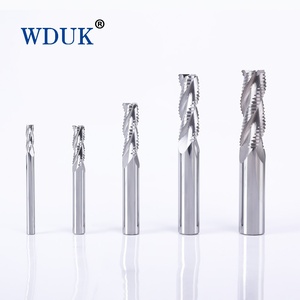
Precision Wave Flute Roughing End Mill for Medical Alloy CNC Milling
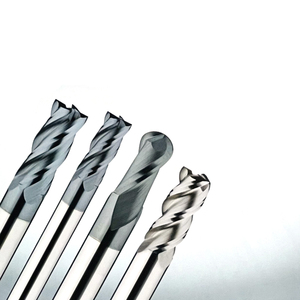
Helical Flute Precision End Mills for Medical Component Fabrication
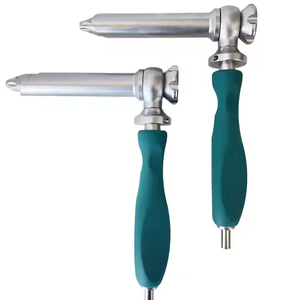
Silicone Overmolded Surgical Instrument Handles (Ergonomic Non-Slip)
Integrated Contract Manufacturing Capabilities for Medical OEMs
Combining multi-axis CNC Swiss machining, powder-bed fusion additive manufacturing, silicone overmolding, and medical grinding under one single accredited quality system.
High-Precision 5-Axis CNC & Swiss Machining
Our multi-axis Swiss-type turning centers machine complex titanium (Grade 5 / Ti-6Al-4V ELI), cobalt-chrome, and PEEK medical components with dimensional accuracies down to micro-level tolerances.
- Bone screws, spinal rods, & dental abutments
- In-process optical laser measurement
- Zero-defect production validation
CE Certified & FDA Registered Quality
Operating fully under ISO 13485:2016 quality controls. We maintain complete Device Master Records (DMR), 100% material lot traceability, and full CE technical documentation for international OEMs.
- Full IQ/OQ/PQ process validation
- ASTM F136 & F138 certified raw materials
- Audit-ready quality files for EU MDR
Medical Grinding & Silicone Overmolding
Proprietary drill-point grinding, flute sharpening, and custom liquid silicone rubber (LSR) overmolding for surgical instrument handles requiring ergonomic grip and torque-limiting mechanisms.
- Non-slip autoclave-safe silicone handles
- High-efficiency wave flute end mills & reamers
- Electrolytic polishing & citric passivation
Future Procurement Trends in Precision Medical Machining (2025–2030)
The global medical device market is undergoing a structural transformation driven by stricter global regulatory frameworks (such as the European Union’s CE MDR EU 2017/745 and FDA’s modernized Quality System Regulation), supply chain vulnerability, and rapid technological convergence in minimally invasive surgery (MIS) and robotic-assisted healthcare systems. For OEM procurement executives, sourcing directors, and supply chain managers, qualifying precision machining partners requires moving beyond simple unit-cost evaluation toward a holistic strategy centered on risk mitigation, regulatory compliance, and technological capability.
1. Transition from Multi-Tier Sourcing to Single-Source Vertical Integration
Historically, medical OEMs distributed project scopes across multiple disparate vendors—contracting one shop for rough CNC machining, another for surface passivation, a third for silicone handle overmolding, and a fourth for cleanroom assembly. However, this fragmented supply chain dramatically inflates logistical lead times, increases scrap rates due to multi-facility handoffs, and creates severe audit compliance bottlenecks when tracking non-conformances (NCRs).
Future procurement strategies overwhelmingly favor vertically integrated contract manufacturers capable of executing end-to-end manufacturing workflows—from Design for Manufacturability (DFM) engineering reviews and 5-axis Swiss CNC milling to automated electrolytic polishing, laser marking, and sterile-ready assembly. Partnering with a full-suite manufacturer like Greyack Medical drastically shortens production cycles from months to days while establishing single-point accountability for quality control.
2. Stringent Material Traceability & Biocompatibility Compliance
In the wake of heightened regulatory scrutiny, global health authorities demand unbroken, documented material origin verification. Medical OEMs can no longer risk utilizing unverified metallic alloys or non-compliant polymer resins. Strategic buyers now mandate that suppliers provide comprehensive certified mill test reports (CMTR) matching strict ISO and ASTM standards, such as ASTM F136 (Ti-6Al-4V ELI), ASTM F138 (316L Stainless Steel), and medical-grade implantable PEEK.
Key Regulatory Deliverables Mandated by Global Buyers
- Full Chemical & Mechanical Raw Material Certifications
- First Article Inspection Reports (FAIR according to AS9102 / ISO 13485)
- Validated Passivation & Surface Roughness Test Records (Ra < 0.2 µm)
- Cpk Capability Indices demonstrating statistical process stability (> 1.33)
Total Cost of Quality (TCQ) Purchasing Metrics
Modern procurement models utilize Total Cost of Ownership (TCO) algorithms that factor in supplier yield rates, delivery punctuality, defect mitigation costs, and audit compliance speed. A slightly lower component purchase price quickly becomes unviable if it generates high scrap rates during OEM final assembly.
3. Early Supplier Involvement (ESI) & Automated DFM Optimization
The traditional model of sending finalized engineering prints over the wall for bidding is rapidly being replaced by Early Supplier Involvement (ESI). By engaging precision machining engineers during the initial CAD modeling phase, OEMs prevent costly manufacturing redesigns. DFM expertise helps optimize tool path geometries, select cost-effective titanium grades, eliminate unnecessary micro-burrs, and ensure that tight tolerances (e.g., micro-threads on spinal pedicle screws or complex end-effector gear teeth) can be repeatedly held in high-volume production runs.
Next-Generation Medical Machining & Product Development Trends
How additive hybrid manufacturing, micro-machining, and ergonomic silicone overmolding are defining the next era of surgical instrumentation.
Hybrid Manufacturing: Additive PBF + Subtractive CNC
The integration of Powder-Bed Fusion (PBF) / Selective Laser Melting (SLM) metal 3D printing with sub-micron 5-axis CNC finishing represents the ultimate breakthrough in orthopedic implant manufacturing. Additive processes build intricate, biomimetic porous titanium structures (resembling natural trabecular bone for superior osseointegration), while high-speed CNC milling finishes the critical mating threads and load-bearing joint interfaces to absolute precision.
Micro-Machining for Surgical Robotics & MIS Tools
As minimally invasive surgical techniques and robotic-assisted procedures expand, component dimensions are shrinking while geometric complexity is escalating. CNC Swiss micro-machining enables the repeatable fabrication of ultra-small components—such as robotic end-effector wrist hinges, micro-pulley shafts, and miniaturized cardiac catheter tips—holding tolerances down to ±0.001mm.
Advanced Silicone Overmolding & Torque-Limiting Handles
Modern surgical instrumentation demands superior tactile ergonomics, reduced surgeon fatigue, and precise mechanical protection during bone screw insertion. Direct overmolding of medical-grade Liquid Silicone Rubber (LSR) onto stainless steel and titanium shafts provides slip-resistant grips resistant to hundreds of high-temperature autoclave sterilization cycles. Integrated torque-limiting ratcheting mechanisms prevent over-tightening during spinal and orthopedic reconstruction.
Closed-Loop Automated Metrology & In-Line CMM Inspection
To eliminate manual measurement variability, future medical manufacturing relies on multi-sensor Coordinate Measuring Machines (CMM), non-contact optical laser scanners, and automated surface roughness profilers integrated directly into automated CNC machine cells. Real-time statistical process feedback automatically adjusts tool offsets, ensuring 100% compliance before components move to finishing.
Frequently Asked Questions (FAQ) for Medical Procurement
Key compliance, engineering, and lead-time questions answered for medical device OEM sourcing teams.
Is Greyack Medical FDA registered and certified to ISO 13485 & CE standards?
What tightest machining tolerances can your CNC facilities achieve for implantable parts?
Which biocompatible materials do you specialize in machining and processing?
How do you handle secondary finishing, surface passivation, and cleanroom packaging?
Can your engineering team support rapid prototyping and Design for Manufacturability (DFM)?
What is the procedure for initiating a Request for Quotation (RFQ) and qualifying Greyack Medical?
Ready to Qualify a CE Certified Precision Medical Manufacturer?
Consult with our engineering and procurement team today. Receive a comprehensive DFM analysis, technical quotation, and quality assurance package within 24–48 hours.