0%

Why choose Spinal Instrumentation Manufacturing when the field demands precision, compliance, and long-term accountability? The answer begins with clinical need. Aging populations, degenerative spinal conditions, and rising surgical volumes continue to support demand for spinal implants. The World Health Organization identifies low back pain as a leading global cause of disability. Fortune Business Insights’ 2024 Spinal Implants Market report also describes sustained market growth, supported by technological progress and expanding surgical access. These trends create opportunities for manufacturers with disciplined engineering capabilities.

Spinal Instrumentation Manufacturing connects design decisions with real surgical outcomes. A titanium pedicle screw must hold its geometry under repeated loading. A spinal rod needs consistent curvature, surface quality, and mechanical strength. Production may involve CNC machining, cleaning validation, laser marking, torque testing, and dimensional inspection. Each batch should remain traceable. ISO 13485 quality systems and applicable FDA or European regulatory requirements provide a practical framework for controlling these activities. Grand View Research reports that material innovation and minimally invasive procedures are major influences on the spinal implants sector.

The opportunity is substantial, but it is not automatically suitable for every company. High equipment costs, supplier qualification, documentation demands, and post-market surveillance can challenge inexperienced teams. That matters. A strong manufacturer combines experienced machinists, biomedical engineers, quality specialists, and surgeons’ practical feedback. Reports can show market potential, yet they cannot replace verified process capability. The better question is not whether the market is growing. It is whether a company can repeatedly produce safe, traceable, and clinically useful instruments without compromising judgment.
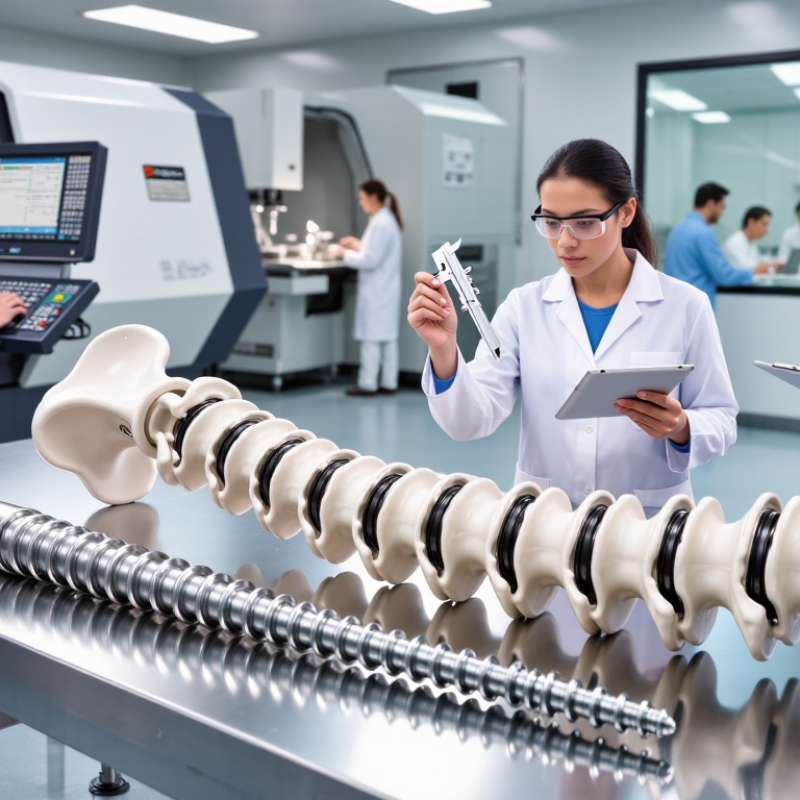
Why Choose Spinal Instrumentation Manufacturing?

Spinal Instrumentation: Definition and Clinical Purpose

Why Choose Spinal Instrumentation Manufacturing?

Spinal Instrumentation: Definition and Clinical Purpose

Spinal instrumentation includes implants and surgical tools used to support the spine. Common examples include screws, rods, plates, connectors, and fixation systems. Surgeons may use these devices to stabilize unstable vertebrae, correct deformity, or support fusion after removing damaged tissue. The clinical purpose is practical: maintain alignment while bone healing develops. Not every patient needs instrumentation.

In an operating room, a surgeon may connect screws to rods and check alignment with real-time imaging. A small change in screw position can affect stability, nerve safety, and surgical confidence. For this reason, manufacturers must control dimensions, surface finish, material quality, and mechanical strength. Materials should meet biocompatibility requirements and perform reliably under repeated spinal loads. Precision matters.

Manufacturing also involves cleaning, inspection, packaging, and traceability. Each production stage should be documented and reviewed against applicable quality standards. A dependable process can reduce variation between instruments and implants. Still, no manufacturing system is flawless. Human handling, complex anatomy, and changing clinical conditions create uncertainty. That reality deserves attention, not polished promises. Engineers and clinical specialists should examine fatigue data, usability feedback, imaging compatibility, and sterilization performance before wider adoption. Careful design supports safer decisions, but it cannot replace surgical judgment.

Core Technologies Used in Spinal Instrument Manufacturing

Why Choose Spinal Instrumentation Manufacturing?

Core Technologies Used in Spinal Instrument Manufacturing

Spinal instrumentation manufacturing depends on controlled engineering, not attractive claims. Modern teams combine 3D computer-aided design, precision machining, and validated surface finishing. Titanium alloys are often selected for strength, corrosion resistance, and imaging compatibility. Stainless steel remains useful in specific applications. Material choice should follow clinical purpose, loading conditions, and sterilization requirements. A machinist’s measurement on the production floor can matter as much as a simulation. Small dimensional errors may affect fit, alignment, or surgical handling.

Core technologies include CNC milling, turning, laser marking, and additive manufacturing. CNC systems create repeatable threads, holes, and complex contours. Additive methods can support porous structures, although consistency requires careful parameter control.

Inspection uses coordinate-measuring machines, optical systems, and documented sampling plans. Cleanroom practices, traceability, and process validation strengthen reliability. In my view, digital monitoring is valuable, but it cannot replace experienced review. A machine can repeat a mistake perfectly. That weakness deserves more attention.

Tips: Ask how manufacturers control burrs, thread accuracy, surface roughness, and material traceability. Request validation evidence, inspection records, and corrective-action procedures. Check whether design engineers understand surgical workflow. A polished prototype is not enough. Talk with the production team. Their practical answer may reveal hidden limits.

Quality, Safety, and Regulatory Standards

Spinal Instrumentation Manufacturing: Quality, Safety, and Risk Control

Spinal instrumentation manufacturing demands more than precise machining. It requires disciplined quality systems, documented processes, and careful risk control. In practice, small dimensional errors can affect fit, alignment, or surgical handling. Each component should be produced from verified materials and inspected against approved specifications. Surface finish, thread accuracy, and fatigue resistance deserve close attention.

Safety begins with design review and continues through packaging. Manufacturers should assess foreseeable misuse, contamination risks, and instrument compatibility. Traceability records help teams identify materials, operators, inspection results, and process changes. Regulatory expectations vary by market, so technical files must match the requirements of each applicable authority. Standards such as ISO 13485 can support consistent quality management, but certification alone does not guarantee dependable performance. That is easy to forget. Manufacturing teams must keep validating processes, training personnel, and investigating deviations without hiding uncomfortable findings.

Tips

Request clear inspection records, material certificates, and traceability evidence. Check whether testing reflects real clinical stresses. Ask how nonconforming parts are controlled. Review sterilization and packaging validation when relevant. Independent audits can add confidence, although they should not replace technical judgment. A strong supplier welcomes questions, reports limitations honestly, and improves procedures after learning from failures. Mistakes may still occur. The response matters.

Benefits of Choosing Specialized Spinal Instrumentation Manufacturing

Specialized spinal instrumentation manufacturing brings focused expertise to a demanding clinical field. These manufacturers understand the anatomy, loading forces, and surgical workflow behind spinal procedures. Their teams can translate clinical requirements into precise instruments, including retractors, guides, trial tools, and fixation instruments. Small details matter. Handle balance, tip geometry, and surface finish can affect control during surgery.

A specialized facility usually maintains documented processes for material traceability, dimensional inspection, cleaning compatibility, and production consistency. CNC machining, controlled finishing, and calibrated measurement equipment help reduce variation between instruments. Engineers may also review designs with surgeons to identify awkward grips, limited visibility, or unnecessary components. This practical feedback can improve usability before production expands. Reliable manufacturers also support design verification and validation, while aligning their work with applicable quality and regulatory requirements.

Customization is another important benefit. Different procedures and surgical approaches may require different lengths, angles, or access profiles. However, customization is not automatically better. A complex feature can increase manufacturing risk without improving clinical performance. That point deserves honest review. Clear specifications, risk analysis, sample evaluation, and ongoing inspection help teams make better decisions. The strongest manufacturing partnerships remain transparent about tolerances, lead times, testing limits, and possible design compromises. Consistency matters most.

Why Choose Spinal Instrumentation Manufacturing?

Specialized spinal instrumentation manufacturing integrates quality management, risk control, biocompatibility, mechanical validation, and sterilization planning. The chart shows the number of commonly referenced standards or regulatory frameworks within each critical manufacturing area.

Reference framework examples include ISO 13485, ISO 14971, ISO 10993 series, ASTM F1717, ASTM F2077, ASTM F2193, ASTM F543, ISO 11607, ISO 11135, ISO 11137, and applicable medical-device quality regulations. Counts are reference-group totals, not certification claims.

Innovation and Future Trends in Spinal Implant Production

Spinal instrumentation manufacturing is moving beyond standard implants. Innovation now begins with patient anatomy, surgical workflow, and long-term evidence.

According to Grand View Research, the global spinal implants market was valued at approximately USD 12 billion in 2023. Its projected growth reflects rising demand for safer, more adaptable reconstruction solutions.

Additive manufacturing is reshaping implant production. Layer-by-layer titanium fabrication can create porous surfaces that support bone integration. It also enables complex geometries that traditional machining may not produce efficiently.

FDA guidance on technical considerations for 3D-printed medical devices highlights the need for material control, process validation, and performance testing. These steps matter on the factory floor.

Engineers must inspect powder quality, surface roughness, fatigue strength, and dimensional accuracy.

Digital planning is becoming more practical.

Imaging data can guide patient-matched designs, while simulation tools may predict stress around screws and rods. A 2024 MarketsandMarkets report estimates continued growth in spinal implants through 2028, driven partly by advanced materials and minimally invasive procedures.

Still, prediction is not proof. Software can miss clinical realities. Manufacturing teams need surgeon feedback, traceable records, and ISO 13485-based quality systems. Sustainability also deserves closer attention, because titanium waste and energy-intensive processing remain difficult problems. The future may be smarter, but it will not be effortless.

FAQS

Which materials are commonly used in spinal instrument manufacturing?

Titanium alloys offer strength, corrosion resistance, and imaging compatibility. Stainless steel may suit specific applications. Material choice depends on loading, clinical use, and sterilization needs.

Which technologies support precise spinal instrument production?

CNC milling and turning create accurate holes, threads, and contours. Laser marking supports identification. Additive manufacturing may create porous structures, but parameters require close control.

How do manufacturers inspect spinal instruments?

Coordinate-measuring machines and optical systems check dimensions and surfaces. Documented sampling plans support consistency. A skilled technician should still review results.

Why is digital monitoring not enough?

Automated systems repeat processes consistently. They can also repeat a wrong setting perfectly. Human review remains necessary, though it may be overlooked during busy production.

What quality records should buyers request?

Request material certificates, inspection records, and traceability details. Check corrective-action procedures. Ask how nonconforming parts are isolated and documented.

How does traceability improve manufacturing safety?

Traceability can connect a component with its material, operator, inspection result, and process changes. This helps investigations. Missing records create uncomfortable uncertainty.

What advantages does specialized manufacturing provide?

Specialized teams understand surgical workflow, anatomy, and loading forces. They can improve handle balance, tip geometry, and instrument access. Practical feedback may reveal problems early.

Is customized instrumentation always better?

No. Different procedures may need different lengths, angles, or access profiles. A complex feature can increase production risk without improving clinical performance. Simple designs sometimes work better.

Conclusion

Spinal Instrumentation Manufacturing plays a vital role in developing implants and surgical tools designed to support, stabilize, and restore the spine. These products may include fixation systems, rods, screws, plates, and specialized instruments used in procedures for spinal deformities, trauma, degeneration, and instability. Their production combines precision engineering, biocompatible materials, advanced machining, surface treatment, and thorough testing to ensure reliable clinical performance.

Choosing a specialized manufacturer offers important advantages, including consistent quality, controlled production processes, customized design support, and compliance with strict safety and regulatory requirements. Careful inspection, traceability, sterilization compatibility, and validation help reduce risks and support patient safety. As medical technology advances, the field is moving toward more personalized implants, improved imaging integration, additive manufacturing, smarter surgical instruments, and data-supported design. These innovations may improve surgical accuracy, adaptability, and long-term outcomes while maintaining high standards for safety and reliability.

Ethan

Ethan

Ethan is a dedicated marketing professional with a strong understanding of the company’s products, services, and customer needs. Through a combination of market insight, strategic thinking, and clear communication, he helps present the company’s value in a practical and engaging way. Ethan......