Orthopedic Surgical Implants are medical devices designed to support, replace, or stabilize damaged bones and joints. They include hip and knee replacements, spinal fixation systems, trauma plates, screws, and biodegradable materials. Some restore movement. Others protect healing tissue while bone gradually reconnects.
The need is substantial. The World Health Organization reports that approximately 1.71 billion people live with musculoskeletal conditions worldwide. Osteoarthritis affects more than 500 million people, according to the WHO. These figures help explain growing demand for reliable orthopedic treatment. They do not, however, prove that every patient needs an implant. Diagnosis, age, bone quality, activity level, and surgical risk still matter.
The global orthopedic devices market was valued at about USD 48 billion in 2023, according to Grand View Research’s market analysis. Its report expects continued growth through 2030, supported by aging populations, sports injuries, and improved surgical techniques. Market size is useful context, not a measure of clinical success. The U.S. Food and Drug Administration emphasizes device safety, performance, and post-market monitoring. That oversight matters because an implant sits inside the body for months or decades. A polished titanium stem may look simple, but its fit, surface, and manufacturing history can influence outcomes. Even advanced designs can fail. Infection, loosening, wear, and patient-specific complications remain real concerns. This article explains what these implants are, how surgeons use them, and why material choice and evidence deserve careful attention. Maybe the most important question is not, “Which implant is newest?” It is, “Which option is appropriate for this patient?”
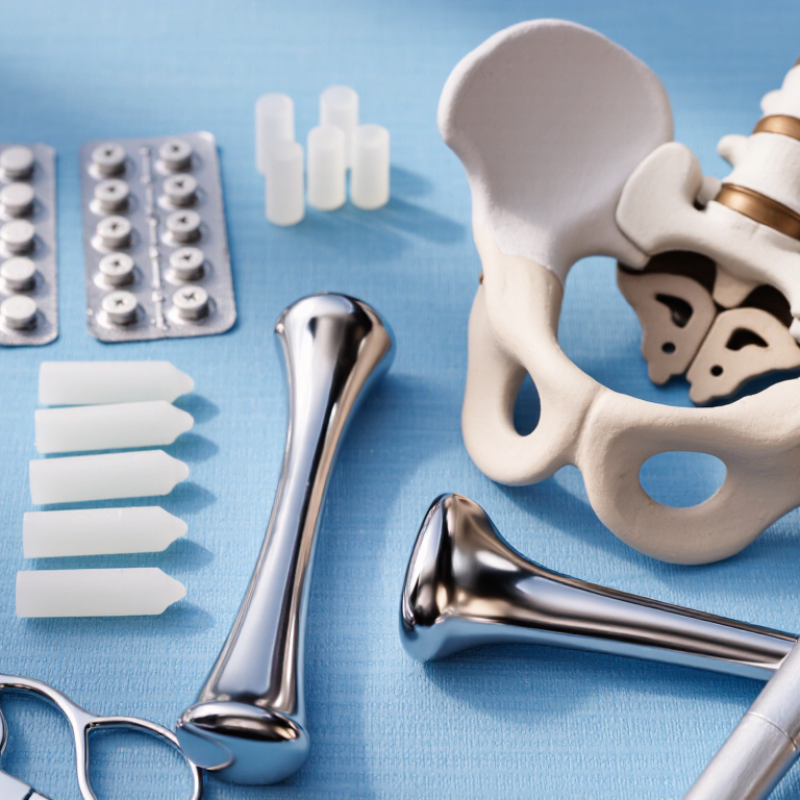
Orthopedic surgical implants are medical devices placed inside the body to support, repair, replace, or stabilize bones and joints. They include plates, screws, rods, pins, spinal cages, and artificial joint components. Their purpose depends on the injury or condition. A plate may hold a broken wrist steady, while a rod can support a long bone during healing. Joint implants may replace damaged surfaces and help restore movement.
In clinical practice, surgeons select implants after reviewing X-rays, scans, bone quality, activity level, and general health. The device must fit the patient’s anatomy and withstand everyday forces, such as walking or lifting. Proper placement matters greatly. Even a strong implant can fail if the bone does not heal, infection develops, or excessive stress affects the surgical area. No implant is perfect. That reality deserves honest discussion before surgery. Patients should understand expected benefits, possible complications, recovery limits, and future monitoring. Surgical decisions also vary between individuals, so online information cannot replace a qualified orthopedic assessment.
Tips: Ask what the implant is designed to do. Confirm how long activity restrictions may last. Keep follow-up appointments, even when pain improves. Report increasing redness, drainage, fever, unusual swelling, or sudden loss of movement. Bring a written medication list to each visit. A small detail can matter.
What Are Orthopedic Surgical Implants?
Major Types of Orthopedic Surgical Implants
Orthopedic implants support damaged bones, joints, and spinal structures. The main categories include joint replacement, fracture fixation, spinal implants, and sports-medicine devices. Joint replacements use artificial hips, knees, shoulders, or elbows to restore movement. Fracture fixation devices include plates, screws, nails, and wires. They hold broken bones while healing occurs. Spinal implants may stabilize vertebrae with screws, rods, cages, or artificial discs. Sports-medicine implants often repair torn ligaments, tendons, or cartilage.
The World Health Organization reported that musculoskeletal conditions affect about 1.71 billion people worldwide in 2022. This burden increases demand for durable, evidence-based treatment. However, implant choice depends on bone quality, injury pattern, activity level, surgical technique, and expected service life. A larger implant is not automatically better. Poor alignment, infection, or delayed healing can still cause failure. OECD’s Health at a Glance 2023 also shows substantial differences in hip and knee replacement rates between countries, reflecting patient needs, healthcare access, and clinical practice.
Tips: Ask what problem the implant solves, how long recovery may take, and which risks apply personally. Request information about material, fixation method, imaging follow-up, and revision options. Surgical outcomes can vary. Even strong clinical data cannot predict every individual result. Careful rehabilitation remains essential after implantation.
What Are Orthopedic Surgical Implants?
Orthopedic surgical implants are medical devices that support, replace, or stabilize damaged bones and joints. Their materials must tolerate body fluids, repeated stress, and contact with living tissue. Titanium alloys are widely valued for their strength and relatively low weight. Cobalt-chromium alloys offer excellent wear resistance in demanding joint applications. Stainless steel remains useful where dependable strength and cost control matter. No material is perfect.
Design features can be as important as the material itself. A porous surface may encourage bone growth around an implant, improving fixation without relying only on cement. Roughened areas can increase grip, while smooth bearing surfaces may reduce friction. Locking screws help maintain alignment in certain fracture plates. Modular parts allow surgeons to adjust fit during an operation, although added connections may introduce more complexity.
Polyethylene is often used as a low-friction bearing material, while ceramic components can provide strong wear performance. Engineers must balance stiffness carefully. An implant that is much harder than bone may change local load distribution and contribute to bone weakening over time. Imaging needs also influence design, because some metals create shadows that complicate follow-up scans. In practice, patient anatomy, activity level, bone quality, and surgical technique shape the final choice. A promising design can still fail when the fit is poor or healing is limited. Careful planning and long-term monitoring remain essential.
Orthopedic implants are medical devices designed to stabilize, replace, or support bones and joints. Their material selection balances strength, corrosion resistance, biocompatibility, wear performance, and elastic stiffness.
The chart compares approximate Young’s modulus values for commonly used orthopedic implant materials. Actual values vary by alloy composition, ceramic type, polymer grade, manufacturing process, and test conditions.
What Are Orthopedic Surgical Implants?
Common Medical Uses and Surgical Applications
Orthopedic surgical implants are medical devices placed inside or around the body to support, repair, or replace damaged bone and joints. Surgeons use plates, screws, rods, pins, and intramedullary nails to stabilize fractures. A broken femur may need a long metal nail through the bone canal. A wrist fracture may require a contoured plate beneath the skin.
Joint replacement implants serve a different purpose. They can replace worn surfaces in the hip, knee, shoulder, or ankle. These implants often combine metal, ceramic, and durable polymer components. Surgery may relieve pain caused by arthritis, injury, or severe joint deterioration. Patient age, bone quality, activity level, and medical history influence the design and surgical approach.
Spinal implants can help restore stability after trauma, deformity, or disc damage. Surgeons may use screws, rods, cages, or artificial discs. Careful imaging guides placement. Experience matters here because a few millimeters can affect nerves, balance, or movement.
No implant is risk-free. Infection, loosening, wear, stiffness, and blood clots can occur, even after careful treatment. Recovery also depends on rehabilitation, nutrition, and the patient’s daily habits. A technically successful operation may still feel disappointing if pain remains. That possibility deserves honest discussion before surgery. Research continues to improve implant surfaces, fixation methods, and long-term monitoring.
| Implant Category | Typical Components or Materials | Primary Medical Purpose | Common Surgical Applications | Key Clinical Considerations |
|---|---|---|---|---|
| Bone Plates | Titanium alloys or stainless steel | Stabilize fractured bone segments and maintain alignment during healing. | Fracture fixation of the forearm, wrist, ankle, clavicle, pelvis, and long bones. | Plate shape, screw position, bone quality, soft-tissue coverage, and protection of nearby nerves and blood vessels are considered. |
| Bone Screws | Titanium alloy or stainless steel | Hold bone fragments together or secure plates, rods, grafts, and other fixation devices. | Lag fixation, cortical fixation, cancellous fixation, and supplementary fixation for joint or spinal procedures. | Screw length, diameter, thread design, purchase in the bone, and risk of penetration into a joint or soft tissue are important. |
| Intramedullary Nails and Rods | Titanium alloys or stainless steel | Provide internal support along the central canal of a long bone and help resist bending and rotation. | Femoral, tibial, and humeral shaft fracture fixation; some systems are also used for limb reconstruction. | Accurate canal preparation, rotational alignment, locking-screw placement, and protection of the surrounding anatomy are required. |
| Wires and Pins | Stainless steel or titanium alloy | Temporarily or permanently hold small bone fragments and support fracture reduction. | Hand, wrist, foot, ankle, and pediatric fracture procedures; frequently used with external fixation or casts. | Pin-site care, migration, infection risk, stability, and the effect on nearby tendons or joints must be monitored. |
| External Fixation Components | Metal pins, wires, clamps, and connecting bars | Stabilize bones from outside the body while allowing access to injured soft tissue. | Open fractures, severe soft-tissue injury, staged trauma care, and limb lengthening. | Pin-track infection, frame stability, patient mobility, alignment, and ongoing wound management are major considerations. |
| Joint Replacement Implants | Metal alloys, ceramics, and highly cross-linked polyethylene | Replace damaged joint surfaces and restore movement while reducing pain. | Total or partial hip, knee, shoulder, elbow, and ankle arthroplasty. | Implant sizing, fixation method, ligament or soft-tissue balance, wear, loosening, infection, and dislocation risk are evaluated. |
| Spinal Fixation Systems | Titanium alloys, stainless steel, and polymer interbody materials | Correct instability, maintain spinal alignment, and support fusion between vertebrae. | Pedicle-screw fixation, rods, plates, and interbody fusion for selected spinal disorders and trauma. | Neurologic safety, screw trajectory, bone quality, spinal alignment, fusion biology, and adjacent-segment effects are considered. |
| Interbody Fusion Devices | Polyether ether ketone or porous metal | Maintain disc-space height and alignment while creating space for bone fusion. | Cervical, lumbar, and thoracic spinal fusion procedures, when clinically indicated. | Endplate preparation, implant positioning, subsidence risk, bone graft use, and restoration of spinal alignment are important. |
| Suture Anchors | Metal, polymer, or bioabsorbable materials | Attach tendons, ligaments, or other soft tissues to bone. | Rotator cuff repair, shoulder stabilization, hip labral repair, and foot or ankle reconstruction. | Anchor placement, tissue quality, pullout strength, healing potential, and avoidance of cartilage or neurovascular injury are assessed. |
| Meniscal and Cartilage Repair Implants | Polymer or bioabsorbable materials | Approximate, support, or replace selected damaged soft-tissue structures within a joint. | Meniscal repair, cartilage restoration, and selected knee reconstruction procedures. | Lesion location, vascular supply, joint alignment, patient activity, biological healing, and implant compatibility affect outcomes. |
| Bone Graft Substitutes and Scaffolds | Calcium phosphate, calcium sulfate, collagen, or other validated biomaterials | Fill bone defects and provide a framework or stimulus for bone regeneration. | Bone void filling, fusion procedures, revision surgery, and selected fracture defects. | They may support bone healing but do not replace the need for stable fixation, suitable blood supply, and appropriate patient selection. |
| Amputation and Osseointegration Implants | Titanium alloy or other biocompatible metal | Provide a structural connection between residual bone and an external prosthetic limb in selected cases. | Rehabilitation after limb amputation in carefully selected patients and specialist centers. | Bone integration, skin-interface care, infection prevention, loading progression, and patient rehabilitation are essential. |
Orthopedic surgical implants replace, support, or stabilize damaged bones and joints. Common examples include hip stems, knee components, plates, screws, and spinal cages. Placement requires careful imaging, sterile technique, and accurate sizing. A few millimeters can affect movement, pressure, and long-term comfort. The 2024 National Joint Registry report records more than five million hip and knee procedures since 2003. That scale strengthens clinical evidence, but it does not guarantee identical results for every patient.
Recovery begins immediately after implantation. Many patients stand or walk with assistance within one day. Physical therapy then rebuilds strength, balance, and joint control. Swelling may persist for several weeks. Recovery is rarely linear. A patient can improve, then experience pain after increased activity. Clinicians usually monitor the wound, temperature, mobility, and blood-clot risk. The American Academy of Orthopaedic Surgeons reports deep infection rates below 2% after joint replacement, although individual risk varies with diabetes, smoking, obesity, and immune health.
Potential complications include infection, dislocation, nerve injury, blood clots, implant loosening, and wear. Some appear early. Others develop years later. The FDA’s adverse-event database can identify safety signals, but it cannot calculate true complication rates. That distinction matters. Registry data also show that revision surgery remains uncommon for many modern implants, yet risk increases with age, activity, implant position, and underlying disease. Patients should question optimistic timelines and report persistent drainage, fever, calf swelling, or sudden loss of function promptly.
The main types include joint replacements, fracture fixation devices, spinal implants, and sports-medicine devices. Each type addresses a different structural problem.
Plates, screws, rods, pins, wires, and nails hold broken bones in proper alignment. A long nail may support a fractured femur inside its central canal.A wrist plate may sit beneath the skin. Healing takes time.
Joint replacements replace damaged surfaces in the hip, knee, shoulder, or ankle. They may reduce pain from arthritis, injury, or severe joint wear.Materials can include metal, ceramic, and durable polymer. Movement may improve, but results vary.
Spinal screws, rods, cages, and artificial discs can improve stability after trauma, deformity, or disc damage. Imaging helps surgeons position these devices accurately.A few millimeters matter. Nerves, balance, and movement can be affected.
These devices can help repair torn ligaments, tendons, or cartilage. The exact implant depends on the damaged tissue and surgical technique.The goal is support. Full recovery is not guaranteed.
Selection depends on bone quality, injury pattern, activity level, medical history, and expected service life. A larger implant is not automatically better.The choice is not always obvious. Ask how the implant solves the specific problem.
Possible risks include infection, loosening, wear, stiffness, blood clots, poor alignment, and delayed healing. Some problems appear only during follow-up imaging.Even careful surgery has uncertainty. Persistent pain deserves medical review.
Ask about the material, fixation method, recovery timeline, imaging schedule, personal risks, and possible revision procedures. Discuss rehabilitation, nutrition, and daily activity restrictions.Bring written questions. Memory can fail under stress.
Orthopedic Surgical Implants are medical devices designed to support, repair, replace, or stabilize damaged bones, joints, and related tissues. They may include joint replacements, bone plates, screws, rods, spinal implants, pins, and other fixation devices. Their main purpose is to restore movement, maintain proper alignment, promote healing, reduce pain, and improve physical function after injury, disease, or age-related deterioration.
These implants are commonly made from materials such as titanium alloys, stainless steel, cobalt-based alloys, ceramics, or medical-grade polymers, selected for strength, durability, compatibility, and appropriate flexibility. Their design depends on the body area and the surgical goal. During placement, surgeons carefully position the implant using specialized techniques and may recommend rehabilitation, activity restrictions, and follow-up examinations during recovery. Although many procedures are successful, potential complications can include infection, bleeding, implant loosening, allergic reactions, nerve or blood-vessel injury, and the need for revision surgery. Individual outcomes depend on the patient’s condition, implant type, surgical method, and adherence to postoperative care.