Choosing Silicone-Handled Surgical Instruments in 2026 requires more than comparing colors, prices, or supplier claims. A handle may feel soft in a showroom, yet become slippery beneath wet gloves. Its value appears during repeated procedures, careful cleaning, and long hours under intense lighting.
Dr. Elena Marquez, a biomedical engineer specializing in surgical ergonomics, states, “A dependable handle should reduce hand strain without compromising control, cleaning, or tactile feedback.” This practical view supports a broader evaluation. Buyers should examine grip diameter, surface texture, instrument balance, silicone bonding, and resistance to sterilization cycles. A well-designed handle should sit naturally between the thumb and index finger. It should also limit pressure points near the palm. Small details matter.
Material safety needs equal attention. Confirm documented silicone specifications, temperature tolerance, and compatibility with the facility’s cleaning process. Inspect joints and edges closely. Hidden gaps can retain moisture or residue. That risk deserves honest consideration, even when a product looks flawless.
The right Silicone-Handled Surgical Instruments should support precision, comfort, and dependable workflow. However, no handle suits every surgical specialty or every user. Hand size, procedure length, glove thickness, and personal technique can change the result. Testing representative instruments before large-scale purchasing is wiser than trusting a catalog image. Some evaluations may feel inconvenient. They can still prevent expensive mistakes.
This guide explains how to compare designs, verify supplier reliability, and assess long-term performance. It also questions common assumptions. Softer is not always better. Newer is not automatically safer. Practical evidence should lead the decision.
What Are Silicone-Handled Surgical Instruments?
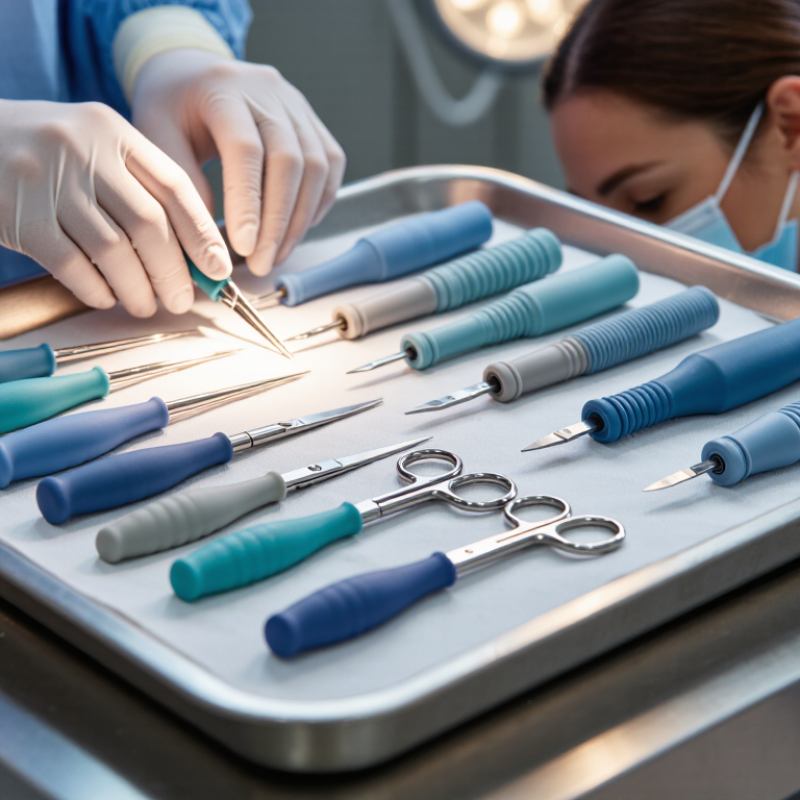
Silicone-handled surgical instruments have a silicone grip or sleeve around a rigid working shaft. The metal tip performs cutting, grasping, clamping, or dissecting. Silicone mainly changes the handle’s touch, friction, and insulation profile. It does not automatically make an instrument electrically safe. That assumption needs correction. In practice, the handle may feel warmer, reduce pressure points, and remain easier to control with wet gloves. However, softness can hide cracks, swelling, or poor bonding.
This matters because reprocessing quality directly affects patient safety. WHO reports that 7 in 100 patients in high-income acute-care settings acquire healthcare-associated infections. The figure reaches 15 in 100 in low- and middle-income settings (WHO, Global report on infection prevention and control, 2022). These figures do not isolate silicone handles, but they show why surface integrity and cleaning evidence deserve attention. A suitable instrument should have a smooth, inspectable junction, validated reprocessing instructions, and clear material compatibility data. Look closely.
When evaluating a silicone-handled instrument, check grip diameter, tactile stability, chemical resistance, and sterilization-cycle limits. AAMI ST79 emphasizes documented processing, inspection, packaging, and sterilization practices for reusable medical devices. The handle should not become tacky, brittle, or discolored after repeated cycles. Ask whether the silicone is medical-grade, securely bonded, and replaceable when damaged. Do not choose by comfort alone. A comfortable handle can still transmit excessive force or impair fine movement. Incomplete supplier documentation is a real selection risk.
2026 How to Choose Silicone Handled Surgical Instruments? - What Are Silicone-Handled Surgical Instruments?
| Evaluation Dimension | What It Means | Typical Information | Selection Guidance |
|---|---|---|---|
| Basic Definition | Surgical instruments with a silicone-based grip, sleeve, or molded handle over a metal instrument body. | The working end is commonly made from surgical-grade stainless steel, while the handle provides insulation, cushioning, or improved control. | Confirm whether the silicone is permanently bonded, mechanically secured, or removable for cleaning and inspection. |
| Common Instrument Types | The silicone handle can be used on instruments requiring precise, repeated manual control. | Examples include forceps, needle holders, scissors, retractors, probes, elevators, and selected electrosurgical accessories. | Match the handle design to the procedure, jaw geometry, shaft length, tip size, and required tissue access. |
| Grip and Ergonomics | Silicone can create a softer, less slippery contact surface than uncoated metal. | Grip performance depends on texture, diameter, moisture, glove material, hand size, and applied force. | Choose a handle that supports a neutral wrist position and allows secure control without excessive finger pressure. |
| Material Characteristics | Silicone is a flexible, chemically stable elastomer used in many medical and laboratory applications. | Medical-grade silicone is generally selected for biocompatibility, flexibility, and resistance to repeated handling; exact properties vary by formulation. | Request material specifications, biocompatibility documentation, and chemical-compatibility information for the intended use. |
| Sterilization Compatibility | The complete instrument must tolerate the healthcare facility’s validated reprocessing method. | Steam sterilization is commonly used for reusable surgical instruments, but temperature, exposure time, drying, and packaging requirements are product-specific. | Follow the manufacturer’s validated instructions for use. Do not assume that every silicone-covered instrument is compatible with every sterilization cycle. |
| Temperature Considerations | Silicone and the metal core may respond differently to repeated heating and cooling. | Repeated exposure to unsuitable heat or drying conditions can contribute to discoloration, hardening, cracking, loosening, or loss of adhesion. | Check validated cycle parameters and inspect the handle after sterilization, especially around seams, joints, and transitions. |
| Cleaning and Debris Control | Surface design affects how easily blood, tissue, and cleaning residues can be removed. | Deep grooves, exposed joints, gaps, and damaged silicone may retain soil and make visual inspection more difficult. | Prefer smooth transitions, minimal crevices, visible inspection areas, and clear instructions for manual or automated cleaning. |
| Electrical Insulation | A silicone covering may provide insulation on compatible electrosurgical instruments, but it is not automatically a complete safety barrier. | Insulation performance depends on thickness, continuity, voltage rating, connector design, moisture, and the condition of the coating. | Use only instruments specifically designed and tested for the intended electrical application. Inspect the insulation before use. |
| Tip and Jaw Performance | The silicone handle should not reduce the accuracy, alignment, or operating force of the working end. | Important factors include jaw alignment, cutting sharpness, ratchet function, articulation, and atraumatic surface condition. | Evaluate the complete instrument, not just the handle. Test opening, closing, locking, cutting, and release functions before clinical use. |
| Durability and Inspection | Reusable instruments must maintain mechanical function and surface integrity over their service life. | Warning signs include cuts, swelling, tackiness, peeling, cracking, exposed metal, corrosion, bent tips, loose joints, or impaired locking. | Establish routine inspection criteria and remove instruments from service when damage could affect cleaning, insulation, grip, or surgical performance. |
| Chemical Compatibility | Cleaning agents, disinfectants, lubricants, and chemicals may affect silicone, adhesives, coatings, or metal components. | Compatibility varies with concentration, contact time, temperature, and repeated exposure. | Use only approved chemicals and concentrations. Avoid unverified solvents, abrasive cleaners, and prolonged soaking when not permitted. |
| Patient Contact and Biocompatibility | Materials contacting the patient must be suitable for the intended duration and type of contact. | Biocompatibility assessment is dependent on the finished device, materials, processing, and intended clinical use. | Request documentation for the finished instrument rather than relying only on a generic statement about silicone. |
| Traceability and Documentation | Documentation supports purchasing decisions, training, maintenance, and incident investigation. | Useful records include instructions for use, reprocessing validation, material information, inspection criteria, warranty terms, and service life guidance. | Select products with clear labeling, lot or serial traceability where applicable, and accessible technical support documentation. |
| Best-Fit Selection Priority | The best instrument balances clinical performance, user comfort, reprocessing safety, and lifecycle cost. | A lower purchase price may not represent lower total cost if the instrument has difficult cleaning, short service life, or frequent repair needs. | Prioritize procedure suitability and validated reprocessing first, then compare ergonomics, durability, documentation, maintenance, and total cost. |
Note: Performance, material composition, sterilization limits, and service life vary by instrument design. Always follow the applicable instructions for use and the healthcare facility’s validated reprocessing procedures.
FAQS
They have a rigid working shaft and a silicone grip or sleeve. The metal tip cuts, grasps, clamps, or dissects. Silicone changes touch and friction. It does not guarantee electrical safety.
Common examples include scissors, needle holders, tissue forceps, and small retractors. Some electrosurgical instruments have silicone-coated grips or insulated sections. The design is not universal.
Silicone can reduce slipping with wet gloves and soften pressure points. It may also reduce the cold-metal feeling during long procedures. Comfort helps, but it is not everything.
Sometimes, but not for every user. A soft grip may reduce direct feedback for surgeons who prefer firm metal contact. Test the instrument with actual gloves. Photographs are not enough.
No. Silicone does not automatically provide electrical protection. Check the instrument’s documented insulation properties and intended use. Do not rely on touch alone.
Look for cracks, lifted edges, swelling, discoloration, tackiness, or trapped moisture. Inspect the junction between silicone and metal closely. Small defects matter.
Request validated instructions for cleaning, drying, packaging, and sterilization. Confirm temperature limits and chemical compatibility. The handle should remain stable after repeated processing cycles.
No. Also assess grip diameter, tactile stability, material resistance, and fine control. Ask whether the silicone is securely bonded and replaceable when damaged. Comfort alone can mislead.
Missing material and reprocessing data makes safe evaluation difficult. A comfortable instrument may still transmit excessive force or hide deterioration. That risk deserves a second look.
Conclusion
Silicone-Handled Surgical Instruments are designed to improve comfort, control, and handling during surgical procedures. Their silicone grips provide a soft, secure surface that can reduce hand fatigue and help maintain precision, especially during long or delicate operations. These handles may be used on instruments such as forceps, scissors, needle holders, retractors, and other tools that require reliable manual control. When selecting them, users should examine the silicone’s medical-grade quality, resistance to chemicals and heat, surface texture, ergonomic shape, and connection with the instrument shaft.
The right choice should match the procedure, handling requirements, and sterilization system used by the facility. Important factors include compatibility with steam or other validated sterilization methods, resistance to repeated cleaning, durability under daily use, and the ability to inspect the handle for cracks or contamination. Cost should be evaluated together with service life, maintenance needs, user comfort, and operational safety. A balanced assessment of material, design, performance, sterilization compatibility, and long-term value helps surgical teams select dependable instruments for different clinical applications.